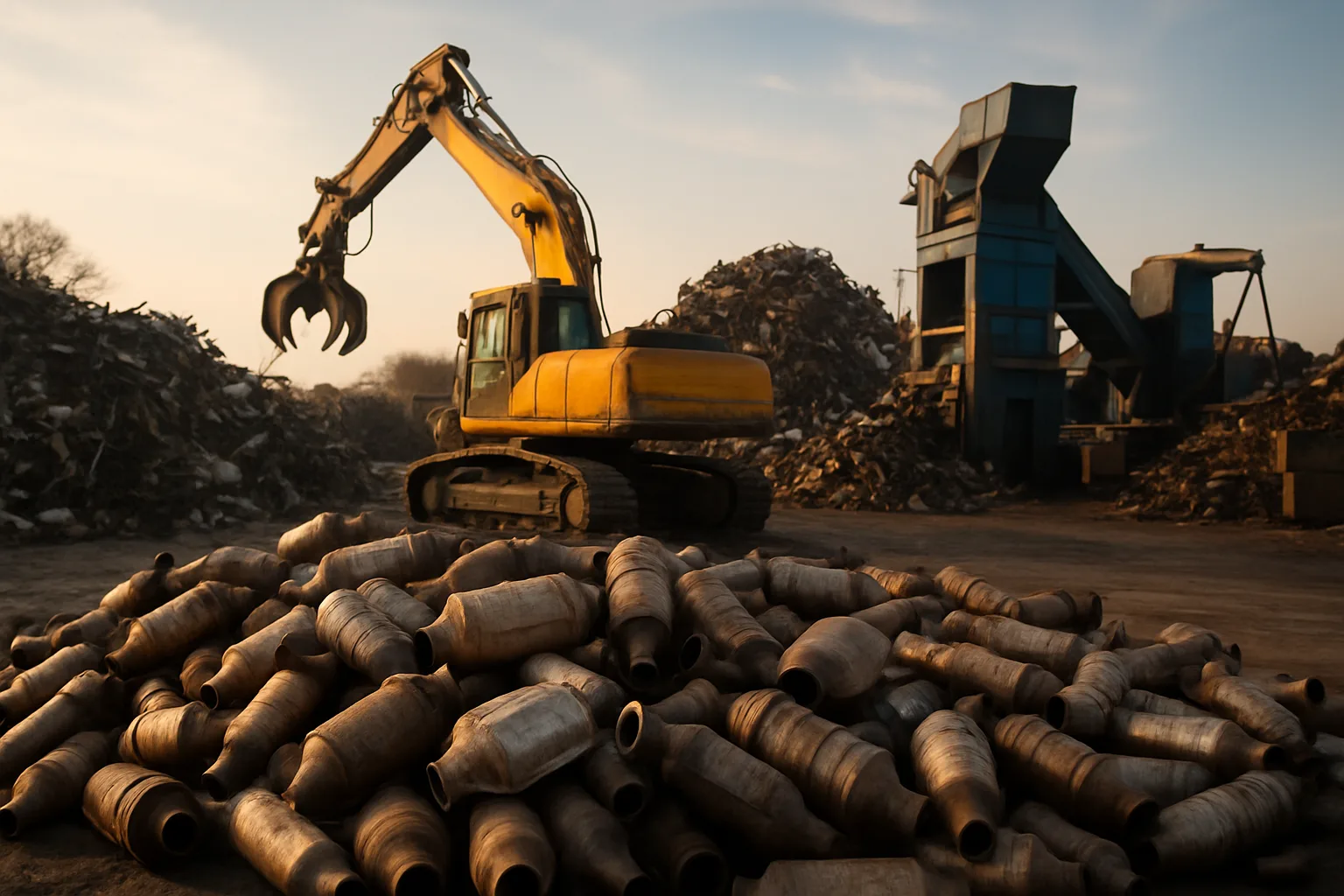
Most people selling a scrap catalytic converter have no idea what's actually inside it — and that ignorance costs them money. The metals packed into a single cat can be worth anywhere from a few dollars to several hundred, depending on what's in there and who's buying. If you're in Gary or anywhere across Indiana, knowing what drives that value is the first step to not getting lowballed.
This guide breaks down exactly what precious metals are inside your catalytic converter, why they matter to recyclers, and how understanding them helps you get the best catalytic converter price today.
Why Catalytic Converters Contain Precious Metals
A catalytic converter's job is to clean exhaust gases before they leave your vehicle. It does that through a chemical reaction — and that reaction requires a catalyst. The most effective catalysts for this application happen to be some of the rarest and most expensive metals on Earth: platinum, palladium, and rhodium. These are collectively called platinum group metals, or PGMs.
PGMs don't get consumed in the reaction. They trigger it. That's what makes them so valuable — they survive the process and can be recovered and reused. Every recycler, every refiner, and every catalytic converter buyer knows this. When they look at your cat, they're calculating how much recoverable PGM is sitting inside the ceramic or metallic substrate.
- Platinum (Pt): Used heavily in diesel converters. Often the primary PGM in older vehicles.
- Palladium (Pd): The dominant PGM in most modern gasoline converters. Has experienced significant price swings over the past decade.
- Rhodium (Rh): The rarest of the three. Even trace amounts carry significant value. Rhodium prices are notoriously volatile.
The exact mix of PGMs varies by vehicle make, model, engine type, and whether the converter is OEM (original equipment manufacturer) or aftermarket. That variability is exactly why identifying your converter properly — before you sell — matters so much.
How Much Platinum, Palladium, and Rhodium Is Actually in There?
The amounts are small but the value is real. A typical passenger vehicle catalytic converter contains somewhere between 3 and 7 grams of PGMs in total — though some high-end or large-displacement converters carry more. Trucks, SUVs, and luxury vehicles often have larger converters with higher PGM loadings.
What makes this complicated is that the PGM ratio differs by converter type. A diesel oxidation catalyst is heavy on platinum. A gasoline three-way converter leans palladium. Some converters have all three metals; some are weighted toward just one or two. Refiners use assay data to determine the exact breakdown — and that data drives the price they offer.
Here's the practical takeaway for sellers in Gary and across Indiana:
- Higher PGM content = higher scrap value
- OEM converters generally contain more PGMs than direct-fit aftermarket replacements
- Larger vehicles (trucks, vans, SUVs) tend to yield more per unit
- Converter condition matters — damaged or crushed units may have lost substrate material
- Current PGM spot prices fluctuate daily and directly affect what buyers pay
No one can tell you an exact number without assay data, but understanding these factors lets you have an informed conversation with any catalytic converter buyer in Gary — and push back when an offer seems low.
Serial Numbers and Why They Unlock Real Value
Here's something most casual sellers don't know: every OEM catalytic converter has a serial number or part number stamped on it. That number ties directly to vehicle data — the make, model, engine, and manufacturer specs. Buyers use that number to look up known PGM content and price the unit accordingly.
If you're trying to figure out how much your catalytic converter is worth by serial number, you're asking exactly the right question. A verified serial number removes the guesswork. It tells a buyer — or a platform like SMASH — what's actually inside without waiting for an assay. That transparency works in your favor.
Without a readable serial number, buyers often default to a conservative estimate. They'd rather underpay than overcommit on a unit they can't verify. That means leaving money on the table — your money.
Before you sell, take a clear photo of the serial number and any part numbers stamped on the shell. If the number is worn or damaged, note the vehicle year, make, model, and engine size. That information still helps narrow down the PGM profile significantly. You can also check current catalytic converter prices to get a market baseline before you engage any buyer.
What Drives the Price of Your Scrap Cat Right Now
PGM content is only half the equation. What those metals are worth on any given day depends on commodity markets — and those markets move constantly. Rhodium, for example, has seen some of the most extreme price swings of any traded metal. Palladium has followed a similarly volatile path. Platinum tends to be more stable but is not immune to market pressure.
For anyone doing catalytic converter recycling in Gary, this matters because the same physical converter can yield a different payout depending on when you sell. A converter worth significantly more in one quarter may be worth notably less in the next if PGM markets shift.
Several factors shape what you actually receive:
- Current PGM spot prices — set by global commodity markets, updated daily
- Converter grade — OEM vs. aftermarket, full-size vs. small foil
- Physical condition — intact substrate vs. cracked, crushed, or missing honeycomb
- Volume — buyers typically pay better per unit when you're moving multiple converters at once
- Competition among buyers — the more buyers competing for your units, the less room there is for lowball offers
That last point is where most sellers lose money. If you're getting one offer from one buyer, you have no idea whether that number reflects the market. Competition reveals price. It's that simple. Platforms like SMASH let you compare scrap metal bids from verified buyers, so you're not flying blind on a high-value material.
OEM vs. Aftermarket Converters — The Value Gap Is Real
Not all catalytic converters are created equal, and buyers know the difference immediately. An OEM converter — the one that came with the vehicle from the factory — is built to manufacturer specs with full PGM loading. Aftermarket converters, while functionally adequate for emissions compliance, often use less PGM because they're designed to a price point.
The value difference can be substantial. An OEM converter from a full-size truck or a performance vehicle can command several times the price of a direct-fit aftermarket unit from the same vehicle class. If you're not sure what you have, the serial number lookup process described above will tell you. OEM units almost always have a recognizable manufacturer stamp.
For auto shops and collectors in Gary, Indiana doing high-volume work, sorting OEM from aftermarket before selling is worth the extra few minutes per unit. Mixing them together in a single lot without identifying them means you're likely getting priced toward the lower grade. Know what you have. Price it accordingly.
Want to go deeper on this? Read catalytic converter pricing guides to understand how different converter types are graded and valued across the market.
How to Get the Best Price as a Seller in Gary
Understanding the metals inside your converter is foundational knowledge. But actually getting paid fairly requires more than just knowing what's in there — it requires a process.
Here's what consistent, higher-value sellers do differently:
- Document everything. Photos of the converter, clear serial number shots, vehicle info. This documentation builds buyer confidence and supports stronger offers.
- Identify the grade before you call anyone. Know whether you have an OEM unit, an aftermarket, a diesel cat, or a foil-type converter. Each category prices differently.
- Don't sell to the first buyer who calls back. If you're searching for a catalytic converter buyer near you, the goal isn't speed — it's price. Give the market a chance to respond.
- Use a competitive platform. SMASH connects sellers with vetted buyers who compete for your inventory. No subscription fees. No guessing. The auction format does the work of finding the market.
- Time your sale with market awareness. You don't need to be a commodity trader, but checking PGM trends before you list a large lot can make a real difference.
Gary's industrial history means there's no shortage of scrap moving through this region. That creates opportunity — but also means you need to be sharp. A casual approach to a high-value material leaves real money behind. Do the work up front, and the payout reflects it.
If you're ready to stop guessing and start selling with actual market data behind you, get the best price for your catalytic converter — get a free quote at best-catalytic-converter-price.com. Bring your serial numbers, document your inventory, and let competition work for you instead of against you.
Disclaimer: Catalytic converter prices fluctuate with PGM commodity markets. Always check current rates before selling. The values referenced in this article are general ranges for educational purposes only.
Frequently Asked Questions
Q: What precious metals are inside a catalytic converter?
Catalytic converters contain platinum, palladium, and rhodium — collectively called platinum group metals (PGMs). The exact mix varies by vehicle type and whether the converter is OEM or aftermarket. These metals are what give scrap cats their recycling value.
Q: How do I find a catalytic converter buyer in Gary, Indiana?
Local scrap yards and auto recyclers in Gary handle catalytic converters, but your best results typically come from using a competitive platform that reaches multiple vetted buyers at once. More competition among buyers means better price discovery on your units. SMASH connects sellers with verified buyers across the U.S. without subscription fees.
Q: How much is my catalytic converter worth by serial number?
The serial number on your converter links to manufacturer data that indicates the PGM loading — how much platinum, palladium, and rhodium it contains. Buyers use this to price units accurately. A clean, readable serial number typically results in a stronger, more confident offer compared to an unidentified unit.
Q: Does the condition of my catalytic converter affect its scrap value?
Yes, significantly. A converter with an intact ceramic or metallic substrate retains its full PGM content. Physical damage — cracking, crushing, or missing substrate material — means lost precious metals, which reduces what a buyer will pay. Always store and transport converters carefully.
Q: Is catalytic converter recycling in Gary worth doing in volume?
Absolutely. Buyers typically offer better per-unit pricing on larger lots, and the documentation process becomes more efficient at scale. Auto shops and collectors in Indiana moving consistent volume stand to benefit most from a structured, competitive selling process rather than selling one unit at a time to a single buyer.
Follow SMASH on LinkedIn for industry updates, PGM market insights, and scrap metal pricing trends across North America.