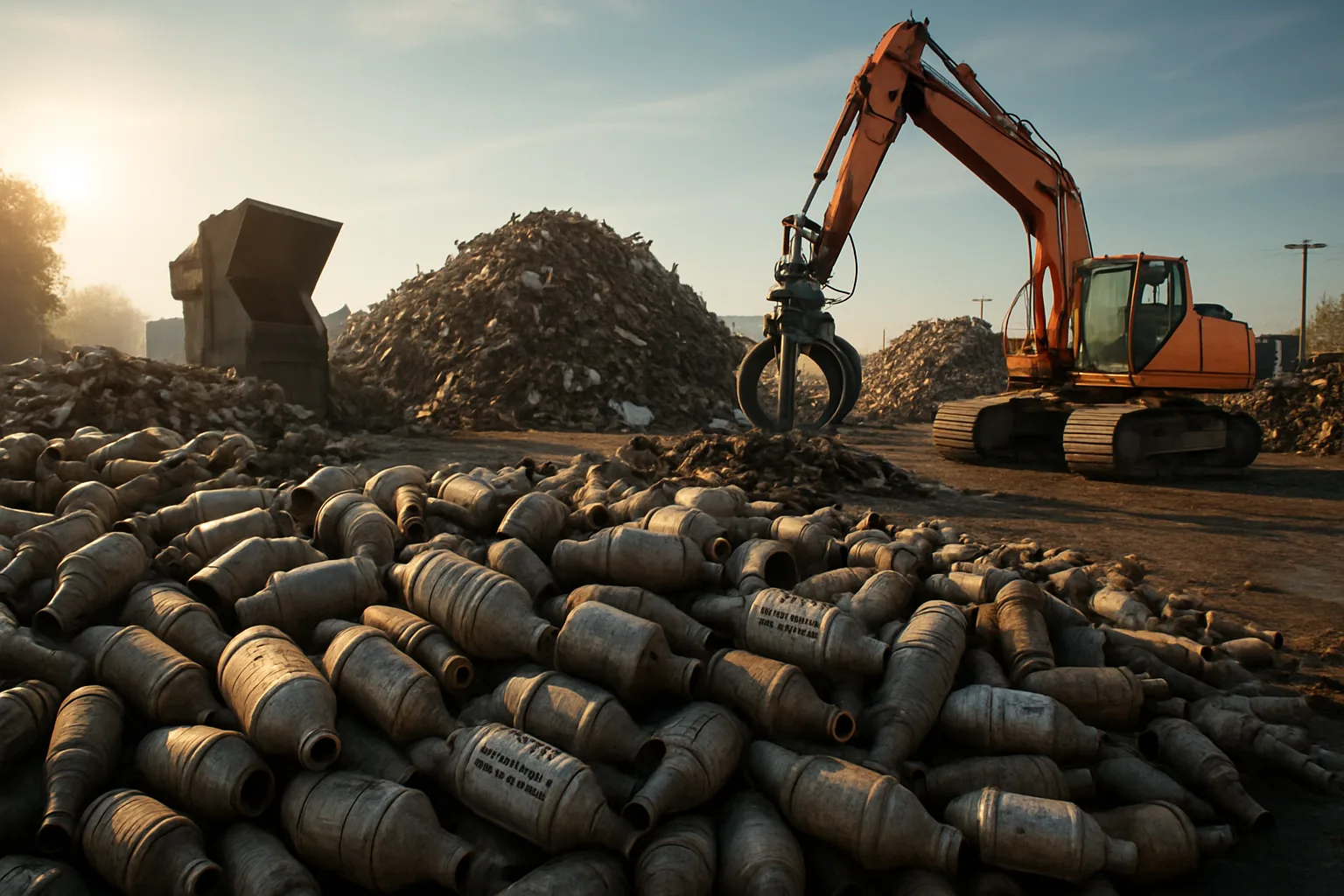
Why Proper Catalytic Converter Recycling Matters More Than You Think
Most people selling a scrap catalytic converter are thinking about one thing: how much money they'll walk away with. That's fair. But there's a bigger story happening behind the transaction — one that affects air quality, precious metal supply chains, and environmental outcomes across North America. If you're a catalytic converter buyer Gary residents rely on, or a seller trying to get fair market value, understanding the environmental side of this process isn't just good ethics. It's good business.
Catalytic converters contain three of the world's most valuable and finite metals: platinum, palladium, and rhodium. These aren't just rare — they're critical. Proper recycling keeps them in circulation. Improper disposal wastes them permanently and creates toxic hazards in the process. The way your converter gets handled after the sale matters more than most people realize.
What's Actually Inside a Catalytic Converter — and Why It Can't Be Wasted
The ceramic or metalite substrate inside a catalytic converter is coated with a precise blend of platinum group metals (PGMs): platinum, palladium, and rhodium. These metals act as chemical catalysts, converting harmful exhaust gases — hydrocarbons, carbon monoxide, nitrogen oxides — into less harmful emissions before they leave your tailpipe. A single OEM converter from a full-size truck or SUV can contain meaningful quantities of these metals, which is exactly why scrap catalytic converter prices can range so widely depending on make, model, and substrate condition.
Mining new platinum, palladium, or rhodium is an environmentally intensive process. It requires significant energy, water, and land disruption — often in regions with limited environmental oversight. Recycling PGMs from spent converters is dramatically more efficient. It takes a fraction of the energy, produces a fraction of the waste, and keeps supply chains from depending entirely on new extraction. Every properly recycled converter reduces the pressure to mine more.
- Platinum: Used in diesel converters; also critical for fuel cells and medical devices
- Palladium: Dominant in gasoline converters; supply is geographically concentrated and vulnerable to disruption
- Rhodium: The rarest of the three; responsible for neutralizing nitrogen oxides and commands the highest price per ounce
When these metals end up in landfills — or in the hands of bad actors who strip and discard the substrate without proper processing — those resources are gone. The environmental cost of recovering them again from raw ore is enormous. Proper recycling closes the loop.
The Environmental Risks of Improper Catalytic Converter Disposal
Catalytic converters aren't benign once they leave your vehicle. The ceramic monolith inside can contain trace residues of heavy metals and chemical compounds absorbed during years of exhaust filtration. When converters are crushed, burned, or discarded carelessly, those compounds can leach into soil and groundwater. That's not a theoretical concern — it's a documented problem in areas where unregulated scrap processing has operated without environmental controls.
In industrial regions like Gary, Indiana — where heavy manufacturing and steel production have historically shaped the local environment — responsible recycling practices matter on a community level, not just a transactional one. Gary has a real legacy of industrial environmental impact. Choosing a catalytic converter recycling Gary operation that processes material responsibly isn't just about your payout. It's about how that material gets handled after it leaves your hands.
There's also the theft angle. Catalytic converter theft remains a serious problem across Indiana and the broader Midwest. Stolen converters often move through unregulated channels, bypassing proper processing entirely. The metals get extracted crudely, the substrates get discarded, and no environmental or safety standards apply. Legitimate buyers with documented, transparent transactions — the kind you find on platforms like SMASH Scrap — where verified buyers bid on your metal — are part of the solution. Accountability in the buying chain discourages illegal supply and ensures material gets processed correctly.
How Legitimate Catalytic Converter Buyers in Gary Support Responsible Recycling
Not every buyer handles material the same way. A legitimate catalytic converter buyer Gary sellers trust will have clear documentation practices, traceable transactions, and established relationships with licensed processing facilities. These aren't just legal requirements — they're the infrastructure that makes responsible recycling possible at scale.
When you sell to a vetted buyer, your converter enters a verified supply chain. The substrate gets assayed — chemically tested to determine the precise PGM content. That data drives the pricing. The metals get extracted using industrial refining processes that capture virtually all recoverable platinum, palladium, and rhodium with minimal waste. The remaining ceramic material gets handled as industrial waste under environmental guidelines. Compare that to the alternative: backyard processing, open burning, or converters buried in general waste streams.
Here's what responsible catalytic converter recycling actually looks like end-to-end:
- Collection: Converters are gathered from yards, shops, and individual sellers with proper documentation
- Identification: VIN lookup and serial tracking confirm the converter type and establish baseline cat converter value
- Assay: Lab testing determines actual PGM content — this is what drives accurate pricing
- Refining: Licensed processors extract platinum, palladium, and rhodium using controlled industrial methods
- Reintroduction: Refined metals re-enter manufacturing supply chains for new converters, electronics, and industrial use
This cycle works. But it only works when converters enter the legitimate chain in the first place. That starts with where you choose to sell.
Getting the Best Price and Doing It Right — These Aren't in Conflict
Here's what the old way looked like: you called one buyer, took their number, and hoped it was fair. You had no idea what your converter was actually worth. No competition, no transparency, no documentation. That's not just bad for your wallet — it's bad for the supply chain. When sellers can't verify value, they're more likely to accept offers from buyers who cut corners, including on environmental compliance.
The better approach is competitive and transparent. When multiple vetted buyers compete for your load, you get price discovery — the market tells you what your converter is actually worth based on current platinum, palladium, and rhodium spot prices. That competition also filters out bad actors. Buyers who don't process material responsibly don't survive in a transparent, documented marketplace where their practices are visible.
Platforms like SMASH bring exactly that dynamic to the scrap metal market. Instead of one phone call and a gut-feel offer, you get verified buyers, competitive bids, and full documentation. If you're ready to get the best catalytic converter price today, that kind of structured process is how you do it without leaving money — or environmental responsibility — on the table.
For sellers in Gary and across Indiana, this matters locally. The steel industry that shaped this region understood material value and supply chain integrity at scale. The same principles apply to catalytic converter recycling. Know your material. Document it. Get competitive offers. Let the market set the price.
What Sellers Can Do Right Now to Recycle Responsibly
You don't need to be an environmental scientist to recycle your catalytic converter the right way. You need to make smart choices about who you sell to and how you document the transaction. Here's a practical checklist:
- Don't sell to unlicensed buyers. If a buyer can't give you documentation, that's a signal.
- Photograph your converter before the sale — substrate condition, end pipes, serial numbers if visible. This protects you and establishes value.
- Know your converter type. OEM converters typically yield higher PGM content than aftermarket units. This affects your best price catalytic converter outcome significantly.
- Get multiple offers. One buyer, one number is not a market price. Competition is how you find actual value.
- Ask where material goes. A legitimate buyer can tell you which processing facility handles their material. If they can't answer that, move on.
If you want to check current catalytic converter prices before you sell, that's the right move. Understanding the market before you pick up the phone puts you in a far stronger position — and helps ensure your material ends up in responsible hands.
For deeper context on how pricing works and what affects your payout, read catalytic converter pricing guides that break down the variables — from substrate condition to PGM spot prices to converter make and model.
The bottom line: selling your scrap catalytic converter the right way isn't complicated. But it does require choosing the right buyer, getting the right documentation, and letting competitive pricing work in your favor. For sellers in Gary, Indiana, and across the country, that combination produces better outcomes — financially and environmentally.
Disclaimer: Catalytic converter prices fluctuate based on platinum, palladium, and rhodium spot prices. Always check current rates before accepting an offer. Nothing in this article constitutes a guaranteed price or market forecast.
Frequently Asked Questions
Q: How do I find a catalytic converter buyer in Gary, Indiana?
Look for licensed buyers with documented transaction processes and verifiable connections to certified processing facilities. Platforms like SMASH connect sellers in Gary and across Indiana with vetted buyers who compete for your material — which helps ensure you're getting a fair market price, not a lowball offer from the only buyer you called.
Q: What makes catalytic converter recycling environmentally important?
Catalytic converters contain platinum, palladium, and rhodium — rare metals that require intensive mining to extract from raw ore. Recycling them from spent converters is dramatically more energy-efficient and reduces demand for new mining operations. Proper recycling also prevents toxic residues in the substrate from entering landfills or soil.
Q: How much is my catalytic converter worth as scrap?
Value depends on the converter type (OEM vs. aftermarket), the vehicle it came from, the condition of the substrate, and current platinum, palladium, and rhodium spot prices. OEM converters from trucks, SUVs, and performance vehicles typically yield the highest returns. Getting multiple competitive offers is the only reliable way to know what yours is actually worth in today's market.
Q: Are there catalytic converter buyers near me open now in the Gary area?
Availability varies by buyer and day. Rather than searching cold, use a platform that connects you with multiple vetted buyers simultaneously — that way you're not dependent on one yard's hours or one buyer's mood. Online auction-style platforms can facilitate offers outside traditional business hours.
Q: Does it matter which buyer I sell my catalytic converter to environmentally?
Yes. Legitimate, licensed buyers route material to certified processing facilities where PGMs are extracted responsibly and substrate waste is handled according to environmental standards. Selling to unverified buyers risks your converter ending up in unregulated processing channels — which is bad for the environment and, increasingly, a legal liability for sellers in some states.
---If you're sitting on scrap catalytic converters and want to sell smart — with real competition, real documentation, and real environmental accountability — the process starts with getting an informed quote. Get the best price for your catalytic converter and get a free quote at best-catalytic-converter-price.com.
Stay current on scrap metal market trends and catalytic converter pricing by following SMASH on LinkedIn — industry updates, market insights, and no fluff.