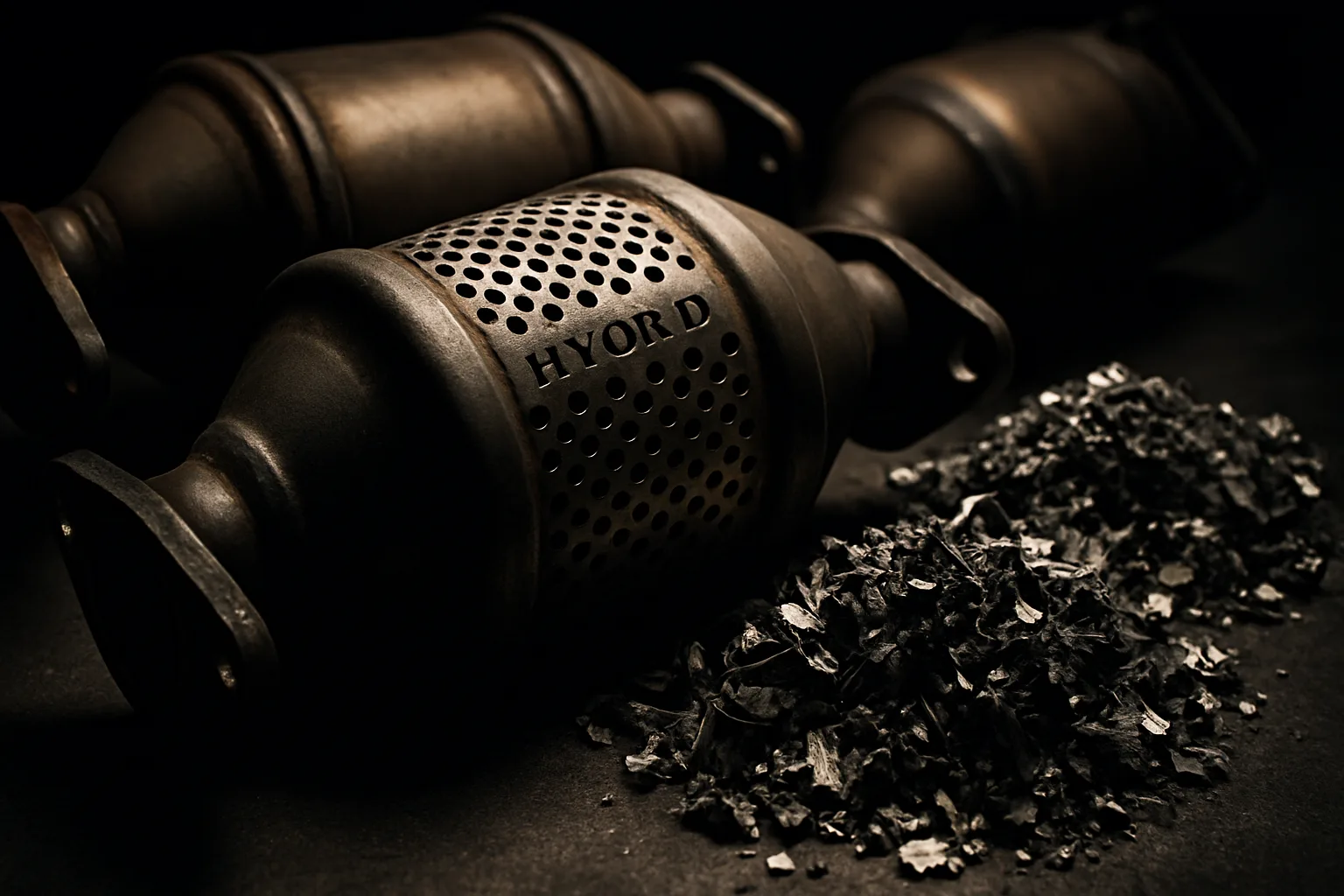
Why Hybrid Catalytic Converters Are Worth More at the Scrap Yard
Most people selling a scrap catalytic converter are leaving money on the table — not because they took a bad deal, but because they never knew what they had. Hybrid vehicle catalytic converters are among the highest-value cats in the recycling market, yet they often get tossed in with standard units and priced accordingly. If you're in Grand Rapids, Michigan, or anywhere else in the US and you've got a hybrid cat sitting in your shop or yard, this guide is for you.
Understanding catalytic converter scrap value starts with understanding what's inside the converter — and hybrid cats are built differently from the ground up. More precious metals, higher loadings, tighter tolerances. That difference translates directly into dollars when you go to sell.
What Makes a Hybrid Catalytic Converter Different
A standard gasoline vehicle runs its engine continuously. The catalytic converter reaches operating temperature quickly, stays hot, and works consistently. Hybrid vehicles are a different animal. The internal combustion engine in a hybrid cycles on and off constantly — sometimes dozens of times in a single commute. Every time it fires back up from cold, the converter has to handle a spike of unburned hydrocarbons and NOx emissions before it reaches light-off temperature.
That thermal cycling is brutal on converter substrates. To compensate, hybrid OEM converters are engineered with:
- Higher precious metal loadings — more platinum, palladium, and rhodium per unit to maintain catalytic efficiency during cold starts
- Closer-coupled positioning — mounted tight to the engine to get up to temperature faster
- Denser substrate washcoat — more surface area means more metal content per converter
- Heavier-gauge substrate — to survive repeated thermal expansion and contraction cycles
All of that engineering means one thing for scrap value: more platinum group metals (PGMs) per converter. Platinum, palladium, and rhodium are what drive cat converter value in the recycling market. More PGMs means a higher assay return, which means more money in your pocket when you sell.
Platinum, Palladium, and Rhodium — Understanding the Metals That Matter
If you want to understand why hybrid cats command a premium, you need a basic grasp of what's actually being recovered. Catalytic converters don't contain precious metals in wire or nugget form — they're dispersed across the ceramic or metallic substrate as microscopic particles embedded in the washcoat. The smelting and refining process extracts those particles and pays you based on the recovered weight.
The three metals in play are:
- Platinum (Pt) — Used for diesel oxidation and helps process hydrocarbons. Price per troy ounce fluctuates with industrial demand and mining output.
- Palladium (Pd) — The dominant metal in gasoline and hybrid converters. Palladium price today remains one of the key drivers of scrap cat value. Hybrid converters tend to carry heavier palladium loadings than standard gasoline units.
- Rhodium (Rh) — The rarest and often most valuable of the three. Even tiny amounts of rhodium have an outsized impact on the OEM converter price you'll get at the scrap level.
Hybrid cats — especially those from Toyota Prius, Honda Accord Hybrid, Ford Escape Hybrid, and similar platforms — are consistently among the top-tier units when it comes to PGM content. Processors and buyers know this. The question is whether you know it before you sell.
To stay current on market conditions, read catalytic converter pricing guides that track PGM movements and explain how spot prices translate into scrap payouts.
How Hybrid Cat Scrap Value Is Determined — and Why You Need Competition
Here's where most sellers go wrong. They call one buyer, get one number, and accept it. That number might be fair. It might not be. Without competition, you have no way to know.
Catalytic converter scrap value is calculated based on several factors:
- Vehicle make, model, and year — This tells experienced buyers the likely PGM loading based on OEM specs
- Converter serial number or part number — Cross-referenced against assay databases to estimate metal content
- Physical condition — Crushed, cut, or damaged substrates lose value; intact units command more
- Current PGM spot prices — Palladium, platinum, and rhodium prices move daily; your payout reflects the market on the day of the transaction
- Buyer's processing margin — Every buyer builds in a margin. Competition between buyers compresses that margin in your favor.
That last point is critical. A single buyer has no reason to offer you a penny more than necessary. Multiple buyers competing for the same load? That's price discovery. That's how markets are supposed to work.
Platforms like SMASH exist specifically to solve this problem. Instead of calling one buyer and hoping for the best, SMASH puts your inventory in front of vetted buyers who compete against each other. More competition can help reveal the true market value of what you're selling — including high-value hybrid cats that single buyers routinely undervalue.
Selling Scrap Catalytic Converters in Grand Rapids and Across Michigan
If you're looking to sell catalytic converters in Michigan, Grand Rapids is a solid market. There's real volume here — auto shops, salvage yards, independent collectors — and buyers know the territory. But volume doesn't automatically mean competitive pricing. Plenty of sellers in Grand Rapids are still getting a single quote from a single buyer and calling it done.
Whether you're an auto shop sitting on a pile of cats from hybrid trade-ins, or an individual who pulled a Prius converter and wants to know what it's worth, the process should always start the same way: identify what you have before you price it.
Steps to maximize your payout in the Michigan market:
- Photograph the converter — both ends and the serial/part number stamped on the shell
- Look up the serial number — many online tools and platforms can give you a reference range for that specific unit
- Check current PGM prices — palladium price today is the biggest variable; don't sell into a dip if you can hold
- Get multiple quotes — this is non-negotiable if you want to know you're getting fair value
- Use an online platform — selling scrap metal online expands your buyer pool beyond your local market
Grand Rapids sellers who go online consistently access buyers they'd never reach through a local phone call. That expanded pool is what generates real competition — and real price discovery.
SMASH makes it straightforward to sell catalytic converter for cash through a competitive auction process with vetted buyers, photo documentation, and full transparency on what you're selling and what you're getting. No subscription fees. SMASH only wins when you do.
Ready to find out what your hybrid cats are actually worth? Get the best catalytic converter price today by submitting your inventory for competitive bids.
Mistakes That Kill Your Catalytic Converter Scrap Value
Knowing you have a high-value hybrid cat is half the battle. Protecting that value through the sale process is the other half. These are the most common mistakes that cost sellers money.
Selling without the serial number. The part number on the converter shell is how buyers identify the unit against assay data. Without it, buyers default to a conservative estimate — which means they low-ball you. Always photograph and record the serial before selling.
Cutting or damaging the substrate. A cracked or crushed substrate loses metal during the extraction process. Buyers account for that loss in their offer. Handle hybrid cats carefully — the substrate is fragile.
Selling in a down market without checking prices first. PGM prices move. Palladium in particular has a history of sharp swings. If you're not time-pressured, monitor the market. A short wait can meaningfully change your payout.
Treating all buyers as equal. They're not. Some buyers specialize in hybrid and high-grade converters and will pay accordingly. Others lump everything together. Finding the right buyer matters — which is exactly why platforms built around competition between vetted buyers exist.
Accepting the first number without comparing. One quote is not a market. It's one data point. You need at least three before you can start evaluating whether an offer is fair. Use every tool available — including checking current catalytic converter prices online before you pick up the phone.
Frequently Asked Questions
Q: Why do hybrid catalytic converters have higher scrap value than regular converters?
Hybrid vehicles put more stress on their catalytic converters because the engine cycles on and off repeatedly. OEMs compensate by loading hybrid converters with more platinum, palladium, and rhodium — the precious metals that drive scrap value. More PGMs means a higher payout when the converter is refined and processed.
Q: How does palladium price today affect what I get paid for my scrap catalytic converter?
Palladium is the primary precious metal in most gasoline and hybrid catalytic converters. Buyers calculate their offers based on current spot prices for platinum, palladium, and rhodium. When palladium prices are up, your payout goes up. When they drop, so does the offer. Always check current PGM prices before you sell — timing matters.
Q: Is it worth selling catalytic converters online instead of at a local yard in Grand Rapids?
For high-value units like hybrid converters, yes — selling online typically expands your buyer pool significantly. More buyers means more competition, and more competition can reveal better market pricing. Local yards in Grand Rapids may offer convenience, but they can't always match the price discovery that comes from a competitive online platform.
Q: What information do I need to sell a catalytic converter for cash?
At minimum, you need the serial or part number stamped on the converter shell, clear photos of both ends and the substrate, and the vehicle make, model, and year the converter came from. Platforms like SMASH also support VIN lookup and photo documentation to streamline the process and give buyers confidence in what they're bidding on.
Q: How do I know if I'm getting a fair price for my catalytic converter scrap value?
The only real way to know is to get multiple quotes. One offer tells you nothing about the market — it only tells you what one buyer is willing to pay that day. Use an online platform that puts your inventory in front of competing buyers, check current PGM spot prices, and never sell based on a single phone call.
If you're sitting on hybrid cats and wondering what they're actually worth, stop guessing. The metals inside those converters are real, the market is real, and getting competitive bids is simpler than it's ever been. Get the best catalytic converter price today — submit your inventory, get competing offers, and sell with confidence.
Disclaimer: Catalytic converter prices fluctuate daily based on PGM spot markets. All values referenced in this article are general in nature. Always verify current rates before selling.
Follow SMASH on LinkedIn for ongoing scrap metal market updates, PGM price movements, and industry insights that help you sell smarter.