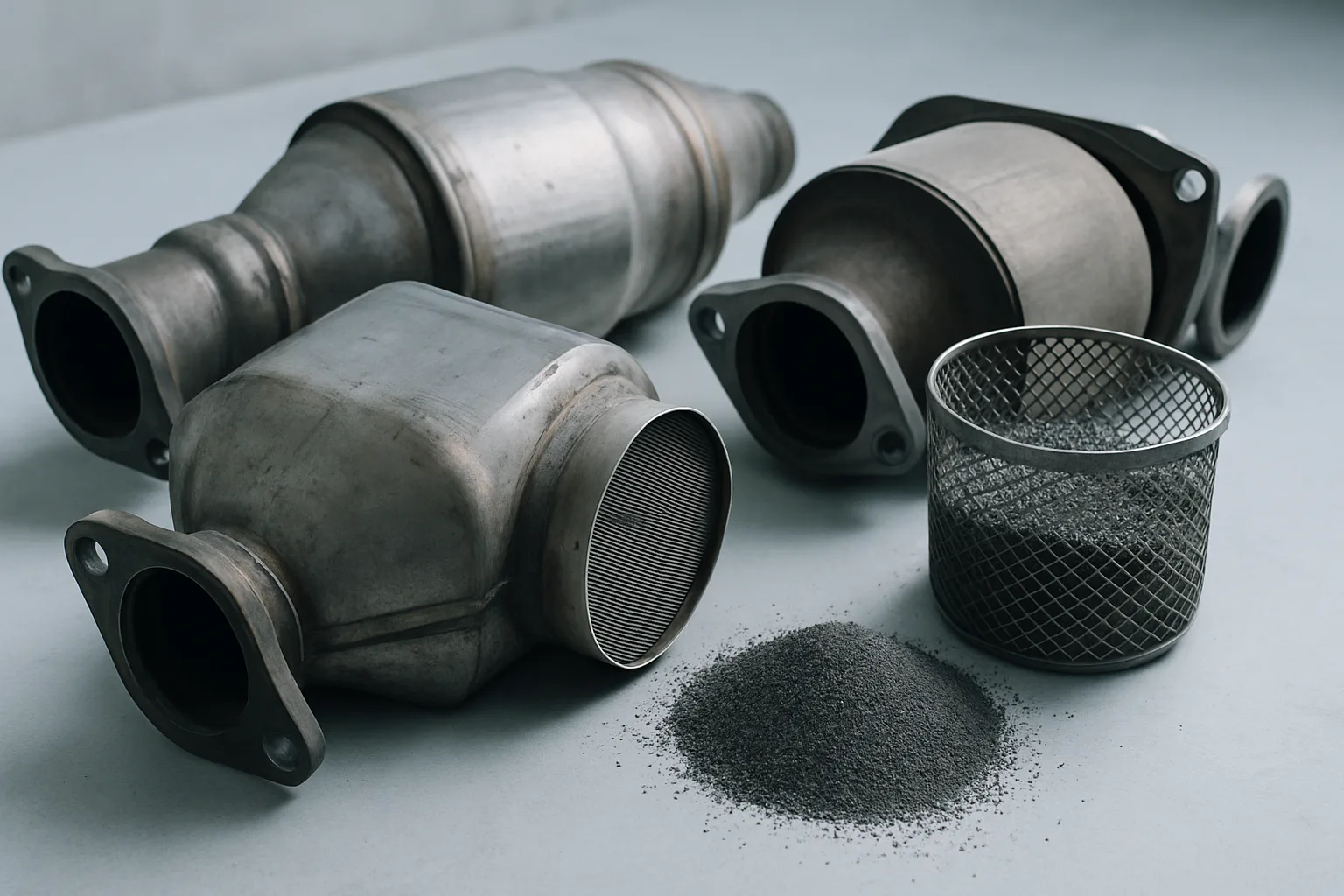
Catalytic converter scams cost sellers thousands of dollars every year — and most victims never see it coming. You show up with a load of cats, get a number that sounds reasonable, and walk away thinking you did okay. Then you find out the buyer graded half your converters down, paid you on a fake price list, or straight-up switched out your cores before weighing them. In a market where catalytic converter prices today can swing hard based on platinum, palladium, and rhodium spot prices, one dishonest transaction can mean hundreds — or thousands — of dollars left on the table.
Whether you're an auto shop in Long Beach clearing out a back room full of cats, an independent scrapper building a steady side income, or a recycling yard looking to move volume, you need to know how this market gets manipulated — and how to protect yourself. Let's break it down.
---The Most Common Catalytic Converter Buying Scams in 2026
The scrap catalytic converter market runs on trust and information. Buyers who have more of both tend to win. Sellers who are short on either tend to get burned. Here are the scams you're most likely to run into right now.
1. The Fake or Outdated Price List
Some buyers hand you a laminated sheet and call it their "current price list." The problem? That list might be weeks or months old — or it was never based on real market data to begin with. Platinum, palladium, and rhodium prices move constantly. A price list that isn't updated daily is already wrong. A buyer who uses a static list has a built-in excuse to pay you less than the real market value, and you have no easy way to challenge it.
2. Grade-Down Switching
You bring in a load of OEM converters — Honda, Toyota, Ford. Good stuff. The buyer looks them over, makes a note, and comes back with a number. But somewhere in that process, your high-grade cats got reclassified as low-grade or "foil" units. Maybe they swapped your physical units during sorting. Maybe they just changed the numbers on paper. Either way, you get paid for cheaper material than you actually delivered. This is harder to prove after the fact, which is exactly why it works.
3. Moisture, Dirt, and Weight Manipulation
Some buyers weigh your load before letting it dry out or clean it up. Wet cats, mud-caked units, or cores stuffed with debris all weigh more. You might think you're getting paid by weight, but if the buyer is using a manipulated gross weight and applying their per-pound rate, the math isn't working in your favor. A legitimate buyer accounts for tare weight properly and won't pad it.
3. Bait-and-Switch Verbal Quotes
You call a buyer, describe your load, and get a quote over the phone. You drive across town — or in some cases, across California — and suddenly the number changes. "Oh, those aren't the model we thought." "These have been cracked." "The market moved this morning." Sometimes the market does move. But if the verbal quote drops every single time you show up, that's not market volatility. That's a pattern, and it's designed to exploit the fact that you've already made the trip.
4. Unlicensed or Unvetted Buyers
California has specific regulations around secondary metals dealers, and Long Beach in particular has seen enforcement activity around unlicensed purchasing operations. An unlicensed buyer isn't just a legal gray area for them — it's a risk for you. If the transaction gets flagged, you could face complications even if you did nothing wrong. Worse, unvetted buyers have zero accountability. There's no recourse if they underpay, misrepresent grades, or disappear with your material.
Why Long Beach Sellers Are Especially Exposed
Long Beach sits in one of the densest auto recycling corridors in the country. The port, the salvage yards, the volume of vehicles — it all adds up to a high-concentration scrap cat market. That volume is a double-edged sword. More buyers means more competition, which should mean better prices. But it also means more room for bad actors to operate.
Sellers in Long Beach and across Southern California often have access to strong loads — late-model OEM converters, high-PGM units off Japanese imports, quality domestic cores. That makes them targets. A buyer who can talk a well-stocked seller into a bad deal on a premium load wins big. If you're selling in this market, knowing the real value of your cats before you walk into any yard is non-negotiable. To get the best catalytic converter price today, you need competitive offers — not one buyer's opinion of what your load is worth.
How to Protect Yourself: What Legitimate Transactions Look Like
Knowing the scams is half the battle. The other half is building a process that protects you before, during, and after the sale. Here's what that looks like in practice.
- Document everything before you hand anything over. Photo your load. Note the serial numbers on high-value converters. A quick phone camera log of your cats before delivery gives you something to reference if a dispute comes up later.
- Know your units before you go. Research the converters in your load. Honda, Toyota, and Ford units vary wildly in PGM content. A unit with strong rhodium concentration is worth significantly more than a similar-looking foil cat. If you can identify your converters, you can push back when a buyer tries to grade them down.
- Verify licensing. In California, secondary metals dealers must be licensed. Ask for proof. A legitimate operation won't hesitate to show it.
- Get quotes in writing before you commit. A verbal quote that changes at the scale isn't a quote — it's bait. Any serious buyer will confirm pricing before you unload.
- Use competitive bidding. One quote from one buyer is just their opinion. Multiple quotes from vetted buyers reveal the actual market. That's price discovery, and it's the single most effective protection against being lowballed.
For yards and shops moving volume, a catalytic converter auction format takes the guesswork out entirely. When multiple buyers compete for your load, the price finds its own level. You don't have to negotiate. You don't have to guess. The market tells you what your cats are worth. Read catalytic converter pricing guides to understand how auction-based selling stacks up against single-buyer transactions.
How SMASH Addresses the Trust Problem in Cat Converter Sales
Most of the scams described above survive because sellers are operating blind. They don't know what their cats are worth. They don't know who's buying them. And they have no paper trail if something goes wrong. SMASH — North America's B2B scrap metal auction platform — is built specifically to close those gaps.
SMASH connects sellers with vetted buyers through a documented, transparent auction process. Every load gets photo documentation. Inventory is tracked with serial numbers where applicable. Buyers on the platform are pre-qualified — no anonymous operators, no unlicensed yards. When your load goes to auction, you're not relying on one buyer's assessment. You're letting the market decide. That's how SMASH scrap handles the trust problem: not with promises, but with structure.
For catalytic converter buyers California-side, the SMASH platform also handles documentation that makes compliance straightforward. Auto-invoicing, packing lists, and transaction records — all built in. The days of a handshake deal and a cash envelope are fading fast, especially in a state like California where regulatory scrutiny on secondary metals is increasing. Platforms like SMASH make it easier to stay clean, stay documented, and stay competitive.
There are no subscription fees. SMASH only earns when you sell. That alignment matters — a platform that only wins when you win has a direct incentive to get you the best outcome. To check current catalytic converter prices and understand what your load should realistically fetch, start with real market data before you approach any single buyer.
Red Flags to Walk Away From Immediately
Some situations are worth cutting short before they cost you money. If you encounter any of the following, trust your instincts and find a different buyer.
- A buyer who won't let you observe the grading or sorting process
- Cash-only operations with no documentation or receipts
- Price lists that haven't been updated in the last week
- Pressure to sell immediately without time to compare offers
- Buyers who change the quote after you've arrived with your load
- Operations without a physical address or verifiable licensing
- Anyone who asks you to leave your load "for testing" before agreeing on a price
These aren't edge cases. They're common. And they're more common in high-volume markets like Long Beach and the broader Southern California corridor, where the throughput is high enough to obscure patterns that would be obvious in a smaller market.
Disclaimer: Catalytic converter prices fluctuate based on platinum, palladium, and rhodium spot prices, load composition, converter grade, and market demand. Always verify current rates before selling. The price you receive may vary from published reference prices.
The Bottom Line on Staying Safe in the Cat Market
The catalytic converter market in 2026 is more regulated than it was five years ago, but enforcement is uneven and bad actors adapt quickly. Your best protection isn't hoping a buyer is honest — it's building a process that doesn't depend on that hope. Document your loads. Know your units. Get multiple quotes. Use platforms that vet their buyers and create a paper trail by default.
If you're in Long Beach, California, or anywhere across the US and you're ready to stop guessing what your cats are worth, there's a better way to sell. Get the best price for your catalytic converter — get a free quote at best-catalytic-converter-price.com and find out what real market competition looks like.
---Frequently Asked Questions
Q: How do I know if I'm getting a fair catalytic converter price today?
The best way to verify a fair price is to get multiple quotes from different buyers before committing. Catalytic converter prices today are tied to live platinum, palladium, and rhodium spot prices, so a legitimate buyer should be able to explain how they're calculating your offer. If a buyer can't or won't break down their pricing, that's a red flag.
Q: Are there specific scams targeting catalytic converter sellers in Long Beach?
Long Beach and the broader Southern California corridor have a high concentration of buyers, which creates more opportunity for grade-down switching, fake price lists, and unlicensed operations. California requires secondary metals dealers to be licensed — always verify before you sell. Sellers in Long Beach benefit from using competitive platforms that vet buyers upfront.
Q: What makes a catalytic converter auction safer than selling to a single buyer?
A catalytic converter auction puts multiple vetted buyers in competition for your load. That competition reveals the real market price rather than letting a single buyer set the terms. Documented auction platforms also create a transaction record that protects you if a dispute arises later.
Q: What is the best catalytic converter price I can realistically expect in California?
The price depends heavily on the converter type, its PGM content (platinum, palladium, rhodium levels), and current spot prices for those metals. High-grade OEM converters from Japanese and domestic vehicles typically return more than aftermarket or foil units. Always check current market rates and get competing offers before you sell — no single buyer's quote should be the only number you see.
Q: Does SMASH work for individual sellers or just scrap yards?
SMASH operates as a B2B scrap metal auction platform, meaning it's built for businesses — recycling yards, auto shops, and volume sellers. If you're moving a significant load of catalytic converters regularly, the platform's vetted buyer network and documented process are designed for exactly that use case. Reach out directly to find out if your volume qualifies.
---Stay sharp on market trends and industry news — follow SMASH on LinkedIn at linkedin.com/company/scrap-metal-auction-sales-hub for regular updates on scrap metal prices, regulations, and best practices across North America.
```