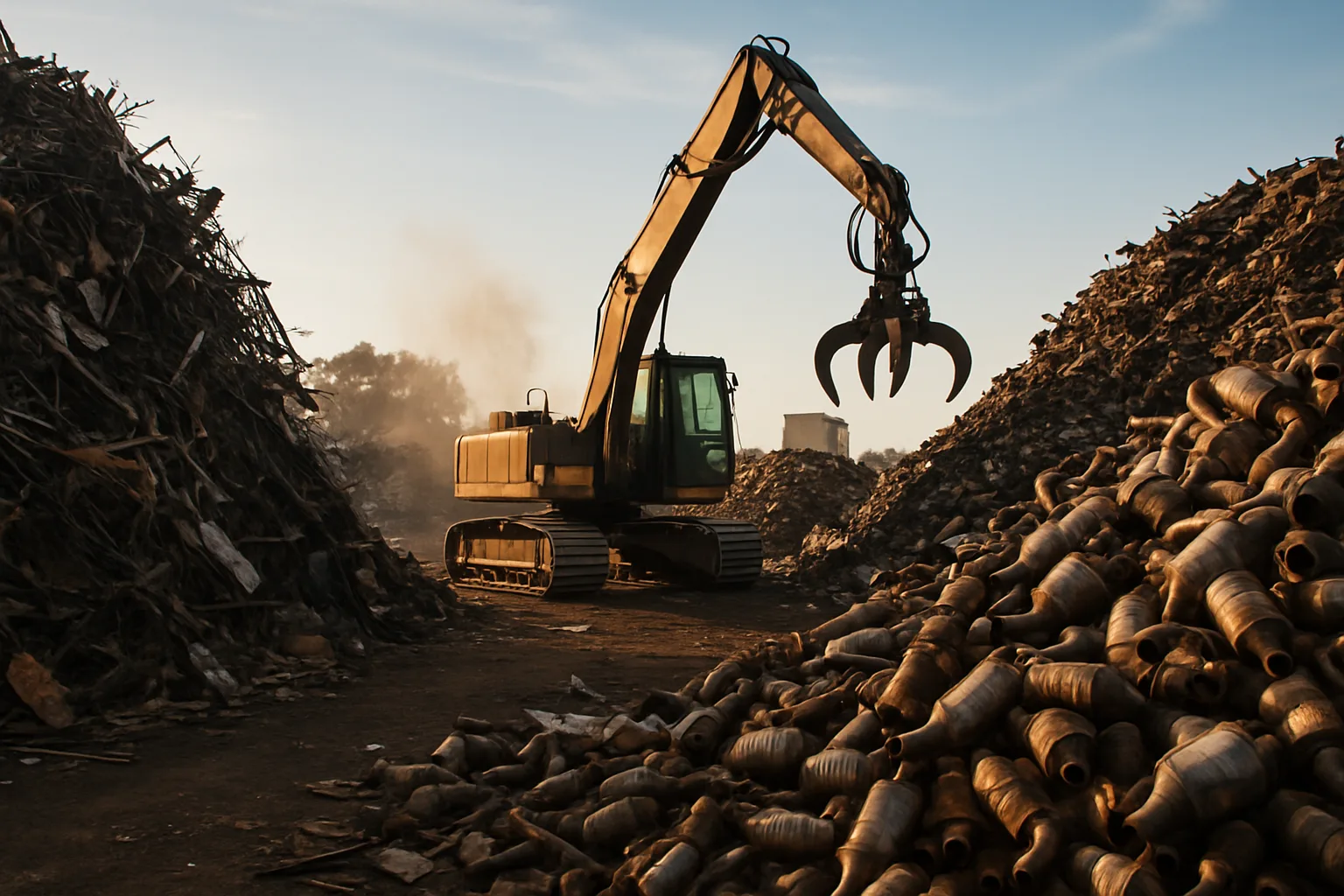
Why Catalytic Converter Prices Change Every Single Day
You checked the price on your scrap catalytic converters last Tuesday. Today, that number looks completely different. That's not a glitch — that's the market doing exactly what it does. OEM catalytic converter value is directly tied to the spot prices of platinum, palladium, and rhodium, three of the most volatile precious metals on the planet. When those metals move, your converter moves with them.
If you're sitting on a stack of cats in Milwaukee and wondering whether to sell now or wait, you need to understand what's actually driving the daily swings. Guessing doesn't pay. Understanding the market does.
What Actually Drives Catalytic Converter Prices Today
Three metals live inside every catalytic converter: platinum, palladium, and rhodium. These aren't just scrap metals — they're industrial commodities traded on global exchanges. Catalytic converter prices today are essentially a reflection of where those metals closed yesterday, adjusted for processing yield and market demand from refiners.
Here's what moves those metals on any given day:
- Automotive production forecasts. More cars being built means more demand for PGMs (platinum group metals). When automakers cut output, demand softens and prices can drop.
- Mining disruptions. South Africa produces the majority of the world's platinum and palladium. A labor strike, power outage, or logistical problem there creates supply pressure — and prices react fast.
- Currency fluctuations. PGMs are priced in USD. When the dollar strengthens or weakens against the rand or ruble, it affects what refiners are willing to pay.
- EV adoption rates. The shift toward electric vehicles reduces long-term demand for catalytic converters. The market watches EV penetration numbers closely, especially as 2026 production data continues to roll in.
- Refiner demand cycles. Refiners buy in batches. When a major refiner is stocked up, they back off pricing. When they need material, they get competitive. Timing matters.
None of this is random. But it moves fast. A single piece of geopolitical news can shift rhodium by hundreds of dollars per troy ounce in a day. Your converter's value rides that wave whether you're paying attention or not.
OEM Catalytic Converter Value vs. Aftermarket — Why It Matters
Not all cats are created equal. This is one of the most important distinctions in the scrap catalytic converter world, and it's one that costs uninformed sellers real money.
OEM catalytic converter value is typically higher than aftermarket because OEM units contain a higher loading of precious metals. Automakers spec their own catalytic converters to meet strict emissions standards, which means more PGM material baked into the substrate. Aftermarket replacements — the ones you buy at an auto parts store — are built to be cheap. Less platinum, less palladium, less rhodium. That translates directly to a lower scrap payout.
When a buyer quotes you a price, they need to know:
- Is this an OEM or aftermarket unit?
- What vehicle did it come off?
- Is the serial number or part number readable?
- Is the substrate intact or damaged?
An OEM converter off a 2020 Ford F-150 can be worth multiples of what an aftermarket replacement off the same truck is worth. The difference isn't cosmetic — it's chemical. Buyers who know what they're looking at will pay accordingly. Buyers who don't will lowball you and hope you don't notice. That's exactly why used catalytic converter price lookup tools and documented inventory exist — to protect sellers who know their material.
Scrap Metal Inventory Management: Stop Guessing, Start Documenting
Here's where most sellers — auto shops, scrap collectors, and small yards across Wisconsin — leave money on the table. They accumulate converters, make a phone call, accept the first number they hear, and move on. That's not selling. That's donating.
Proper scrap metal inventory management changes the equation completely. When you can tell a buyer exactly what you have — OEM vs. aftermarket, part numbers, vehicle make and model, photo documentation, substrate condition — you take away their ability to pad a lowball offer with "we don't know what we're looking at" uncertainty.
Documented inventory does a few critical things for you:
- It removes ambiguity. Buyers price in risk. If they can't verify what you have, they assume the worst and price accordingly. Clear documentation eliminates that risk premium.
- It enables comparison. When you have a complete packing list, multiple buyers can quote the same material. Apples to apples. No one can hide behind "well, we'd have to see it."
- It creates accountability. If a buyer changes their number after receiving your material, you have documentation to push back. No documentation means no leverage.
- It speeds up transactions. Buyers move faster on clean, documented loads. Less back and forth means faster payment.
Platforms like find the best price for your scrap on SMASH are built specifically to make this documentation process structured and useful — not just a box to check. When buyers can see clearly what they're bidding on, competition increases. More competition means better price discovery. That's not a theory. That's how markets work.
How the SMASH Auction Model Applies to Catalytic Converter Pricing
The old way of selling scrap cats looks like this: you call one buyer, they give you a number, you take it or spend another hour calling around. By the time you've made three calls, the market may have shifted. You're still guessing.
The SMASH scrap metal auction model flips that. Instead of one buyer, one price, you put your documented load in front of vetted buyers who are actively competing. Competition can help reveal the market. More buyers bidding on the same material means better price discovery — not a guaranteed higher number, but a more accurate one.
For sellers in Milwaukee and across Wisconsin, this matters because the local buyer pool isn't always the most competitive. Geography used to determine your ceiling. A platform that connects you to buyers across North America removes that ceiling. Your OEM catalytic converter value isn't limited by who happens to pick up the phone in your zip code.
SMASH also handles auto-invoicing and documentation so you're not piecing together paperwork after the fact. No subscription fees. The platform only wins when you do. If you're selling volume — multiple loads per month, a steady stream of cats from a busy shop — that structure matters a lot. To get the best catalytic converter price today, you need more than one buyer in your corner.
What Milwaukee Sellers Should Know About Timing the Market
You can't perfectly time a commodity market. Anyone who tells you otherwise is selling something. But you can make smarter decisions based on observable signals.
A few practical guidelines for sellers in Milwaukee and the broader Wisconsin market:
- Watch the Monday open. PGM markets often see volatility early in the week as traders react to weekend news. If you're planning to sell, Tuesday or Wednesday midweek tends to show more price stability.
- Don't sit on inventory too long waiting for a spike. Rhodium has seen dramatic swings over the past several years, but extended holds come with their own risks — damage, theft, and the opportunity cost of capital tied up in idle inventory.
- Sell in documented loads, not piecemeal. A buyer will pay more per unit when they're acquiring a clean, verified load of 20 OEM converters than when they're picking up one at a time with no documentation.
- Use price lookup tools before you call anyone. Know your starting point. If you don't know what your material is worth in today's market, you're negotiating blind.
The read catalytic converter pricing guides available through this site are a solid place to start building that baseline knowledge. Don't rely on what you heard last month. Catalytic converter prices today reflect today's PGM market, not last quarter's.
If you're looking for local options to benchmark against, Milwaukee scrap metal services can give you a regional reference point as part of a broader strategy — but never limit yourself to a single local quote when you have the option to compete the material nationally.
The bottom line: OEM converter value is real, it's significant, and it changes daily. Document your inventory. Use competitive platforms. Don't accept the first number. And when you're ready to move a load, check current catalytic converter prices before you pick up the phone.
Disclaimer: Catalytic converter prices fluctuate daily based on PGM spot prices and market conditions. Always verify current rates before selling.
Frequently Asked Questions
Q: What determines OEM catalytic converter value compared to aftermarket units?
OEM catalytic converters are manufactured to meet original factory emissions specs, which requires a higher loading of platinum, palladium, and rhodium in the substrate. Aftermarket converters are built to lower cost tolerances, which means less precious metal content and a significantly lower scrap value. Always identify whether your converter is OEM before accepting any quote.
Q: Why do catalytic converter prices change so frequently?
Prices are directly tied to the daily spot prices of platinum, palladium, and rhodium on global commodity markets. These metals respond to automotive industry demand, mining output, geopolitical events, and currency movements — all of which can shift significantly within a single trading day. Checking prices on the day you plan to sell is essential.
Q: Where can I sell scrap catalytic converters in Milwaukee, Wisconsin?
There are local scrap yards and buyers throughout the Milwaukee area, but limiting yourself to local options often means accepting below-market pricing. Using a competitive platform like SMASH exposes your material to vetted buyers across North America, which can lead to better price discovery than a single local quote. Local buyers are a reference point — not necessarily your best offer.
Q: How do I look up the value of a used catalytic converter by part number?
Most converters have a serial number or part number stamped on the body or visible on the end cap. Used catalytic converter price lookup tools use these numbers to identify the vehicle, estimated PGM content, and market value based on current spot prices. Documenting this information before contacting buyers puts you in a much stronger negotiating position.
Q: Is it worth holding catalytic converters and waiting for higher PGM prices?
It's a reasonable question, but carrying inventory has real costs — storage risk, theft exposure, and capital tied up in material that isn't earning. Unless you have strong conviction about near-term price direction, a competitive auction process is typically a more reliable way to maximize value than trying to time the market.
Ready to stop guessing and start selling smarter? get the best catalytic converter price today with a free quote — know your number before you make a single call.
Follow SMASH on LinkedIn for daily scrap market insights, PGM price updates, and industry news that actually affects your bottom line.