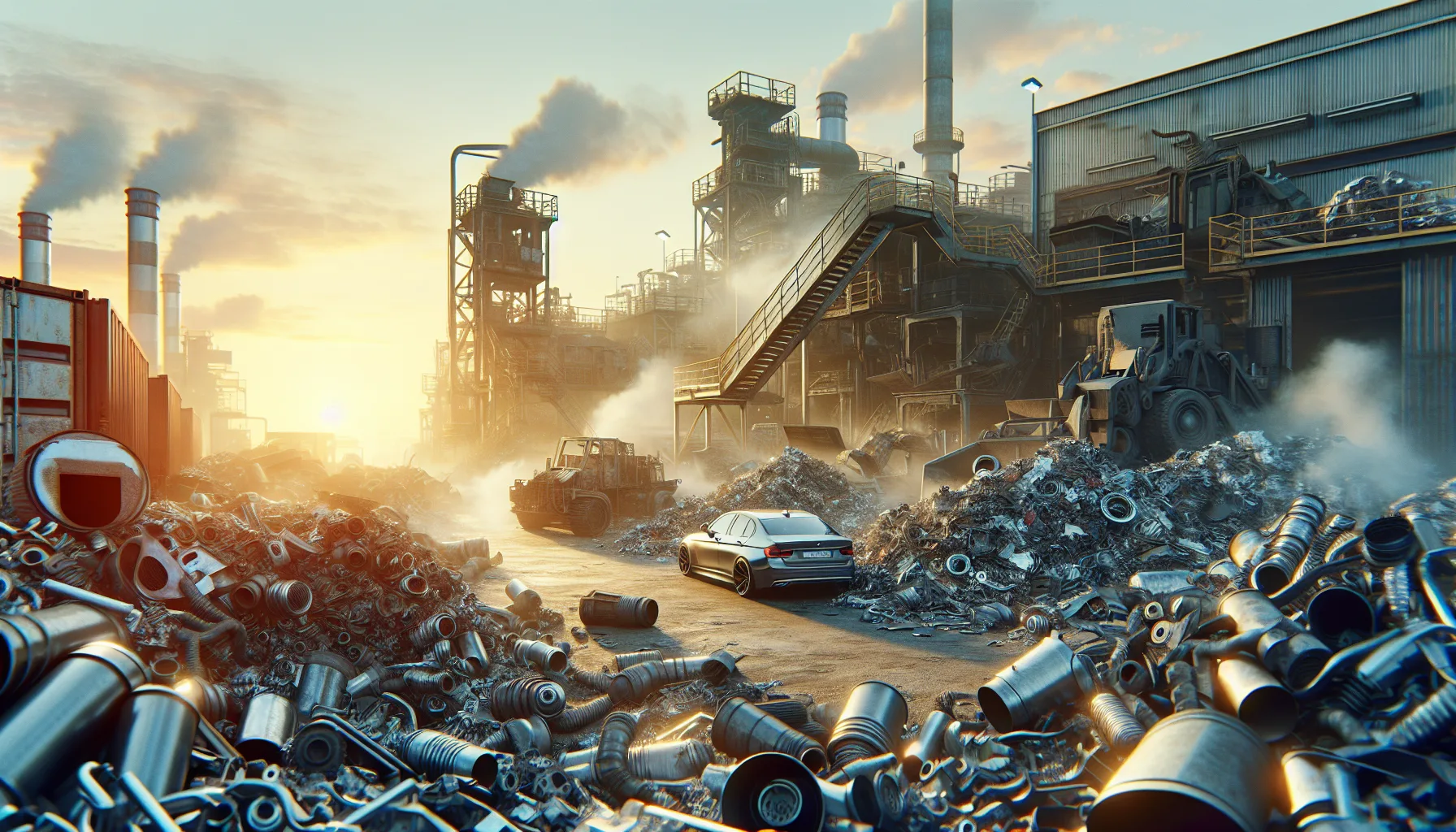
Understanding the Complete Catalytic Converter Journey: From Manufacturing to Precious Metal Recovery
The journey of a catalytic converter spans decades, from its initial manufacturing with precious metals to its final destination as recovered platinum, palladium, and rhodium. Understanding this lifecycle helps explain why catalytic converter prices today remain consistently high and why sellers in Orlando and across Florida can command premium prices for their scrap units.
A catalytic converter's value doesn't diminish when it stops working in your vehicle. The precious metals inside actually become more accessible during the recycling process. This creates a thriving secondary market where platforms like SMASH connect sellers with buyers who understand the true value of these components.
Each stage of a converter's lifecycle influences its final scrap value. From the original equipment manufacturer specifications to the recycling facility's extraction methods, multiple factors determine what you'll receive when you get the best catalytic converter price today.
Stage 1: Manufacturing and Installation — Setting the Foundation for Future Value
Catalytic converters begin their journey in specialized manufacturing facilities where precious metals are carefully applied to ceramic or metallic substrates. The amount of platinum, palladium, and rhodium varies significantly based on the vehicle's engine size, emissions requirements, and manufacturer specifications.
OEM converters typically contain higher concentrations of precious metals compared to aftermarket alternatives. This difference becomes crucial years later when determining scrap value. A Toyota Prius converter manufactured in 2020 contains substantially more precious metal than a generic replacement unit installed in 2024.
Vehicle manufacturers strategically place converters in the exhaust system where they'll operate at optimal temperatures. This positioning affects how the precious metals wear and distribute over time, ultimately impacting recovery rates during recycling.
The initial precious metal loading determines a converter's maximum potential value. Even when these components fail mechanically, the metal content remains relatively stable, preserving most of the unit's inherent worth.
Stage 2: Active Service Life — How Operating Conditions Affect Future Scrap Value
During active service, catalytic converters process millions of exhaust cycles while maintaining their precious metal content. Orlando's warm climate and stop-and-go traffic patterns create specific operating conditions that influence how these metals distribute within the substrate.
Highway driving versus city driving affects metal migration patterns. Converters from vehicles primarily used on Florida's interstate system often show different wear characteristics compared to those from urban delivery vehicles. These variations impact recovery efficiency but rarely eliminate the metals entirely.
Fuel quality and engine maintenance directly influence converter longevity. Well-maintained vehicles typically produce converters with better-preserved precious metal distribution, potentially commanding higher prices in the scrap market.
Even failed converters retain significant value. Mechanical failure rarely means precious metal loss — the metals simply become less effective at catalyzing reactions while remaining available for recovery.
Stage 3: Removal and Collection — Entering the Scrap Market
When catalytic converters reach the end of their service life, they enter the scrap market through various channels. Auto repair shops in Orlando accumulate units from routine maintenance and emission system repairs. Individual vehicle owners remove converters during engine swaps or vehicle retirement.
Professional scrap collectors understand that timing affects pricing. Catalytic converter prices today fluctuate based on precious metal commodity markets, making strategic selling decisions important for maximizing returns.
SMASH has revolutionized this collection stage by connecting sellers directly with qualified buyers across Florida. Instead of accepting whatever local scrap yards offer, sellers can now access competitive bidding that reflects true market values.
The removal process itself doesn't affect precious metal content, but proper handling prevents physical damage that could complicate processing. Clean cuts and intact honeycomb structures facilitate easier evaluation and better pricing.
Stage 4: Evaluation and Pricing — Determining True Market Value
Professional buyers evaluate catalytic converters using sophisticated analysis methods that go far beyond visual inspection. X-ray fluorescence technology identifies specific precious metal concentrations, while database comparisons verify OEM specifications against actual units.
The best catalytic converter price Orlando buyers achieve comes from understanding these evaluation processes. Units with clear manufacturer markings and intact serial numbers typically receive more accurate assessments, leading to better pricing.
Market dynamics influence pricing decisions. A catalytic converter auction environment allows sellers to benefit from competitive bidding, often resulting in prices significantly above standard scrap yard offers. SMASH facilitates this competitive process by connecting sellers with multiple qualified buyers.
Bulk sellers often receive premium pricing due to processing efficiencies. Catalytic converter buyers Florida operations frequently offer better rates for auto shops and collectors who can provide consistent volumes.
Geographic factors also influence pricing. Orlando's position as a major metropolitan area provides access to multiple buyers and processing facilities, creating natural price competition that benefits sellers throughout the region.
Stage 5: Processing and Precious Metal Recovery — Completing the Cycle
The final stage involves sophisticated processing operations that extract precious metals from converter substrates. These facilities use high-temperature furnaces and chemical processes to separate platinum, palladium, and rhodium from ceramic and metallic components.
Recovery rates vary based on processing technology and converter condition. Modern facilities achieve extraction rates exceeding 95% for most precious metals, ensuring maximum value realization from each unit processed.
The recovered metals enter global commodity markets where they're purchased by manufacturers for new catalytic converter production. This creates a circular economy where today's scrap converters become tomorrow's emission control systems.
Processing facilities typically operate on regional scales due to transportation costs and environmental regulations. This geographic concentration means sellers benefit from understanding which buyers have direct relationships with processing facilities versus those who act as intermediaries.
Advanced processing techniques continue evolving, potentially improving recovery rates and creating additional value streams from converter recycling. These improvements gradually translate into better pricing for sellers who understand market dynamics.
When you're ready to complete your catalytic converter's lifecycle journey, platforms like check current catalytic converter prices help ensure you receive fair market value. You can also read catalytic converter pricing guides to better understand current market conditions. For Canadian readers dealing with end-of-life vehicles, you can get free scrap car pickup across Canada.
Frequently Asked Questions
Q: How do catalytic converter prices today compare to precious metal commodity prices?
Catalytic converter prices closely follow platinum, palladium, and rhodium markets but include processing costs and profit margins. Current scrap converter prices typically represent 60-80% of the precious metal content value, depending on processing efficiency and market competition.
Q: What makes Orlando catalytic converter buyers offer different prices?
Orlando buyers vary in their processing relationships, volume capabilities, and evaluation technologies. Some buyers process locally while others ship to distant facilities, affecting their pricing ability. Competition among multiple buyers in the Orlando market generally benefits sellers.
Q: Do older catalytic converters contain more valuable metals?
Older OEM converters often contain higher precious metal concentrations than newer units due to evolving manufacturing efficiency and emissions standards. However, condition and manufacturer specifications matter more than age alone in determining scrap value.
Q: How does SMASH scrap compare to traditional scrap yards for catalytic converter sales?
SMASH connects sellers with specialized catalytic converter buyers who understand precious metal values, while traditional scrap yards often offer generic pricing. This specialized focus typically results in significantly higher offers for sellers.
Q: What happens to the non-metal parts of catalytic converters during recycling?
Ceramic substrates and steel housings are separated during processing and typically recycled through standard industrial channels. The steel components have modest scrap value, while ceramics may be processed for rare earth element recovery or disposed of according to environmental regulations.
Understanding the complete lifecycle of catalytic converters helps you make informed decisions about timing and buyer selection. Whether you're an auto shop in Orlando accumulating multiple units or an individual with a single converter, knowing these market dynamics ensures you receive appropriate compensation for your valuable scrap materials. Get the best price for your catalytic converter — get a free quote at best-catalytic-converter-price.com.