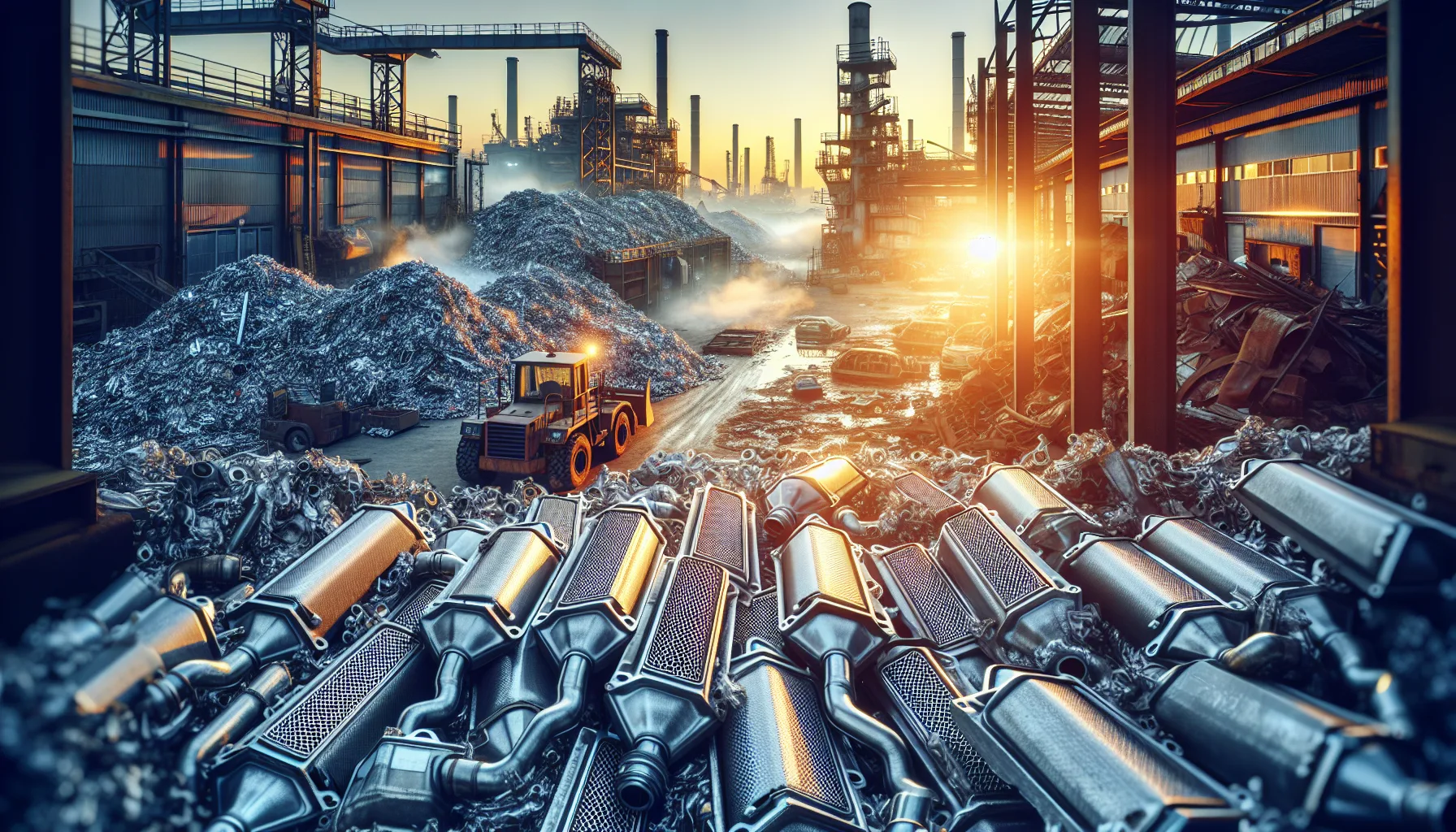
Understanding the Value Gap: OEM vs Aftermarket Catalytic Converters
When checking catalytic converter prices today, you'll quickly discover that not all converters are created equal. OEM (Original Equipment Manufacturer) catalytic converters command significantly higher prices than aftermarket alternatives — sometimes three to five times more. This dramatic price difference stems from the precious metal content, manufacturing standards, and market demand that separate these two categories.
For sellers in Orlando looking to maximize their return, understanding these distinctions becomes crucial. Whether you're an auto shop with accumulated inventory or an individual with a damaged converter, knowing why OEM units fetch premium prices helps you make informed selling decisions. The best catalytic converter price Orlando dealers recognize these differences and price accordingly.
The precious metals inside — platinum, palladium, and rhodium — drive most of the value. OEM converters typically contain 3-7 grams of these metals combined, while aftermarket units often contain 1-3 grams. This difference alone explains why OEM Toyota Prius converters sell for $800-1200, while aftermarket replacements bring $150-300.
Platforms like SMASH make it easier to connect with buyers who understand these value distinctions. Rather than accepting generic "scrap metal" prices, sellers can access specialized catalytic converter auction markets where OEM units receive proper valuation.
Why OEM Converters Contain More Precious Metals
Automakers design OEM catalytic converters to last the vehicle's lifetime while meeting strict emissions standards. This requires higher concentrations of platinum, palladium, and rhodium — the three precious metals that actually clean exhaust gases. Ford, Toyota, Honda, and other manufacturers specify precise metal formulations for each vehicle model.
These specifications aren't arbitrary. Each engine produces different exhaust compositions requiring tailored catalyst formulations. A Toyota Camry's 2.4L engine needs different precious metal ratios than a Ford F-150's V8. OEM converters contain exactly what each application demands — no shortcuts.
Aftermarket manufacturers face different constraints. They must produce converters that fit multiple vehicle applications while maintaining profitable margins. This often means using minimum precious metal amounts that still meet EPA requirements. The result: functional converters with significantly less valuable content.
For Orlando sellers, this translates to real money. An OEM Honda Accord converter might contain $400-600 worth of precious metals at current market rates. Its aftermarket replacement? Perhaps $80-150 in metal value. When you get the best catalytic converter price today, these distinctions matter enormously.
How to Identify OEM vs Aftermarket Converters
Distinguishing OEM from aftermarket converters requires examining several key indicators. The part number provides the most reliable identification method. OEM converters display manufacturer part numbers — Toyota uses numbers starting with specific prefixes, while Honda employs different coding systems.
Physical construction offers additional clues. OEM converters typically feature heavier gauge materials, more sophisticated heat shields, and precise fitment designs. The internal substrate — the honeycomb structure containing precious metals — appears denser in OEM units.
Aftermarket converters often display universal part numbers or generic manufacturer codes. Brands like Magnaflow, Walker, or Eastern Catalytic indicate aftermarket production. These units frequently use lighter materials and simpler construction methods to control costs.
Weight provides another indicator. OEM converters generally weigh more due to higher precious metal content and robust construction. A genuine BMW converter might weigh 8-12 pounds, while its aftermarket equivalent weighs 5-7 pounds.
Florida catalytic converter buyers who specialize in precious metal recovery know these differences instantly. They'll examine part numbers, construction quality, and weight to determine accurate valuations. When you work with knowledgeable buyers, identification becomes their responsibility rather than yours.
Market Demand Differences in Orlando's Scrap Industry
Orlando's diverse automotive landscape creates varying demand for different converter types. The city's mix of older vehicles, fleet operations, and tourist rental cars generates steady supply of both OEM and aftermarket units. However, buyers show strong preference for OEM converters due to guaranteed precious metal content.
Catalytic converter buyers near me within 8.1 km of Orlando's automotive districts often specialize in specific converter types. Some focus exclusively on OEM units from luxury vehicles, while others handle volume processing of aftermarket converters. This specialization affects pricing strategies and purchase preferences.
The auction market reflects these preferences clearly. SMASH scrap platforms connect sellers with buyers nationwide, expanding market reach beyond local limitations. OEM converters attract multiple bidders, driving prices higher through competitive bidding. Aftermarket units move quickly but at lower margins.
Timing also influences demand patterns. Florida's tourist seasons affect vehicle turnover rates, creating fluctuating supply levels. Smart sellers monitor these cycles to maximize returns on their converter inventory.
Maximizing Returns on Both Converter Types
Even aftermarket converters deserve proper valuation when you check current catalytic converter prices. While they won't match OEM returns, aftermarket units still contain valuable precious metals worth extracting. The key lies in finding buyers who process both types efficiently.
Volume matters for aftermarket converters. Individual units may bring modest returns, but accumulated inventory can generate meaningful revenue. Auto shops that save aftermarket converters from routine replacements often find quarterly sales worthwhile.
Documentation enhances value for both converter types. Keeping vehicle information, part numbers, and removal dates helps buyers verify authenticity and process transactions quickly. Professional presentation increases buyer confidence and willingness to pay fair market rates.
Market timing affects both categories, though OEM converters show less price volatility. Precious metal markets fluctuate daily, but OEM converters maintain relatively stable premiums due to consistent metal content. Aftermarket prices move more dramatically with supply and demand cycles.
When selling in Orlando, consider using auction platforms that reach specialized buyers. Traditional scrap yards often treat all converters similarly, missing the value distinctions that read catalytic converter pricing guides clearly demonstrate. Professional buyers understand these differences and price accordingly.
The current market rewards informed sellers who understand converter classifications. Whether you're dealing with high-value OEM units or volume aftermarket inventory, connecting with knowledgeable buyers through platforms like smashscrap.com ensures fair market pricing. Take time to identify your converter types properly, and you'll see the difference in your final returns.
Frequently Asked Questions
Q: How much more are OEM catalytic converters worth compared to aftermarket ones?
OEM converters typically sell for 3-5 times more than aftermarket units due to higher precious metal content. An OEM Toyota converter might bring $800-1200, while its aftermarket replacement brings $150-300. The exact difference depends on the specific vehicle application and current precious metal prices.
Q: Can I tell if my catalytic converter is OEM just by looking at it?
Yes, several visual indicators help identify OEM converters. Look for manufacturer part numbers, heavier construction, and precise fitment designs. OEM units typically weigh more and feature more sophisticated heat shields compared to aftermarket alternatives.
Q: Where can I get the best price for OEM catalytic converters in Orlando?
Specialized buyers who understand precious metal content offer the best prices for OEM converters. Online auction platforms connect you with buyers nationwide, often yielding higher returns than local scrap yards that may not distinguish between OEM and aftermarket units.
Q: Do aftermarket catalytic converters have any scrap value?
Yes, aftermarket converters still contain valuable precious metals, though in lower concentrations. While they won't match OEM prices, they're worth significantly more than regular scrap metal. Professional buyers process both types and offer fair market rates based on actual metal content.
Q: How do precious metal prices affect OEM vs aftermarket converter values?
Both categories rise and fall with precious metal markets, but OEM converters maintain more stable premiums due to consistent metal content. Aftermarket converter prices show more volatility since their lower metal content makes them more sensitive to market fluctuations and supply-demand cycles.
Understanding these value differences helps you make informed decisions about your catalytic converter inventory. Whether you're dealing with premium OEM units or aftermarket converters, proper identification and market knowledge ensure fair returns. Get the best price for your catalytic converter — get a free quote at best-catalytic-converter-price.com.
Follow SMASH on LinkedIn for industry updates and scrap metal market insights.