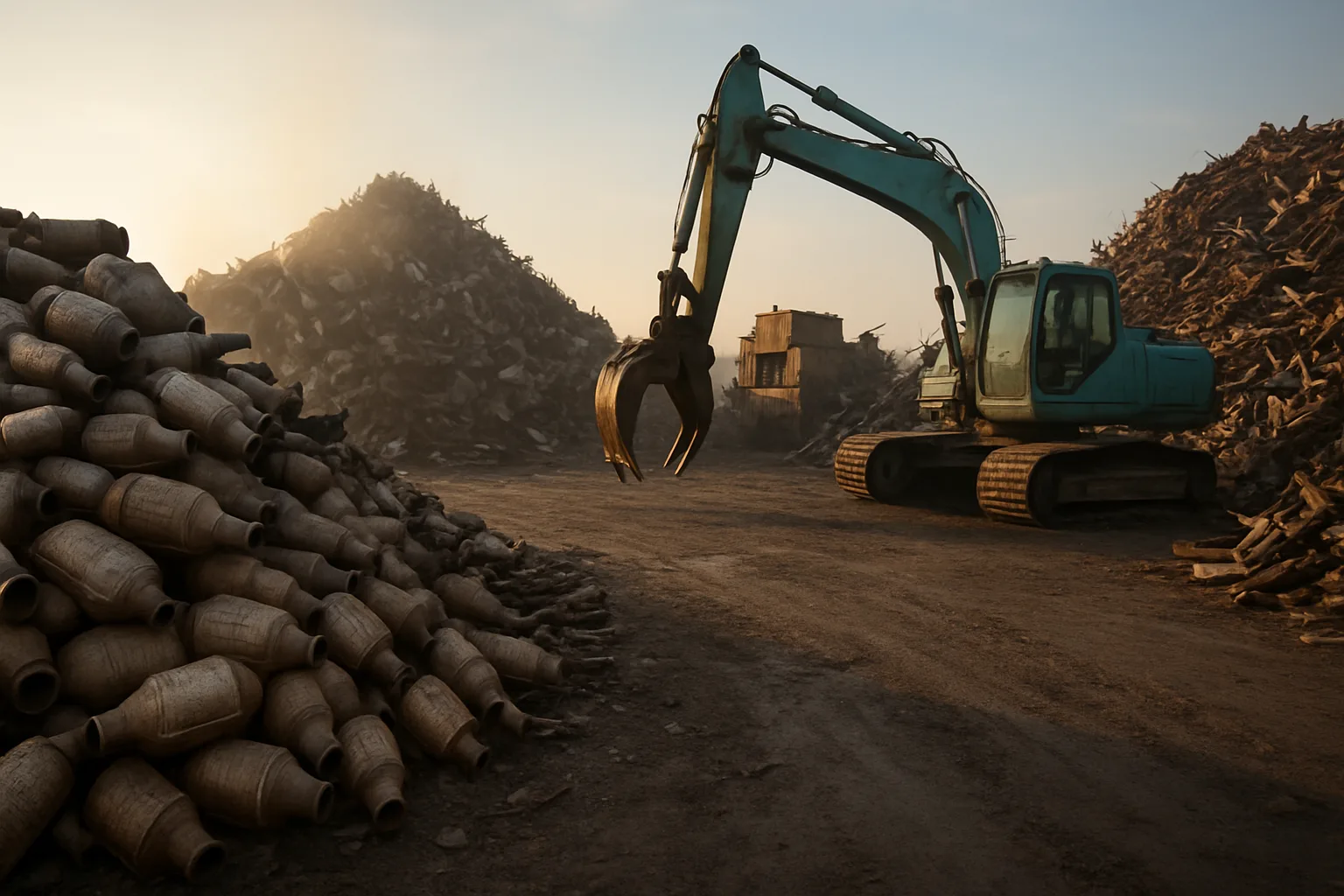
Most auto shops leave serious money on the table when they sell scrap catalytic converters. Not because the market isn't there — it absolutely is — but because they're treating bulk cat sales like an afterthought instead of a revenue stream worth managing. If your shop pulls converters regularly, the difference between a lazy approach and a smart one can mean hundreds or thousands of dollars per load.
This isn't a story about one lucky shop. It's a pattern we see repeatedly. Shops that document their inventory, understand basic catalytic converter scrap value, and use competitive platforms consistently outperform those who just call the same buyer every time. Here's what the smarter shops are doing — and how you can do the same, whether you're in Spokane, Washington or anywhere else running a steady volume of pulled cats.
Why Bulk Cat Sales Are Different From Selling One-Off Converters
When you're selling a single converter, the transaction is simple. You get a quote, you take it or leave it. But bulk sales — even just 10 to 20 units — are a different game. The buyer knows you have volume. That means they're pricing the lot, not each piece, and the spread between their offer and actual market value tends to widen when sellers don't push back with data.
Platinum, palladium, and rhodium — the platinum group metals inside every catalytic converter — fluctuate constantly. The mix of those metals varies wildly by converter type. An OEM converter from a late-model truck can carry significantly more platinum palladium rhodium content than a small foreign cat from a compact sedan. When you lump everything together and accept a flat price-per-unit offer, you're almost certainly subsidizing the buyer's profit on your best pieces.
- OEM converters typically carry higher PGM content than aftermarket units
- Large-body domestic truck cats are often the most valuable per unit
- Foreign cats from imported vehicles vary widely by make and model
- Diesel cats have different metal profiles than gasoline converters
- Foil-type converters are generally lower value than bead or pellet substrate types
The takeaway: not all cats are equal, and lumping them together without documentation costs you money. This is where process makes a real difference.
Document Every Converter Before You Sell — Here's How
The shops that consistently get the best catalytic converter price today share one habit: they photograph and identify every converter before it leaves the building. This isn't complicated. It takes a few extra minutes per unit, and it pays back every time.
For each converter, capture the following:
- Serial number or part number — stamped on the converter body or shield. This is your pricing anchor.
- Photo of the unit — top, bottom, and the serial number close-up. Buyers gain confidence when they can see what they're bidding on.
- Vehicle source — year, make, model. OEM or aftermarket matters. If you pulled it from a 2021 Ford F-250, say so.
- Condition notes — intact substrate, rattling, cracked, or missing end pipes. Honest condition notes reduce disputes.
- Count and weight by category — separate your domestic large, domestic small, foreign, and diesel units before you price the load.
Platforms like the SMASH scrap metal auction marketplace are built to support exactly this kind of documented inventory. When buyers can see real photos, serial numbers, and accurate descriptions, they bid with more confidence — and competition drives better price discovery. That's the whole point.
How Competitive Auctions Change Cat Converter Prices in Spokane
Here's the old way: you call your one buyer, they give you a number, you either take it or wait until next week. There's no competition. There's no pressure on the buyer to sharpen their pencil. You're guessing whether the offer is fair because you have no benchmark.
Here's what happens when you put that same load in front of multiple vetted buyers through an auction format. Suddenly, the buyer who was going to lowball you knows they're competing. Cat converter prices in Spokane — like anywhere else — are ultimately set by the PGM spot market, but the spread between what you get and what the market supports depends entirely on how much competition exists at the time of sale.
SMASH puts verified buyers in competition for your load. No subscription fees. No monthly charges. The platform wins when you win — that's how the fee structure works. For shops in Washington State running consistent volume, this approach consistently surfaces better price discovery than a single-buyer relationship where the power dynamic favors the buyer.
If you're curious about local options in the Pacific Northwest, Spokane scrap metal services can connect you with buyers who understand this market specifically.
Sorting and Grading Your Lot: The Step Most Shops Skip
Sending a mixed lot of unsorted cats to a buyer is like selling a mixed pallet of electronics without telling anyone what's in the box. You lose control of valuation the moment you hand over something the buyer has to sort themselves — because they'll price the work into their offer, and they won't be generous about it.
Sort before you sell. This is one of the highest-leverage things an auto shop can do to improve catalytic converter scrap value on bulk loads. Here's a practical sorting framework:
- Domestic large cats — full-size trucks and SUVs, typically the highest value per unit
- Domestic small cats — mid-size and compact domestics
- Foreign/import cats — sort these carefully; some imports carry excellent PGM loads
- Aftermarket cats — generally lower value, keep separate from OEM units
- Diesel cats — different metals profile, should be quoted separately
- Damaged or open substrate cats — these need to be disclosed; don't mix with clean units
Once your lot is sorted, you can price it intelligently. You can also read catalytic converter pricing guides that break down what each category typically yields, so you walk into any buyer conversation with a baseline expectation.
Timing, Volume, and Building a Repeatable System
Random timing kills your leverage. If you're calling buyers when you happen to have a pile of cats in the corner, you're reacting instead of managing. Shops that build a repeatable process — pull, document, sort, sell on a schedule — tend to get better results because they're never desperate to move a load quickly.
PGM markets move. Scrap metal prices today are not what they were six months ago, and they won't be the same six months from now. Building a loose awareness of platinum, palladium, and rhodium spot prices helps you decide when to hold and when to move. You don't need to be a commodity trader — you just need to know roughly where the market is before you accept an offer.
A few practical timing tips for shops running consistent volume in the Spokane area:
- Set a regular cadence — weekly or biweekly — for pulling and logging cats
- Don't let inventory pile up so long that you're under pressure to sell at any price
- Check PGM spot prices before posting or accepting offers
- Track what you sold, when, and at what price — this creates your own market baseline over time
- Use documented history when negotiating; "last load went for X" is leverage
Shops in Washington that treat their scrap cat operation like a managed revenue line — not an afterthought — consistently extract more value from the same volume of material. The cats are the same. The process is different.
What the Best-Run Shops Do That Others Don't
This is the case study section that matters. The shops consistently getting strong returns on bulk cat sales share a few behaviors that are worth naming directly.
They don't rely on one buyer. Exclusive relationships with a single buyer sound convenient, but they remove all price pressure. The buyer knows you're coming back regardless. That's comfortable for them — and expensive for you.
They use the VIN when it matters. For higher-value OEM units, pulling the VIN from the source vehicle and cross-referencing with known pricing data can confirm whether you're sitting on a premium cat or an average one. Platforms with VIN lookup tools make this fast.
They photograph everything. Photo documentation isn't just about buyer confidence — it protects you. If a dispute arises about condition, you have proof of what you sent.
They understand that catalytic converter recycling is a real commodity business. Whether you look at operations like Platinum Group Metals Recycling Ltd or regional buyers closer to home, the underlying truth is the same: PGMs are valuable, the market is global, and the price is set by supply and demand — not by what your local buyer tells you it is.
They use platforms designed for this. SMASH brings vetted buyers to compete for your load. Auto-invoicing, documented inventory, auction format — it's built for exactly the kind of bulk cat selling that shops like yours should be running as a system. Whether you're comparing notes with shops doing catalytic converter recycling in San Antonio or running your operation out of Spokane, the platform works the same way: competition reveals the real market.
When you're ready to stop guessing and start selling smarter, check current catalytic converter prices and get a sense of where the market sits before your next load moves. Getting the best price for your catalytic converters starts with a free quote at best-catalytic-converter-price.com — no pressure, just real numbers you can work with.
Frequently Asked Questions
Q: How do I get the best cat converter prices in Spokane for a bulk shop load?
Sort your converters by type (domestic large, domestic small, foreign, diesel, aftermarket) before seeking quotes. Document each unit with photos and serial numbers. Then use a competitive platform like SMASH to put your load in front of multiple vetted buyers — competition is the fastest way to surface real market value instead of a single buyer's take-it-or-leave-it number.
Q: Does sorting converters by type really change the price I get?
Yes, significantly. A mixed lot gives the buyer control over valuation — they'll price the work of sorting into their offer. When you present a sorted, documented load, buyers can bid accurately on what they're actually getting, and your high-value OEM units don't get averaged down by your lower-value aftermarket cats.
Q: How often do catalytic converter scrap values change?
PGM prices — platinum, palladium, and rhodium — move with global commodity markets and can shift meaningfully week to week. It's worth checking spot prices before you accept any offer on a bulk load. Prices fluctuate; always verify current rates before selling.
Q: Is it worth waiting for a better market before selling my cat inventory?
It depends on your volume and storage situation. Holding inventory when PGM prices are trending up can make sense for larger shops with organized storage. But don't let cats pile up under time pressure — that puts the negotiating advantage firmly on the buyer's side. A consistent sell cadence with documented inventory usually beats trying to time the market perfectly.
Q: What makes SMASH different from just calling a local scrap buyer in Spokane?
A local buyer gives you one number with no competition behind it. SMASH brings multiple vetted buyers into an auction format, which creates price competition on your load. There are no subscription fees — the platform is structured so it wins when you win. For shops running regular bulk volume, that difference in price discovery compounds over time.
⚠️ Disclaimer: Catalytic converter prices fluctuate with PGM spot markets. All values referenced are general in nature. Always check current rates before selling.
Follow SMASH on LinkedIn for ongoing scrap metal market insights, PGM price updates, and industry news that helps you sell smarter.
```