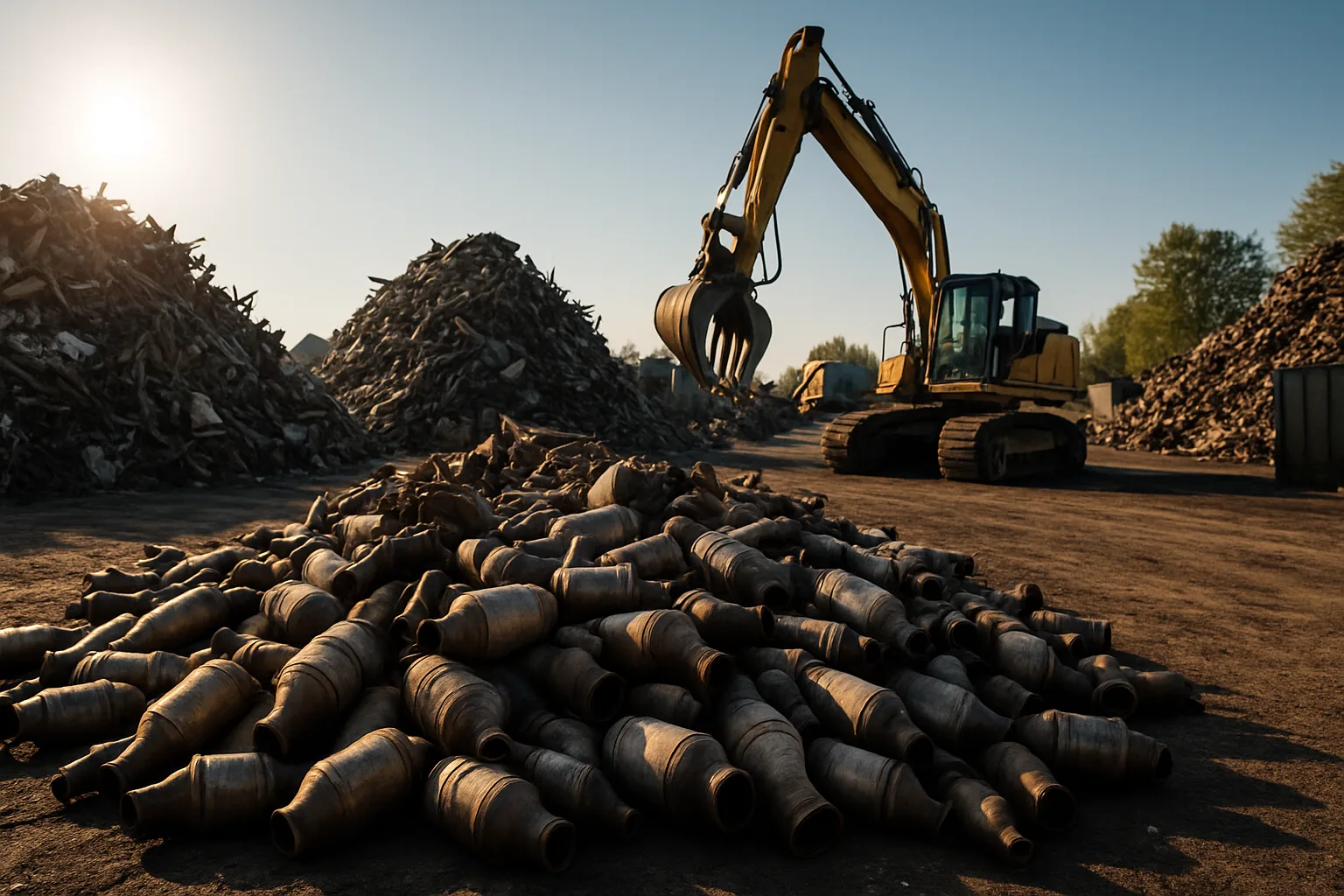
What's Actually Inside Your Catalytic Converter — and Why It Determines Your Payout
Most people selling scrap catalytic converters focus on one number: the price. But experienced recyclers in Erie know the real question is why two converters from similar vehicles can pay out completely differently. The answer comes down to grading — a tiered system based on the precious metals inside, the converter's origin, and its physical condition. If you don't understand grading, you're selling blind.
Catalytic converter recycling in Erie follows the same market logic as anywhere in North America. Buyers assay your converter's platinum, palladium, and rhodium content and price accordingly. Knowing how that system works gives you leverage — and leverage gets you a better return.
The Three Precious Metals Driving Catalytic Converter Scrap Price
Every catalytic converter contains a ceramic or metallic substrate coated with a washcoat of precious metals. Those metals — platinum (Pt), palladium (Pd), and rhodium (Rh) — are the only reason a scrap converter has value beyond its steel shell. Their spot prices fluctuate daily on commodity markets, which is exactly why your catalytic converter scrap price changes week to week.
Here's a quick breakdown of what each metal does and why it matters:
- Platinum: Handles oxidation reactions. Common in diesel converters. Has historically been the baseline metal in OEM converter pricing.
- Palladium: Dominant in gasoline engine converters. Highly reactive at lower temperatures, making it the preferred choice in modern vehicle manufacturing since the early 2000s.
- Rhodium: The rarest of the three. Controls nitrogen oxide emissions. Even trace amounts significantly affect a converter's value — rhodium has traded at multiples of gold in recent years.
The ratio of these three metals varies by manufacturer, engine type, and model year. That's why a converter from a large-displacement domestic truck can outvalue one from a compact import, even if the compact looks newer. When you get the best catalytic converter price today, those ratios are exactly what buyers are bidding on.
Catalytic Converter Grading Tiers Explained
The scrap industry doesn't have a single universal grading standard, but most buyers and processors use a tiered system that groups converters by their precious metal content and source. Understanding these tiers is essential if you're serious about getting a fair return — especially when you sell catalytic converters online to buyers you can't meet face-to-face.
High-Grade (Premium) Converters
These are the top-tier units. High-grade converters typically come from domestic trucks, SUVs, and larger-displacement gasoline engines. They carry dense substrates with high loadings of palladium and rhodium. Think full-size GM, Ford, and Chrysler trucks from the late 1990s through the mid-2010s. A single high-grade unit can be worth multiples of a low-grade converter — sometimes significantly more. OEM converters in this category are the ones professional recyclers hunt for.
Mid-Grade Converters
The most common tier. Mid-grade converters come from a wide range of passenger vehicles — sedans, crossovers, minivans. They carry a reasonable PGM (platinum group metal) loading but not at the density of high-grade units. Volume matters here. Auto shops and collectors in Erie that accumulate mid-grade cats in lots often do better than selling one-off units because buyers can assay the batch more efficiently.
Low-Grade (Foreign Small) Converters
Smaller, lighter, and less loaded with PGMs. Often called "foreign smalls" in the trade — compact imports, economy vehicles, and older vehicles with aged or degraded substrates. They still have value, but you need volume to make them worthwhile. Don't write off a pile of low-grades; just be realistic about per-unit pricing.
Aftermarket and Direct-Fit Replacements
This is where sellers sometimes get caught off guard. Aftermarket cats — the ones installed as replacements after the OEM unit is removed — typically carry very low PGM content. Some have near-zero assay value. Buyers will discount these heavily or reject them outright. If you're sorting a mixed lot, pull the aftermarkets out early and price them separately.
Exotic and Specialty Units
Certain converters from luxury, hybrid, and high-performance vehicles carry exceptional PGM loadings. Units from Toyota Prius, certain Honda models, and European luxury brands often land in specialist tiers with premium pricing. If you're sitting on one of these and you don't know what you have, you could leave real money on the table. This is exactly where reading catalytic converter pricing guides before you sell pays off.
How Serial Numbers Unlock Accurate Catalytic Converter Scrap Pricing
The fastest way to identify which tier a converter falls into — without cutting it open — is the serial number stamped on the shell. Every OEM converter has one. That number corresponds to the vehicle make, model, engine size, and year it was manufactured for, which directly maps to the known PGM loading in industry databases.
When you search your catalytic converter scrap price by serial number, you're pulling from assay data compiled from thousands of processed units. This isn't guesswork. It's the same reference data professional buyers use. If a buyer won't look up your serial number or won't share what grade they're assigning your unit, that's a red flag. Legitimate buyers show their work.
Platforms like smashscrap.com bring competitive bidding to the process, which means your serial number data gets priced against multiple buyers — not just one yard's margin preference. That's how competition reveals real market value instead of a single buyer's offer floor.
What Affects the Final Payout Beyond Grade
Grading gives you a starting point. But your final payout depends on several additional factors that every seller in Pennsylvania should account for before committing to a price.
- Physical condition: Cracked substrates, flooded units, or converters damaged by overheating lose assay yield during processing. Buyers price that risk in.
- Foiled or tampered units: Converters with the substrate removed — sometimes called "empty shells" — have no PGM value. Trying to sell them as intact units is fraud. Don't do it.
- Current spot prices: Rhodium, palladium, and platinum prices move constantly. A converter worth one number in April can pay out differently in July. Always check current catalytic converter prices before you finalize a deal.
- Lot size: Buyers process in volume. A single unit costs them roughly the same to assay as a pallet. Larger lots often attract better per-unit pricing because the processing cost is spread across more material.
- Buyer competition: This is the one most sellers underestimate. A single buyer quoting you has no incentive to offer top dollar. Multiple buyers competing for your load do. That's the structural advantage when you sell catalytic converters online through an auction-based platform like SMASH rather than cold-calling one local yard.
Selling Catalytic Converters in Erie: What Local Sellers Should Know
Erie sits in a strong position for scrap recycling activity. The region has a mix of commercial auto shops, fleet operations, and individual collectors — all generating converter inventory. Whether you're running a garage on Peach Street or pulling cats from a salvage yard near the I-90 corridor, the grading system applies the same way. What changes is how you access buyers.
Selling locally in Erie has historically meant one or two buyers, limited price visibility, and little leverage. That dynamic has shifted. When you sell catalytic converters in Pennsylvania through an online platform, you're not limited to whoever's close enough to drive to. You're putting your inventory in front of vetted buyers across North America who are actively competing on price.
SMASH is built specifically for that dynamic. Sellers document their inventory — serial numbers, photos, grade notes — and buyers bid competitively. No guessing. No single-buyer take-it-or-leave-it offers. More buyers bidding on your cats means better price discovery. That's not a marketing line; it's how auctions work.
If you're in Erie and you've never sold converters online before, the process is more straightforward than you might expect. You photograph your units, pull serial numbers, list your lot, and let vetted buyers come to you. The documentation you build upfront — photos, serials, condition notes — is exactly what gives buyers confidence to bid higher. Documented inventory performs better than mystery boxes. Every time.
Frequently Asked Questions
Q: How do I know what grade my catalytic converter is before selling?
Start with the serial number stamped on the converter shell. Cross-reference it against an industry price database or submit it to a buyer who uses serial-based pricing. Grade is primarily determined by the vehicle it came from and the PGM loading from the manufacturer. When in doubt, a reputable buyer should be able to tell you exactly what tier they're placing your unit in — and why.
Q: Are catalytic converter prices the same in Erie as the rest of Pennsylvania?
The underlying commodity prices — platinum, palladium, rhodium spot rates — are the same everywhere. What varies is the buyer margin built into a local offer. A single yard in Erie may price conservatively because they have no competition for your inventory. Selling online through a competitive platform removes that geographic pricing disadvantage.
Q: What happens if my converter has a cracked or damaged substrate?
Damaged substrates reduce PGM yield during processing because some material is lost or contaminated. Buyers account for this in their pricing — expect a discount relative to an intact unit of the same grade. Be upfront about condition when listing. Misrepresenting a damaged unit damages your reputation with buyers and can result in chargebacks after assay.
Q: Is it worth selling a single catalytic converter online, or do I need a full lot?
Single high-grade units can absolutely justify online selling, especially if they're from a known high-value vehicle. For low-grade or mid-grade units, accumulating a small lot before listing typically improves your per-unit return. That said, don't hold inventory indefinitely waiting to build volume — spot prices move, and timing matters.
Q: How does SMASH handle catalytic converter sales differently from a local scrap yard?
SMASH uses an auction format with vetted buyers competing on your listed inventory. Instead of one buyer setting your price in a take-it-or-leave-it offer, multiple buyers bid based on your documented serial numbers, photos, and grade information. Competition drives price discovery. You see what the market is actually willing to pay — not just what one buyer wants to offer.
Understanding grading is the single biggest step you can take to protect your return on catalytic converter recycling. Whether you're clearing a few units from a shop in Erie or moving regular inventory across Pennsylvania, the tier your converter lands in — and the buyer competition you create around it — determines your outcome. If you're ready to find out what your cats are actually worth, get a free quote at best-catalytic-converter-price.com and see what competitive pricing looks like.
Disclaimer: Catalytic converter prices fluctuate based on daily precious metal spot rates. Always verify current rates before finalizing any sale.
Stay ahead of scrap metal market shifts — follow SMASH on LinkedIn for industry updates, pricing insights, and recycling market news.