Why Your Phone Photos Could Be Costing You Money on Every Catalytic Converter Quote
Most sellers leave money on the table before the conversation even starts. Not because their cat converter has low value — but because the buyer can't see what they actually have. A blurry photo, a missing serial number shot, or a converter photographed upside down in dim light forces buyers to guess. And when buyers guess, they price in risk. That means a lower offer for you.
If you're trying to get the best catalytic converter price San Diego sellers can realistically achieve, the photos you submit with your quote request matter more than most people realize. This guide breaks down exactly how to photograph your scrap catalytic converter so you get an accurate valuation — not a conservative lowball built on uncertainty.
What Buyers Actually Look For in a Catalytic Converter Photo
Scrap buyers — especially serious ones working with platforms like get competitive bids for your scrap metal — are evaluating a few critical factors from your photos before they put a number on your converter. They're not just eyeballing it. They're trying to determine make, model, and whether the unit is intact, tampered with, or aftermarket.
Here's what a buyer needs to confirm from your photos:
- Serial number or OEM stamp — This is the single most important data point. It tells the buyer exactly what precious metal loading is inside: platinum, palladium, and rhodium content is tied directly to the original equipment manufacturer spec.
- Physical condition of the body — Crushed ends, torch cuts, or compromised substrate reduce value immediately.
- Pipe ends — Both inlet and outlet ends should be visible. Cut pipes close to the body are a red flag for some buyers.
- Substrate integrity — A rattling or blown-out core means the platinum, palladium, and rhodium are partially gone. Photos don't always capture this, but visible damage matters.
- Manufacturer markings — OEM converters carry significantly more PGM (platinum group metal) value than aftermarket units. A clear photo of any stamps or heat shields helps confirm this.
Miss any of these, and the buyer either asks for more photos (slowing down the process) or prices conservatively. Neither outcome helps you.
Step-by-Step: How to Photograph a Catalytic Converter for an Online Quote
You don't need a professional camera. A modern smartphone with a steady hand and decent lighting does the job. What matters is what you shoot, not what you shoot it with.
Step 1 — Clean the Serial Number Area First
Grease, rust scale, and road grime routinely obscure the most important marking on the converter. Use a wire brush or a rag with solvent to clean the area around the serial number before you take a single photo. This one step alone can change the quality of your quote significantly. If a buyer can read the number clearly, they can pull the exact OEM converter price reference without guessing at the spec.
Step 2 — Shoot in Natural Light or Bright Artificial Light
Garage fluorescents often create shadows in the worst spots. If you can, take the converter outside on a bright day — San Diego's climate makes this easy year-round — and shoot in indirect sunlight. Direct sun creates harsh glare on metal surfaces, so shade or an overcast sky actually produces the clearest detail shots.
Step 3 — Take These Six Shots as a Minimum
- Top-down overview — Full converter, both ends in frame, on a clean surface.
- Serial number close-up — Fill the frame. The number should be readable without zooming.
- Inlet pipe end — Show the cut or flange clearly.
- Outlet pipe end — Same as above.
- Manufacturer stamp or heat shield markings — If visible, shoot it.
- Any damage or anomalies — Dents, torch marks, replaced bung holes. Don't hide these. Buyers find out anyway, and surprises kill trust.
Step 4 — Use Your Phone's Tap-to-Focus Feature
Tap the serial number area on your screen before shooting. Most smartphones will auto-focus on that point and adjust exposure. Hold the phone still for a second after tapping before you press the shutter. A slightly blurry serial number photo is almost as useless as no photo at all — the digits need to be legible.
Step 5 — Include a Size Reference If You Have Multiple Units
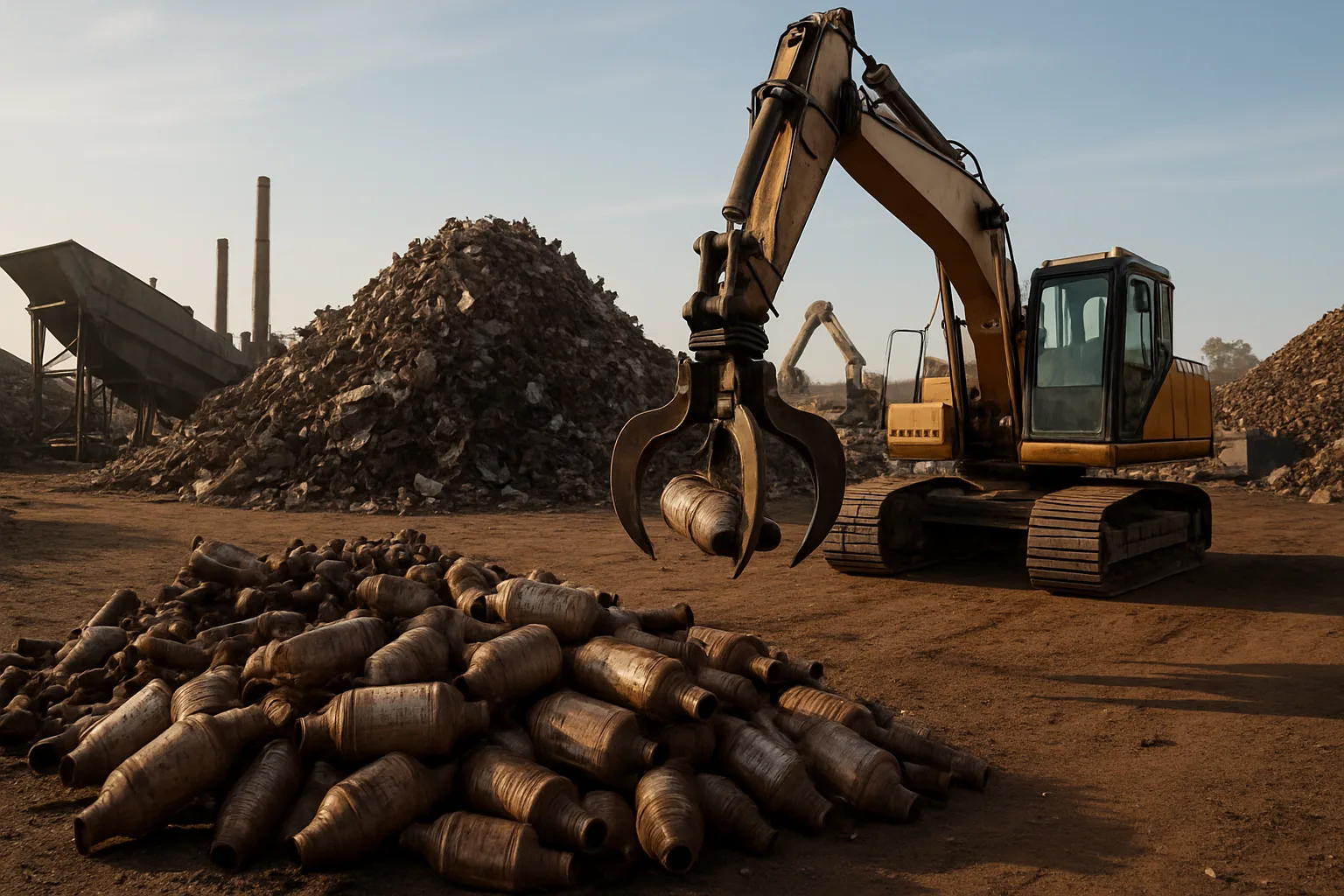
If you're submitting a load of cats, include a photo showing all units laid out together. Buyers can sometimes identify models by shape and size before they even read the serial number. It also confirms the count matches what you stated in your submission.
How Photo Quality Connects to Platinum, Palladium, and Rhodium Pricing
This is where it gets interesting — and why photo quality is a legitimate financial issue, not just an administrative one. The scrap catalytic converter market prices PGMs (platinum group metals) based on actual content recovered through smelting. A Tier 1 OEM converter from a Honda, Toyota, or BMW has a known assay history. Buyers can reference that data against rhodium price today and current palladium and platinum spot values to make a precise offer.
But that entire system breaks down if the buyer can't confirm the unit's identity. An unreadable serial number means the buyer defaults to a generic estimate — often based on the lowest reasonable assumption for that size and type of converter. You may have a high-PGM unit sitting right in front of them, and they can't price it accurately because the photo doesn't show enough detail.
Platforms built around competition and transparency — like SMASH — are specifically designed to solve this problem at scale. When your documentation is clean and complete, multiple vetted buyers can bid with confidence. That's how scrap metal prices today actually get realized rather than approximated. To check current catalytic converter prices, you need buyers who have enough information to bid accurately — and that starts with your photos.
Common Photography Mistakes That Hurt Your Quote in San Diego and Across California
Sellers make the same avoidable errors repeatedly. Here's what to stop doing if you want accurate offers:
- Shooting through a dirty windshield or in shadow — The converter is in a dark corner of your garage. The phone's auto-exposure brightens the background and darkens the unit. Pull it out into the light.
- Sending screenshots of photos instead of original images — Screenshots compress detail. Send the original file directly from your camera roll.
- Only shooting one angle — Single-photo submissions almost always result in follow-up requests or conservative pricing.
- Not noting aftermarket vs. OEM in your submission — An aftermarket converter can look nearly identical to an OEM unit in photos. If you know it's aftermarket (often marked "CARB" or with a generic brand stamp), say so upfront. Buyers in California are often familiar with CARB-compliant aftermarket units used throughout the state.
- Photographing converters still on the vehicle — Undercarriage lighting is almost always terrible. Remove the unit first, clean the serial area, then photograph it properly.
- Submitting photos days after removal without protecting the unit — Substrate damage from improper storage can occur quickly. Document condition at removal if possible.
If you're selling in San Diego or anywhere in California and want to get the best catalytic converter price today, avoid these mistakes and your first submission will do most of the heavy lifting.
Using SMASH to Turn Good Documentation Into Competitive Offers
Good photos get you accurate quotes. Competitive quotes get you better prices. That's the logic behind auction-based platforms like SMASH scrap metal auction. Instead of calling one buyer and accepting whatever they offer, you document your cats properly, submit them through a platform with vetted buyers, and let competition do the work.
SMASH supports photo documentation, serial tracking, and inventory tools designed specifically for scrap yards and collectors who want to stop guessing at value. No subscription fees. No hidden costs baked into low offers. When your documentation is solid, buyers bid on what's actually there — not on what they assume is there after a blurry phone call.
For sellers managing volume — auto shops, dismantlers, recycling operations running regular loads — clean photo documentation also speeds up the invoicing and logistics process significantly. Auto-invoicing only works when the records behind it are accurate from the start.
You can also read catalytic converter pricing guides to understand how PGM values shift with market conditions and what drives quote variation between identical-looking units. Knowledge closes the gap between what you think a converter is worth and what a buyer will actually pay.
If you're local to Southern California, connecting with San Diego scrap metal services can also help you understand regional demand and buyer activity in your area — which matters when you're ready to move inventory quickly.
When you're ready to submit your cats and get real competitive numbers, the documentation you've already prepared will make the process faster and the results more accurate. Stop leaving precision — and the dollars that come with it — on the table.
Disclaimer: Catalytic converter scrap prices fluctuate based on live platinum, palladium, and rhodium market conditions. All pricing referenced in this article reflects general market dynamics as of July 2026. Always check current rates before finalizing a sale.
Frequently Asked Questions
Q: How many photos do I need to submit for an accurate catalytic converter quote in San Diego?
Six photos is a solid minimum: a full overview, a close-up of the serial number, both pipe ends, any manufacturer stamps, and any visible damage. More is better when you're submitting a large load of units. Buyers working the San Diego and California markets are experienced enough to move quickly when documentation is complete.
Q: Does the serial number really change the quote that much?
Yes — significantly. A readable serial number lets buyers cross-reference the exact OEM spec and calculate platinum, palladium, and rhodium content precisely. Without it, they estimate based on size and type, which almost always results in a more conservative offer. The serial number is the single most valuable piece of information in a cat converter quote.
Q: Can I get a better price by submitting to multiple buyers instead of just one?
That's exactly how auction-based platforms like SMASH work. Instead of calling one local buyer and accepting a single offer, you submit documented inventory to multiple vetted buyers who compete for your load. Competition drives price discovery — you see what the market will actually pay, not just what one buyer feels like offering today.
Q: What if my converter has no visible serial number?
Photograph the area where the serial number should be, plus any other markings, stamps, or heat shield text. Include the vehicle make, model, year, and engine size in your submission if you know it. Buyers can sometimes identify units by shape, size, and pipe configuration — a clean, well-lit overview photo becomes even more critical in this situation.
Q: Does rhodium price today affect what I'll be quoted for my cat converter?
Directly. Rhodium is one of the most volatile PGMs in the scrap converter market. High-rhodium-content units — often from diesel applications or certain European makes — swing considerably in value based on daily rhodium spot prices. That's why getting a quote quickly after photographing your unit matters: the number you see today may not be the same number available next week.
---If you've got cats sitting in your yard, don't let poor documentation determine what you get paid. Take the right photos, submit clean documentation, and let competitive buyers put real numbers on your inventory. Get the best price for your catalytic converter — get a free quote at best-catalytic-converter-price.com and see what the market will actually pay.
Follow SMASH on LinkedIn for scrap metal market updates, PGM price movements, and industry insights that help you make smarter selling decisions.