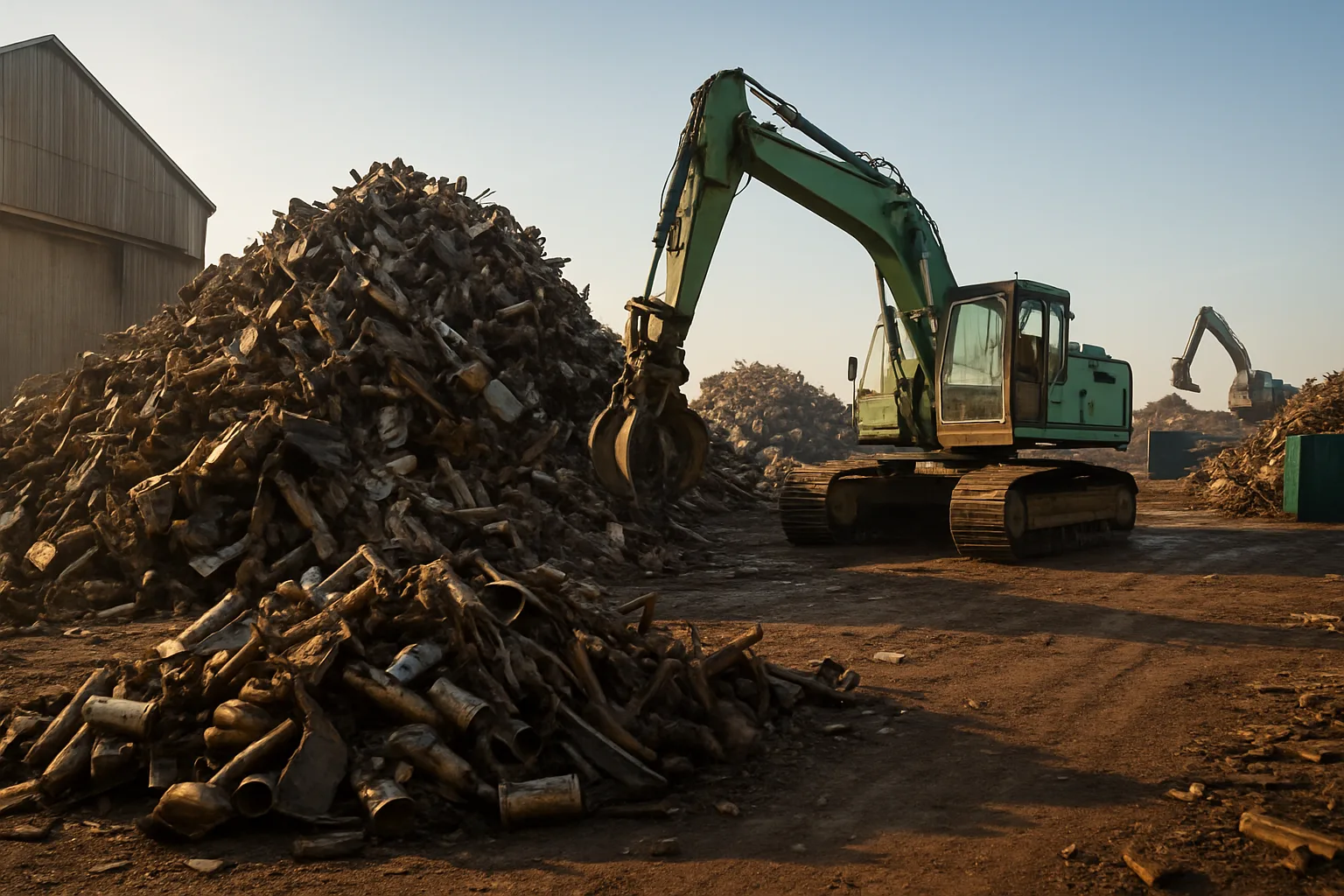
What Actually Happens to a Catalytic Converter After It Leaves Your Vehicle
Most people pull a catalytic converter off an old exhaust system, toss it in a pile, and wonder why the price quote they got feels random. Here's the thing: there's nothing random about it. The value locked inside that converter follows a precise path — from your vehicle to a refinery — and every step of that journey either adds or destroys money. Understanding the lifecycle means you stop leaving cash on the table.
The rhodium price today is one of the most volatile inputs in precious metal markets. It swings harder than platinum or palladium, and it's one of the primary reasons the same cat can be worth dramatically different amounts week to week. If you're selling in Fort Lauderdale or anywhere else in Florida, you need to understand what you're actually selling before you hand it over to the first buyer who calls back.
Stage One: The Converter Is Born — OEM Catalytic Converter Value Explained
Every catalytic converter starts as an engineered emissions control device. OEM units — the ones that come factory-installed — are built to tighter tolerances and typically carry higher precious metal loadings than aftermarket replacements. That matters enormously when it comes time to sell.
OEM catalytic converter value is higher for a straightforward reason: more platinum group metals (PGMs) per unit. A factory Toyota, Honda, or BMW converter will almost always outperform a generic replacement on the scrap market. The ceramic substrate inside holds the PGMs — platinum, palladium, and rhodium — embedded through a washcoat process designed for maximum surface area and chemical contact with exhaust gases.
- Platinum handles oxidation of hydrocarbons and carbon monoxide
- Palladium works alongside platinum, particularly in gasoline engines
- Rhodium is the heavy lifter for nitrogen oxide reduction — and typically the most expensive of the three
The ratio of these metals varies by manufacturer, vehicle type, and production year. A large-displacement truck converter from a domestic automaker carries a very different PGM fingerprint than a small import sedan unit. That's why generic price lists are nearly useless — and why getting the best catalytic converter price today requires actual data, not guesswork.
Stage Two: The Vehicle Retires — When and Where Converters Enter the Scrap Stream
Converters enter the scrap market through a few main channels. End-of-life vehicles are the biggest source — when a car gets junked, the converter comes off before the body goes to the crusher. Collision shops pull them during tear-downs. Exhaust specialists swap them during repairs. And in South Florida specifically, the combination of high vehicle density, year-round driving, and a robust auto recycling industry means a steady, high-volume flow of units entering the market.
Fort Lauderdale sits in the middle of Broward County, one of the most vehicle-dense counties in Florida. Auto recyclers, independent mechanics, and junk yards in the area generate significant converter volume. That creates opportunity — but it also creates pressure to sell fast and settle for low offers if you don't have a better option lined up.
This is exactly where most sellers make their first mistake. They call one buyer. That buyer gives them a number. They take it. No competition. No market check. No way to know if that number reflects the rhodium price today, yesterday, or three months ago.
Stage Three: How Converters Are Graded and Priced Before the Refinery
Once a converter leaves your hands, it enters a grading process before it ever sees a refinery. Buyers — whether local scrap dealers or larger consolidators — identify each unit using the serial number, manufacturer markings, and physical characteristics. This is where the OEM versus aftermarket distinction really bites you if you don't know what you have.
Identification drives pricing. A converter with a legible serial number and clear OEM markings gets priced against known assay data. A unit with a ground-off serial or an aftermarket body gets treated as an unknown and priced conservatively — meaning lower. If you've ever used a how much is my catalytic converter worth calculator free online and gotten a wildly different number from what a buyer quoted you, this is often why. The calculator knew the OEM part. The buyer looked at an unknown.
Key grading factors include:
- Serial number / part number — links the unit to known PGM content data
- Physical condition — cracked substrate, melted core, or stripped washcoat reduces value
- Foil vs. ceramic substrate — foil (metallic) units from diesel applications are handled differently
- Size and weight — larger units from trucks and SUVs generally carry more PGMs
- Whether the unit is intact — decanned converters (substrate removed from the shell) are evaluated differently again
If you want to check current catalytic converter prices before walking into a negotiation, you'll be in a much stronger position than someone who just wants it gone today.
Stage Four: Precious Metal Recovery and Why Rhodium Price Today Matters So Much
After grading, converters are batched and sent to smelters and refineries — typically large operations that process enormous quantities of material. The substrate is ground, sampled, and assayed. The PGMs are chemically separated and recovered. What comes out the other end is pure platinum, palladium, and rhodium — sellable on the commodities market.
Rhodium is the wildcard. Its price per troy ounce has historically ranged from a few hundred dollars to eye-watering highs that dwarf both platinum and palladium. Even at moderate price levels, rhodium's concentration in a converter can make it the single largest value driver in the unit — even though it's present in smaller quantities than palladium or platinum. A shift in rhodium price today can meaningfully change what your converters are worth, sometimes week to week.
Palladium tells a similar story. Its price relative to platinum flipped dramatically in the 2010s and has remained elevated relative to historical norms. Gasoline-heavy markets like the United States — where palladium-intensive three-way catalysts dominate — mean palladium content is a key value driver for most domestic vehicle converters.
The takeaway for sellers: commodity prices move. A batch of cats you're sitting on today has a different value profile than that same batch in 30 days. Timing matters. And so does having buyers who are actively bidding at current market levels, not offering you a stale number based on last week's spot price.
How to Sell Smarter: Platforms Like SMASH Change the Equation
The old way to sell catalytic converters Florida — or anywhere else — was to call around to catalytic converter buyers near me within 20 mi, get a few numbers, and hope one of them was honest. The problem is you never really knew. You had no leverage, no competing bids, and no visibility into what your load was actually worth.
That's what the SMASH scrap metal auction marketplace was built to solve. SMASH connects sellers with vetted buyers through a competitive auction format. Instead of calling one buyer and hoping for the best, your inventory goes in front of multiple buyers who compete for it. Competition does what phone calls can't — it reveals the actual market.
SMASH supports documented inventory with photo documentation, serial tracking, and structured listings. That means buyers see exactly what they're bidding on, which builds confidence and drives better offers. No subscription fees. SMASH only wins when you win. For sellers in Fort Lauderdale handling regular converter volume — from a shop, a yard, or a collection route — that structure matters.
If you want to sell scrap metal online without the usual information asymmetry, the SMASH model is built for exactly that. Read catalytic converter pricing guides to understand how to document and present your inventory before listing.
What Sellers in Fort Lauderdale Should Do Before Selling
Florida's scrap market is active. Fort Lauderdale sellers have access to a dense buyer network, but density doesn't automatically mean competitive pricing. Here's how to approach a sale strategically:
- Document every unit. Photo the converter, note the serial number, identify OEM versus aftermarket before you list or call anyone.
- Check spot prices. Know where platinum, palladium, and rhodium are trading before you engage buyers. The rhodium price today is publicly available through commodities data feeds.
- Get multiple offers. One offer is not a market price. It's one person's number. Use platforms like SMASH to create real competition.
- Don't let units sit too long. PGM prices move. A converter that's worth a strong number today may be worth less in a slow market next month.
- Know your unit types. OEM converters from trucks, SUVs, and larger displacement vehicles often carry the most value. Don't batch them with lower-grade aftermarket units without noting the difference.
The scrap metal business rewards the prepared seller. In a market like Fort Lauderdale — where volume is real and buyers are active — information is leverage. Use it.
Frequently Asked Questions
Q: How does the rhodium price today affect what I get paid for my catalytic converter?
Rhodium is one of three platinum group metals recovered from catalytic converters, and it's often the most valuable per ounce. Even though converters contain less rhodium than palladium or platinum by weight, a spike in rhodium spot price can significantly increase the total value of a unit. Always check current PGM spot prices before accepting a buyer's quote.
Q: What's the difference between OEM catalytic converter value and aftermarket converter value?
OEM converters are built to factory specifications and typically contain higher concentrations of precious metals than aftermarket replacements. When a buyer grades your converter, an OEM unit with a legible serial number gets priced against known assay data — which almost always results in a higher offer than an unidentified aftermarket unit.
Q: How do I find reliable catalytic converter buyers near me within 20 miles of Fort Lauderdale?
Local buyers exist throughout Broward County and the broader South Florida area. However, proximity alone doesn't guarantee the best price. Using an online platform like SMASH alongside local contacts means you can compare competitive offers — not just the first number a nearby buyer throws out.
Q: Can I sell catalytic converters online if I'm based in Florida?
Yes. Platforms that let you sell scrap metal online — including converter-specific marketplaces — allow Florida sellers to reach vetted buyers across a broader network. You document your inventory, list it, and let buyers compete. This is often more effective than relying solely on local contacts, especially for larger or specialty lots.
Q: How accurate are free catalytic converter worth calculators?
Free calculators can give you a useful ballpark based on serial number lookups and current PGM spot prices. However, they don't account for physical condition, substrate damage, or whether the unit is decanned. Use them as a starting point for price discovery — not as the final number you accept.
If you're sitting on converters and wondering what they're actually worth in today's market, don't guess. The lifecycle of a catalytic converter ends at a refinery — but your role in the process, right now, is to make sure the value captured at that refinery reflects what you're owed. Get the best catalytic converter price today with a free quote at best-catalytic-converter-price.com.
Disclaimer: Catalytic converter prices fluctuate with platinum, palladium, and rhodium spot markets. Always verify current rates before selling.
Stay ahead of PGM market moves and scrap metal industry news — follow SMASH on LinkedIn for regular updates on scrap metal markets, pricing trends, and industry insights.