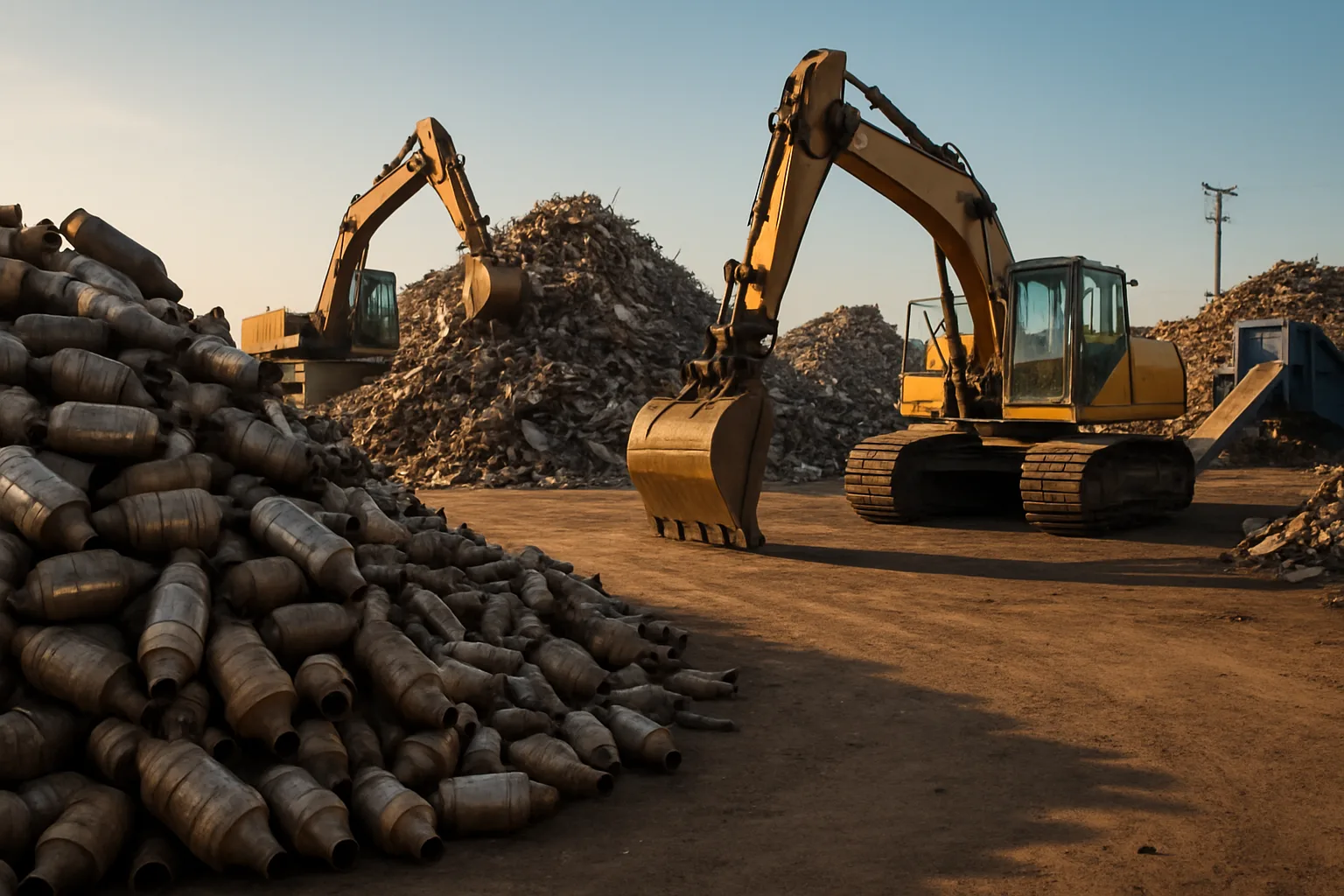
Why Auto Shops Leave Money on the Table When Selling Scrap Cats in Bulk
Most auto shops in Philadelphia are sitting on more value than they realize. A shop pulling 20 to 50 converters a month isn't just doing routine maintenance — it's generating a serious secondary revenue stream. The problem? Too many shops sell that inventory the wrong way: one buyer, one phone call, no leverage.
If you're running a shop in Pennsylvania and selling scrap catalytic converters in bulk, this guide is for you. We'll walk through the practical steps to document, price, and move converter inventory at the best possible price — and explain why platforms like the SMASH scrap metal auction marketplace are changing how smart shops approach bulk cat sales.
Understand What's Actually Inside Your Cats Before You Sell
Every catalytic converter holds a ceramic or metallic substrate coated with platinum group metals — platinum, palladium, and rhodium. These are the precious metals that drive scrap value. A single OEM converter from a domestic truck can hold significantly more PGM content than an aftermarket unit. Knowing the difference matters before you quote a price or accept an offer.
Rhodium especially swings hard with market conditions. When rhodium is elevated, certain Toyota, Honda, and GM cats can be worth multiples of what a quick quote over the phone might suggest. That's the gap between guessing and knowing.
Here's what drives catalytic converter value:
- PGM content (platinum, palladium, rhodium) — the primary value driver
- OEM vs. aftermarket — OEM converters typically carry more substrate and higher PGM loading
- Vehicle make, model, and year — different applications yield vastly different returns
- Substrate condition — a clean, intact substrate is worth more than a cracked or flooded one
- Current spot prices — PGM markets move daily, sometimes sharply
Before you sell a single load, know what you have. A VIN lookup or serial number scan can tell you a lot about expected PGM content. Some platforms now offer serial tracking tools that help identify converter grades before you ever make a call.
How to Document Bulk Converter Inventory the Right Way
Documentation isn't just paperwork. It's leverage. A buyer who can see exactly what they're bidding on is a buyer who bids with confidence — and confident buyers bid higher. That's the math.
If you're accumulating bulk converter inventory at your shop, here's a practical documentation workflow:
- Photograph every converter — top, bottom, and serial number. Consistent photo documentation builds trust and reduces disputes.
- Record serial numbers and OEM codes — this links each unit to a vehicle application and helps buyers assess PGM content remotely.
- Sort by grade — group OEM units separately from aftermarket, and set aside any high-value exotics (BMW, Mercedes, Land Rover) for individual attention.
- Note condition — cracked, rattling, or substrate-damaged units should be flagged. Surprises kill buyer trust and repeat business.
- Track your running inventory — a simple spreadsheet or an inventory tool tied to your sales platform keeps you organized and audit-ready.
In Pennsylvania, scrap dealers are subject to state regulations around documentation and record-keeping for catalytic converter sales. Keep purchase records tied to the vehicles those cats came from. It protects your shop legally and builds credibility with serious buyers.
Why Bulk Volume Is Your Biggest Negotiating Asset
A shop moving 10 cats is interesting to a buyer. A shop moving 50 to 100 cats per month is a relationship. Volume changes the conversation entirely. Buyers compete differently for consistent, documented, high-volume supply. That's not a small distinction — it's the difference between being a one-off transaction and being a preferred seller.
The old way: call your usual buyer, get a number, take it or leave it. You have no idea if that number is fair. You have no comparison. You just hope it's okay and move on.
The SMASH way: list your documented inventory, let vetted buyers compete, and let market competition do the work. More buyers seeing your load means better price discovery. You're not guessing anymore — you're watching the market tell you what your inventory is actually worth.
This matters especially if you're running a high-volume shop in or around Philadelphia. The Northeast has serious buyer appetite for well-documented converter loads. Competition among buyers in this market can be real — but only if you put your inventory in front of enough of them.
Finding the Right Catalytic Converter Buyer in Philadelphia
Not every buyer is the same. A catalytic converter buyer in Philadelphia who works with auto shops regularly is going to approach bulk loads differently than a casual recycler picking up individual units. You want a buyer who:
- Understands grade separation and OEM vs. aftermarket values
- Can process high-volume loads efficiently
- Has a transparent pricing model tied to actual PGM assay
- Provides proper documentation (receipts, BOLs, packing lists) for your records
- Pays on a timeline that works for your cash flow
The challenge with Philadelphia-area buyers is that without competitive pressure, there's no reason for a single buyer to offer their best number. They know you have limited options if you're only making one call. That's why putting your inventory on a platform that routes it to multiple vetted buyers changes the dynamic entirely.
If you want to get the best catalytic converter price today, the starting point is making sure more than one qualified buyer has eyes on your inventory. That's not a trick — it's just how markets work.
For shops in the Philadelphia area, Philadelphia scrap metal services through best-catalytic-converter-price.com connect you with buyers who specialize in converter inventory at volume.
Pricing Your Load: What to Know Before You Accept an Offer
When someone asks how much is my catalytic converter worth scrap, the honest answer is: it depends on the market the day you sell it. PGM prices move. Rhodium especially has shown significant volatility over recent years, and 2026 has been no different. A price that seemed fair six weeks ago might look very different today.
Here's what to check before accepting any offer on a bulk load:
- Current PGM spot prices — platinum, palladium, and rhodium spot prices are publicly available and should anchor any serious offer
- Assay vs. upfront pricing — some buyers quote upfront per-unit prices; others pay based on assay (actual lab testing of PGM content after processing). Know which model you're dealing with.
- Deductions — processing fees, freight, and refining costs affect your net return. Ask for total net value, not just gross.
- Payment terms — net 30 versus same-week payment is a real difference for shop cash flow
If you're not sure what your load is worth, start by researching the specific makes and models you have on hand. Then check current catalytic converter prices to get a market-based baseline before you pick up the phone.
Disclaimer: Catalytic converter prices fluctuate based on daily PGM spot markets and load-specific factors. Always verify current rates before completing a sale.
Building a Long-Term Bulk Sales Strategy for Your Shop
The shops that consistently get the best return on their converter inventory don't treat it as an afterthought. They build a system. Here's what that looks like in practice:
- Set a pull schedule — decide whether you sell monthly, bi-monthly, or when you hit a certain unit count. Consistency helps you plan and gives buyers predictability.
- Standardize your documentation process — assign one person to photograph, tag, and log every converter before it goes into your holding area.
- Use a platform that tracks your history — knowing what you sold, to whom, and at what price helps you benchmark future loads and spot trends.
- Stay on top of PGM markets — you don't need to watch prices daily, but a general awareness of whether rhodium is up or down matters when timing a sale.
- Cultivate competition among buyers — never let one buyer get comfortable knowing they're your only option. Documented, organized inventory creates leverage. Use it.
For shops across Pennsylvania looking to sharpen this process, read catalytic converter pricing guides that walk through real-world scenarios and help you understand what separates a good offer from a great one.
Platforms like SMASH exist specifically to close the information gap between sellers and buyers. When your inventory is documented and listed where vetted buyers compete, you stop guessing what your cats are worth — and start finding out.
If you're ready to stop leaving money on the table, the next step is simple. Get your inventory documented, get it in front of qualified buyers, and let competition do the rest. Get the best price for your catalytic converter — get a free quote at best-catalytic-converter-price.com.
Frequently Asked Questions
Q: How do I find a reliable catalytic converter buyer in Philadelphia for bulk loads?
Look for buyers with experience handling auto shop volume — not just individual units. A reliable buyer will offer transparent pricing tied to PGM assay, provide proper documentation (receipts and BOLs), and pay on a consistent timeline. Using a platform that vets buyers before listing is one of the most effective ways to avoid unreliable contacts.
Q: How much is my old catalytic converter worth as scrap?
It depends on the make, model, and year of the vehicle it came from, the condition of the substrate, and current platinum, palladium, and rhodium spot prices. OEM converters from domestic trucks and SUVs tend to carry more value than aftermarket units. The only way to know for sure is to get a documented quote tied to current market pricing — not a ballpark over the phone.
Q: What's the best way for an auto shop to sell scrap catalytic converters in bulk in Pennsylvania?
Document every unit (photo, serial number, grade), sort OEM from aftermarket, and put your inventory in front of multiple vetted buyers instead of calling one contact. Pennsylvania regulations also require proper documentation for converter sales, so keeping solid records protects your shop legally and makes buyers more confident in your loads.
Q: Does catalytic converter recycling in Philadelphia pay differently than other markets?
PGM pricing is set by global commodity markets, so the underlying value of a converter is the same regardless of where you're selling. What varies is buyer competition in your local market and the platform or method you use to sell. Philadelphia-area shops with documented, high-volume inventory can attract serious buyer interest — but only if that inventory is visible to more than one buyer.
Q: Should I sell my bulk converter load upfront or wait for an assay-based return?
It depends on your cash flow needs and how confident you are in your load's PGM content. Upfront pricing offers certainty and speed. Assay-based returns take longer but can yield higher payouts if your substrate quality is strong and PGM loading is high. For mixed loads with unknown grades, getting multiple upfront quotes through a competitive platform is often the most practical starting point.
Stay ahead of scrap metal market shifts — follow SMASH on LinkedIn for industry updates, PGM market insights, and tips for getting the most out of your scrap inventory.