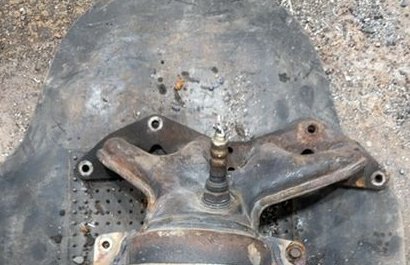
Why Platinum, Palladium, and Rhodium Make Your Catalytic Converter Worth Real Money
Most people treat a catalytic converter like any other worn-out car part — pull it off, toss it in a pile, maybe get a few bucks at the scrap yard. But there's a reason thieves cut them off vehicles in broad daylight. Inside that metal shell sits a honeycomb substrate coated in some of the most valuable metals on the periodic table. If you're doing catalytic converter recycling in San Antonio without understanding what's inside, you're probably leaving money on the table.
This guide breaks down exactly what makes a cat converter valuable, how those precious metals affect your payout, and how to stop guessing and start getting a real market-based price.
The Three Precious Metals Inside Every Catalytic Converter
The magic happens inside the substrate — that ceramic or metallic honeycomb you see when a converter is cut open. Manufacturers wash that substrate with a slurry containing platinum group metals (PGMs). These metals act as catalysts, triggering chemical reactions that convert harmful exhaust gases into less toxic compounds. No heat required, no consumables — the metals do the work passively, which is why they survive hundreds of thousands of miles of driving.
The three PGMs that drive converter value are:
- Platinum (Pt): The original catalyst metal. Platinum handles oxidation reactions, converting carbon monoxide and unburned hydrocarbons into CO₂ and water. Diesel converters tend to be heavier in platinum content. Platinum trades in a wide price band and is sensitive to industrial demand from fuel cell development and jewelry markets.
- Palladium (Pd): Palladium took center stage in gasoline-powered converters over the past two decades because it activates at lower temperatures than platinum. That makes it ideal for cold-start emissions control. Palladium prices have historically run higher than platinum during periods of tightening supply — it's often the biggest value driver in a gasoline cat.
- Rhodium (Rh): Rhodium is the wild card. It handles the reduction reaction — breaking down nitrogen oxides (NOx) into nitrogen and oxygen. Rhodium is extraordinarily rare, and its price can swing dramatically based on supply constraints from South Africa and Russia, which produce the vast majority of the world's supply. Even tiny amounts of rhodium in a converter can represent a significant portion of its total value.
The exact ratio of these three metals varies by manufacturer, vehicle type, engine size, and model year. There's no universal formula. That's why two converters that look identical on the outside can have very different scrap values.
What Determines the Catalytic Converter Worth at a Scrap Yard
Understanding the metals is step one. Understanding how recyclers price them is step two — and this is where most sellers get burned.
When a recycler quotes your converter, they're estimating the PGM content based on the converter's serial number or OEM part number, cross-referencing that against assay databases built from years of processing. The buyer then applies current spot prices for platinum, palladium, and rhodium, factors in processing costs, and makes you an offer. The problem? You don't always know what spot prices look like that day, and you rarely know what database the buyer is using.
Several factors push the catalytic converter worth at a scrap yard up or down:
- Converter type: OEM (original equipment manufacturer) converters from the factory typically carry higher PGM loadings than aftermarket replacements. An aftermarket converter might look the same but contain a fraction of the precious metal content. Always disclose — and verify — whether your converter is OEM.
- Vehicle make and application: Trucks, SUVs, and performance vehicles often run larger-displacement engines requiring more catalyst. Some exotic converters — particularly from certain luxury and high-output vehicles — carry PGM loadings that make them significantly more valuable.
- Condition: A converter that's been crushed, cut open, overheated to the point of substrate destruction, or had the substrate removed is worth far less. Buyers need intact, processable material.
- Current PGM spot prices: This is the biggest variable. Rhodium in particular can move hundreds of dollars per troy ounce in a short period. A converter you priced out six months ago might be worth more or less today. Always check current catalytic converter prices before you sell.
- Volume: If you're a shop or collector moving multiple units, you may have more negotiating power. Single-unit sellers are at a disadvantage when dealing with a single local buyer.
One of the smartest moves you can make — whether you're an individual or running an auto shop in San Antonio — is to get the best catalytic converter price today by letting multiple vetted buyers compete for your material, not just accepting the first number someone throws at you.
OEM vs. Aftermarket: Why It Matters More Than You Think
This distinction costs sellers real money every day. An OEM catalytic converter from a vehicle's original production run is engineered to meet strict emissions standards using specific PGM loadings specified by the automaker. Aftermarket converters — installed as replacements — are built to pass emissions tests at a lower cost, which often means reduced precious metal content.
The difference in scrap value can be dramatic. Some aftermarket converters process out with PGM values that are a fraction of their OEM equivalent from the same vehicle platform. If you're selling a pile of mixed converters and you don't separate OEM from aftermarket, you're likely getting averaged down on everything.
A reputable buyer will identify this. A buyer looking to maximize their margin may not tell you. This is why transparency in the pricing process — and competition between buyers — matters. Platforms like SMASH Scrap — where verified buyers bid on your metal — exist precisely to close this information gap.
How to Sell Catalytic Converters Online and Get a Real Price
For San Antonio sellers, the local market is only part of the equation. Sell catalytic converters online and you open the door to buyers across the country who may be running short on specific units you happen to have. That supply-and-demand dynamic can work in your favor — but only if you know how to document and present your material.
Here's what experienced sellers do before they reach out to any buyer:
- Photograph every converter clearly. Both ends, the serial number, and any visible damage or substrate condition. Buyers price what they can verify. Blurry photos or missing serial numbers create uncertainty — and uncertainty gets priced conservatively against you.
- Record the serial number or OEM part number. This is how buyers cross-reference PGM content estimates. No serial number means the buyer has to guess, and their guess will be low.
- Note whether the converter is OEM or aftermarket. If you pulled it from the original vehicle and it's never been replaced, say so. That context has value.
- Know your volume. Are you moving one unit or twenty? Ten pounds of cats or two hundred? Volume affects logistics and pricing. Have your count ready.
- Don't accept the first offer. Get at least two or three bids before you commit. In Texas, there are buyers ranging from local scrap yards to regional processors to national platforms. Use all of them.
SMASH connects sellers with vetted buyers who compete for your material. That competition is the mechanism that reveals the actual market price — not a number a single buyer decides to quote you on a slow Tuesday. If you're serious about maximizing your return when you sell scrap metal online, that's how the process should work. You can also read catalytic converter pricing guides to sharpen your understanding before you sell.
What San Antonio Sellers Should Know About the Local Market
San Antonio has a substantial vehicle population — pickup trucks, commercial fleets, and a steady stream of older vehicles cycling through the market. That translates into real volume for anyone collecting or processing catalytic converters in the area. Local scrap yards in the region do buy cats, but local pricing reflects local competition. If there are only two or three buyers within a reasonable drive, those buyers have pricing power.
That's why more sellers across Texas are supplementing local sales with online platforms. San Antonio scrap metal services through platforms like SMASH give you access to buyers who aren't constrained by local market dynamics. A buyer in another region may be running low on the specific converter type you have and willing to pay more for it. You'll never know unless you put it in front of them.
Texas regulations around scrap metal sales — including documentation requirements for catalytic converter transactions — continue to evolve. In 2026, sellers should be prepared to provide proof of ownership or vehicle documentation when selling cats. Working with vetted buyers through a documented platform protects you legally and operationally. That's not a minor point. Sell catalytic converters in Texas the right way, with paperwork and a clear transaction trail.
If you're ready to stop guessing and start getting market-based quotes, the path forward is straightforward: document your inventory, photograph your units, identify your serial numbers, and let buyers compete. That's how you find out what your converters are actually worth — not what one buyer decides to tell you. Head over to best-catalytic-converter-price.com to get a free quote and see what the market is actually paying today.
Disclaimer: Catalytic converter prices fluctuate based on PGM spot prices for platinum, palladium, and rhodium. Always verify current market rates before completing any transaction.
Frequently Asked Questions
Q: How do I know if my catalytic converter has high PGM content?
The best indicator is the serial number or OEM part number stamped on the converter. Buyers and recyclers use databases that correlate part numbers to estimated PGM loadings. OEM converters from trucks, SUVs, and larger-displacement engines often contain more platinum, palladium, and rhodium than smaller passenger car units. If you can't find the serial number, a reputable buyer can sometimes identify the converter visually by shape and size.
Q: Can I sell a catalytic converter in San Antonio without the vehicle title?
Texas law has tightened requirements around catalytic converter sales. In most cases, you'll need documentation connecting the converter to a vehicle you own or legally obtained. A vehicle title, bill of sale, or repair order from an auto shop can satisfy this requirement. Always check current Texas regulations or consult the buyer before completing a transaction — requirements can vary by transaction type and volume.
Q: What's the difference in value between an OEM and aftermarket catalytic converter?
Significant. OEM converters are built with precise PGM loadings specified by the automaker to meet emissions standards over the vehicle's full service life. Aftermarket replacements are designed to meet minimum emissions thresholds at lower production cost, which typically means less precious metal content. The scrap value difference can be substantial — sometimes an aftermarket cat processes out at a fraction of the OEM equivalent from the same vehicle platform.
Q: Is it better to sell catalytic converters locally in San Antonio or online?
Both have a role. Local yards offer speed and simplicity. Online platforms — particularly auction-style services like SMASH — generate buyer competition, which can reveal a stronger market price. For high-value units or larger volumes, online is almost always worth the extra step. For common low-value cats, your local market may be perfectly adequate. The key is knowing what you have before you decide where to sell it.
Q: How much do PGM spot prices affect what I get for my catalytic converter?
Directly and significantly. Rhodium in particular can swing hundreds of dollars per troy ounce based on supply conditions out of South Africa and Russia. Palladium prices have historically been volatile as well, driven by demand from automotive manufacturers and supply constraints. A converter that was quoted at one price last quarter may be worth more or less today. Check current rates before you sell — don't rely on a quote you got weeks ago.
---Follow SMASH on LinkedIn for ongoing scrap metal market updates, PGM price insights, and industry news that affects what your converters are worth.