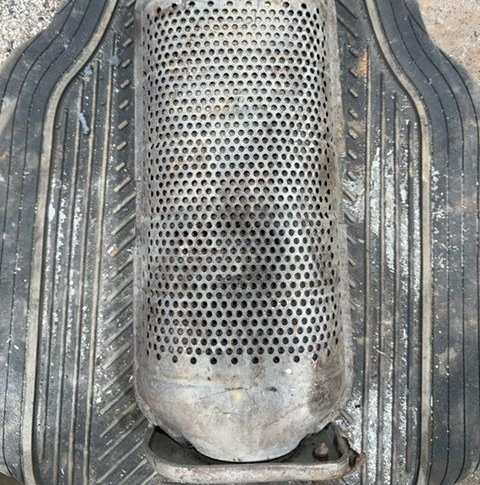
Most people selling a scrap catalytic converter have no idea what's inside it — or why global emissions policy directly affects what they get paid. If you're sitting on a used cat in Colorado Springs and wondering why prices swing so much, the answer starts with platinum, palladium, and rhodium. And it runs straight through every major emissions regulation passed in the last decade.
This guide breaks down how stricter emissions rules keep driving demand for platinum group metals (PGMs) — and what that means for your wallet when you're ready to sell. Whether you're an auto shop clearing out a stack of old cats or a scrapper running one load at a time, understanding the market helps you get a better price. That's the whole point.
If you want to skip the background and get the best catalytic converter price today, you can do that too. But reading this first will make you a sharper seller.
Why Emissions Regulations Are the Hidden Engine Behind Catalytic Converter Value
Governments across North America and globally haven't eased up on vehicle emissions standards — they've tightened them year after year. In 2026, federal EPA Tier 3 standards and California's CARB rules are among the most demanding in the world. Every compliant vehicle rolling off a production line carries a catalytic converter loaded with PGMs: platinum, palladium, and rhodium.
These three metals do the actual work. They trigger chemical reactions that convert toxic exhaust gases — carbon monoxide, hydrocarbons, nitrogen oxides — into less harmful compounds before they hit the atmosphere. There's no synthetic substitute that does the job as efficiently at scale. That's why demand for mined and recycled PGMs stays strong even as the broader auto market fluctuates.
The tighter the standard, the more PGM loading per converter. Stricter rules mean manufacturers have to hit lower emission thresholds, which often means packing more catalyst into each unit. More catalyst means more platinum, more palladium, more rhodium. And when that vehicle eventually ends up at a scrap yard in Colorado Springs, that converter is worth real money.
The Platinum, Palladium, and Rhodium Breakdown — What's Actually in Your Cat
Not every catalytic converter is created equal. The scrap cat converter value depends heavily on which metals are inside and how much of each. OEM converters — the ones installed by manufacturers at the factory — typically carry higher PGM loadings than aftermarket replacements. That's why an OEM converter price at scrap is often significantly higher than an aftermarket unit from the same vehicle.
Here's a rough breakdown of how PGMs appear in common converter types:
- Platinum: Found in diesel converters and some gasoline units. Platinum is a stable, high-melting metal that handles oxidation reactions. Prices for platinum fluctuate based on diesel vehicle production trends and industrial demand.
- Palladium: Dominant in gasoline-powered vehicle converters. Palladium demand surged as gasoline engines became the global standard over diesel. It remains one of the more volatile PGM metals by price.
- Rhodium: The heavy hitter. Rhodium handles nitrogen oxide reduction and is the rarest of the three. Even small amounts of rhodium dramatically affect scrap catalytic converter value. Rhodium prices have historically swung from a few hundred dollars per troy ounce to well above ten thousand — volatility that directly moves the price you're offered at the yard.
When a buyer quotes your cat, they're essentially pricing those three metals minus processing costs and margin. Understanding this helps you recognize when an offer is fair — and when someone is low-balling you.
How Colorado Springs Sellers Are Affected by Global PGM Demand
Colorado Springs might be landlocked, but the scrap metal market here is tied directly to global supply chains. The PGMs recovered from your old converter in El Paso County eventually make their way into a smelter, then back into the supply chain for new vehicles or industrial applications. That's not a metaphor — it's literally the recycling loop that keeps the PGM market functioning.
Colorado's elevation and environmental conditions also factor in. The state has adopted stricter vehicle inspection standards over time, which means a higher percentage of vehicles in the Colorado Springs metro area run compliant, PGM-loaded converters. That's good news for local sellers: the converters coming off Colorado-registered vehicles tend to be from relatively modern, well-maintained vehicles — meaning better PGM content on average.
Local auto shops, fleet operators, and scrap collectors in Colorado Springs all feed into the same market. If you're holding a stack of cats and haven't gotten multiple quotes, you're almost certainly leaving money on the table. Platforms like SMASH exist to fix exactly that problem — instead of one buyer setting your price, competitive bidding lets the market speak. You can find the best price for your scrap on SMASH and see what real buyers are willing to pay.
Catalytic Converter Recycling Colorado Springs — What the Local Process Looks Like
Catalytic converter recycling in Colorado Springs follows the same general chain as anywhere in North America, but local regulations add a layer of compliance you need to know about. Colorado has implemented secondary metal dealer regulations that require documentation of converter sales — including seller ID and vehicle information in many cases. This isn't unique to Colorado, but it's enforced.
Here's what the recycling chain typically looks like when you sell a scrap cat:
- Initial sale: You sell to a local buyer, an auto recycler, or through an online platform. You provide documentation where required.
- Sorting and identification: Converters are sorted by type — OEM vs. aftermarket, diesel vs. gasoline, brand and model where identifiable. This is where serial tracking and photo documentation matter.
- Assay: Processors use X-ray fluorescence (XRF) or chemical assay to determine PGM content. This is what your price is ultimately based on.
- Smelting and refining: PGMs are extracted and refined into tradeable metals.
- Re-entry into supply chain: Refined PGMs go back into new converters, electronics, or other industrial uses.
Every step in that chain affects what you're paid at step one. Buyers who can trace converters accurately — through serial numbers, VIN lookup, and photo documentation — can often offer more competitive prices because they have better data. Buyers guessing at content will pad their margin to cover uncertainty. That's a gap you can close by selling through documented, transparent channels.
If you want to understand current pricing before you sell, read catalytic converter pricing guides that break down what drives value by converter type.
Sell Catalytic Converter Online Instantly — Why More Colorado Springs Sellers Are Going Digital
The fastest-growing shift in the scrap cat market is online selling. Five years ago, most sellers in Colorado Springs walked into a local yard with a cat in hand and took whatever they were offered. That's still common. It's also one of the least efficient ways to sell.
Today, you can sell catalytic converter online instantly — or close to it. Digital platforms let you submit photos, serial numbers, and converter details, get competitive quotes from multiple vetted buyers, and complete the transaction without ever cold-calling a yard or haggling in a parking lot. For auto shops moving volume, this is a significant time saver. For individual sellers, it levels the playing field.
SMASH is built for exactly this kind of transaction. Auction-format selling means buyers compete for your load instead of you accepting a single take-it-or-leave-it offer. No subscription fees. No guessing. Just documented inventory, vetted buyers, and competition that helps reveal what your cats are actually worth on the open market. More buyers means better price discovery — that's not marketing language, that's how markets work.
If you're holding OEM converters with known serial numbers, documented vehicle history, and clear photos, you're in a strong position. That's the documentation that gives buyers confidence — and confident buyers bid more aggressively.
PGM Markets in 2026 — What Sellers Need to Know Right Now
As of October 2026, the PGM market reflects several converging pressures. Emissions standards across North America and Europe continue to tighten, keeping upstream demand for PGMs elevated. At the same time, the recycling supply chain has matured — meaning processors are more sophisticated and better at accurately assaying converter content.
European regulatory frameworks, sometimes referenced in trade discussions around recycling the platinum group metals from a policy perspective, have historically pushed harder on secondary recovery rates than North American regulations. That's changing. U.S. policy increasingly treats scrap PGM recovery as a critical supply chain priority, particularly given concerns about mining supply concentration in South Africa and Russia.
What does that mean for a seller in Colorado Springs? It means the infrastructure to buy, process, and refine scrap cats is better funded and more competitive than it's ever been. More processing capacity means more buyers. More buyers means more competition for your inventory. That's the market you're operating in right now — and it favors informed sellers who document their material and go to market strategically.
Price disclaimer: Catalytic converter prices fluctuate based on live PGM spot prices, converter type, and market conditions. Always check current catalytic converter prices before selling to ensure you're working with up-to-date market data.
Frequently Asked Questions
Q: How do I find a reliable catalytic converter buyer in Colorado Springs?
Look for buyers who use documented processes — photo submission, serial number tracking, and transparent pricing tied to actual PGM assay values. Local yards, auto recyclers, and online platforms like SMASH are all options. The key is getting more than one quote before you sell.
Q: What documentation do I need to sell a catalytic converter in Colorado Springs?
Colorado requires secondary metal dealers to document converter sales, typically including a government-issued ID and vehicle information. Requirements vary by buyer and transaction size. Check with your buyer before you show up — missing paperwork can delay or kill a transaction.
Q: Does the type of vehicle affect how much my catalytic converter is worth?
Yes, significantly. Trucks, SUVs, and luxury vehicles often carry higher-PGM converters than economy sedans. OEM converters are generally worth more than aftermarket replacements. Diesel converters have different PGM profiles than gasoline units. Knowing your converter type before you sell helps you evaluate offers accurately.
Q: Why do catalytic converter prices change so frequently?
Because prices are tied to live platinum, palladium, and rhodium spot prices — which trade on commodity markets and move daily. A converter worth a certain amount this week may be worth more or less next week based purely on metal prices, not any change to the physical converter itself.
Q: Can I sell catalytic converters online from Colorado Springs?
Yes. Online platforms let you submit converter details, get competitive quotes from vetted buyers across North America, and complete the sale without being limited to local buyers. SMASH uses an auction format that puts buyers in competition for your material — which helps ensure you're getting a market-based price rather than one buyer's best guess.
If you're holding scrap cats in Colorado Springs and haven't tested the market, now is a reasonable time to do it. Emissions regulations aren't loosening — demand for PGMs from recycled sources is built into the market long-term. The infrastructure to sell smart is there. Use it. Get the best price for your catalytic converter by starting with a free quote at best-catalytic-converter-price.com — it costs you nothing to find out what your material is actually worth.
Stay current on PGM markets and scrap metal trends by following SMASH on LinkedIn — practical market insights for people who actually work in the industry.