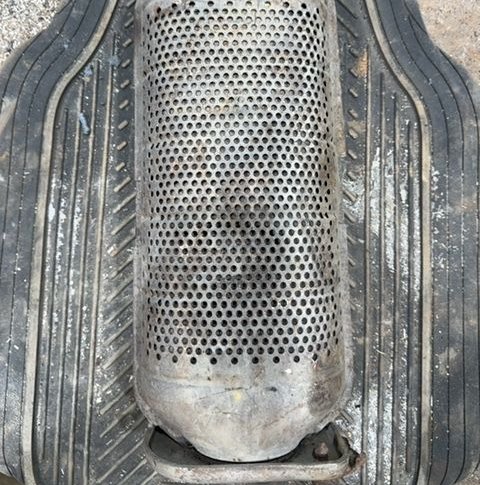
Most people selling a scrap catalytic converter have no idea what happens to it after it leaves their hands. It gets picked up, they get a check, and that's the end of the story. But understanding what happens between "I pulled this cat" and "here's your money" — the assaying and smelting process — is exactly why some sellers consistently get better prices than others. If you're in Dallas and you're sitting on a load of cats, this is worth reading.
The recycling chain for catalytic converters is more sophisticated than most people expect. The value isn't in the steel shell. It's in what's packed inside: platinum, palladium, and rhodium — three of the most valuable metals on the planet. The process of getting those metals out, measuring them accurately, and paying sellers fairly is where transparency either shows up or breaks down.
Knowing this process helps you get the best catalytic converter price today — because when you understand what buyers are actually paying for, you stop guessing and start negotiating from facts.
What's Actually Inside a Catalytic Converter (and Why It Matters for Price)
Before diving into assaying and smelting, you need to understand what makes a scrap catalytic converter worth anything. Inside every cat is a honeycomb substrate — either ceramic or metallic — coated with a washcoat containing platinum group metals (PGMs). These are:
- Platinum (Pt) — Used in diesel and some gasoline converters. Prices fluctuate significantly based on industrial demand.
- Palladium (Pd) — Found in higher concentrations in gasoline converters. Has seen dramatic price swings over the past decade.
- Rhodium (Rh) — The rarest of the three. Even tiny amounts can represent significant value per converter.
The concentration of these metals varies enormously depending on the vehicle make, model, engine size, and whether the converter is an OEM unit or an aftermarket replacement. An OEM converter from a late-model truck will carry far more PGM content than a cheap aftermarket unit. That's why a scrap catalytic converter price lookup by serial number or VIN gives you a much more accurate starting point than a flat-rate offer. When you read catalytic converter pricing guides, this distinction — OEM vs. aftermarket — comes up constantly, and for good reason.
How Catalytic Converter Assaying Works: From Scrap Yard to Lab
Assaying is the process of determining exactly how much PGM content is in a given batch of catalytic converters. It's not a guess. It's a precise metallurgical measurement, and it directly determines what processors pay for your material. Here's how it works step by step.
Step 1: Collection and Decanning
When cats arrive at a processor, the steel shell gets cut open (decanned) and the substrate is removed. The steel shell has scrap value on its own, but it's separated from the substrate because the two materials get processed differently. For sellers in Dallas sending full units, the decanning happens at the processing facility — you don't need to do this yourself.
Step 2: Sampling and Lot Preparation
The loose substrate material gets crushed, ground, and blended into a fine powder. This homogenization is critical — it ensures that when a small sample is pulled for testing, it accurately represents the entire lot. Larger processors use rotary sampling systems that continuously pull representative fractions from the material stream. This is called a "lot sample," and it's the foundation of the assay.
Step 3: Laboratory Analysis
The sample goes to a certified lab where analysts use techniques like ICP-OES (Inductively Coupled Plasma Optical Emission Spectrometry) or fire assay to measure exact PGM concentrations in parts per million (ppm). These are not ballpark numbers. They're precise measurements that determine the exact split between platinum, palladium, and rhodium in your material. The lab report is what drives the settlement price.
This is why transparency in the assay process matters so much. Some buyers give you a flat offer before assay results come in. Others do a "toll refining" arrangement where you get paid based on actual assay results. Both approaches exist in the market — knowing which one you're dealing with affects how you evaluate an offer. Platforms like SMASH help sellers understand the difference and connect with buyers who can provide documented, transparent settlement terms.
The Smelting Process: Turning Substrate Powder Into Refined Metal
Once the assay is done and the lot is settled, smelting begins. This is the physical process of extracting the PGMs from the substrate material and refining them into usable form.
Pyrometallurgical Smelting
Most large-scale PGM recyclers use a pyrometallurgical process — essentially high-temperature smelting in a furnace. The substrate powder gets combined with flux materials and heated to temperatures exceeding 1,400°C (2,550°F). At those temperatures, the PGMs migrate into a molten metal collector phase (often copper or iron), while the ceramic substrate melts into slag that floats on top and gets separated. The result is a PGM-rich alloy called a "matte" or "collector alloy."
Hydrometallurgical Refining
After smelting, the collector alloy goes through a series of chemical leaching and precipitation steps to separate platinum, palladium, and rhodium from each other and from the base metal collector. Acids dissolve the metals selectively, and chemical precipitants pull each PGM out in sequence. The end product is refined PGM powder or sponge, ready to be sold back into the industrial market — back into new autocatalysts, electronics, or jewelry.
The entire process — from decanning to refined metal — typically takes four to eight weeks at major refineries. That turnaround time is one reason some sellers prefer spot-price buyers who offer immediate payment based on estimated assay values rather than waiting for full refinery settlement. There's a tradeoff either way, and knowing that tradeoff helps you make a smarter decision when you check current catalytic converter prices before selling.
Why This Process Directly Affects the Price You Get in Dallas
Here's the practical takeaway for anyone doing catalytic converter recycling in Dallas: the accuracy of your payout depends entirely on who's doing the assay, how transparent they are about the process, and how many buyers are competing for your material.
A single buyer offering you a flat price has no incentive to share the actual assay results with you. They've already built in their margin before the offer lands. When you sell catalytic converters online through a competitive platform, multiple vetted buyers are bidding based on their own read of the material — and that competition reflects the actual market more honestly.
Dallas is one of the largest scrap metal markets in Texas, with significant volumes of automotive scrap moving through the region every week. That means there's real buyer demand for cat loads out of this market. If you're routing your cats through a single local contact without exploring broader market options, you may be leaving money on the table — not because anyone is dishonest, but because you haven't introduced competition into the equation.
Platforms like sell your scrap metal on the SMASH marketplace exist precisely to solve this problem. Instead of one buyer, one call, and one number — you get vetted buyers competing for your load. The documentation tools, photo uploads, and serial tracking that come with the platform give buyers more confidence in the material, which typically supports stronger bids. You can also explore Dallas scrap metal services to get localized support for your load.
How to Sell Catalytic Converters Online with Better Results
Understanding the assay and smelting process gives you leverage. Here's how to use it:
- Know what you have before you sell. Use a scrap catalytic converter price lookup tool to identify your units by serial number. OEM converters from domestic trucks and larger vehicles typically carry higher PGM loads than small foreign converters or aftermarket units.
- Document your material. Photos of the substrate condition, weight per unit, and serial numbers give buyers confidence. Better documentation typically supports better bids.
- Don't accept the first number. Whether you're trying to sell catalytic converters Texas-wide or just locally, more buyers means better price discovery. One offer is a starting point, not a market.
- Understand the settlement terms. Ask whether an offer is based on estimated or actual assay results. Know when you'll get paid and what deductions apply for refining and sampling fees.
- Use platforms built for this market. SMASH connects sellers with vetted buyers who deal specifically in scrap metal and cats. That's a different experience than posting on a general marketplace and hoping someone responds.
Whether you're an individual with a handful of cats, an auto shop clearing out a month of pulls, or a recycling yard moving larger volumes, these steps apply. The market for PGMs is real and active — sell scrap metal online through channels built for the industry, not around them.
If you're ready to stop guessing and start getting market-based prices, the process is simpler than it sounds. Get the best price for your catalytic converter — get a free quote at best-catalytic-converter-price.com and see what your cats are actually worth in today's market.
Disclaimer: Catalytic converter prices fluctuate based on platinum, palladium, and rhodium spot prices, which change daily. Always check current rates before finalizing any sale.
Frequently Asked Questions
Q: How long does the assay process take for catalytic converters?
Full refinery assay and settlement typically takes four to eight weeks from the time material arrives at the processor. Some buyers offer faster payment based on estimated PGM content, but these are usually flat-rate offers that may not reflect actual assay results. Know which type of deal you're accepting before you ship.
Q: Does the condition of the substrate affect the price I get in Dallas?
Yes, significantly. A damaged, cracked, or contaminated substrate has lower recoverable PGM content than an intact one. Buyers factor substrate condition into their bids. If you're doing catalytic converter recycling in Dallas and your cats have damaged substrates, document them honestly — it sets realistic expectations and builds trust with buyers.
Q: What's the difference between an OEM and aftermarket catalytic converter for scrap value?
OEM (original equipment manufacturer) converters are built to meet higher emissions standards and contain more platinum group metals than most aftermarket replacements. As a result, OEM units typically fetch significantly higher scrap prices. Always try to identify whether a unit is OEM before accepting a flat offer.
Q: Can I sell catalytic converters online from Texas without shipping them first?
Many platforms allow you to get quotes or bids before committing to a sale. You can sell catalytic converters online by listing your material with photos, serial numbers, and weights — then compare offers before shipping. Platforms like SMASH let vetted buyers bid competitively, so you see real market demand before the material leaves your hands.
Q: Is there a scrap catalytic converter price lookup tool I can use?
Yes. Several tools allow you to look up cat values by serial number, which ties to the vehicle make, model, and engine — the factors that determine PGM load. These lookups give you an estimated value range, not a final price, but they're a solid baseline when evaluating offers. Use them before you call any buyer.
Follow SMASH on LinkedIn for ongoing scrap metal market insights, industry updates, and pricing trends: linkedin.com/company/scrap-metal-auction-sales-hub.
```