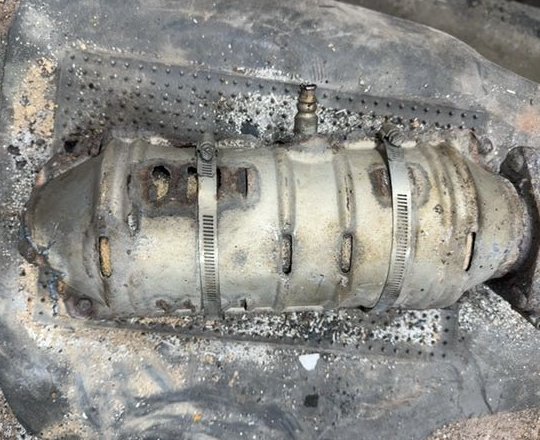
Catalytic Converter Theft Is Poisoning the Legitimate Scrap Market — Here's What's Actually Happening in 2026
If you've tried to get the best catalytic converter price today and found the process more complicated than it used to be, theft is a big reason why. Catalytic converter theft remains one of the most disruptive forces in the scrap recycling industry — not just for vehicle owners, but for legitimate recyclers, auto shops, and buyers trying to operate clean businesses. In Colorado Springs and across Colorado, the downstream effects of organized theft rings are still shaping how buyers verify inventory, how prices get quoted, and what documentation you now need to sell a cat converter at all.
This isn't background noise. It's an active market force. Understanding it helps you protect your inventory, navigate tighter regulations, and — critically — still get paid what your converters are actually worth.
Why Catalytic Converter Theft Still Drives Policy in 2026
Theft volumes peaked a few years back, but the regulatory response has a long tail. Laws passed between 2021 and 2024 are now fully enforced across most U.S. states, and Colorado is no exception. In Colorado Springs, scrap dealers are required to collect seller identification, vehicle documentation, and in many cases proof of ownership before purchasing any catalytic converter. These rules weren't designed to punish legitimate sellers — they were designed to choke off the pipeline that made stolen cats easy to move.
The problem is that the compliance burden landed on everyone. Auto shops sitting on a box of pulled converters, fleet operators with end-of-life vehicles, and independent scrappers with clean inventory all face the same documentation requirements as someone trying to fence a stolen part. The paperwork got heavier. The process got slower. And some buyers — particularly smaller, less-organized operations — stopped buying cats altogether rather than navigate the compliance risk.
What that means for sellers: fewer active buyers in some markets, more friction at the point of sale, and in some cases, artificially suppressed prices because competition has thinned out. That's a real problem if you're trying to move legitimate inventory at fair market value.
How Theft Distorts Rhodium, Platinum, and Palladium Pricing
The core value in any catalytic converter sits in three platinum group metals: platinum, palladium, and rhodium. Rhodium in particular — the rarest of the three — has historically driven the highest per-gram return in OEM converters. If you've searched rhodium price today recently, you already know the market is volatile. But theft compounds that volatility in ways that don't always get discussed clearly.
When stolen converters flood the secondary market — often through offshore processing channels that don't ask questions — it creates a parallel supply stream that operates outside normal price discovery. Legitimate buyers who pay fair market rates based on assay data are competing, indirectly, with a gray market that has zero acquisition cost. That distorts buyer behavior. Some processors tighten margins across the board to offset uncertainty. Others shift to higher-volume, lower-verification purchasing models that favor large commercial accounts over individual sellers.
The result for a seller in Colorado Springs sitting on a stack of legitimately pulled converters? You may get quoted a price that doesn't reflect what the platinum, palladium, and rhodium in your cats are actually worth on a transparent, competitive market. That gap is real — and it's one of the core problems that auction-based selling is built to close.
What Legitimate Sellers Need to Document — And Why It Matters for Your Price
Documentation isn't just a legal box to check. Done right, it's a value driver. Buyers who can verify the provenance of a catalytic converter — vehicle VIN, removal records, photos, packing lists — bid with more confidence. More confidence means more competition. More competition means better price discovery. This is a direct line from your paperwork to your payout.
Here's what legitimate sellers in Colorado and most other U.S. states should have ready before selling:
- Government-issued ID — required by most state laws for all cat converter sales
- Vehicle title or bill of sale — proof the vehicle the converter came from was legally yours
- VIN documentation — increasingly required or at least strongly preferred by serious buyers
- Photos of the converter — serial numbers, end-cut condition, any stamped markings
- Removal records — shop work orders or internal fleet documentation if applicable
If you're running an auto shop or a fleet operation in Colorado Springs, this documentation is probably already part of your workflow. The difference is knowing how to use it to your advantage when you sell. Platforms that support serial tracking and photo documentation — like SMASH — let that verified inventory work for you in front of multiple vetted buyers, not just the one local buyer willing to take your call on a Friday afternoon.
Before you sell, it's worth taking a few minutes to check current catalytic converter prices so you know what the market actually looks like before you walk into a negotiation.
The Stolen Cat Pipeline and How It Affects Buyers Near You
If you've searched catalytic converter buyers near me open now, you may have noticed the landscape has shifted over the past few years. Some local buyers have tightened their purchasing criteria dramatically. Others have posted clear signs about what they will and won't accept. A few have exited the cat buying market entirely.
This isn't arbitrary. Buyers who get caught — even unknowingly — purchasing stolen converters face serious legal exposure. In Colorado, receiving stolen property charges apply to buyers who can't demonstrate reasonable due diligence. That liability has pushed many buyers toward a more conservative posture: stricter documentation, lower prices to offset risk, or simply refusing to buy from unknown sellers without an established account relationship.
For a legitimate seller, this creates a frustrating situation. Your inventory is clean. Your paperwork is solid. But the local buyer pool has shrunk, and the buyers who remain may not be offering competitive prices because they're operating in a low-competition environment. The old model — one call, one buyer, one price — was never great. In 2026, it's even more broken than it used to be.
This is exactly where platforms like SMASH change the math. North America's B2B scrap metal auction platform, SMASH connects documented, verified inventory with vetted buyers who are actively competing for loads. No subscription fees. No guessing. Competition does what competition is supposed to do — it reveals the actual market.
How to Get the Best Catalytic Converter Price in Colorado Springs Despite Theft-Driven Market Disruption
The theft epidemic changed the rules. But it didn't eliminate your ability to sell well — it just raised the bar on preparation and process. Sellers who understand what buyers actually need, document their inventory correctly, and access competitive markets consistently outperform sellers who rely on a single local buyer with no alternatives.
Here's a practical approach for sellers in Colorado Springs looking to maximize value in 2026:
- Know your converter type before you sell. OEM converters from domestic trucks and SUVs typically carry more platinum group metal content than aftermarket units. If you're asking how much is my catalytic converter worth scrap by reg, the answer starts with knowing exactly what you have. VIN lookups and serial number references can help identify the specific converter and its approximate PGM content.
- Document everything. Photos, VINs, removal records. Not because you're suspected of anything — because documentation increases buyer confidence and buyer confidence increases bids.
- Don't sell to the first buyer who answers. One quote is not a market. It's one opinion. Competition reveals price; a single buyer conceals it.
- Use platforms built for this. SMASH's inventory tools, VIN lookup features, and vetted buyer network are specifically designed to handle documented cat converter inventory at scale. Whether you're moving one converter or a full pallet, the process is built to get your inventory in front of buyers who are actually competing.
- Check the PGM market before you accept a quote. Platinum, palladium, and rhodium prices move. A quote that was fair on Monday may be low on Thursday. Timing and market awareness matter.
You can also read catalytic converter pricing guides to get a clearer picture of how PGM content, converter type, and market conditions combine to determine what your cats are actually worth.
If you're in Colorado Springs and you're sitting on legitimate inventory that's been properly documented, don't let a thinned-out local buyer pool set your price. The market is bigger than your zip code. Access it like it is.
The best catalytic converter price isn't found — it's created, through competition, documentation, and access to the right buyers. If you're ready to find out what your inventory is actually worth, get a free quote at best-catalytic-converter-price.com and see what a competitive process looks like.
Disclaimer: Catalytic converter prices fluctuate based on platinum group metal spot prices, converter type, and market conditions. Always verify current rates before selling.
Frequently Asked Questions
Q: How does catalytic converter theft affect the price I get for my legitimate scrap cats in Colorado Springs?
Theft-driven regulation has reduced the number of active buyers in many local markets, including Colorado Springs, which limits competition and can suppress prices. Sellers with documented, verified inventory who access competitive platforms see better price discovery than those relying on a single local buyer operating in a low-competition environment.
Q: What documentation do I need to sell a catalytic converter legally in Colorado?
Colorado requires sellers to provide government-issued ID and, in most cases, proof that the converter was legally obtained — typically a vehicle title, bill of sale, or work order. VIN documentation and photos of the converter are increasingly expected by serious buyers even where not legally mandated, and they can meaningfully improve the price you receive.
Q: How do I find out how much my catalytic converter is worth scrap by reg number or VIN?
VIN lookups and serial number references can help identify the specific OEM converter on a vehicle and estimate its platinum group metal content. Platforms like SMASH offer VIN lookup tools as part of their inventory documentation process, which helps buyers bid accurately and sellers get quotes grounded in actual converter data rather than guesswork.
Q: Are catalytic converter buyers near me still open and buying in 2026?
Many local buyers have tightened purchasing requirements or reduced their buying activity due to theft-related liability concerns. While buyers do still operate in Colorado Springs and across Colorado, the active buyer pool in any given local market may be smaller than it was a few years ago. Accessing a broader network of vetted buyers through an auction platform typically yields better results than relying solely on local options.
Q: Does the rhodium price today affect what I get paid for scrap catalytic converters?
Yes, directly. Rhodium is one of the three platinum group metals — alongside platinum and palladium — that determine a converter's scrap value. When rhodium spot prices move, the value of converters with high rhodium content moves with them. Checking current PGM spot prices before accepting a quote ensures you're not selling into a favorable market at a stale, low price.
Follow SMASH on LinkedIn for ongoing scrap metal market insights, PGM pricing updates, and industry news that keeps you ahead of the market.