What Actually Drives Scrap Catalytic Converter Prices in 2026
Most people selling a scrap cat have no idea why one converter is worth $40 and another is worth $400. It feels random. It isn't. Scrap catalytic converter prices are driven almost entirely by three precious metals locked inside the ceramic substrate — platinum, palladium, and rhodium. Understanding how those metals are priced — and how buyers calculate what your converter is worth — is the difference between getting a fair number and getting taken.
If you're in Dayton or anywhere else in Ohio, this guide breaks down exactly how cat prices are determined in 2026, what's moving the market right now, and how to make sure you're not leaving money on the table.
The Three Metals Inside Every Catalytic Converter
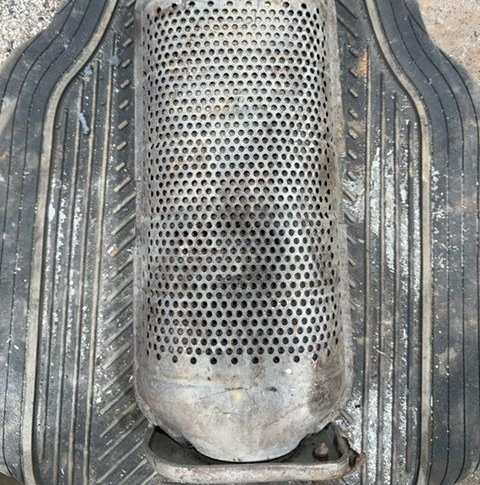
Catalytic converters don't look like they contain anything valuable. Shake one and you'll hear a rattle. Cut it open and you'll find a ceramic honeycomb — or in some cases, a metallic substrate — coated with a thin wash of precious metals. Those metals do the actual chemical work of converting harmful exhaust gases into less harmful compounds. They also happen to be worth serious money.
Here's what's inside:
- Platinum (Pt): Used heavily in diesel converters. Stable compared to the other PGMs (platinum group metals), but still subject to global commodity swings. Diesel-heavy markets like Europe drive a lot of platinum demand.
- Palladium (Pd): Dominant in gasoline converters. Palladium had a wild run in the early 2020s, peaking dramatically before pulling back. As of 2026, palladium prices have softened from those highs, largely due to electric vehicle adoption reducing long-term gasoline engine demand — but it still makes up a major portion of most cat values.
- Rhodium (Rh): The wild card. Rhodium is the rarest of the three and has the most volatile price history of any traded metal. It can swing hundreds of dollars in a short period. Even tiny amounts of rhodium in a converter can represent a significant chunk of the scrap value.
Every legitimate buyer — whether a local yard in Dayton or a national refinery — calculates your converter's value based on the estimated amounts of these three metals and their current spot prices. That's it. That's the formula.
How Buyers Calculate Cat Converter Value
The process starts with identification. Buyers use the converter's serial number, OEM part number, or physical characteristics to match it to a known assay — a historical record of what precious metal content that specific unit typically contains. No two converters are identical, but consistent manufacturing means the averages are well-documented.
Once the converter is identified, the calculation looks roughly like this:
- Identify the unit — serial number, manufacturer, vehicle application
- Pull the assay data — PGM content in troy ounces per unit (or per pound of substrate)
- Apply current spot prices — platinum, palladium, and rhodium trade daily on global commodity markets
- Apply a refinery return percentage — refineries don't pay 100% of spot; they pay a percentage that reflects processing costs and margin
- Subtract logistics and handling — shipping, sorting, and processing costs
What you receive as a seller is the result of that chain of calculations. The problem is, if you're calling one buyer and accepting their number, you have no way of knowing if that number reflects the real math — or their margin. That's where competition becomes the most important factor in the transaction. Platforms like SMASH Scrap — where verified buyers bid on your metal exist specifically to solve that problem by putting multiple vetted buyers against each other on documented loads.
To check current catalytic converter prices before you sell, use a pricing tool that pulls live PGM spot data — not a static price list from six months ago.
Why Scrap Catalytic Converter Prices Dayton Sellers See Can Vary So Much
If you've gotten quotes from multiple buyers in the Dayton area and seen wildly different numbers for the same converter, you're not imagining things. That spread is real, and it comes from several places.
Spot price timing matters. Rhodium and palladium can move significantly between Monday morning and Friday afternoon. A quote you got last Tuesday may not reflect today's market. Always get your quotes on the same day and make sure buyers are working off current spot prices.
Identification accuracy matters. If a buyer misidentifies your converter — or groups it into a lower-value category — your payout drops. High-quality photo documentation and serial number tracking help prevent this. When you document your load properly before it leaves your hands, buyers have less room to downgrade the value after the fact.
Buyer margins vary. Some buyers in Ohio operate with thin margins because they move volume. Others rely on uninformed sellers. The only way to know which you're dealing with is to get competing offers. One buyer's "best price" is another buyer's starting point.
Converter type matters enormously. A domestic foil converter from a late-model American truck and an aftermarket converter that was installed as a replacement have completely different PGM loads. OEM converters from certain foreign vehicles — Toyota, Honda, GM trucks — often carry significantly more precious metal content than their aftermarket replacements. Knowing what you have before you sell is worth real money.
How the Catalytic Converter Auction Model Changes the Game
The traditional scrap cat sale looks like this: you call one buyer, they give you a number, you take it or leave it. Maybe you call two buyers. You feel like you've done your homework. But you haven't created competition — you've just sampled two data points from a market that has many more participants.
A catalytic converter auction model flips that entirely. Instead of you going to buyers one at a time, vetted buyers come to you — simultaneously — and compete for your load. The price isn't set by one buyer's margin. It's set by the market.
This matters most when you're moving volume. An auto shop in Dayton doing 20-30 converters a month, or a scrap yard in Ohio pulling cats from a steady stream of end-of-life vehicles, has leverage that a single-call approach completely throws away. SMASH is built around this model — bring your documented load to the platform, let verified buyers bid, and the final number reflects actual market demand rather than one buyer's offer.
The competitive auction format also creates a paper trail. Every bid is documented. That transparency protects sellers and builds trust with buyers who are serious about long-term relationships. If you want to get the best catalytic converter price today, competition is the mechanism that gets you there — not negotiating harder with a single buyer who holds all the information.
What the 2026 PGM Market Means for Cat Sellers
The platinum group metals market in 2026 reflects a few competing forces that every cat seller should understand — even at a high level.
Electric vehicle adoption continues to grow, which puts long-term downward pressure on palladium demand (since EVs don't need catalytic converters). However, the transition is gradual, and the existing fleet of gasoline and hybrid vehicles still represents hundreds of millions of converters that will eventually come off the road as scrap. Near-term supply of end-of-life cats remains healthy.
Rhodium supply is structurally tight. Most of the world's rhodium comes from South Africa as a byproduct of platinum mining. Supply disruptions there can spike prices with very little warning. Sellers with high-rhodium converters — often found in certain European and domestic vehicle applications — should pay close attention to spot prices before committing to a sale.
Platinum has found support from hydrogen fuel cell development and continued diesel vehicle presence in global markets. It's the most stable of the three PGMs right now, which gives platinum-heavy diesel cats a relatively predictable value floor.
None of this means you can time the market perfectly. But understanding the direction of each metal helps you make smarter decisions about when to sell and which converters to prioritize moving. For deeper market context, read catalytic converter pricing guides that track live PGM trends rather than relying on static information.
Disclaimer: Catalytic converter prices fluctuate daily based on PGM spot prices. Always verify current rates before selling. The information in this article reflects general market conditions as of October 2026 and is not a guarantee of specific pricing.
How to Get the Best Price for Your Scrap Cats in Dayton
Here's the practical checklist for anyone in Dayton or the broader Ohio area looking to sell scrap catalytic converters in 2026:
- Document everything before it leaves your hands. Photos, serial numbers, unit counts. This protects you from post-shipment downgrades and gives buyers the information they need to bid accurately.
- Know what you have. OEM vs. aftermarket matters. Foreign vs. domestic matters. Large vs. small substrate matters. If you're unsure, use a VIN lookup or serial number identification tool before quoting.
- Check current PGM spot prices. Platinum, palladium, and rhodium trade publicly. A five-minute check on the day you're selling gives you a baseline for evaluating any offer.
- Get multiple offers on the same day. Don't accept a quote from Monday and compare it to a new quote on Thursday. Same-day comparison is the only apples-to-apples test.
- Use a competitive platform. Single-buyer negotiation leaves money on the table. More catalytic converter buyers Ohio sellers can access — simultaneously — the better the price discovery.
- Don't wait on volume you've already accumulated. PGM prices move. Holding a large lot hoping for a spike is speculation, not strategy. Sell documented loads at current market and move on.
If you're ready to stop guessing and start selling into a real market, SMASH connects you with vetted buyers who compete for your loads — no subscriptions, no games. When you win, they win. That's the only model that makes sense for serious sellers.
Ready to find out what your cats are actually worth? Get the best price for your catalytic converter — request a free quote at best-catalytic-converter-price.com and let the market tell you the number.
Frequently Asked Questions
Q: What makes scrap catalytic converter prices in Dayton different from other markets?
The base value of any converter comes from PGM content and global spot prices — those don't change by city. What varies locally is buyer competition, logistics costs, and whether you have access to platforms that bring multiple catalytic converter buyers Ohio and beyond into a single competitive process. More competition means better price discovery, regardless of your zip code.
Q: How often do cat converter prices change?
Platinum, palladium, and rhodium trade on global commodity markets every business day. Prices can move meaningfully in a single session, especially rhodium. Always get same-day quotes and confirm which spot price date your buyer is using to calculate their offer.
Q: Does it matter if my converter is OEM or aftermarket?
Yes — significantly. OEM converters typically contain more precious metal than aftermarket replacements, which are engineered to meet emissions standards at lower cost. An aftermarket cat that looks identical to an OEM unit can be worth a fraction of the price. Proper identification using serial numbers or VIN lookup protects you from being paid aftermarket rates for an OEM unit.
Q: What's the best way to sell a large lot of scrap cats from a shop in Dayton?
Document your load thoroughly — photos and serial numbers for each unit — then bring it to a platform where multiple vetted buyers can bid simultaneously. Volume gives you negotiating power, but only if you're using it in a competitive format. Single-buyer calls on large lots are where sellers leave the most money behind.
Q: Are cat converter price lists from the UK or Australia useful for US sellers?
Not directly. A catalytic converter price list UK or catalytic converter price list Australia reflects local market conditions, currency exchange rates, and regional buyer margins that don't apply to US transactions. For accurate pricing as a seller in Ohio, use a tool or platform that reflects USD spot prices and North American buyer demand.
Stay current on scrap metal market trends and PGM pricing movements — follow SMASH on LinkedIn for regular industry updates and catalytic converter market insights.