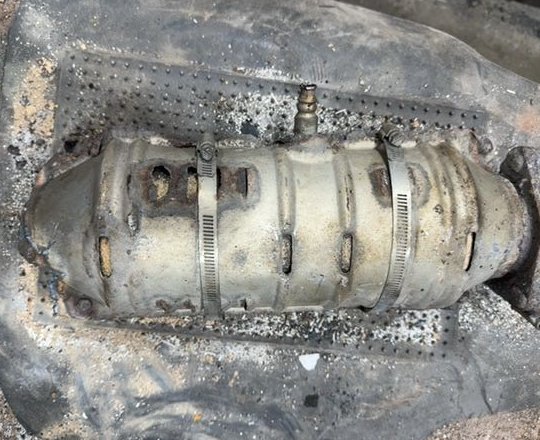
Most people selling scrap catalytic converters have no idea what they're worth on any given day — and that's exactly how some buyers prefer it.
The market for scrap cats moves constantly. Platinum, palladium, and rhodium prices shift daily based on mining output, industrial demand, and currency fluctuations. If you're trying to sell catalytic converters online without understanding those swings, you're leaving real money on the table. This weekly recap breaks down what's driving prices this week, what to watch, and how to make sure you're not the person getting the short end of the deal.
Why Catalytic Converter Scrap Prices Move Every Single Day
Scrap cat prices aren't like used car values — they don't drift slowly over months. They can move meaningfully in 24 hours. That's because the value of a catalytic converter is almost entirely tied to the precious metals locked inside it: platinum, palladium, and rhodium. These are traded on global commodity exchanges, and the platinum price today at market open in London can look different from what it is by the time you're loading a truck in Denver.
Here's what drives daily movement:
- Platinum, palladium, and rhodium spot prices — The big three. Every OEM converter price traces back to these numbers. Rhodium in particular is known for violent swings; it can represent a significant percentage of a high-grade cat's value.
- Currency exchange rates — PGMs (platinum group metals) are priced in USD globally. A stronger dollar can compress prices; a weaker one can push them up.
- Industrial demand signals — Auto production data, EV adoption forecasts, and mining disruptions in South Africa or Zimbabwe all move the needle.
- Recycling supply volume — When a lot of cats hit the market at once (think end-of-quarter fleet auctions), prices can soften temporarily.
Understanding this doesn't require a finance degree. It just requires knowing that when someone offers you a flat rate with zero explanation, they're not doing you a favor — they're doing themselves one.
This Week's Market Snapshot: What Sellers in Colorado Should Know
As of the week of October 25, 2026, PGM markets continue to reflect ongoing tension between constrained South African mine output and steady automotive catalyst demand from Asian manufacturers. Palladium has seen moderate pressure from accelerating hybrid and plug-in hybrid production, which uses different converter configurations than traditional ICE vehicles. Platinum, meanwhile, has held relatively firm, supported by hydrogen fuel cell investment and ongoing diesel catalyst demand in international markets.
For sellers in Colorado, here's what this practically means:
- High-grade domestic cats (think OEM converters from full-size trucks and SUVs) remain among the most valuable loads you can move. These units carry meaningful platinum and palladium content.
- Foreign or exotic cats — particularly from European or Japanese imports — continue to command strong interest from processors who can accurately assay the PGM content.
- Aftermarket or direct-fit replacements typically carry far less PGM loading than OEM units. Know what you have before you quote anyone a price.
- Bead and foil converters remain in demand but require accurate identification — don't let misidentification cost you on a full load.
Denver yards and auto recyclers are well-positioned right now. Colorado sees high volumes of older domestic trucks — the kind that carry high-value OEM converters. If you're sitting on inventory, the market this week isn't punishing you for holding. But don't assume that holds through next week.
The Identification Problem: Why You Can't Price What You Can't Identify
Here's a hard truth: the biggest money lost in scrap catalytic converter sales isn't lost because of bad market timing. It's lost because sellers can't accurately identify what they have.
A catalytic converter without a legible serial number or a verified make/model match is worth whatever the buyer decides it's worth — and that number will be conservative. Buyers price uncertainty into their offers. If they can't confirm the PGM content, they assume the worst-case scenario and protect their margin accordingly.
This is where proper scrap metal inventory management becomes a real dollar-and-cents issue. Platforms like SMASH let you compare scrap metal bids from verified buyers — but that process only works at its best when your inventory is documented properly. That means:
- Serial numbers captured and cross-referenced before any buyer sees your lot
- Photos of the unit, the end pipes, and the substrate visible through any damage
- VIN-matched vehicle data where applicable, especially for full cars or insurance write-offs
- Clear separation of OEM vs. aftermarket units in any load manifest
Documented inventory gives buyers more confidence to bid aggressively. That's not a theory — it's how markets work. When a buyer can see exactly what they're pricing, competition opens up. When they can't, they hedge.
For Denver-area sellers, Denver scrap metal services through best-catalytic-converter-price.com can help you get properly organized before you go to market — so you're not handing anyone a reason to low-ball you.
How to Sell Catalytic Converters Online Without Getting Burned
Selling cats online sounds straightforward. It's not — if you're doing it wrong. The old way: one phone call, one buyer, one number. You take it or you don't. That model works great for the buyer and poorly for you.
The smarter approach puts competition back in your corner. When multiple vetted buyers see the same documented inventory at the same time, you stop guessing what your load is worth and start finding out. That's the difference between a price and a market.
Here's how to do it right:
- Document everything before you list. Serial numbers, photos, weights, OEM vs. aftermarket classification. Do this once, do it right.
- Don't accept the first offer. Even if it sounds reasonable. You don't know what reasonable is until you've seen competing bids.
- Understand PGM exposure in your load. High-rhodium units (certain Toyota and Honda cats, some BMW) carry very different values than a generic aftermarket replacement. Know your mix.
- Time your sale with awareness. If palladium dropped 8% this week, it might not be the week to move a palladium-heavy load if you have the flexibility to hold.
- Use a platform that works for you, not the buyer. Get the best catalytic converter price today by putting your inventory in front of buyers who compete for it — not buyers who know they're the only option.
SMASH was built exactly for this. No subscription fees. No pressure to accept a lowball. Just vetted buyers, a competitive auction format, and full transparency on what your inventory is actually worth in the current market. Read catalytic converter pricing guides to go deeper on how the process works before your first listing.
Weekly Seller Checklist: What to Do Before You Move Inventory This Week
Markets are moving. Here's your practical checklist for this week if you're sitting on scrap catalytic converters in Colorado or anywhere in the U.S.:
- ✅ Check current PGM spot prices — platinum, palladium, and rhodium. Know where the market opened today before any conversation with a buyer.
- ✅ Audit your inventory documentation. If serials are missing or photos are unclear, fix that before going to market.
- ✅ Separate your high-grade OEM units from aftermarket. Don't bundle them if you don't have to — it dilutes the value of your best pieces.
- ✅ Get a current quote from more than one source. If you only have one number, you have no idea if it's good.
- ✅ Verify your buyer is legitimate. SMASH only works with vetted buyers — that matters when you're dealing with high-value loads.
Denver sellers, in particular, should be aware that Colorado law continues to enforce strict documentation requirements on catalytic converter purchases. Keeping clean records isn't just good business — it's legally required. Make sure your BOLs and packing lists reflect accurate counts, unit descriptions, and seller information before anything moves.
If you're ready to check current catalytic converter prices and get your inventory in front of buyers who are actually competing for it, this week is as good a time as any to stop guessing and start selling with data behind you.
Disclaimer: Catalytic converter scrap prices fluctuate daily based on platinum, palladium, and rhodium spot prices, global supply and demand, and regional market conditions. Always verify current rates before finalizing any sale. Prices referenced in this article reflect general market context for the week of October 25, 2026, and are not guaranteed quotes.
Frequently Asked Questions
Q: How often do catalytic converter scrap prices change?
Catalytic converter scrap prices can change daily — sometimes multiple times in a single day. Because cat values are tied directly to platinum, palladium, and rhodium spot prices, any movement in global PGM markets affects what buyers are willing to pay. Check current prices on the day you plan to sell, not the day before.
Q: Can I sell catalytic converters online if I'm in Denver, Colorado?
Yes. Online platforms make it possible to list your inventory and receive bids from verified buyers across the U.S., regardless of your location. Denver sellers benefit from strong local volume of high-value domestic truck converters, which are consistently in demand. Using a platform like SMASH puts that inventory in front of competing buyers without limiting you to local yard rates.
Q: What's the difference between an OEM and aftermarket catalytic converter for scrap value?
OEM (original equipment manufacturer) converters are installed at the factory and carry significantly higher PGM loading than most aftermarket replacements. This means they're typically worth considerably more as scrap. Aftermarket cats are often designed to meet emissions standards at lower cost, which means less precious metal content. Always identify which type you have before pricing a load.
Q: Why do buyers pay more for documented catalytic converter inventory?
When a buyer can verify serial numbers, confirm vehicle make and model, and see clear photos of the units, they can price more accurately — and more confidently. Uncertainty leads to conservative bids. Documented inventory removes uncertainty, which allows buyers to compete more aggressively. Better documentation almost always leads to better price discovery.
Q: Is it legal to sell scrap catalytic converters in Colorado?
Yes, but Colorado has specific regulations around documentation for catalytic converter sales, designed to combat theft. Sellers are generally required to provide proof of ownership, valid ID, and accurate records of the units being sold. Keeping clean packing lists, BOLs, and seller information on file protects you legally and makes your inventory easier to sell on legitimate buyer platforms.
If you're done guessing what your cats are worth and ready to find out what the market will actually pay, get a free quote at best-catalytic-converter-price.com and let buyers compete for your inventory. That's how you get the best price for your catalytic converter — not by hoping one buyer is being fair.
Follow SMASH on LinkedIn for weekly scrap metal market updates, PGM price insights, and industry news that actually matters to recyclers and yard operators.