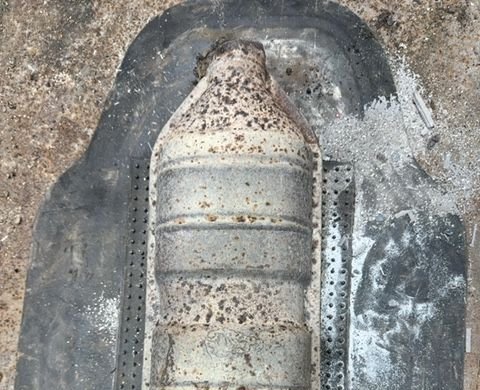
What's Actually Inside a Catalytic Converter — and Why It Matters for Price
Most people know scrap catalytic converters are worth money. Fewer understand why — or why the price swings so dramatically from one week to the next. If you're sitting on a pile of cats and you're not tracking catalytic converter prices today, you're likely leaving money on the table. This week's market recap breaks down exactly what drives converter value: the three platinum group metals (PGMs) inside every unit, how their spot prices move, and what that means for sellers in El Paso and across Texas right now.
Understanding the fundamentals isn't just trivia. It's the difference between accepting a lowball offer and knowing when to push back. Let's get into it.
The Three Metals That Determine Catalytic Converter Value
Every catalytic converter contains a ceramic or metallic substrate coated with a precise blend of platinum, palladium, and rhodium. These are platinum group metals — some of the rarest and most industrially critical materials on earth. The exact loading varies by vehicle make, model, engine size, and manufacturer — but those three metals are always the starting point for any legitimate price calculation.
Here's a quick breakdown of what each metal does and why it matters at the recycling yard:
- Platinum (Pt): Handles oxidation of hydrocarbons and carbon monoxide. Common in diesel converters and many OEM gasoline units. Historically the most recognizable of the three PGMs.
- Palladium (Pd): The dominant metal in most modern gasoline catalytic converters. Palladium prices have been one of the biggest drivers of converter value over the past decade, and they remain volatile in 2026.
- Rhodium (Rh): The rarest and often the highest-value of the three. Rhodium handles nitrogen oxide reduction. Even tiny amounts — fractions of a gram — can represent significant dollar value depending on spot price conditions.
When a recycler or processor quotes you a price on a cat, they're working backward from the current spot price of these three metals, the estimated assay yield for that specific unit type, and their processing margin. No metal prices, no quote. It's that direct.
How Spot Prices for Platinum, Palladium, and Rhodium Move
PGM prices don't move like copper or aluminum. They're thinner markets, more sensitive to geopolitical shifts, automotive demand signals, and mining supply out of South Africa and Russia — the two countries that dominate global PGM production. That makes them unpredictable in ways that scrap steel or even non-ferrous metals are not.
In 2026, palladium has seen continued pressure as the EV transition gradually reduces demand from internal combustion engine production. That said, ICE vehicles still dominate the global fleet, and replacement and repair cycles continue to generate catalytic converter scrap volume. Platinum has remained more stable, with growing interest from the hydrogen fuel cell sector adding a new demand layer. Rhodium remains extraordinarily volatile — small supply disruptions can spike its price fast.
What this means for sellers: the cat converter value on a unit you're holding today may not be the same as it was last month — or what it will be next month. Timing matters. So does having access to competitive, transparent pricing rather than a single buyer's quote.
Disclaimer: PGM spot prices fluctuate daily. Always check current catalytic converter prices before accepting any offer.
OEM vs. Aftermarket Converters — and Why It Affects Your Price
Not all catalytic converters carry the same PGM loading, and this is where sellers — especially first-timers — often get confused. OEM converter price premiums exist for a reason: factory-installed converters from the original manufacturer are built to tighter emissions standards and typically contain higher PGM loadings than aftermarket replacements.
An aftermarket converter sourced from a low-cost supplier might look nearly identical to an OEM unit on the outside. On the inside, the substrate loading could be a fraction of what you'd find in the original. When a processor runs your cat through assay, that difference shows up directly in the payout. Selling an aftermarket unit as if it's OEM-grade is one of the fastest ways to lose credibility with buyers — and one of the most common mistakes new sellers make.
Here's how to think about converter categories at the yard level:
- High-grade OEM units — late-model domestic and import vehicles, full PGM loading, top payout tier
- Mid-grade OEM units — older vehicles, worn substrates, partial loading, mid-tier pricing
- Aftermarket / replacement converters — lowest PGM content, bottom-tier payout
- Exotic/specialty units — diesel particulate filters (DPFs), pre-cats, torpedo-style converters — pricing varies widely and requires specific buyer expertise
Knowing which category your inventory falls into — and having a buyer who can accurately identify and price each — is critical. That's exactly where platforms like SMASH create an advantage. Competition among informed buyers leads to better price discovery across all converter grades.
Why Competitive Bidding Beats the One-Buyer Phone Call — Especially in El Paso
If you're running a shop or a yard in El Paso, you already know the market can feel thin. You've got a handful of local buyers, a few brokers who call in, and maybe one processor relationship that you've been using for years. That setup is comfortable. It's also almost certainly costing you money.
Single-buyer pricing is a ceiling, not a market. When one buyer sets your price, there's no competitive pressure keeping them honest. They're not wrong to offer what they offer — they're running a business too. But you have no visibility into whether that number reflects the actual PGM-based value of your inventory, or whether it simply reflects what that buyer needs to offer to keep your account.
Platforms like North America's B2B scrap metal auction platform SMASH exist to replace that dynamic with something better. When multiple vetted buyers compete on your load — with documented inventory, photo evidence, VIN lookups, and serial tracking attached — pricing reflects the actual market. That's not a sales pitch. That's how competitive markets work.
For sellers across Texas, including those running volume through El Paso scrap metal services, the ability to access buyers beyond your local network is a structural advantage. You don't have to drive further or make more calls. You list your inventory, qualified buyers bid, and you compare real offers side by side.
What to Document Before You Sell Your Cats
Documentation is the part most sellers skip — and it's the part that has the most impact on what buyers are willing to offer. A load of converters with clear photos, accurate counts, and properly identified unit types will consistently attract stronger bids than a vague listing with a phone photo of a pile on the floor.
Before you go to market, do this:
- Count and sort your inventory — separate by grade (OEM, aftermarket, DPF, pre-cat)
- Photograph each unit clearly — show the serial or part number, the substrate condition, and any physical damage
- Run VIN lookups where possible — especially on higher-value late-model OEM units
- Note any cracked substrates — rattled or cracked cats carry a steep discount; disclose it upfront
- Estimate weight by category — buyers need this to structure accurate bids
SMASH's inventory tool is built specifically for this workflow. It lets you document your load systematically, attach photos, and present a clean, credible listing to buyers. That documentation builds buyer confidence — and buyer confidence drives competitive bidding. To get the best catalytic converter price today, showing up prepared is half the battle.
This Week's Market Context — October 2026
As of this week, PGM markets continue to reflect the broader macro environment: palladium remains under modest pressure from longer-term EV transition narratives, while platinum holds relatively firm on hydrogen sector interest. Rhodium spot pricing has shown less volatility recently than in prior years, but remains one of the most sensitive metals to supply-side news out of South Africa.
For sellers in El Paso and across Texas, the practical implication is this: converter prices today are real, active, and competitive — but they are not guaranteed to stay where they are. If you're holding volume and waiting for a "better" moment, make sure that decision is based on actual market data, not a hunch. Talk to multiple buyers. Use a platform that creates transparency. And read catalytic converter pricing guides to stay informed between sales cycles.
The yards and shops that consistently get strong prices aren't lucky. They understand the metals driving their inventory value, they document properly, and they sell into competition — not into a single relationship with no leverage.
If that's where you want to be, start by getting a real quote. Visit best-catalytic-converter-price.com to see what your inventory is actually worth in today's market — no subscription required, no guesswork.
Frequently Asked Questions
Q: What metals determine the price of a scrap catalytic converter?
Three platinum group metals drive catalytic converter value: platinum, palladium, and rhodium. The specific mix and loading depends on the vehicle make, model, and model year. Processors use assay data and current spot prices for all three metals to calculate what each unit is worth.
Q: Why do catalytic converter prices change so frequently?
PGM spot prices trade daily on global commodity markets and react to automotive demand signals, mining supply disruptions, and macroeconomic conditions. Because converter payouts are tied directly to these spot prices, the value of your inventory can shift meaningfully from week to week. Always check current rates before selling.
Q: How do I get the best catalytic converter price in El Paso, Texas?
The most reliable way to maximize your payout is to sell into competition — not to a single buyer. Document your inventory clearly with photos and part numbers, identify OEM versus aftermarket units, and use a platform like SMASH that connects you with multiple vetted buyers who bid against each other on your load.
Q: Does a cracked or rattled catalytic converter still have value?
Yes, but significantly less. A cracked substrate loses PGM material through the damage, and buyers factor that in. Disclose substrate condition upfront — trying to hide damage destroys trust with buyers and can get your load rejected or repriced after inspection.
Q: What's the difference between an OEM and aftermarket catalytic converter for scrap value?
OEM converters typically carry higher PGM loadings than aftermarket replacements, which translates directly to a higher scrap payout. Aftermarket units are built to meet minimum emissions requirements at lower cost, often using less platinum, palladium, and rhodium. A legitimate buyer will identify the difference — so accurate sorting and disclosure matter before you sell.
Follow SMASH on LinkedIn for weekly scrap metal market updates, pricing insights, and industry news: linkedin.com/company/scrap-metal-auction-sales-hub.