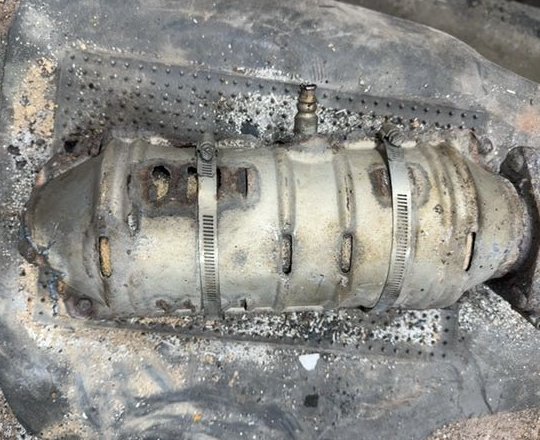
Why the Rhodium Price Today Changes What Your Catalytic Converter Is Actually Worth
Most people selling a scrap catalytic converter think of it as a single transaction — pull it off, get a number, move on. But the price you get depends on a layered system of grading and precious metal values that shifts daily. The rhodium price today alone can swing your payout by hundreds of dollars per unit. If you're selling in Flint, Michigan and you don't understand how cats are graded, you're leaving real money on the table.
This guide breaks down exactly how catalytic converter grading works, what drives the pricing tiers, and how to position yourself to get a fair, market-based number — not whatever a single buyer decides to offer you that morning.
The Three Precious Metals Inside Every Catalytic Converter
Every catalytic converter contains a substrate coated with a blend of platinum group metals (PGMs): platinum, palladium, and rhodium. These three metals do the actual emissions work — converting toxic exhaust gases into less harmful compounds. They're also what makes your old cat worth far more than most scrap metal by weight.
Of the three, rhodium is the one that causes the most price volatility. It's rare, it's difficult to mine, and global supply is concentrated in a handful of South African operations. When industrial demand spikes — or supply tightens — the rhodium price today can move dramatically. Palladium follows its own trajectory, heavily tied to gasoline engine production. Platinum, historically the most valuable, has played second fiddle to palladium for years but holds its own in diesel applications.
- Platinum (Pt): Common in diesel-engine converters. Relatively stable but influenced by European automotive demand.
- Palladium (Pd): Dominant in gasoline converters. Highly sensitive to global new-car production volumes.
- Rhodium (Rh): Present in the smallest quantities but often the highest value per troy ounce. Even small fluctuations in the rhodium price today ripple across every grade of converter.
Understanding this mix matters because different converter types carry different concentrations of each metal. That concentration difference is the foundation of the entire grading system.
How Catalytic Converter Grading Actually Works
The scrap industry categorizes catalytic converters into grades — typically labeled as domestic, foreign (import), high-grade, low-grade, and aftermarket (also called "biscuit" or "direct fit" aftermarket). These aren't arbitrary labels. They reflect the expected PGM loading inside the substrate, which buyers estimate based on converter type, vehicle application, and manufacturer data.
OEM catalytic converter value is the benchmark the industry works from. Original equipment manufacturer converters — the units installed at the factory — carry higher and more consistent PGM concentrations than aftermarket replacements. An OEM converter from a late-model Toyota or Honda will typically grade higher than a replacement unit installed at a muffler shop three years later, even if they look identical from the outside. This is a crucial distinction that many first-time sellers miss entirely.
Common Grading Tiers
- High-Grade Domestic: Typically large-body converters from American trucks and SUVs. High PGM content. These include units from full-size pickups and luxury vehicles with bigger engines.
- Standard Domestic: Mid-range converters from passenger cars and smaller trucks. Solid PGM content, high volume in the market.
- Foreign/Import Grade: Generally smaller converters from Japanese and European vehicles. Can range from low to high PGM depending on the specific model.
- High-Grade Foreign: Import converters from hybrid vehicles (notably Toyota Prius and Honda hybrids) often carry exceptional PGM loading because hybrids rely more heavily on the converter to manage emissions during cold starts.
- Aftermarket/Biscuit: The lowest tier. These were manufactured cheaply, often with minimal PGM content to meet basic legal thresholds. Payouts reflect that reality.
- Pre-Cats and Small In-Lines: Tiny units, often nested close to the exhaust manifold. Low substrate volume but can carry concentrated PGM in some applications.
If you're sorting a load of cats in Flint and you've got a mix of domestic truck units alongside a stack of aftermarket replacements, you're looking at two very different value pools — even if the converters weigh roughly the same. Sorting matters. A buyer who grades accurately is worth more than one who gives you a flat rate across the board.
Why the Rhodium Price Today Hits Every Tier Differently
Here's where it gets practical. Rhodium is present in virtually every catalytic converter, but its concentration varies significantly by grade. A high-grade domestic converter might carry three to five times the rhodium loading of a low-grade aftermarket unit. When the rhodium price today spikes, the payout gap between grades widens. A $200-per-ounce move in rhodium can mean a dramatically different spread between your best units and your worst.
This is why checking current market prices before you sell is non-negotiable. A rate sheet from last month is already stale. Buyers who purchase at flat weekly rates are pricing in their own risk margin — which comes directly out of your payout. To get the best catalytic converter price today, you need pricing tied to live spot values, not a buyer's convenient weekly average.
Platforms like the SMASH scrap metal auction marketplace create competitive pressure that forces pricing closer to actual market value. When multiple vetted buyers are bidding on your load, there's no room to hide a margin inside a stale rate card. Competition does the work for you.
Selling Catalytic Converters in Michigan: What Local Sellers Need to Know
Michigan's scrap market is active, particularly around the Flint corridor where auto industry history runs deep. Auto recyclers, salvage yards, and independent scrap collectors all move catalytic converters regularly. But "active market" doesn't automatically mean "fair market." In a region where relationships between sellers and buyers run long, it's easy to default to the same buyer every time — even if they're not offering the best rate.
If you're looking for catalytic converter buyers near me in or around Flint, proximity shouldn't be your only filter. How a buyer grades your material matters as much as where they're located. A buyer eight kilometers away who lowballs your high-grade domestics costs you more than shipping to a competitive buyer who prices accurately.
Michigan sellers also deal with a well-documented theft market that has tightened regulations around converter resale documentation. Keep your paperwork clean — vehicle ownership records, bills of sale, or yard receipts. Documented inventory moves faster and at better prices. Buyers at the top of the market want to know what they're buying, and proof of provenance removes friction from the transaction.
To check current catalytic converter prices before you call a local buyer, build that habit into your process. Know your approximate grade mix. Know the live spot prices for platinum, palladium, and rhodium. Walk into every conversation informed.
How to Use SMASH to Get Market-Rate Pricing on Your Cats
The old way of selling scrap cats is one phone call, one number, take it or leave it. The SMASH way is documented inventory, competitive bids, and full price transparency. For sellers looking to sell scrap metal online without a subscription fee and without guessing, that difference is significant.
SMASH connects sellers with vetted buyers across North America through an auction format. You document your load — photos, converter types, grade estimates, serial numbers where applicable — and buyers compete for it. The competition itself reveals what your material is actually worth at today's market. No single buyer controls your price. You can read catalytic converter pricing guides to sharpen your grading knowledge before you list.
For Flint sellers moving volume — whether you're a salvage yard pulling cats off wrecks or a collector who's built up inventory — SMASH gives you reach beyond your local market without requiring you to cold-call buyers or negotiate blind. The documentation tools also protect you: photo records and inventory tracking create a paper trail that matters in a market where compliance is increasingly important.
SMASH only wins when you win. No subscription fees. If your load doesn't sell, you haven't paid for the privilege of listing it. That alignment of interests matters when you're choosing who to trust with your material.
Frequently Asked Questions
Q: How does the rhodium price today affect what I get paid for my catalytic converter?
Rhodium is one of three precious metals inside every catalytic converter, and it's often the most valuable per ounce. When the rhodium price today rises, the payout on high-grade converters — which carry more rhodium — increases proportionally. Even small moves in rhodium spot pricing can meaningfully change what your load is worth, which is why checking live rates before you sell is essential.
Q: What's the difference between OEM and aftermarket catalytic converter value?
OEM (original equipment manufacturer) converters are built to stricter emissions standards and carry higher, more consistent concentrations of platinum group metals. Aftermarket converters are manufactured to meet minimum thresholds at lower cost, which typically means lower PGM loading and a lower scrap value. If you're sorting a mixed load, separating OEM units from aftermarket replacements before pricing is worth doing.
Q: Where can I sell catalytic converters in Michigan and get a fair price?
Local scrap yards in the Flint area can buy your converters, but a single buyer means a single offer with no competitive pressure. Online platforms that connect you to multiple vetted buyers — like SMASH — allow the market to set your price rather than one buyer's margin. Document your inventory, know your grades, and compare offers before committing.
Q: Does it matter how I document my catalytic converters before selling?
Yes, significantly. Buyers paying top dollar want to know exactly what they're bidding on. Clear photos, accurate grade identification, and vehicle sourcing documentation all reduce buyer risk — and reduced buyer risk translates to better offers. Michigan regulations around converter resale also make proper documentation a practical necessity, not just a best practice.
Q: Is the catalytic converter scrap price near me the same as national market rates?
Not always. Local buyers price based on their own margins, local competition, and how much they want your load on a given day. National market rates, tied to live platinum, palladium, and rhodium spot prices, can be meaningfully higher. Using a platform that exposes your load to multiple buyers across a wider geography helps close that gap between what a local buyer offers and what the market actually supports.
If you've got cats sitting in the yard and you're not sure what they're worth, stop guessing. Understand your grades, track the rhodium price today, and get your material in front of buyers who compete for it. Whether you're in Flint or anywhere across Michigan, the difference between a single phone call and a competitive process can be significant — and you won't know what you left behind until you try both. Get the best price for your catalytic converter and get a free quote at best-catalytic-converter-price.com.
Disclaimer: Catalytic converter prices fluctuate daily based on live platinum, palladium, and rhodium spot markets. Always verify current rates before selling. No prices referenced in this article should be taken as guarantees of value.
Follow SMASH on LinkedIn for ongoing scrap metal market insights, pricing updates, and industry news that keeps you informed between loads.