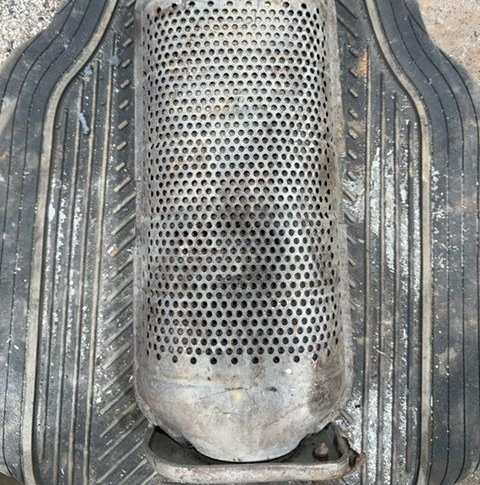
Foil vs. Bead Catalytic Converters: What's Inside Determines What You Get Paid
Most people selling scrap cats think a converter is a converter. Hand it over, get a check, move on. But if you've got a mix of foil-style and bead-style units sitting in your yard — or a pile you pulled from a fleet job in Boston — you're leaving real money on the table if you don't know the difference. The palladium price today is one of the biggest factors driving scrap catalytic converter value, and foil and bead converters carry those precious metals in very different concentrations.
This guide breaks down what each type is, what's inside, and what they're realistically worth in today's market. Whether you're a shop owner in Massachusetts, a scrap collector running routes, or a recycling yard trying to get better price discovery on your loads, this is what you need to know before you sell.
What Are Foil-Style Catalytic Converters?
Foil-style converters — also called metallic substrate converters — use a thin corrugated metallic foil wound into a honeycomb structure. That substrate is typically made from a ferritic stainless steel alloy, and the precious metal catalyst (platinum, palladium, or rhodium) is wash-coated onto the surface of that foil. The result is an extremely thin-walled, lightweight substrate with high surface area.
You'll find foil-style cats most often in:
- High-performance and sports vehicles
- European imports — BMW, Mercedes-Benz, Audi, Porsche
- Motorcycles and small-displacement engines
- Some diesel applications with tight packaging constraints
- Certain OEM converters on turbocharged engines where heat cycling is extreme
Foil converters tend to be smaller and lighter than ceramic bead or ceramic honeycomb units. That matters for scrap value. Less physical mass can mean less total precious metal content — but the loading rate (how much PGM per gram of substrate) is often competitive with ceramic. The challenge is that processing foil-style material requires specific smelting capability, and not every refinery handles it the same way. That variability in processing is one reason scrap catalytic converter value lookup tools exist — to match your material to buyers who can actually extract full value from it.
What Are Bead-Style Catalytic Converters?
Bead-style converters use small ceramic beads — think aquarium gravel, but engineered to precise tolerances — packed loosely inside the converter housing. The precious metals are impregnated into the surface of each bead. As exhaust flows through, it passes around and between thousands of beads, maximizing contact with the catalyst surface.
Bead cats were common in American vehicles from the late 1970s through the mid-1980s — think early GM trucks, Chrysler products, and some Ford applications from that era. They've largely been replaced by cordierite ceramic honeycomb substrates in modern OEM applications, but you still find bead units in:
- Classic and vintage American muscle and trucks
- Older fleet vehicles that haven't been updated
- Some aftermarket replacement converters on older platforms
- Restoration project vehicles where the OEM unit is replicated
Bead-style units present a unique challenge at the yard. The beads can shift, settle, or even leak out through cracks in the housing. If the housing is compromised, you may be losing substrate — and precious metal — before the converter ever reaches a processor. Documenting your units with photos before they leave your hands isn't optional. It's how you protect your payout. Platforms focused on scrap metal inventory management treat photo documentation as a core part of the process, not an afterthought.
Palladium Price Today and Why It Matters for Both Converter Types
Here's the part that directly affects your payout. The palladium price today is one of the three major PGM prices driving scrap catalytic converter values — alongside platinum and rhodium. All three are present in varying concentrations depending on the converter type, the vehicle it came from, and the year of manufacture.
In recent years, palladium has been the dominant PGM in gasoline vehicle converters. Automakers shifted heavily toward palladium (and away from platinum) for gasoline oxidation catalyst applications starting in the late 1990s, partly for cost reasons and partly for performance. That means the typical gasoline passenger car converter you're pulling today has significant palladium content — and palladium spot price directly moves the payout on those units.
How foil and bead converters stack up against each other on PGM content:
- Foil converters: Can carry competitive palladium and platinum loading per gram of substrate, but total PGM yield depends heavily on the specific application and how the unit was manufactured. European foil cats from performance platforms can carry meaningful precious metal value.
- Bead converters: Older units lean more toward platinum, since most bead cats predate the widespread shift to palladium-dominant formulations. If you're sitting on a stack of bead cats from early-80s trucks, you're looking at platinum content — which has its own spot price to track.
- Rhodium: Present in both types at low concentrations. Rhodium handles NOx reduction and commands a high per-ounce price, but the volume in any single converter is small. It adds up in bulk.
The practical takeaway: before you sell, check the palladium price today, the platinum spot, and the rhodium spot. All three affect your payout. A platform that lets you check current catalytic converter prices against live market data puts you in a much stronger position than calling one buyer and accepting whatever number they quote you.
What Foil and Bead Converters Are Actually Worth — Scrap Catalytic Converter Prices in Boston
Putting a single dollar figure on foil or bead converters isn't realistic, and anyone who does without seeing your specific units is guessing. That said, here's how to frame your expectations based on what's in the market right now.
Disclaimer: Catalytic converter prices fluctuate daily based on PGM spot prices, processor demand, and market conditions. The ranges below are general guidance only. Always get the best catalytic converter price today from a current, verified source before selling.
General value considerations for each type:
- High-grade foil converters (European performance applications, clean housing, intact substrate) — tend to command stronger per-unit prices due to PGM loading and buyer demand from specialty processors.
- Low-grade foil converters (motorcycle cats, small-displacement, heavily deteriorated) — lower PGM yield means lower payout. Don't overprice these expecting big returns.
- Bead converters in good condition (housing intact, beads secure, minimal cracking) — solid platinum content makes these worthwhile, particularly when platinum spot is elevated. Keep them contained — loose beads mean lost value.
- Bead converters with damaged housings — value drops sharply if substrate is compromised. Some processors discount heavily or decline these outright.
For yards and collectors in Boston and across Massachusetts, Boston scrap metal services can help you identify what you have and connect you with buyers who pay accurately for the material type. Local market access matters — getting your load in front of multiple vetted buyers beats accepting the first offer every time.
SMASH makes this process straightforward. Instead of calling one buyer and hoping the number is fair, you list your inventory — including foil and bead units — and let competition do the work. Find the best price for your scrap on SMASH and see what real market demand looks like for your specific material.
How to Sell Foil and Bead Converters — The Right Way
Getting full value from foil and bead converters comes down to documentation, identification, and access to the right buyers. Here's what that looks like in practice.
Step 1: Identify what you have. Foil converters are identifiable by their lighter weight and the metallic sheen visible if the housing is cut or damaged. Bead converters will rattle when shaken — the loose beads are unmistakable. If you're unsure, a scrap catalytic converter value lookup tool that lets you search by VIN, serial number, or photo can help you identify the type and get a price estimate before committing to a sale.
Step 2: Document everything. Photo documentation protects you from disputes and gives buyers confidence in your material. Serial numbers, housing condition, substrate integrity — all of it. This is especially important for bead cats where housing damage directly impacts value.
Step 3: Don't sell to one buyer. This is the core problem with the old way. One phone call, one quote, no leverage. The only way to know if a price is fair is to see what multiple buyers will offer. That's exactly what an auction format delivers.
Step 4: Use a platform built for this. SMASH handles inventory management, buyer vetting, photo documentation, and auto-invoicing in one place. If you want to sell catalytic converter online instantly without the guesswork, that's the workflow that gets you there. Read catalytic converter pricing guides to sharpen your knowledge before your next sale.
Frequently Asked Questions
Q: What is the palladium price today and how does it affect my catalytic converter payout?
Palladium spot price changes daily based on futures markets and industrial demand. Since palladium is a primary precious metal in most gasoline vehicle catalytic converters, a higher palladium price generally means higher payouts for scrap cats. Always check a live PGM spot price source before selling — the price you got quoted last week may already be stale.
Q: Are bead-style catalytic converters worth less than ceramic honeycomb converters?
Not necessarily. Bead cats from the right vehicles and eras can carry meaningful platinum content. The key is condition — a bead converter with a cracked or leaking housing loses substrate and value fast. Keep them sealed and contained until they reach a processor.
Q: Where can I sell scrap catalytic converters in Boston?
Several buyers operate in the Boston area and across Massachusetts, but price discovery is the challenge. Rather than calling one local buyer, using a platform like SMASH puts your inventory in front of multiple vetted buyers simultaneously. That competition is how you find out what your material is actually worth in today's market.
Q: How do I identify if my converter is foil-style or bead-style?
Weight and sound are your fastest indicators. Bead converters rattle distinctly when shaken — the loose ceramic beads are unmistakable. Foil converters are noticeably lighter than comparably sized ceramic honeycomb units and may have a metallic appearance if the substrate is visible. When in doubt, a serial number or VIN lookup can confirm the type.
Q: Can I sell foil and bead catalytic converters online?
Yes. Platforms like SMASH allow you to list, document, and sell scrap catalytic converters online — including specialty types like foil and bead units. Proper documentation (photos, serial numbers, condition notes) gives buyers the confidence to bid competitively, which means better price discovery for you.
If you've got foil cats, bead cats, or a mixed load sitting in your yard, don't guess at the value or settle for the first number someone throws at you. Get the best price for your catalytic converter — get a free quote at best-catalytic-converter-price.com and find out what your material is worth in today's market.
Follow SMASH on LinkedIn for industry updates, PGM market insights, and scrap metal pricing news.