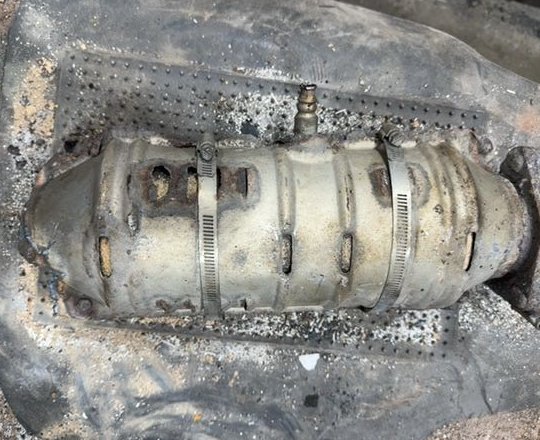
Rhodium costs more per ounce than gold, platinum, and palladium — sometimes by a factor of ten or more. If you're sitting on a pile of scrap catalytic converters and not thinking about rhodium content, you're leaving serious money on the table. Understanding OEM catalytic converter value starts with understanding what's inside the unit — and rhodium is the reason certain cats command prices that make first-timers do a double take.
This article breaks down why rhodium is so valuable, how it affects what your scrap cats are worth, and how sellers in Atlanta and across Georgia are using smarter tools to stop guessing and start getting paid.
What Makes Rhodium the Most Valuable Metal in a Catalytic Converter?
Platinum group metals (PGMs) — platinum, palladium, and rhodium — are the core active ingredients inside every catalytic converter. They sit on a ceramic or metallic substrate and trigger chemical reactions that convert harmful exhaust gases into less harmful ones. All three do real work. But rhodium does something the other two can't do as effectively: it neutralizes nitrogen oxides (NOx), one of the most regulated pollutants in vehicle emissions.
That functional specificity drives scarcity. Rhodium is one of the rarest elements on earth. Global annual production is measured in single-digit tonnes — a fraction of what platinum and palladium produce. South Africa accounts for the overwhelming majority of world supply, which means any disruption — labor, geopolitical, logistical — hits rhodium pricing hard and fast. When demand spikes and supply doesn't, prices go vertical. That's exactly what the market has experienced in cycles over the past decade, and those cycles aren't over.
- Rarity: Rhodium production globally is a small fraction of platinum and palladium output.
- Functionality: It's the primary NOx reduction agent — no good substitute exists at scale.
- Regulatory pressure: Tightening global emissions standards keep industrial demand elevated.
- Concentration in cats: OEM converters, especially from trucks and SUVs, often carry meaningful rhodium loads.
If you're selling scrap cats without knowing which units carry higher rhodium loads, you're essentially leaving cash sitting in a bin.
OEM Catalytic Converter Value: Why the Source Unit Matters
Not all catalytic converters are equal. An OEM unit — original equipment manufacturer, meaning it came off the vehicle as factory-installed — typically carries a higher PGM load than an aftermarket replacement. Aftermarket cats meet emissions standards, but they're often engineered to do it more cheaply, which can mean lower precious metal concentrations. That difference translates directly into OEM catalytic converter value at the scrap level.
Vehicle type compounds the difference. A large displacement truck or SUV running a factory cat will carry more substrate volume than a compact car. More substrate means more surface area, which typically means more PGM loading — including rhodium. Diesel units often have different configurations, with some carrying significant platinum loads but less rhodium. Knowing what you have before you sell isn't just useful — it's the difference between a fair price and a great one.
Buyers in the Atlanta market see this play out constantly. A yard running a mix of domestic truck cats, import economy cars, and older SUVs is sitting on a wide value range — even if every unit looks similar on the outside. Check current catalytic converter prices and compare by unit type before you move a load. The spread between low-value and high-value units can be dramatic.
How Rhodium Pricing Affects Catalytic Converter Prices Today
Catalytic converter prices today don't move in a straight line. They track PGM spot markets, and rhodium — despite representing a small fraction of the total metal volume in a converter — can swing overall cat values significantly because of its per-ounce cost. A moderate drop in rhodium spot can soften cat prices even when platinum and palladium hold steady. The inverse is also true: a rhodium spike can push cat values up quickly.
This is why selling scrap cats based on a fixed "price list" you got six months ago is a losing strategy. That list doesn't reflect where rhodium is trading today. It reflects where it was when someone printed it. Sophisticated buyers know the current spot. If you don't, you're negotiating blind.
The practical implication: treat your scrap catalytic converter inventory like a commodity position. Watch PGM markets. Time your sales with intention. And use platforms that price against real-time market data rather than static sheets. If you want to get the best catalytic converter price today, you need a process — not luck.
Scrap Metal Inventory Management: Stop Guessing, Start Documenting
Here's where most yards and collectors leave money on the ground: poor documentation. A catalytic converter is worth what a buyer is willing to pay — and buyers pay more when they have confidence in what they're buying. Photo documentation, serial numbers, VIN lookups, and accurate unit counts all contribute to buyer confidence. More confidence means more competitive bidding. More competitive bidding means better prices.
Scrap metal inventory management isn't just an operational efficiency play. It's a revenue play. When a buyer can see clear photos of your load, verify the unit types, and trust the packing list, they don't have to price in uncertainty. Uncertainty always costs the seller. Transparency works in your favor.
Platforms like find the best price for your scrap on SMASH are built around this idea. SMASH gives sellers tools to document inventory properly — photos, serial tracking, accurate unit counts — and then puts that documented load in front of vetted buyers who compete for it. The result is price discovery, not price guessing. For anyone managing regular cat volumes in Atlanta or across Georgia, that process difference adds up fast.
- Photograph every unit — multiple angles if possible.
- Record serial numbers and cross-reference against known unit databases.
- Separate OEM units from aftermarket before listing.
- Note vehicle source (truck, SUV, import economy) where you know it.
- Keep accurate counts — discrepancies at delivery kill deals and trust.
The SMASH Scrap Metal Auction Approach: Competition Drives Value
The old way of moving cats: call your one buyer, take what they offer, move on. No visibility into what other buyers would pay. No competition. No transparency. Just a number, delivered with confidence, that you have no way to verify is fair. That model benefits exactly one party — and it's not you.
The SMASH scrap metal auction model flips that dynamic. Your documented load goes in front of multiple vetted buyers simultaneously. They bid against each other. Competition reveals the market. You see what buyers are actually willing to pay — not what one buyer decides to tell you the market is. That's not a minor distinction. That's the structural difference between getting paid and getting played.
SMASH doesn't charge subscription fees. The model is straightforward: we only win when sellers win. For yards processing regular cat volumes — especially in active markets like Atlanta, where Atlanta scrap metal services are well-established — the auction format creates meaningful, recurring value. Not a one-time pop. A systematic improvement in how price discovery works for every load you move.
Auto shops, collectors, and recycling yards across Georgia are starting to treat their cat inventory the way serious commodity traders treat positions: with documentation, timing awareness, and multiple buyers competing. That shift in mindset is worth more than any single price tip.
What Atlanta Sellers Should Know Before Moving a Cat Load
Atlanta is a major logistics hub. That means buyers can reach you easily, and competition among buyers for quality loads is real. It also means you're operating in a market where savvy buyers are actively looking for sellers who don't know what they have. Don't be that seller.
Before you move any cat load out of Atlanta or anywhere in Georgia, run through this checklist:
- Know your units. OEM vs. aftermarket. Truck vs. car. Diesel vs. gas. These distinctions move price.
- Check PGM spot prices. Rhodium especially. Know roughly where the market is before you negotiate.
- Document your load. Photos, serials, accurate count. Don't give buyers a reason to discount.
- Get multiple offers. One quote is not a market. Multiple competing buyers is a market.
- Use a platform that works for you. Not just for the buyer.
For deeper context on how to approach this, read catalytic converter pricing guides that break down the variables affecting your specific unit types and market conditions in 2026.
The scrap catalytic converter market rewards the prepared. Rhodium makes certain loads genuinely valuable — but only if the seller understands what they have and puts it in front of buyers who compete. If you're in Atlanta, you have access to a real market. Use it like one.
Disclaimer: Catalytic converter prices fluctuate daily based on PGM spot markets. Always verify current rates before selling. Nothing in this article constitutes a guaranteed price or offer.
Frequently Asked Questions
Q: Why is rhodium more valuable than platinum or palladium in a catalytic converter?
Rhodium is significantly rarer than both platinum and palladium, with global annual production in the low single-digit tonnes. Its unique ability to neutralize nitrogen oxides (NOx) makes it functionally irreplaceable in catalytic converter chemistry. No cost-effective substitute exists at industrial scale, which keeps demand high relative to supply — and prices elevated.
Q: How do I know if my catalytic converter is OEM or aftermarket?
OEM units typically carry the vehicle manufacturer's stamp or serial number on the housing and were installed at the factory. Aftermarket units often have generic branding or replacement part markings. If you have access to VIN records or the vehicle history, cross-referencing the serial can confirm OEM status. When in doubt, a knowledgeable buyer or scrap platform can help you identify units from photos and markings.
Q: What affects catalytic converter prices today in Atlanta?
PGM spot prices — especially rhodium, platinum, and palladium — drive the base value of every catalytic converter. Vehicle type, OEM vs. aftermarket status, and substrate condition all affect final pricing. In Atlanta's active scrap market, competition among buyers also plays a real role. Using an auction-based platform like SMASH puts multiple buyers in competition, which helps ensure the price reflects actual market conditions rather than a single buyer's offer.
Q: How many cats do I need before it's worth listing on an auction platform?
There's no hard minimum, but larger loads attract more buyer competition and typically justify the documentation effort more clearly. Many sellers in Georgia start seeing meaningful price discovery benefits with loads of ten units or more. If you're accumulating cats regularly — from an auto shop, a yard, or collection routes — building a consistent process early pays off over time.
Q: Does proper inventory documentation actually change what I get paid for scrap cats?
Yes, directly. Buyers price in uncertainty. If they can't verify what they're buying — unit type, condition, count — they discount the offer to protect themselves. Clear photos, accurate serials, and honest counts reduce buyer risk, which reduces their need to discount. Documented loads on transparent platforms consistently attract more competitive bids than undocumented loads sold over the phone.
If you're moving cats out of Atlanta or anywhere across Georgia, the market is there — but only if you show up prepared. Get the best price for your catalytic converter by starting with the right process. Get a free quote at best-catalytic-converter-price.com.
Follow SMASH on LinkedIn for ongoing PGM market updates, scrap pricing insights, and practical guidance for yards and collectors across North America.