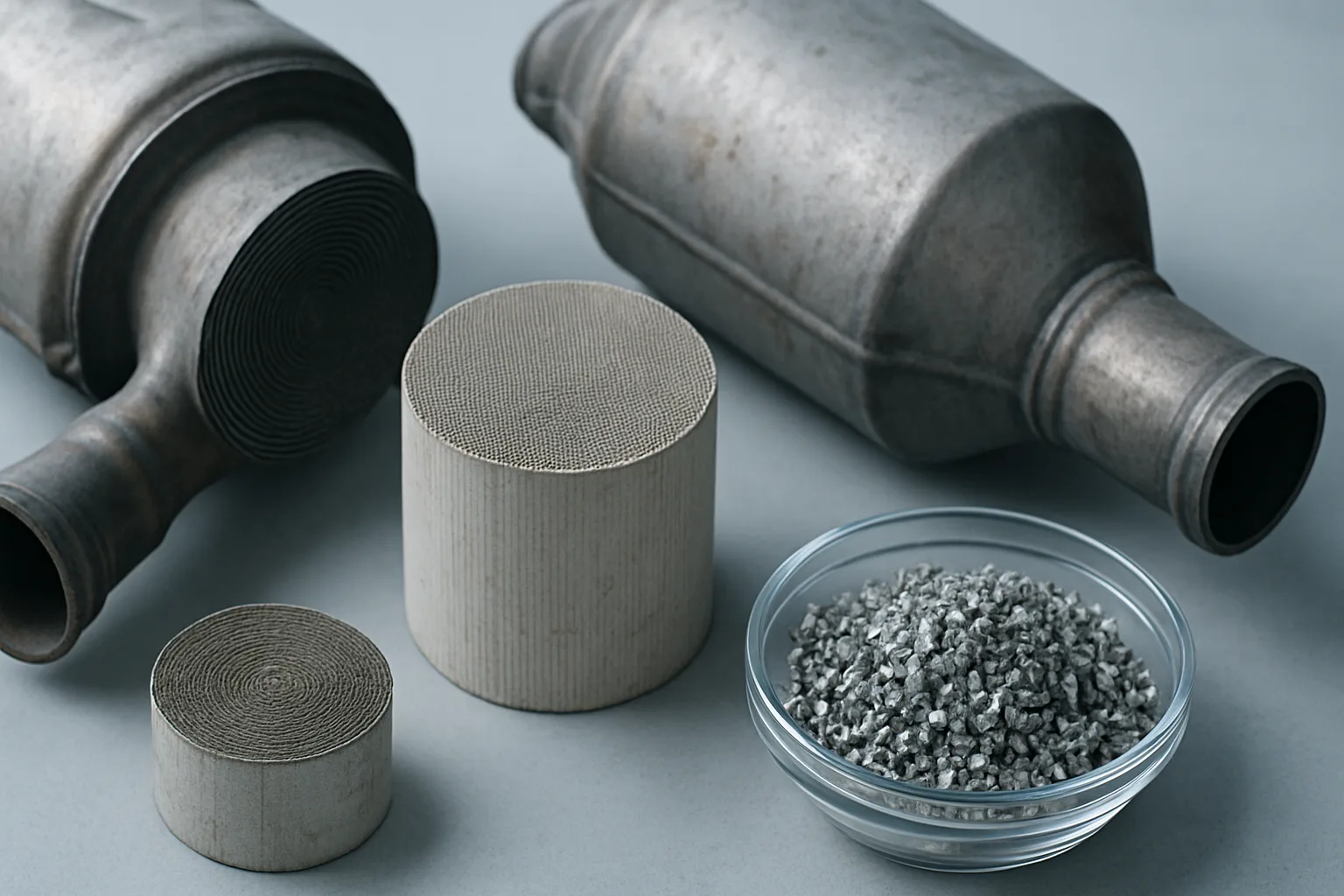
Foil vs. Bead Catalytic Converters: What's Inside Determines What You Get Paid
Most people selling scrap catalytic converters think all cats are roughly equal — strip it off, hand it over, done. That's leaving money on the table. The internal structure of a catalytic converter — whether it's foil-style or bead-style — directly affects how much platinum group metals (PGMs) it contains and what a buyer will actually pay. If you want to sell catalytic converters online at real market value, you need to understand what's sitting inside that shell.
This matters especially in high-volume markets like Atlanta, where auto shops, dismantlers, and collectors move significant quantities of scrap cats. Knowing the difference between foil and bead types gives you a real negotiating edge — whether you're selling one unit or a full pallet.
What Is a Foil-Style Catalytic Converter?
Foil-style converters use a metallic substrate — thin corrugated metal foil wound into a honeycomb structure. This substrate is coated with a washcoat that holds the platinum, palladium, and rhodium (the PGMs that give a cat its scrap value). Foil-style converters are most commonly found on European vehicles and high-performance applications where precise exhaust flow and heat resistance are engineering priorities.
The key characteristic of foil substrates: they tend to hold lower PGM loadings than ceramic honeycomb converters but can still carry meaningful value depending on the vehicle make and the specific alloy mix in the coating. The metallic substrate itself also has some base metal value — typically nickel and chromium content — that doesn't exist in ceramic units. Don't assume foil means low value. Some European OEM foil cats carry surprisingly strong recoveries.
- Common vehicles: BMW, Mercedes, Porsche, some diesel applications
- Substrate: Corrugated metallic foil (Fecralloy or similar alloy)
- PGM mix: Often higher platinum ratios relative to palladium
- Appearance when cut: Metallic sheen, flexible substrate layers
European recyclers have studied this type extensively. If you want context on how foil substrate recovery compares globally, searching for material on recycling the platinum group metals a european perspective turns up relevant technical literature — useful background even for North American sellers trying to understand why European vehicles command different pricing than domestic units.
What Is a Bead-Style Catalytic Converter?
Bead-style converters are exactly what they sound like: the catalyst is applied to small ceramic or alumina beads packed loosely inside the converter housing. Instead of a fixed honeycomb substrate, exhaust gas flows through and around a bed of these coated beads. This design was more common in older American vehicles — you'll find bead cats on some classic GM, Ford, and Chrysler models from the late 1970s and 1980s.
Bead-style cats behave differently in processing. The loose bead structure makes sampling and assaying more straightforward in some ways — the material is already granular and mixes more uniformly. However, bead cats are increasingly rare in the current scrap stream. When you do find one, it's worth identifying correctly before you hand it off at a flat rate. A mislabeled bead cat sold as generic scrap is a missed opportunity.
- Common vehicles: Older domestic cars and light trucks (1975–1990s era)
- Substrate: Loose alumina beads coated with PGMs
- PGM loading: Variable — some carry higher platinum content than expected
- Appearance when cut: Small round beads, no honeycomb, loose fill
- Processing note: Requires different handling than ceramic honeycomb units
If you're running Atlanta scrap metal services and you're sorting through older domestic inventory, bead cats are worth flagging separately. Atlanta scrap metal services that specialize in catalytic converters will recognize the difference and price accordingly.
Platinum, Palladium, and Rhodium: The Real Price Drivers
The scrap value of any catalytic converter — foil, bead, or ceramic honeycomb — comes down to one thing: the PGM content. Platinum, palladium, and rhodium are the metals doing the actual catalytic work inside every converter. They're also what recyclers and refiners are paying for when they buy your scrap cats.
Understanding platinum palladium rhodium market dynamics gives you a major advantage when timing your sales. Rhodium has historically shown the most dramatic price swings of the three — it can represent a disproportionate share of a single converter's total value when rhodium markets are strong. Palladium has been a dominant value driver for catalytic converters in recent years due to tight supply, while platinum prices have their own separate industrial demand story tied to hydrogen fuel cells and jewelry markets.
The platinum price today is always a moving target. Prices are set by global commodity markets, and they move daily based on mining output (primarily from South Africa and Russia), automotive production forecasts, and industrial demand. This is why a cat converter price you were quoted six months ago may not reflect what the market will bear today. Always verify current rates before you sell — check current catalytic converter prices before you hand over a load.
For foil and bead units specifically:
- Foil cats from European luxury vehicles often carry higher platinum ratios — relevant when platinum markets are running strong
- Bead cats may have inconsistent PGM distribution across the bead bed — proper sampling at the refinery matters
- Neither type should be lumped into a generic "miscellaneous" category by a buyer who won't tell you what they found inside
Why Transparency at the Point of Sale Matters More Than You Think
Here's where most sellers — even experienced ones in Georgia — leave real money behind. A single buyer with a flat-rate sheet has no incentive to explain to you whether your foil cat is a high-loading European unit or a low-grade aftermarket piece. They pay you a blended number, send it to a refiner, and pocket the spread. That spread exists because you didn't have competing bids.
The scrap industry has run this way for decades. One call, one price, take it or leave it. The problem isn't that buyers are dishonest — it's that without competition, there's no mechanism to surface the real market value of what you're holding. That's true whether you're selling one foil cat out of a BMW 5 Series or a hundred bead cats from an estate auto collection.
Platforms like North America's B2B scrap metal auction platform exist specifically to break that dynamic. SMASH runs a competitive auction model for scrap metal, including catalytic converters, where vetted buyers bid against each other. Competition can help reveal the market. More buyers seeing your load — with accurate documentation — means better price discovery than a single phone call ever will.
If you're moving volume in Atlanta or across Georgia, this isn't a small consideration. The difference between one buyer's flat rate and a competitive auction outcome on a pallet of correctly identified European foil cats can be meaningful. And SMASH charges no subscription fees — they only win when the seller wins.
How to Document Foil and Bead Cats Before You Sell
Documentation is what separates a seller who gets a fair price from one who gets whatever the buyer feels like offering that day. When you're dealing with specialty converter types like foil and bead units, accurate identification and documentation are non-negotiable.
Here's a practical checklist before you list or sell:
- Photograph the exterior — serial numbers, OEM stamps, condition of the shell
- Record the vehicle application — year, make, model, and engine size if known
- Note the substrate type — foil, bead, or ceramic honeycomb (cut if needed to verify)
- Weigh the unit — gross weight and estimated substrate weight separately if possible
- Check the serial number against a known pricing database before accepting any offer
- Don't mix types in a single lot unless buyers are aware of the mix and pricing accordingly
The more clearly documented your inventory, the more confident a vetted buyer is making a competitive bid. That confidence translates directly into stronger offers. Whether you're selling through a B2B scrap metal marketplace or directly to a local refiner in the Atlanta area, documentation gives you leverage.
For help navigating pricing and getting a competitive quote, get the best catalytic converter price today by submitting your inventory details with as much specificity as possible. Generic descriptions get generic prices.
Getting the Best Price for Foil and Bead Cats in Atlanta and Beyond
The Atlanta market is active. Auto dismantlers, independent shops, and collectors across Georgia generate a steady stream of scrap catalytic converters — including specialty types like foil and bead units that often get lumped in with standard ceramic cats and priced accordingly. That's a mistake that costs sellers money every single week.
If you're sitting on foil cats from European makes, or you've pulled a batch of bead-style units from older domestic vehicles, treat them as the distinct category they are. Research the OEM converter price for the specific applications you have. Compare what your current buyer is offering against market-based alternatives. A legitimate catalytic converter recycling near me search will turn up options — but not all of them offer transparent, competitive pricing.
The best outcome comes from combining accurate identification, strong documentation, and access to multiple buyers who compete for your load. That's not an idealistic model — it's how competitive markets actually work when you have access to the right infrastructure. To read catalytic converter pricing guides and understand what specific converter types are worth before you sell, arm yourself with information first.
Whether you're clearing out one foil cat or building a recurring stream of specialty converter inventory, the approach is the same: know what you have, document it properly, and let competition work in your favor. Get the best price for your catalytic converter — start with a free quote at best-catalytic-converter-price.com and bring your inventory details.
Disclaimer: Catalytic converter prices fluctuate daily based on platinum, palladium, and rhodium spot prices. All pricing references in this article are general in nature. Always check current market rates before selling.
Frequently Asked Questions
Q: What is the difference between a foil and a bead catalytic converter?
A foil catalytic converter uses a metallic honeycomb substrate made from corrugated metal foil coated with platinum group metals. A bead converter uses small ceramic or alumina beads coated with PGMs packed inside the housing. Foil units are common on European and performance vehicles; bead units appear mostly on older domestic vehicles from the late 1970s through the 1990s. Both types carry PGM value but require different identification and pricing approaches.
Q: Can I sell catalytic converters online without physically taking them to a buyer?
Yes. Platforms that let you sell catalytic converters online allow you to document your inventory with photos, serial numbers, and weight, then submit it for competitive bids from vetted buyers. SMASH operates a B2B auction model where buyers compete for scrap metal loads including catalytic converters. This process can surface better pricing than a single local quote because multiple buyers are bidding simultaneously.
Q: How much are foil catalytic converters worth in Atlanta?
Foil cat values vary based on the specific vehicle application, PGM loading, and current platinum, palladium, and rhodium spot prices. European OEM foil cats from luxury or performance vehicles typically carry stronger values than generic aftermarket pieces. Rather than accepting a flat rate, document the serial number and vehicle application and check against a current pricing database or request a competitive quote.
Q: Where can I find catalytic converter recycling near me in Georgia?
Georgia has active recycling infrastructure, particularly in and around the Atlanta metro area. However, proximity alone doesn't guarantee the best price. Compare local buyer rates against online B2B platforms where multiple buyers compete. The best catalytic converter recycling outcome — near you or online — comes from documented inventory and competitive bidding, not just convenience.
Q: Does the platinum price today affect what I get for my scrap cats?
Directly, yes. Catalytic converter scrap prices are tied to live PGM spot prices for platinum, palladium, and rhodium. When platinum or rhodium markets move significantly, converter values move with them. Always check current spot prices before accepting any offer, and be cautious of buyers offering fixed flat rates that don't reflect current market conditions.
Stay current on scrap metal market trends and catalytic converter pricing — follow SMASH on LinkedIn for industry updates and PGM market insights.