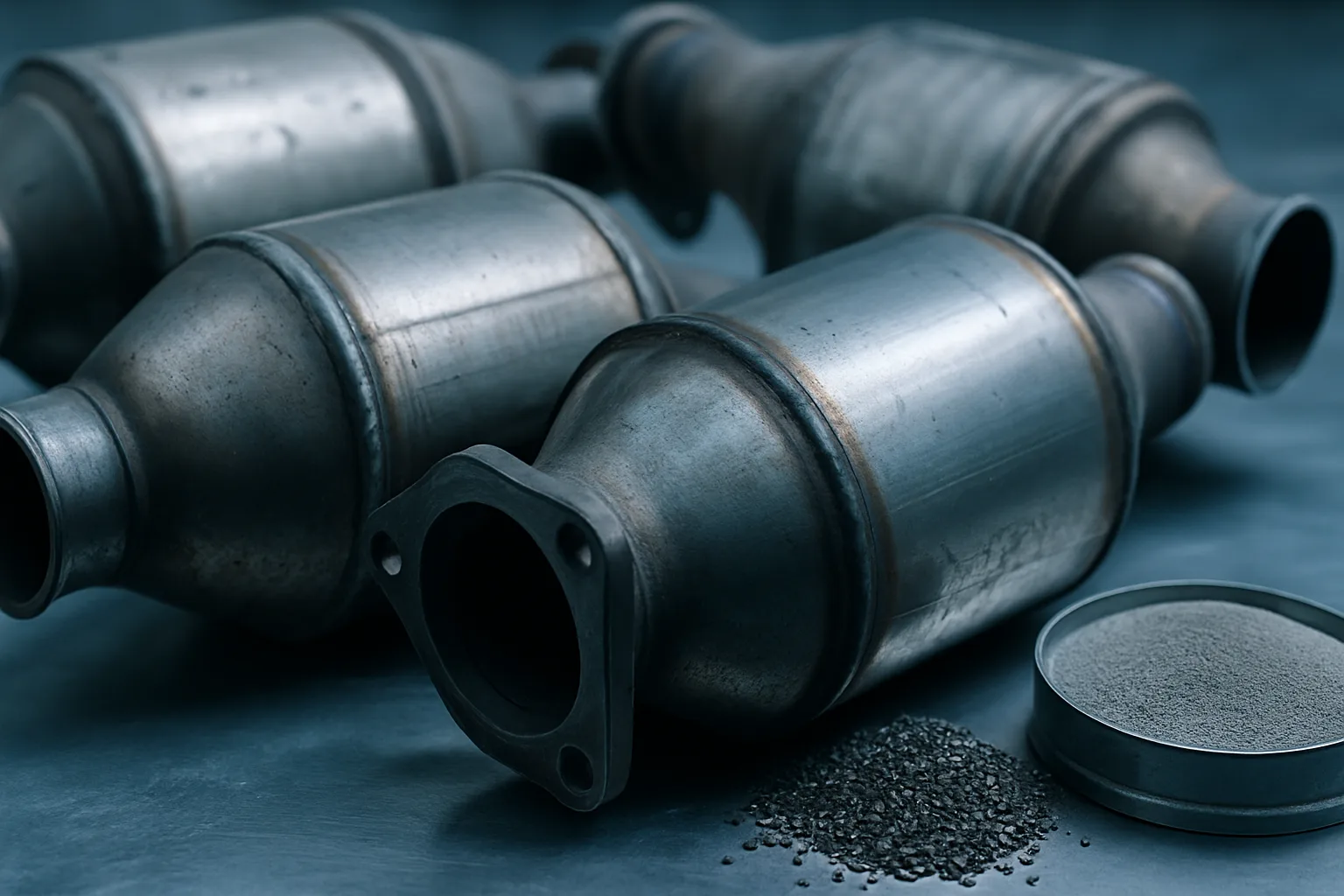
Why the Platinum Price Today Should Change How You Think About Catalytic Converter Removal
Most people tossing an old catalytic converter into a bin have no idea what's inside it. We're talking platinum, palladium, and rhodium — precious metals that move markets and drive real money on the scrap floor. The platinum price today directly affects what your cat converter is worth, and that means how you remove it, document it, and sell it matters more than most recyclers realize.
This guide covers the right way to pull a cat for recycling — safely, legally, and in a way that protects its value. Whether you're an independent shop in Cincinnati, a collector running loads across Ohio, or someone pulling your first converter off a junked vehicle, this is what you need to know before you touch a wrench.
What You Need Before You Start: Tools, Safety, and Legal Prep
Removing a catalytic converter isn't complicated. But doing it wrong can hurt you, damage the unit, or even get you in legal trouble. Ohio has strict regulations around converter documentation, and Cincinnati scrap yards expect paperwork. Don't skip this step.
Here's what you need before the work starts:
- Safety gear: Heat-resistant gloves, eye protection, and a respirator rated for exhaust dust. Catalytic converter substrates contain fine ceramic particulate — you don't want to breathe that.
- Proper lift equipment: A floor jack with rated jack stands, or access to a lift. Never work under a vehicle supported only by a jack.
- The right tools: Impact wrench or breaker bar, penetrating oil (apply the night before on rusted bolts), reciprocating saw or angle grinder as a backup, pipe wrench for flex-pipe sections.
- Documentation: Title of the vehicle, your ID, and any bill of sale if you acquired the vehicle. In Ohio, scrap buyers are required to record this information — have it ready.
- Photos before you start: Photograph the converter on the vehicle, the VIN plate, and the full undercarriage. This protects you and increases buyer confidence when you go to sell.
If you're pulling cats off multiple vehicles as part of a salvage operation, document every unit separately. Serial numbers, make, model, and year all affect the OEM converter price you'll receive. A Honda Accord cat and a Ford F-250 cat are worth completely different amounts — don't mix them up unlabeled in a bin.
Step-by-Step: How to Remove a Catalytic Converter Without Damaging It
The goal is a clean pull. A damaged converter — cracked shell, crushed substrate, missing heat shield — loses value fast. Buyers assay the precious metal content based on the substrate condition. Take your time here.
- Let the vehicle cool completely. Exhaust systems hold heat for hours. Burns from a hot cat are serious. If the vehicle ran recently, wait at least two hours.
- Soak all bolts with penetrating oil. Exhaust hardware corrodes badly, especially in Ohio's freeze-thaw climate. Rusted bolts that shear off can leave flanges unusable. Soak overnight when possible.
- Lift and support the vehicle properly. Get it at a working height you can sustain. Rushing because you're uncomfortable under the car causes mistakes.
- Locate the converter in the exhaust line. Most passenger vehicles have one; trucks, vans, and many OEM setups on larger engines may have two. Identify both before you start cutting or unbolting.
- Unbolt at the flanges where possible. If the flange bolts are too corroded, use a reciprocating saw to cut the pipe cleanly — leaving a few inches of pipe on each side of the converter body protects the unit.
- Support the unit as you remove it. Converters can be heavier than expected. Letting one drop and hit concrete can crack the ceramic substrate inside, which reduces the recoverable platinum, palladium, and rhodium content.
- Bag and label immediately. Once off the vehicle, place the converter in a clearly labeled bag or bin with the vehicle year, make, model, and VIN. Take a photo right then. This is your documentation chain.
Don't clean or alter the converter. Buyers want to see it as-removed. Grinding, cutting, or washing can trigger red flags and reduce what you're offered. Let the assay process do its job.
Understanding Platinum, Palladium, and Rhodium — and Why the Platinum Price Today Isn't the Whole Story
Here's where most casual sellers leave money on the table. The platinum price today gets all the headlines, but catalytic converter value is driven by a blend of all three platinum group metals (PGMs): platinum, palladium, and rhodium. The ratio depends on the vehicle make, engine type, and manufacturer specs.
Diesel converters tend to be platinum-heavy. Gasoline converters lean more on palladium. Some high-performance or large-displacement OEM units carry significant rhodium content, which can be the most valuable of the three by weight. When you check the get the best catalytic converter price today for your specific unit, you're getting an estimate based on all three metals — not just platinum alone.
This is why the same converter from two different makes can have a wildly different scrap catalytic converter value. A buyer who only quotes you based on platinum is giving you an incomplete number. You want a buyer who runs a full assay or quotes based on known OEM data for that specific unit.
Platforms like SMASH connect sellers with vetted buyers who understand PGM composition. That means competitive bids based on actual content, not a lowball guess from a single buyer on the phone. More buyers means better price discovery — and that's the difference between walking away with fair value or leaving cash behind.
Selling Your Catalytic Converter in Cincinnati — What Local Sellers Need to Know
Cincinnati has a solid base of scrap metal infrastructure, but not every buyer treats catalytic converters the same way. Some yards lump cats into a generic "exotic" category with minimal pricing transparency. Others specialize and can quote OEM converter prices by serial number or unit type.
Ohio law requires catalytic converter buyers to collect seller identification, proof of vehicle ownership, and record the transaction. Legitimate buyers in the Cincinnati market will ask for this. If a buyer doesn't ask — that's a red flag, not a convenience.
When you're ready to sell, you have options beyond just walking into a local yard. Cincinnati scrap metal services through best-catalytic-converter-price.com connect you with buyers who specialize in cat converters and quote based on current PGM data. That's a different experience than a general yard pricing your cat converter by weight alone.
If you're moving volume — multiple units per week or larger loads — a scrap metal auction platform changes the math entirely. Instead of one buyer setting the price, you get competing bids. SMASH operates exactly that way. Get competitive bids for your scrap metal and see what the market actually pays, not what one buyer decides to offer you today.
Avoiding the Most Common Mistakes That Cost You Money
The removal is only half the equation. How you handle the converter after it's off the car is just as important as how you pull it. Here's where sellers consistently lose value:
- No documentation: Unlabeled converters lose OEM pricing. If a buyer can't identify the unit, they'll default to a lower generic rate.
- One buyer, no competition: Calling one yard and taking their number is the old way. It was never the right way. Use a platform that puts your inventory in front of multiple vetted buyers.
- Selling at the wrong time: PGM markets fluctuate. If rhodium spikes or palladium dips, the math on your batch changes. Read catalytic converter pricing guides to understand how to time your sales when market conditions favor sellers.
- Damaged substrate: Dropped converters, improper cutting, or vehicles crushed with the cat still in can reduce recoverable precious metal. Pull clean and store carefully.
- Skipping photos: Documented inventory gives buyers more confidence — and confident buyers bid higher. Photo documentation is one of the simplest things you can do to improve your outcome.
Check current catalytic converter prices before you commit to a sale. Markets move. What you were quoted last week may not reflect what's available today, especially with PGM volatility in 2026.
How SMASH Helps Ohio Sellers Get More for Every Load
The old model — one phone call, one buyer, one price — is broken. That single buyer knows you have limited options. They price accordingly. It's not personal; it's just the leverage they hold when there's no competition in the room.
SMASH flips that dynamic. As a scrap metal auction platform built for serious recyclers, SMASH puts your documented inventory — including catalytic converters — in front of vetted buyers who actually compete for your material. The result is price discovery that reflects the real market, not one buyer's margin.
For Cincinnati and Ohio sellers moving volume, SMASH also handles the documentation side: photo records, inventory tracking, auto-invoicing. No subscription fees. SMASH only wins when you win. That's the deal.
Whether you're a shop pulling cats off trade-ins, a salvage operator running loads, or someone recycling a single vehicle, the principle is the same: competition reveals the market. One buyer hides it.
If you're ready to stop guessing and start selling with data behind you, get the best price for your catalytic converter — get a free quote at best-catalytic-converter-price.com and find out what your units are actually worth in today's market.
Disclaimer: Catalytic converter prices fluctuate based on daily platinum, palladium, and rhodium spot prices. Always check current rates before selling.
Frequently Asked Questions
Q: How does the platinum price today affect what I get for my catalytic converter?
The platinum price today is one of three factors that determine your converter's value — palladium and rhodium spot prices matter equally or more depending on your unit. OEM converter prices are calculated using the PGM blend specific to the make and model. Check current market rates before selling, especially when precious metals are volatile.
Q: Is it legal to sell a catalytic converter in Cincinnati, Ohio?
Yes, but Ohio law requires buyers to collect your ID and proof of vehicle ownership at the time of sale. Legitimate catalytic converter buyers in Cincinnati will always ask for documentation. Keep your title or bill of sale ready — this protects both you and the buyer.
Q: What tools do I need to safely remove a catalytic converter for recycling?
At minimum: jack stands rated for the vehicle weight, an impact wrench or breaker bar, penetrating oil applied well in advance, eye protection, heat-resistant gloves, and a respirator. For heavily rusted exhaust systems, a reciprocating saw lets you cut cleanly without damaging the converter body.
Q: Where can I find catalytic converter buyers near me in Ohio?
Local scrap yards are one option, but not all specialize in cats or offer OEM-based pricing. For better price discovery, use a platform that brings multiple vetted buyers to your inventory. Searching for a catalytic converter buyer in Cincinnati through best-catalytic-converter-price.com connects you with buyers who quote based on actual PGM content and current market data.
Q: Does a damaged catalytic converter still have scrap value?
Usually yes, but less than an intact unit. A cracked shell or damaged substrate reduces the recoverable precious metal content, which buyers factor into their offer. A converter with a crushed or powdered substrate may be priced as a "low grade" unit regardless of the vehicle it came from. Pull carefully and store upright to protect value.
Follow SMASH on LinkedIn for scrap metal market insights, PGM price updates, and recycling industry news: linkedin.com/company/scrap-metal-auction-sales-hub
```