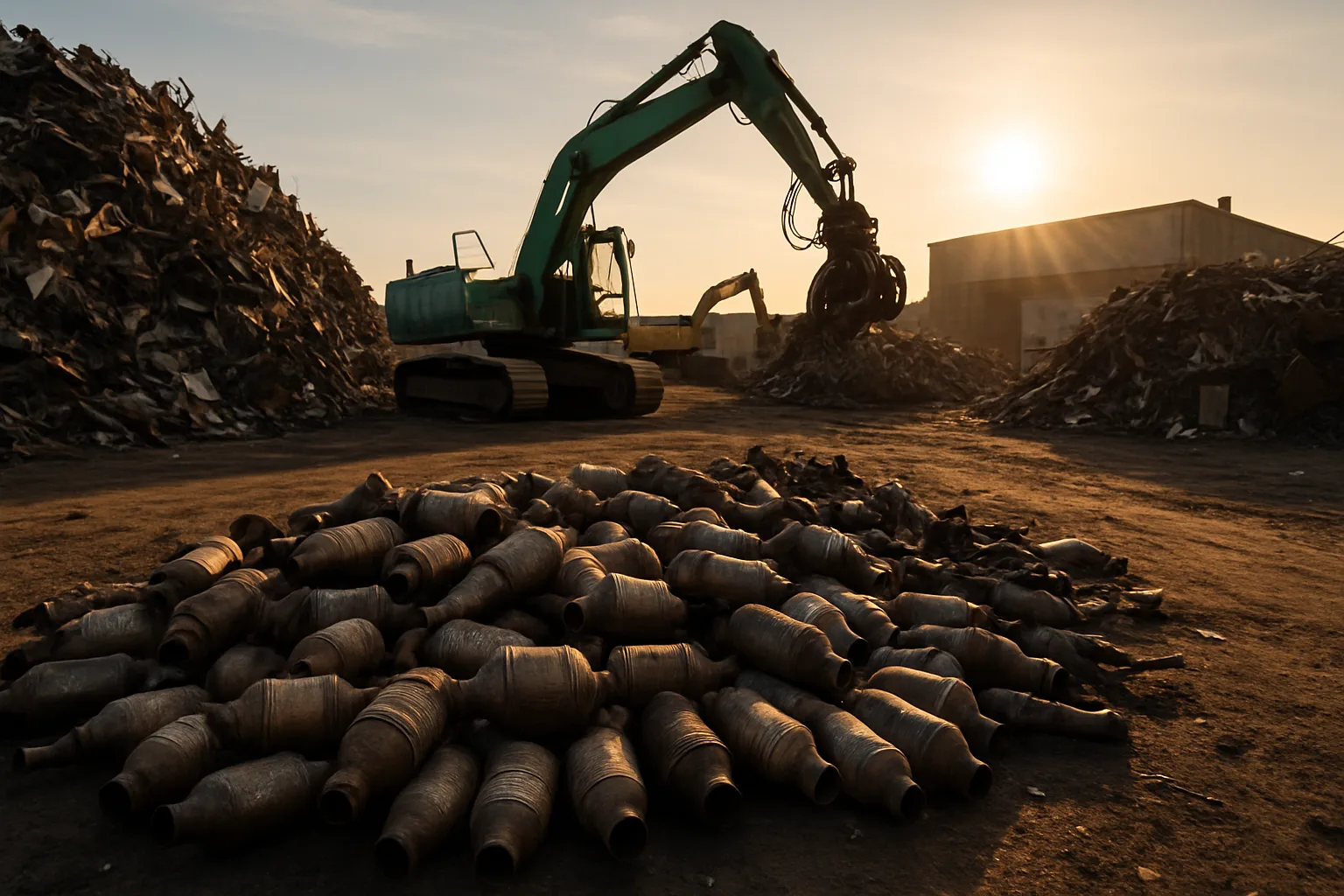
Catalytic converter theft costs the legitimate recycling industry tens of millions of dollars every year — and the yards playing it straight are the ones absorbing the damage.
If you work in scrap or run an auto recycling operation in Dallas or anywhere across Texas, you already know this problem isn't theoretical. It shows up in your daily operations: tighter regulations, slower transactions, buyers second-guessing loads, and a market where trust is harder to establish than it should be. The OEM catalytic converter value discussion has shifted dramatically over the last few years — not just because of PGM prices, but because theft has poisoned the well for everyone operating above board.
This is a market report. Let's look at what's actually happening, why it matters for your bottom line, and how legitimate sellers can protect themselves — and their prices.
How Theft Warps the Catalytic Converter Market
When stolen cats flood the secondary market, they don't disappear in a vacuum. They depress prices for legitimate sellers, draw regulatory scrutiny that slows down honest transactions, and make buyers cautious about entire load categories. A buyer who gets burned once on a questionable load of converters doesn't forget it — and that caution translates into lower bids for everyone, including yards with clean documentation and verified material.
The theft problem also distorts data. When you're trying to assess catalytic converter prices today, you're working against a market that's partly shaped by illegal supply chains moving material at below-market prices to unscrupulous processors. That creates artificial price pressure that hurts the sellers who are doing everything right.
Here's what that looks like on the ground:
- Buyers in major markets tighten purchasing criteria across the board — even for documented loads.
- Processors introduce more verification steps, slowing the sale cycle.
- State-level regulations expand, adding paperwork and wait periods for all sellers — not just bad actors.
- Price discovery becomes harder because the "street price" for some converter types is contaminated by stolen supply.
For a yard in Dallas running a legitimate operation, this is a real cost. It doesn't show up as a line item, but it shows up in slower turns, lower bids, and more time spent on compliance.
Texas Regulations and What They Mean for Legitimate Sellers
Texas has taken a harder look at catalytic converter sales since theft rates spiked. By 2026, regulations in many Texas counties require sellers to provide detailed documentation — vehicle identification, proof of ownership, photo records, and in some cases, waiting periods before payment is released. Dallas and surrounding counties have seen some of the most active enforcement in the state.
For bad actors, these rules are an obstacle. For legitimate sellers, they're an opportunity — if you're set up to comply cleanly and quickly, you stand out. The yards and sellers who can hand a buyer a complete documentation package move faster, build better buyer relationships, and tend to see stronger price offers because buyers have confidence in what they're getting.
This is where documentation isn't just a regulatory checkbox — it's a pricing lever. A load of catalytic converters backed by VIN records, photos, weight logs, and a clean chain of custody is a fundamentally different product than an undocumented pile of cats. Check current catalytic converter prices and you'll notice that verified material consistently commands better offers from serious buyers.
The regulation environment is unlikely to loosen. If you're a Dallas-area yard operator or an auto shop sitting on accumulations of converters, building your documentation process now isn't optional — it's the cost of staying competitive.
OEM Catalytic Converter Value — What's Actually Driving the Price?
The OEM catalytic converter value is ultimately a function of three things: the platinum group metals (PGMs) inside — platinum, palladium, and rhodium — the converter's make, model, and year, and current market conditions for those metals. Theft affects all three of these indirectly.
PGM prices in 2026 remain volatile. Rhodium in particular has seen dramatic swings over the past several years, and palladium supply chain pressures haven't fully resolved. This volatility means that the difference between getting a quote today versus next week can be meaningful. Legitimate sellers who understand this work with buyers who price fairly against current spot rates — not buyers who use market uncertainty as an excuse to low-ball.
The OEM vs. aftermarket distinction matters more than many sellers realize. OEM converters from high-value vehicles — think late-model trucks, SUVs, and luxury vehicles — carry significantly more PGM loading than cheap aftermarket replacements. An aftermarket unit might look identical on the outside but return a fraction of the value at assay. Knowing what you have before you sell is basic due diligence.
Some general benchmarks to understand (not guaranteed prices — see our disclaimer below):
- Large domestic truck converters (OEM): Among the highest-value categories, particularly GM and Ford full-size platforms.
- Toyota and Honda OEM units: Consistently strong value due to high PGM content.
- Diesel converters (DPFs): Different chemistry — lower PGM content but worth assessing separately.
- Aftermarket replacements: Significantly lower PGM loading — price accordingly.
Disclaimer: Catalytic converter prices fluctuate with PGM spot markets. Always get the best catalytic converter price today by checking current rates before finalizing any sale.
Why Transparent, Competitive Selling Is the Antidote to Market Disruption
The legitimate recycling market's best defense against the distortion caused by theft isn't just better regulations — it's better price discovery. When sellers bring documented, verified loads to competitive buyers rather than accepting the first offer from a single phone call, they establish market value based on real demand. That's how you push back against the downward price pressure that stolen material creates.
This is where a B2B scrap metal marketplace changes the math. Instead of calling one buyer, accepting one price, and moving on — you bring your load to multiple vetted buyers who compete for it. Competition reveals what the market actually thinks your material is worth.
smashscrap.com — the SMASH scrap metal auction platform — is built specifically for this. SMASH connects yards and sellers with vetted buyers across North America, runs a competitive auction format, and handles inventory documentation, photo records, and auto-invoicing in one workflow. There are no subscription fees. SMASH wins when you win.
For Dallas-area sellers managing accumulations of catalytic converters, working through a platform like SMASH means your documented, legitimate load is competing on a level field — and serious buyers can see exactly what they're bidding on. That transparency is worth real money. You can also explore Dallas scrap metal services to see how local sellers are using competitive markets to get better outcomes.
What Legitimate Sellers Should Do Right Now
If you're an auto shop, a recycling yard, or a scrap collector in Texas sitting on catalytic converters, here's a practical checklist. The theft problem in the market makes documentation and process more important than ever — but it also means that sellers who get this right have a real competitive advantage.
- Document everything before you sell. Photos of each converter, VIN numbers where available, weight records, and source documentation. This is both a compliance requirement in many Texas jurisdictions and a pricing advantage with serious buyers.
- Know what you have. OEM versus aftermarket matters. Make and model matters. Don't sell a Toyota OEM unit at aftermarket pricing because you didn't check.
- Don't rely on a single buyer. One phone call, one price is the old way. Competition is how you find out what your load is actually worth in today's market.
- Work with vetted buyers. In a market contaminated by theft, buyers who operate transparently and pay against current spot pricing are worth more than a buyer who offers a quick cash deal with no documentation.
- Check current PGM prices before you sell. Rhodium and palladium in particular can move significantly week to week. Timing matters.
- Use platforms built for this market. A B2B scrap metal marketplace like SMASH gives you access to competitive buyers without the guesswork.
You can read catalytic converter pricing guides to go deeper on specific converter types, PGM pricing methodology, and how to evaluate buyer offers against market rates.
The Bottom Line for Dallas Recyclers and Sellers in 2026
Catalytic converter theft isn't going away. But the legitimate recycling market doesn't have to absorb its costs passively. Sellers who document their material, understand what they have, and bring it to competitive buyers are insulated from the worst of the market distortion. The yards cutting corners on compliance aren't just risking legal exposure — they're leaving money on the table by failing to differentiate their material from the noise.
In Dallas and across Texas, the regulatory environment in 2026 rewards sellers who operate transparently. Pair that with a competitive selling process — not a single cold call — and you're positioned to get a fair price regardless of what the theft-driven underbelly of the market is doing.
If you have catalytic converters ready to sell, don't guess what they're worth and don't settle for one offer. Get a free quote at best-catalytic-converter-price.com and find out what a competitive, documented sale actually looks like. That's how you get the best price for your catalytic converter — no games, no guesswork.
Frequently Asked Questions
Q: How does catalytic converter theft affect the price I get for my legitimate scrap converters?
Theft floods parts of the secondary market with undocumented material at below-market prices, which can suppress bids from cautious buyers. It also triggers tighter regulations that slow transactions. The best way to protect your price is to document your material thoroughly and sell through competitive platforms where vetted buyers can see exactly what they're bidding on.
Q: What is OEM catalytic converter value, and how is it different from aftermarket converter value?
OEM catalytic converter value reflects the actual platinum group metal (PGM) content loaded into the original factory converter — typically platinum, palladium, and rhodium. OEM units from major manufacturers carry significantly higher PGM loading than aftermarket replacements, which often use cheaper catalyst formulations. Selling an OEM unit without identifying it correctly means you may receive aftermarket-level pricing for a much more valuable piece.
Q: Are there specific regulations for selling catalytic converters in Dallas, Texas in 2026?
Yes. Texas — and Dallas specifically — has enacted regulations requiring sellers to provide proof of ownership, identification, and documentation of the source vehicle for catalytic converter sales. Requirements vary by county and may include waiting periods before payment. Working with compliant buyers and platforms helps you navigate these rules without slowing your cash flow unnecessarily.
Q: How does a B2B scrap metal marketplace like SMASH help me get a better price for my catalytic converters?
Instead of accepting a single offer from one buyer, a competitive auction platform like SMASH brings your documented load in front of multiple vetted buyers who compete for it. Competition drives price discovery — meaning you find out what your material is actually worth in the current market, not just what one buyer is willing to offer on a slow day.
Q: How often do catalytic converter scrap prices change, and how do I know what mine are worth today?
PGM prices — especially rhodium and palladium — can move significantly week to week based on global supply and demand. That means a converter you priced out last month may be worth more or less today. Always check current rates before committing to a sale, and use a platform that prices against live spot markets rather than fixed buy lists that may lag the market.
Follow SMASH on LinkedIn for regular scrap metal market updates, PGM pricing insights, and industry news that matters to recyclers and buyers across North America.
```