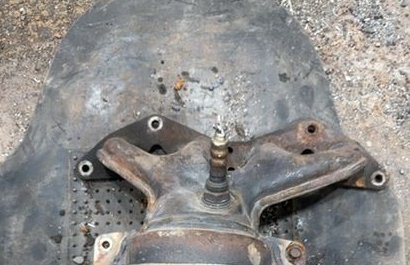
From Exhaust System to Precious Metal: How a Catalytic Converter's Value Gets Unlocked
Most people pull a catalytic converter off a vehicle and think about one thing: what's it worth today? That's a fair question. But understanding the full lifecycle — from the moment it leaves the exhaust system to the point where platinum, palladium, and rhodium get refined and resold — changes how you approach the sale. It changes who you sell to, how you document it, and how much you walk away with.
If you're a catalytic converter buyer in Portland, an auto shop clearing end-of-life inventory, or a scrap collector working Oregon's yards and salvage lots, this breakdown matters. The cat on your bench has a story. That story drives its value — and knowing it helps you get paid fairly.
Stage 1 — The Working Life of a Catalytic Converter
A catalytic converter does one job: reduce harmful emissions from combustion engines. It sits between the engine and the muffler, using a ceramic or metallic substrate coated with precious metals to trigger chemical reactions that neutralize toxic gases. Platinum oxidizes hydrocarbons and carbon monoxide. Palladium handles hydrocarbons at lower temperatures. Rhodium breaks down nitrogen oxides. These three metals are the reason scrap cats have real value.
Most OEM converters last between 100,000 and 150,000 miles under normal conditions. Aftermarket units often carry lower PGM (platinum group metal) loadings — which directly affects scrap value. That's why a catalytic converter price list by number matters so much: the serial number or OEM part number tells buyers exactly what substrate and PGM loading to expect. A domestic full-size truck cat and a compact economy car cat look similar. Their payouts are not.
- OEM converters — higher PGM content, better scrap value
- Aftermarket converters — lower PGM loading, lower scrap return
- High-performance and diesel cats — variable PGM content, often require assay to confirm value
- Direct-fit vs. universal-fit — affects identification and pricing accuracy
The condition of the cat at end-of-life matters too. Physical damage, melted substrate, or a cracked honeycomb reduces recovery yield. A converter that looks intact on the outside can still have a compromised interior from overheating or a major engine failure. Buyers who know what they're doing will shake it, inspect the ends, and ask about the vehicle history before quoting.
Stage 2 — Removal, Sorting, and the First Transaction
Once a vehicle reaches end-of-life — whether it's a total loss, a trade-in going to auction, or a retired fleet vehicle — the catalytic converter gets removed. In a professional dismantling operation, this happens quickly and cleanly. In less organized settings, it happens with a reciprocating saw and a lot of speed. How the converter is removed doesn't usually affect its value, but how it's identified and stored absolutely does.
This is where most sellers in Portland and across Oregon either gain or lose money. Mixing unidentified cats in a bin, losing the vehicle VIN, or failing to photograph the converter before removal strips away the documentation that supports a higher price. Buyers paying top dollar want to know exactly what they're getting. Uncertainty gets priced in — against you.
Smart sellers at this stage:
- Photograph the converter in place and after removal
- Record the VIN of the source vehicle
- Note the OEM part number or serial stamped on the shell
- Keep cats separated by type — domestic, foreign, diesel, aftermarket
- Store them in a dry environment to prevent substrate moisture damage
Platforms like North America's B2B scrap metal auction platform SMASH are built around this kind of documentation. Photo uploads, VIN lookup, and serial tracking aren't bureaucratic overhead — they're the tools that justify higher bids from vetted buyers. More information means more buyer confidence. More confidence means more competition. More competition means better price discovery on your load.
Stage 3 — Getting a Fair Price Before the Cat Leaves Your Hands
Here's where the old way and the SMASH way diverge sharply. The old way: call one buyer, get one number, take it or leave it. No context, no competition, no way to know if that number reflects actual scrap metal prices today or just what that buyer feels like paying.
The better approach is to get the best catalytic converter price today by putting your inventory in front of multiple vetted buyers simultaneously. That's the core mechanic of an auction format — not chaos, but structured competition. When three or four serious buyers are looking at the same documented load of Portland-area scrap cats, the price reflects the actual market. Not a guess. Not a favor. The market.
For individual sellers or smaller shops with a handful of cats, understanding cat converter value starts with identification. Use the OEM part number or serial to cross-reference against current price databases. If you're working with a volume load — dozens or hundreds of units — getting the documentation right matters even more, because buyers are making larger commitments and they'll price in risk if the information isn't there.
Local Portland scrap metal services can help you move smaller quantities efficiently, but if you're aggregating a serious load from multiple sources, a competitive auction process is how you find out what the market actually pays — not what one buyer decided to offer this week.
Stage 4 — The Processing Chain: From Scrap Yard to Smelter
After the converter leaves your hands, it enters the industrial processing chain. This is where the chemistry matters more than the paperwork. Converters get sorted and consolidated at a processing facility, then the substrate — the ceramic or metallic honeycomb — gets separated from the steel shell. The shell goes to ferrous scrap. The substrate is where the value lives.
The substrate gets crushed, milled, and sampled. Processors take representative samples from large batches to determine the actual PGM content through fire assay or spectrographic analysis. This is called sampling and assay, and it's the foundational step before any refining happens. The assay results drive final settlement — meaning if you sold on a per-unit basis or a fixed price list, the refiner's assay is what the buyer used to decide whether that price worked for them.
From there, the PGM-bearing material goes to a smelter or hydrometallurgical refinery. The platinum, palladium, and rhodium get separated from the base materials through a combination of heat treatment and chemical processing. The end product is refined precious metal — sponge or powder form — ready for resale into the industrial and automotive markets. Rhodium, consistently the most volatile of the three, goes back into new catalytic converter production. The cycle starts again.
Understanding this chain is why reading catalytic converter pricing guides regularly makes sense. The PGM spot prices that drive what refiners pay today also drive what buyers offer you. When rhodium spikes or palladium softens, that movement flows back through every stage of the chain — including what a buyer in Portland quotes you on Thursday morning.
Stage 5 — What Makes One Seller Get More Than Another
Two shops in Oregon, both clearing the same volume of scrap cats every month. One consistently gets stronger prices. Why? It comes down to three things: documentation, timing, and access to competitive buyers.
Documentation — The seller who can say "here's the VIN, here's the part number, here's the photo" removes uncertainty for the buyer. That translates directly to a stronger offer.
Timing — Selling into a rising PGM market versus a falling one can be the difference of significant dollars per unit on a large load. Watching scrap metal prices today and understanding when to move inventory is a skill worth developing.
Access — A seller who contacts one buyer gets one price. A seller who puts a documented load in front of multiple vetted buyers through a platform like SMASH creates competition. Competition is the mechanism by which the market price gets revealed, not invented by one buyer's algorithm.
The goal isn't to squeeze every cent out of every transaction. The goal is to make sure you're not leaving money on the table because of bad process. And when you check current catalytic converter prices regularly, you build the market awareness to know the difference between a fair offer and a low one.
If you're in Portland and ready to move a load, or just want to understand what your cats are actually worth in today's market — start with proper identification, solid documentation, and access to real buyer competition. That's the process. That's how value gets unlocked at every stage of the lifecycle.
Frequently Asked Questions
Q: What makes a catalytic converter worth more to a buyer in Portland?
OEM part numbers, documented VIN history, and photos all increase buyer confidence and lead to stronger offers. Foreign (import) cats and high-content domestic units from full-size trucks and SUVs typically carry the highest PGM loadings. A converter with clear identification is always worth more than an unidentified unit.
Q: How do I find a reputable catalytic converter buyer in Portland?
Look for buyers who ask for documentation — VIN, part numbers, photos. Buyers who ask no questions and offer flat, undifferentiated prices aren't pricing your specific inventory; they're pricing their own risk margin. Platforms that aggregate vetted buyers and use an auction format give you a more accurate read on market value.
Q: Does the condition of the converter affect what I get paid?
Yes, significantly. A converter with a physically intact, undamaged substrate will yield more recoverable PGM during processing than one with a cracked honeycomb or melted internals. Overheating damage, impact cracks, and moisture exposure all reduce recovery rates — and buyers factor that in when pricing.
Q: How often do catalytic converter prices change?
PGM spot prices — platinum, palladium, and rhodium — move daily with commodity markets. Scrap catalytic converter prices follow those movements with a short lag. Prices can shift meaningfully week to week, which is why timing your sale and staying current on market conditions matters. Disclaimer: Prices fluctuate continuously. Always check current market rates before finalizing any sale.
Q: Is there a difference between selling one converter versus a full load in Oregon?
Volume changes your leverage and your options. A single converter is typically sold at a local buyer's posted price or a quick quote. A large documented load — 20, 50, 100+ units — gives you the ability to run a competitive process, access wholesale buyers, and negotiate based on assay rather than per-unit list pricing. In Oregon and across the Pacific Northwest, volume sellers consistently access better terms through competitive channels.
If you've got cats ready to move and you want to know what the market actually pays — not what one buyer decided to offer — start the right way. Get the best price for your catalytic converter by requesting a free quote at best-catalytic-converter-price.com. Know what you have. Know what it's worth. Then sell from a position of information, not guesswork.
Follow SMASH on LinkedIn for regular scrap metal market updates, PGM price movement, and industry insights that help you time your sales and understand the market behind your inventory.