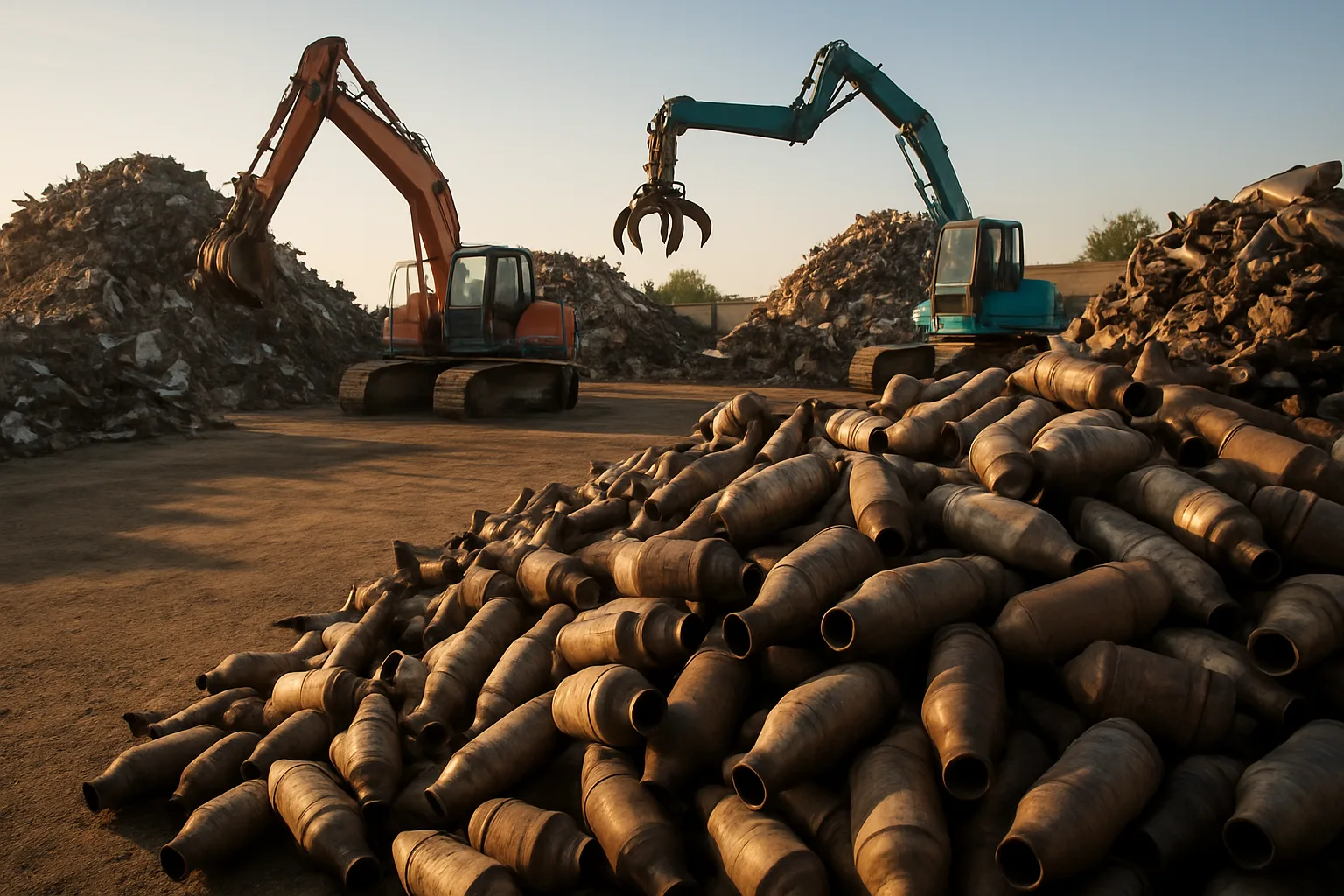
Rhodium, Platinum, and Palladium: Why Your Catalytic Converter Is Worth More Than You Think
Most people know catalytic converters contain precious metals. Few people know that one of those metals — rhodium — regularly trades at prices that make gold look affordable. If you're sitting on a pile of spent cats and wondering why prices swing so wildly, rhodium is usually the answer. Understanding what's inside your converter isn't just interesting chemistry. It's the difference between leaving money on the table and getting paid what your material is actually worth.
Whether you're an auto shop in Houston clearing out a backlog of spent OEM converters, or a collector who's been pulling cats for years, this breakdown will help you understand the real value driver inside every unit — and how to get the best catalytic converter price today by selling smarter, not harder.
What's Actually Inside a Catalytic Converter
Every catalytic converter contains a ceramic or metallic substrate coated with a washcoat loaded with platinum group metals — commonly referred to as PGMs. The three metals that matter most to scrap value are platinum, palladium, and rhodium. These metals act as catalysts, triggering chemical reactions that convert harmful exhaust emissions into less toxic gases.
The substrate itself is essentially worthless. What makes a cat valuable is the loading — the concentration of PGMs embedded in that washcoat. Loading varies significantly by vehicle make, model, engine size, and the emissions standard the converter was built to meet. An OEM converter from a late-model V8 truck will carry far more PGM loading than an aftermarket or low-grade replacement unit.
- Platinum (Pt): Used heavily in diesel converters and many older gasoline units. Historically the best-known PGM in catalytic applications.
- Palladium (Pd): Dominant in modern gasoline converters. Higher loadings in three-way catalysts targeting hydrocarbons and carbon monoxide.
- Rhodium (Rh): Present in smaller quantities by weight — but responsible for NOx (nitrogen oxide) reduction, and priced at a significant premium per troy ounce. This is where most of the value sits.
When a refiner processes your scrap catalytic converter, they're assaying the material to determine exactly how much of each PGM is present. That assay result, combined with the current spot price for each metal, determines what your load is worth. No guessing. No estimates based on pictures from South Africa or outdated price lists. Real lab results, real market prices.
Why Rhodium Commands a Premium — and Why It Matters for Your Scrap Cat Value
Rhodium is rare. Genuinely rare. Global annual production sits in the low tens of thousands of kilograms — a fraction of gold or even platinum production. Most of the world's rhodium supply comes from South Africa and Russia as a byproduct of platinum and palladium mining. That tight supply chain means price volatility is extreme. Rhodium has historically spiked to prices many multiples above gold per troy ounce during supply crunches, and it has also corrected sharply when demand softens.
What drives demand? Emissions regulations. Every time a major market — the U.S., the EU, China — tightens NOx standards, automakers need more rhodium per converter to hit the new targets. Stricter emissions mean higher rhodium loadings mean higher scrap converter values when those vehicles eventually come off the road. In 2026, global regulatory pressure on vehicle emissions remains intense, and that keeps rhodium demand structurally elevated.
Here's the practical implication: two converters that look identical on the outside can have very different values based on their rhodium content alone. A small shift in rhodium spot price can move the value of a high-grade OEM cat by a meaningful amount. That's why relying on a static scrap catalytic converter price list — whether it's from a local yard, an app, or a PDF circulating from South Africa — gives you an incomplete picture. Those lists age fast. Real-time market pricing doesn't.
If you want to understand how platinum price today factors into your specific load, or why your palladium-heavy gasoline cats might be performing differently than your diesel units, the only honest answer is: you need access to current market data and a buyer who's actually competing for your material.
OEM vs. Aftermarket: Why the Converter Type Changes Everything
Not all cats are created equal, and this is one of the most common points of confusion for sellers — especially those just starting to sell catalytic converters online. OEM (original equipment manufacturer) converters are built to strict factory specifications and typically carry higher PGM loadings than aftermarket replacements. An aftermarket "universal fit" cat often uses significantly less precious metal to keep the unit price low for repair shops.
When you're sorting a load, mixing high-grade OEM converters with low-grade aftermarket units and selling them as a blended load often means the high-grade material subsidizes the low-grade. That's not a deal — that's a loss. Sorting by converter type and grade before you sell is one of the simplest things you can do to improve your return.
- High-grade OEM cats: Typically from domestic V6 and V8 trucks, SUVs, and late-model sedans. Higher PGM loading, higher scrap value per unit.
- Mid-grade converters: Smaller displacement OEM units, some import vehicles. Moderate PGM content.
- Low-grade or aftermarket: Universal fit units, low-loading replacements. Lower per-unit value. Don't let these drag down a premium load.
- Foil/small foreign cats: Generally lower value. Worth knowing before you quote them as high-grade.
- DPFs (Diesel Particulate Filters): Different chemistry, different value profile. Price separately.
In Houston, Texas, the high volume of F-150s, Silverados, Tahoes, and heavy-duty trucks on the road means auto shops and dismantlers here often have access to above-average grade converter loads. That's an advantage — but only if you're selling to buyers who recognize and pay for that grade difference. Local one-buyer deals rarely reward you for quality. Competitive markets do.
How to Sell Catalytic Converters Online and Actually Get Market Price
The old way to sell scrap cats: call your one buyer, accept their number, load your truck, get paid. No comparison. No competition. No idea whether the offer reflected anything close to current PGM spot prices. That system benefits buyers, not sellers.
The better way is to bring your load to a B2B scrap metal marketplace where multiple vetted buyers compete for your material. Competition does what no single phone call can — it creates price discovery. When five qualified buyers are looking at the same documented load and bidding against each other, you find out what the market actually pays. Not what one buyer decides to offer on a slow Tuesday.
Platforms like smashscrap.com are built for exactly this. SMASH connects scrap sellers with vetted buyers through an auction format that brings real competition to every load. Documented inventory — photos, weights, serial tracking, VIN lookups where applicable — gives buyers the confidence to bid aggressively. Better documentation means better offers. It's that direct.
If you're in Houston and managing a regular volume of spent catalytic converters through your shop or yard, SMASH can help you move material faster and with more price transparency than calling the same buyer every week. You can check current catalytic converter prices and understand what competitive bids look like before you commit to selling.
For more background on how converter pricing works and what factors move the number up or down, read catalytic converter pricing guides that break it down without the jargon.
Documentation, Compliance, and Selling Smart in Texas
If you're operating an auto shop, dismantling yard, or collection route in Texas, documentation isn't optional — it's your protection. Texas has active enforcement around catalytic converter theft, and legitimate sellers benefit from being able to prove the provenance of their material. That means keeping records: where converters came from, what vehicles they were pulled from, when and how you acquired them.
Beyond compliance, documentation drives value. A load of converters with clear photos, accurate identification by converter type, and a clean chain of custody is a more attractive buy than a mystery pile that forces the buyer to hedge on grade. Buyers bid more confidently on well-documented material. That confidence shows up in their offers.
SMASH's inventory tools make this documentation process practical — not a burden. Photo documentation, serial tracking, and organized listings mean your Houston scrap metal services aren't just compliant, they're competitive. If you're regularly working with Houston scrap metal services, building this documentation habit now pays off every single time you bring a load to market.
The combination of good sorting, accurate identification, and real competition from vetted buyers is how professional sellers consistently outperform the single-buyer phone call. It's not complicated. It just requires treating your converter inventory as the valuable commodity it actually is — because rhodium, platinum, and palladium make it exactly that.
Frequently Asked Questions
Q: Why is rhodium more valuable than platinum in a catalytic converter?
Rhodium is significantly rarer than platinum and serves a critical function that platinum and palladium can't fully replace — reducing nitrogen oxide (NOx) emissions. Global supply is very limited, making it highly sensitive to demand shifts from emissions regulations. Even though converters contain less rhodium by weight than platinum or palladium, its spot price per troy ounce often makes it the dominant value contributor in high-grade OEM cats.
Q: How do I sell catalytic converters online safely and get a fair price?
Use a documented, competitive process. Photograph your converters, identify them by type (OEM, aftermarket, foil), and bring them to a B2B platform like SMASH where vetted buyers compete for your load. Avoid selling to a single buyer without comparing offers — you have no way to know if that offer reflects current PGM prices. Platforms that use an auction format give you real price discovery.
Q: Does the platinum price today affect what I get for my scrap converters?
Yes, directly. Scrap catalytic converter prices are derived from the current spot prices of platinum, palladium, and rhodium, minus processing and refining costs. When platinum or rhodium prices rise, the value of your converter load rises with them. This is why static price lists — including any scrap catalytic converter price list with pictures — go stale quickly. Always verify against current market data before selling.
Q: Are catalytic converters from Houston-area trucks worth more than from smaller vehicles?
Generally, yes. Full-size trucks and SUVs common in Houston, Texas — F-150s, Silverados, Tahoes, Expeditions — typically carry higher-loading OEM converters than economy cars or compact imports. Larger displacement engines running through tighter emissions cycles require more PGM loading to meet standards. Sort your loads by vehicle type and grade before selling to avoid blending high-value units with lower-grade material.
Q: How many catalytic converters do I need before it makes sense to sell online through a marketplace?
There's no hard minimum, but most B2B marketplace buyers are looking for meaningful loads — not single units. If you're an auto shop or yard accumulating converters regularly, batch your inventory and sell on a schedule. Larger, well-documented loads attract stronger bids and make the logistics worthwhile. Even a modest volume of well-sorted, properly documented converters can generate competitive offers through a platform like SMASH.
You know what's in your converters now. Rhodium, platinum, and palladium don't care whether you sell smart or sell cheap — but your bottom line does. If you're in Houston or anywhere across Texas moving spent cats on a regular basis, stop guessing and start competing. Get the best catalytic converter price today with a free quote at best-catalytic-converter-price.com — and find out what competitive buyers actually pay for your material.
Stay current on PGM markets and scrap metal pricing trends by following SMASH on LinkedIn at linkedin.com/company/scrap-metal-auction-sales-hub — industry updates, market insights, and no fluff.