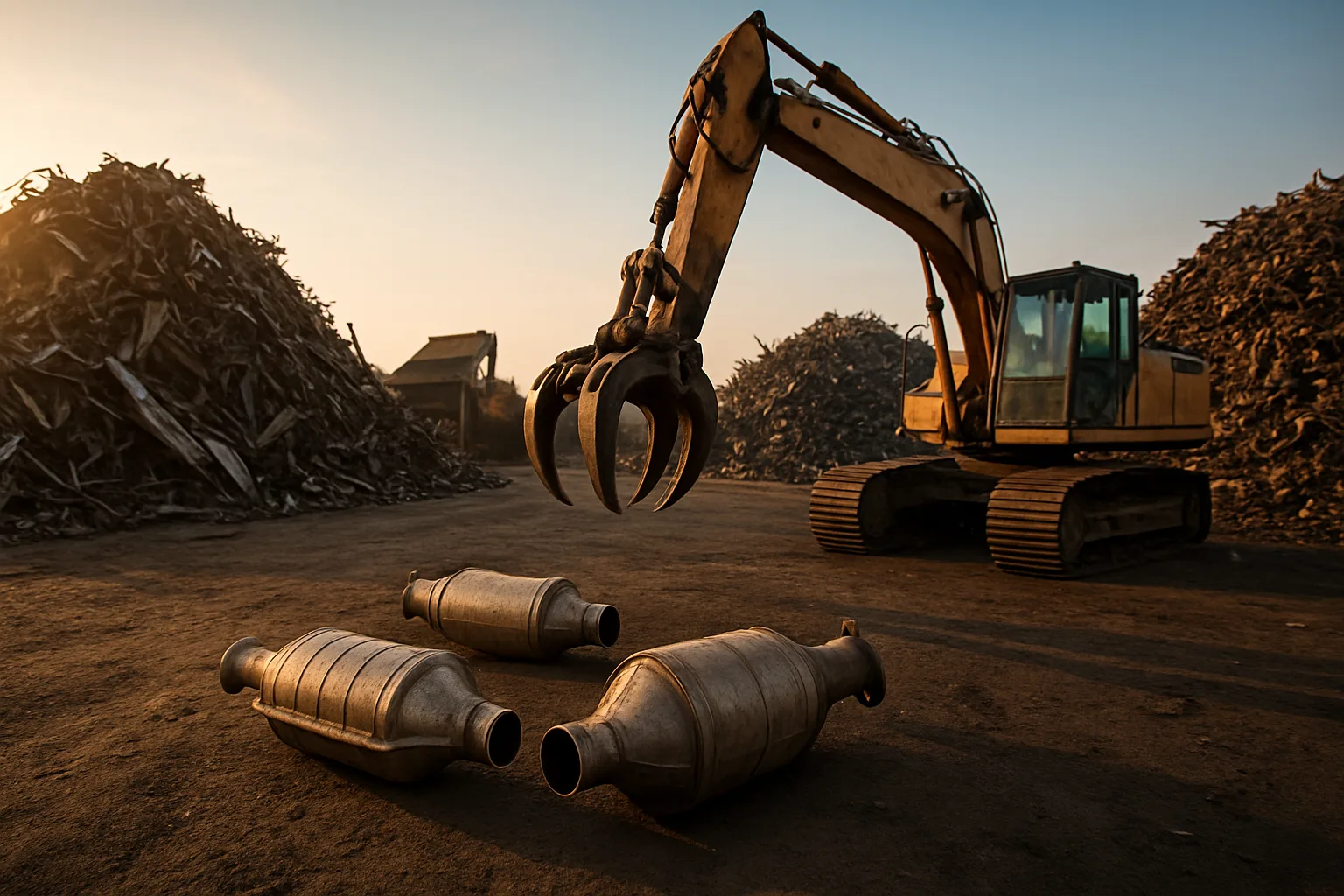
Most people leave hundreds of dollars sitting on a lift. If you've got a dead vehicle, a salvage engine, or a pile of pulled cats from your shop, the platinum, palladium, and rhodium locked inside those converters is real money — but only if you handle the process right. This guide walks you through safe removal, what to expect from your converter's value, and how to get the best catalytic converter price today instead of taking the first number a buyer throws at you.
Whether you're an auto shop in Long Beach clearing out old inventory, a private seller with a junked vehicle, or a scrap collector building up a load, the steps below apply directly to you. Do this right and you protect yourself legally, physically, and financially.
---Why Catalytic Converter Removal Requires More Than a Sawzall
Anyone who's worked in a shop knows the temptation — grab a reciprocating saw, cut it loose in 60 seconds, done. But sloppy removal creates real problems. You can damage surrounding components, expose yourself to residual exhaust gases, and in some cases reduce the scrap value of the converter itself if you nick the housing or crush the substrate inside.
There's also a legal dimension that matters more than ever in 2026. California has some of the tightest catalytic converter documentation laws in the country. Recyclers and scrap buyers in Long Beach are required to verify ownership before purchasing a converter. That means you need paperwork — a title, a repair order, or proof of vehicle ownership — before you even walk in the door. Showing up with a loose cat and no documentation is a fast way to get turned away, or worse.
The physical risks are real too. Catalytic converters retain heat long after a vehicle is shut off. The substrate inside contains fine ceramic dust that becomes airborne if the unit is cracked or broken — and that dust is a respiratory hazard. Proper PPE and a cool-down period aren't optional.
---Step-by-Step: Safe Catalytic Converter Removal for Recycling
Follow these steps whether you're pulling one converter or clearing a stack of vehicles. Rushing any stage increases risk and can lower your scrap return.
- Let the vehicle cool completely. A minimum of two hours after the engine last ran. Overnight is better. Catalytic converters operating at full temperature can exceed 1,000°F internally. Burns from a still-hot converter are severe.
- Lift and secure the vehicle properly. Use a certified floor jack and jack stands rated for the vehicle's weight. Never work under a vehicle supported only by a scissor jack. In a shop environment, a two-post lift is the standard. In Long Beach, many mobile mechanics use portable lift ramps — these work fine as long as they're rated for the load.
- Spray penetrating oil on the flange bolts and oxygen sensor bungs. California road conditions and coastal salt air in Long Beach can fuse exhaust hardware badly. Give the penetrant 20–30 minutes to work before you touch a wrench.
- Use the right cutting tool. A pipe cutter or angle grinder with a cut-off wheel gives you cleaner cuts than a reciprocating saw. If you're cutting the inlet and outlet pipes, leave a few inches of pipe on each side of the converter body. Buyers don't penalize you for attached pipe stubs, but they will flag a converter with a cracked or crushed housing.
- Wear respiratory protection. A basic N95 respirator is the minimum. If the converter is visibly cracked or the substrate is exposed, step up to a P100 half-mask. Palladium and platinum dust from a damaged substrate isn't something you want in your lungs.
- Label and document the converter immediately. Note the make, model, year, and VIN of the vehicle it came from. Take photos of the converter still on the vehicle before removal. This documentation is your protection under California's converter purchase laws and gives buyers confidence when they're pricing your load.
- Store converters in a secure, dry location. Don't leave them in an unlocked truck bed or an open shop bay. Converter theft is still an active problem in 2026 — including secondary theft of already-pulled converters from yards and shops.
Following this process keeps you safe, keeps you legal, and keeps your converter in the best possible condition for valuation. A clean, documented, undamaged converter commands a better price than a crushed or cracked unit every time.
---What Drives Catalytic Converter Value — Platinum, Palladium, and Rhodium
The scrap value of a catalytic converter comes almost entirely from three platinum group metals (PGMs): platinum, palladium, and rhodium. The loadings vary significantly by vehicle make, model, engine size, and whether the converter is OEM or aftermarket. A direct-fit OEM converter from a full-size truck carries a very different PGM load than a universal-fit aftermarket unit from a compact car.
Rhodium price today remains a key variable in the total value calculation. Rhodium is the rarest of the three PGMs and the most volatile in price. When rhodium spikes, high-rhodium converters from certain diesel and performance applications can see dramatic value increases. When it softens, the impact hits those same units hardest. Platinum and palladium tend to be less volatile but still move with broader precious metals markets and automotive demand trends.
This is exactly why accepting a single verbal quote from one buyer is leaving money on the table. You have no benchmark. You don't know if the number you're hearing reflects current PGM pricing or last month's spot rates. For Long Beach sellers managing multiple converters or full loads, even a modest per-unit pricing difference adds up fast. The smarter move is to check current catalytic converter prices against market data before committing to any buyer.
Key factors that affect your converter's value:
- Vehicle make and model — certain manufacturers use significantly higher PGM loadings
- OEM vs. aftermarket — OEM converters typically contain more precious metal by weight
- Condition of the substrate — intact ceramic substrates retain full PGM content; damaged ones may have lost material
- Age and mileage — very high-mileage converters may have reduced PGM efficiency but often still carry recoverable value
- Current rhodium, platinum, and palladium spot prices — these move daily and directly affect your payout
Disclaimer: Catalytic converter prices fluctuate with precious metals markets. Always verify current rates before selling. The values described here are general in nature and not guaranteed pricing.
---How to Get the Best Catalytic Converter Price in Long Beach Without Getting Lowballed
Long Beach has a dense network of auto recyclers, scrap yards, and metal buyers. That's an advantage — competition exists. But not every buyer prices converters the same way, and not every yard is transparent about how they arrive at their numbers. The default approach of calling one yard, getting a quote, and taking it is the oldest way to underperform on a sale.
The better approach is competitive bidding. When multiple vetted buyers see your inventory and submit offers, price discovery happens naturally. You're not guessing whether you got a fair number — you can see what the market actually says your converters are worth on that specific day, with current PGM pricing baked in.
That's the core of what platforms like SMASH deliver. Compare scrap metal bids from verified buyers through an auction format that creates real competition. SMASH operates across North America, connecting sellers with vetted buyers — no subscription fees, no guessing. You win when competition drives the price up, not when a single buyer decides what your load is worth.
For Long Beach sellers specifically, this matters because your converters may be worth more to a buyer in a different market. A regional yard down the street might not be your best exit. An auction format that reaches buyers across California and beyond expands your options without extra legwork on your end.
Want to read catalytic converter pricing guides that break down value by converter type? The blog covers OEM converter price benchmarks, how to identify high-value units, and what documentation to prepare before you sell.
---Documentation, Legal Requirements, and Protecting Yourself as a Seller in California
California's catalytic converter laws tightened significantly in recent years, and 2026 compliance expectations are strict. Legitimate buyers in Long Beach are required to document the seller's identity, the source vehicle, and the transaction. This protects honest sellers just as much as it protects the system — it separates documented, legal inventory from stolen material.
As a seller, here's what you should have ready before approaching any buyer:
- Valid government-issued photo ID
- Vehicle title or registration for the source vehicle
- Repair orders or shop records if the converters came from customer vehicles (for shops)
- Photos of the converters on the vehicle prior to removal (strongly recommended)
- VIN documentation matched to each converter if you're selling multiple units
SMASH's inventory and photo documentation tools make this process cleaner. When your load is documented with photos, serial tracking, and vehicle data from the start, buyers have more confidence — and more confidence typically translates to stronger bids. Sloppy documentation creates hesitation. Clean documentation creates competition.
Auto shops in Long Beach managing converter inventory from customer vehicles should maintain a log that ties each converter to a specific repair order and VIN. This isn't just good practice for legal compliance — it's the kind of documentation that lets you sell through an auction platform and get full market value rather than a discounted "no questions" price from a buyer who isn't sure what they're getting.
---Frequently Asked Questions
Q: How do I find the best catalytic converter price in Long Beach?
Get multiple quotes rather than accepting the first offer. Competitive bidding through platforms like SMASH exposes your inventory to vetted buyers and creates real price discovery. Walk-in quotes from a single yard give you no market benchmark and no leverage.
Q: Do I need documentation to sell a catalytic converter in Long Beach?
Yes. California law requires buyers to verify seller identity and the source of the converter. Bring a valid ID and proof of vehicle ownership — a title, registration, or repair order. Selling without documentation will get you turned away at legitimate yards, and it should.
Q: Does the condition of the catalytic converter affect its scrap price?
Significantly. A converter with an intact substrate retains its full PGM content. A cracked or crushed unit may have lost material, which reduces its value. Remove carefully using the right tools and avoid dropping or compressing the converter body during handling or storage.
Q: How does rhodium price today affect what I get paid for my catalytic converter?
Rhodium is one of three PGMs recovered from catalytic converters, and it's the most price-volatile. On high-rhodium converters, a swing in the rhodium spot price can meaningfully shift your payout. Always check current PGM spot rates before selling — what you were quoted last week may not reflect today's market.
Q: Can auto shops in California sell catalytic converters from customer vehicles?
Yes, with proper documentation. Shops need repair orders, customer authorization, and records tying each converter to a specific vehicle. California has specific rules for business sellers that differ from individual sellers — check current state requirements and make sure your buyer is compliant before completing any transaction.
---You've done the work of pulling and documenting your converters correctly. Don't undercut that effort by settling for the first number you hear. The market has a real price for your inventory — find it. Get the best catalytic converter price today and get a free quote at best-catalytic-converter-price.com. It takes minutes and puts actual competition to work for you.
Stay current on scrap metal market movements and PGM pricing trends by following SMASH on LinkedIn — industry updates posted regularly for sellers, buyers, and recyclers across North America.