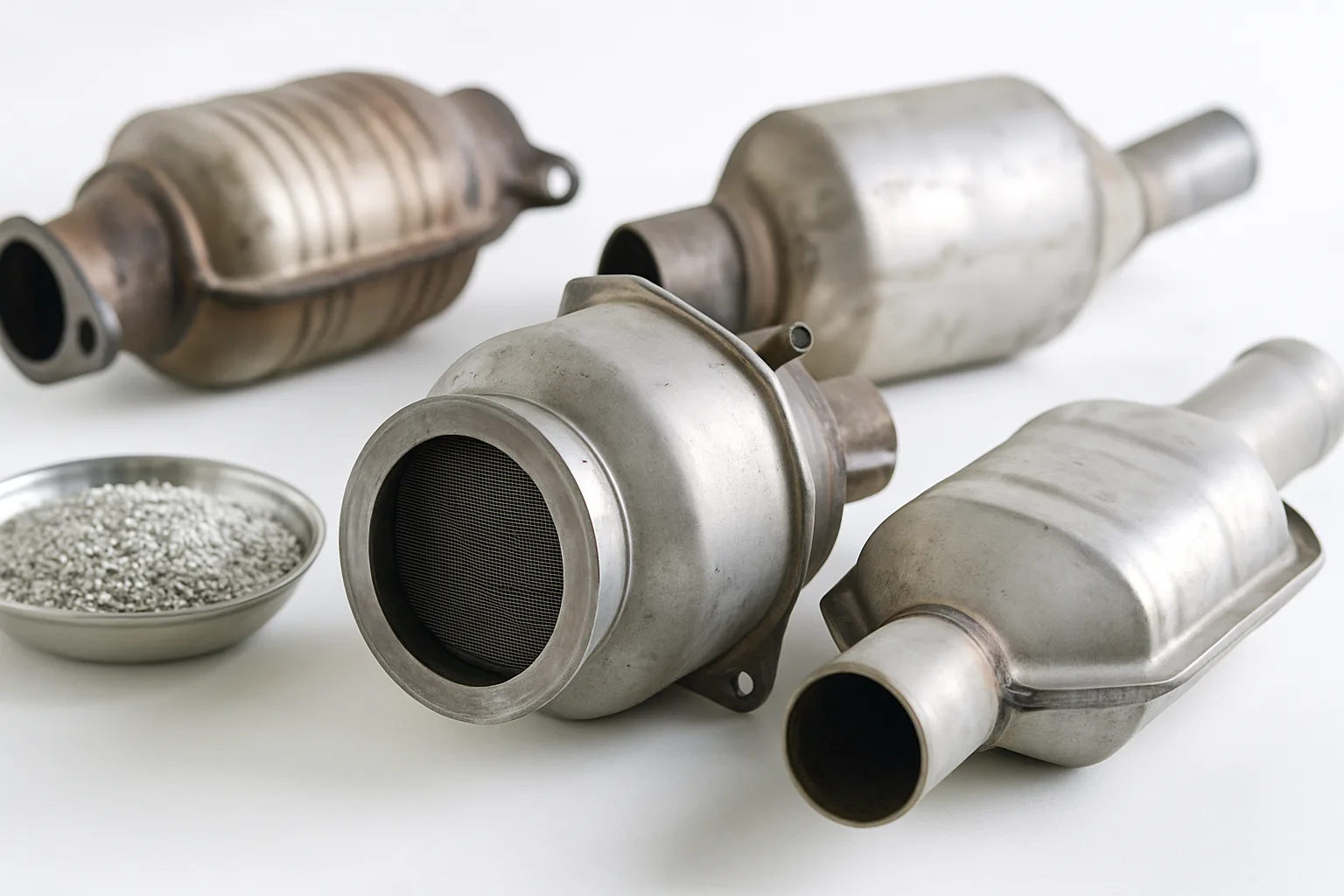
Rhodium Is Worth More Than Gold — And It's Sitting Inside Your Scrap Catalytic Converter
Most people selling a scrap catalytic converter think about weight. They eyeball the unit, get a number from their regular buyer, and move on. What they rarely think about is which specific metals are inside — and why one of those metals, rhodium, can swing the value of a single converter by hundreds of dollars. If you're chasing scrap catalytic converter prices in San Francisco without understanding rhodium, you're leaving real money on the table.
This isn't theory. Rhodium has historically traded at multiples of gold. Its role in catalytic converter chemistry is irreplaceable, its global supply is razor-thin, and its concentration varies dramatically by converter make and model. That variation is exactly why two converters sitting side by side in your yard can have wildly different values — and why getting the right buyer matters more than people realize.
What Makes Rhodium So Valuable in a Catalytic Converter?
Catalytic converters contain three platinum group metals (PGMs): platinum, palladium, and rhodium. All three are precious. All three are recoverable at the smelter. But rhodium is in a category of its own for one core reason: there is almost no other industrial use for it outside of autocatalysts.
Platinum and palladium have applications in jewelry, electronics, and fuel cells. Rhodium's primary job — the reason refiners want it badly enough to pay extraordinary prices — is reducing nitrogen oxide emissions. It's the metal that converts NOx gases into harmless nitrogen and oxygen inside your converter's ceramic substrate. No other commercially viable metal does this job as efficiently at scale. That makes rhodium non-negotiable in converter design, which means demand stays high while supply stays extremely limited.
Global rhodium production is concentrated in South Africa, with secondary supply coming from Zimbabwe and Russia. Annual mine output is measured in the low single-digit tons globally. Compare that to gold, which is produced in the thousands of tons per year, and you start to understand the structural scarcity driving rhodium's price. When automotive production ramps up — or when emissions regulations tighten — rhodium demand climbs while supply barely moves.
How Rhodium Content Affects Cat Converter Value: What San Francisco Sellers Need to Know
Here's where it gets practical. Not every catalytic converter contains the same ratio of platinum, palladium, and rhodium. A domestic truck converter and a foreign luxury vehicle converter might weigh the same but contain dramatically different PGM loadings. OEM converters from Japanese and European manufacturers often carry higher PGM concentrations because those vehicles were engineered to meet strict emissions standards from the factory.
In San Francisco and across California, the vehicle mix skews toward imports, hybrids, and late-model vehicles — which tends to mean higher-value converters in the scrap stream. A Toyota Prius catalytic converter, for example, is consistently one of the most discussed high-value units in the industry precisely because of its PGM content. Understanding your vehicle mix matters when you're trying to estimate your load's value before you pick up the phone.
- Foreign OEM converters (Toyota, Honda, BMW, Mercedes) often carry higher rhodium and palladium loadings
- Domestic OEM converters (Ford, GM, Chrysler) tend to be higher in platinum, with variable rhodium content
- Aftermarket converters contain significantly lower PGM concentrations — sometimes a fraction of OEM levels
- Pre-emission converters (pre-1975) generally contain no PGMs at all
- DPF (diesel particulate filters) contain different precious metal profiles — platinum-heavy, less rhodium
If you're running a shop or collecting converters in the San Francisco Bay Area, documenting your units by make, model, and year before you sell isn't extra work — it's the difference between guessing and knowing. Buyers who can verify what they're buying pay more confidently. That's a fact in this market.
The Problem With Selling Scrap Cats the Old Way
The traditional process looks like this: you accumulate a load of converters, call one buyer, get a number, take it or leave it. That buyer knows exactly what rhodium is trading at. You probably don't. That information gap is not accidental — it's profitable for the buyer.
Single-buyer pricing means you have zero leverage. You don't know if the number you're getting reflects the current PGM market or the buyer's margin target. You don't know if the unit in your hand is worth $80 or $800 because the serial number lookup didn't happen. You're negotiating blind against someone who does this for a living.
This is why the shift toward competitive, transparent selling matters. When multiple vetted buyers see the same documented load at the same time and compete against each other, price discovery actually happens. The market reveals what your converters are worth — not what one buyer decides to tell you. You can get the best catalytic converter price today by creating competition, not by taking the first offer.
For yards and collectors in California operating at volume, the difference between reactive selling and strategic selling adds up fast. A few percentage points on PGM recovery across a hundred units is significant revenue. Across a year, it's the difference between a mediocre margin and a healthy one.
How a Scrap Metal Auction Platform Changes the Game for Catalytic Converter Sellers
This is where the model shifts. Platforms like SMASH — North America's B2B scrap metal auction platform — are built specifically for this kind of selling. Instead of one phone call to one buyer, your documented converter load goes in front of a network of vetted buyers simultaneously. They compete. You see the results. No subscription fees. SMASH only wins when the seller wins.
The documentation piece is critical and often overlooked. Serial tracking, photo documentation, and VIN lookup aren't just administrative steps — they're what make buyers confident enough to bid aggressively. A well-documented load of catalytic converters with accurate serial numbers and clear photos gives a buyer the data they need to price confidently. Confident buyers bid higher. That's not a sales pitch — that's how competitive markets work.
Consider what a successful load sale actually looks like through this lens. A California shop accumulates 40 mixed catalytic converters over a quarter. They document each unit with photos and serial numbers. They upload the load to SMASH, where vetted buyers review the documentation and bid against each other. The shop owner sees multiple offers in real time. They accept the best one. Auto-invoicing handles the paperwork. The shop owner now has a data point for what the market actually paid — and they use that information in the next sale.
That's not complicated. It's just a better process than guessing and hoping.
Why Rhodium Price Volatility Makes Timing and Transparency Matter
Rhodium is not a stable market. It has seen dramatic price swings — periods of extreme highs driven by supply disruptions or regulatory tightening, followed by corrections. Unlike gold, which institutional investors hold as a hedge, rhodium is almost entirely an industrial metal. When automotive production slows, rhodium demand softens. When emissions regulations tighten globally, demand spikes. You are selling into a market that moves.
This volatility has two implications for sellers. First, timing matters. Selling during a rhodium price trough means less money for the same converters. Second, transparency matters more. In a volatile market, a single opaque buyer can anchor their offer to a price that's already weeks old. Competitive bidding responds to current market conditions because buyers are motivated to win the lot.
Sellers in San Francisco who want to stay informed about where PGM markets are moving should make a habit of checking real market data, not just the number their regular buyer quotes them. Read catalytic converter pricing guides regularly to understand how rhodium, platinum, and palladium movements affect what your load is actually worth on any given week.
The market is not your enemy. Lack of information is. Fix the information problem and your selling position gets stronger immediately.
What to Do Before You Sell Your Next Load of Cats in California
If you're ready to stop guessing and start selling smarter, there are a few practical steps that make a real difference before your next transaction.
- Sort your converters by type. Separate OEM from aftermarket. Separate domestic from foreign. Your buyer needs to know what they're pricing, and so do you.
- Document serials and photos. Every unit should have a clear photo and serial number logged before it leaves your facility. This protects you legally and commercially.
- Check the current market. PGM prices move. Know where rhodium, platinum, and palladium are trading before you sell. Check current catalytic converter prices before you commit to any deal.
- Create competition. Don't accept the first number. Get multiple offers. Use a platform like SMASH to put your load in front of vetted buyers who have to compete for it.
- Track your results. What did your last load sell for per unit? Per pound? Knowing your baseline makes the next sale better.
Sellers in San Francisco and across California have access to a strong buyer network and a healthy volume of high-value OEM converters in the local scrap stream. The infrastructure exists to sell well. The question is whether you're using it.
If you've been relying on a single relationship and a handshake price, you owe it to yourself to find out what your loads are actually worth on the open market. The rhodium inside those converters doesn't care who buys it — but you should care who's paying you for it.
Ready to find out what your catalytic converters are really worth? Get the best price for your load — get the best catalytic converter price today with a free quote at best-catalytic-converter-price.com.
Disclaimer: Catalytic converter scrap prices fluctuate based on live PGM spot prices for platinum, palladium, and rhodium. Always check current market rates before selling. Prices referenced in this article are for educational context only and do not represent guaranteed offers.
Frequently Asked Questions
Q: Why does rhodium make catalytic converters so valuable as scrap?
Rhodium is one of the rarest metals on Earth, with global annual mine production measured in just a few tons. It's essential for reducing nitrogen oxide emissions in catalytic converters and has virtually no substitute at scale. That structural scarcity drives its high price — and because every modern converter contains some rhodium, it significantly affects the scrap value of the unit.
Q: How do I find out the current scrap catalytic converter prices in San Francisco?
The best approach is to use a platform that gives you access to multiple vetted buyers and current market-based pricing rather than relying on a single quote. You can also read catalytic converter pricing guides to stay informed on how PGM markets affect local prices. Scrap catalytic converter prices in San Francisco reflect national PGM spot rates, so watching platinum, palladium, and rhodium trends gives you useful context.
Q: Does the make and model of my vehicle affect how much my catalytic converter is worth?
Yes, significantly. OEM converters from certain Japanese and European manufacturers often contain higher concentrations of PGMs than domestic equivalents. Aftermarket converters contain much lower PGM loadings and are worth considerably less. Knowing your converter's make, model, and year — and documenting serial numbers — helps buyers price accurately and gives you more leverage in negotiations.
Q: What's the difference between selling to a single cat converter buyer versus using an auction platform?
Selling to one buyer means accepting whatever price they offer with no market context and no leverage. Using a platform like SMASH puts your documented load in front of multiple vetted buyers who compete against each other. Competition reveals what the market will actually pay — which is often more than the first offer you'd receive through a single-buyer channel.
Q: Are catalytic converter prices in California different from other states?
Cat converter scrap prices are primarily driven by live PGM spot prices, which are national and global — not regional. However, the mix of vehicles in California (heavy on imports, hybrids, and late-model cars) means the average converter coming out of a California yard may carry higher PGM content than in other regions. That affects the average value per unit, even though the underlying metal prices are the same. Catalytic converter buyers in California are well-positioned to evaluate OEM foreign units accurately.
Follow SMASH on LinkedIn for scrap metal market insights, PGM price updates, and industry news that helps you sell smarter.