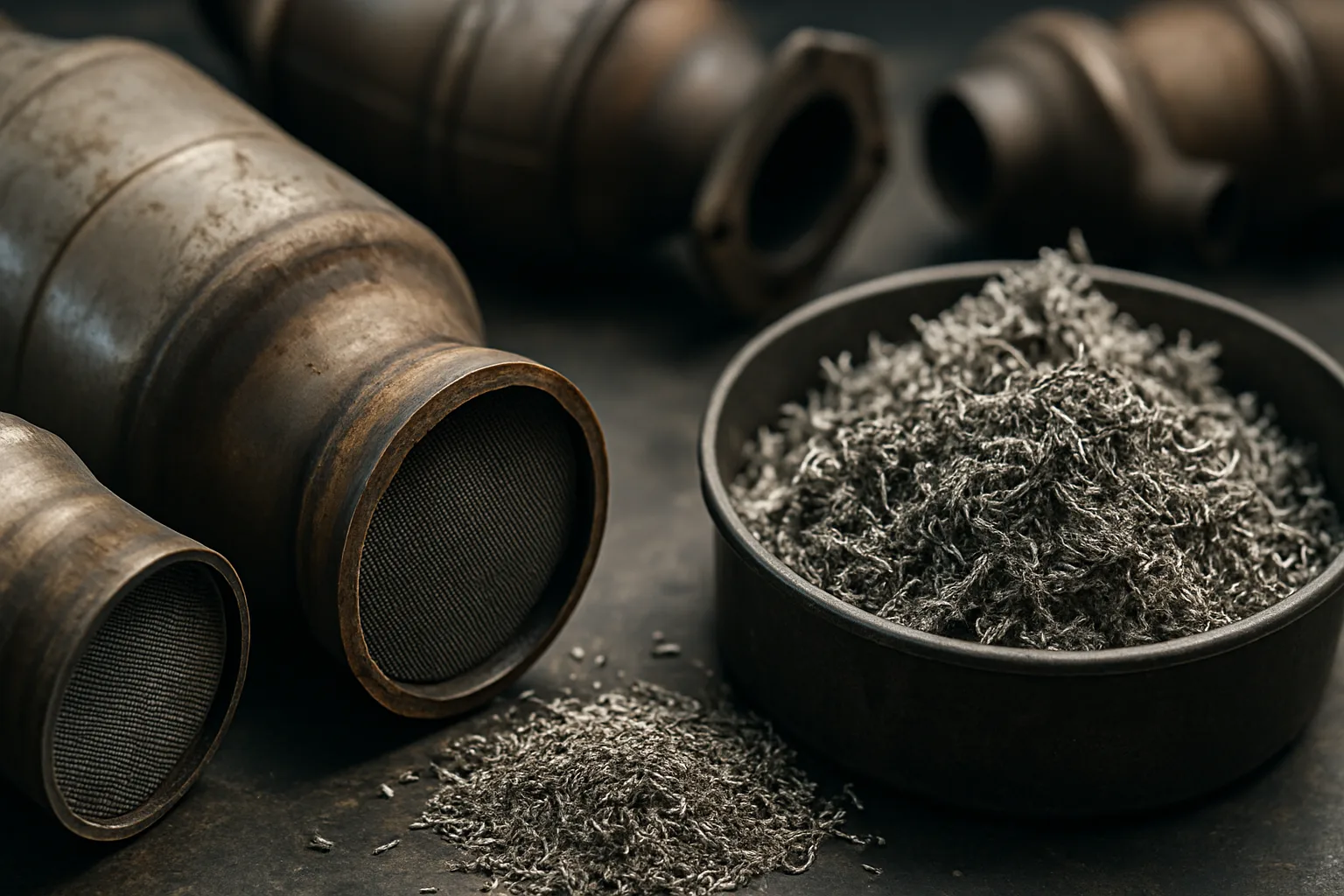
Most people leave serious money on the table when they remove a catalytic converter for recycling — not because they sold it wrong, but because they damaged it getting it off. A cracked substrate, a stripped oxygen sensor bung, or a converter caked in oil contamination can knock real dollars off your OEM catalytic converter value before you ever get a bid. The removal process matters. How you document it matters. And where you sell it matters most of all.
Whether you're an auto shop in Columbus pulling cats off trade-ins, a scrapper working a salvage run across Ohio, or an individual with a dead vehicle in the driveway — this guide walks you through the right way to remove a catalytic converter for recycling and get paid what it's actually worth.
Why the Removal Process Directly Affects Catalytic Converter Prices Today
Before you touch a wrench, understand this: buyers price converters based on what's inside them. Platinum, palladium, and rhodium are the precious metals that drive catalytic converter prices today. Those metals sit inside the ceramic or metallic substrate. Crack the substrate, expose it to moisture, or burn it out with a torch during removal, and you've degraded the recoverable PGM content before it ever hits a smelter.
Buyers — especially experienced ones — know what a heat-damaged or cracked-out converter looks like. They adjust their bids accordingly. That means your removal technique isn't just a safety issue. It's a financial one. A clean, intact OEM converter from a late-model truck can carry significantly different value than the same unit with a fractured honeycomb. Protect the substrate and you protect your price.
- Cracked substrate: Reduces PGM yield, lowers buyer confidence, lower bid
- Heat damage from torch cutting: Can oxidize PGM content, signals poor handling
- Oil contamination inside the cat: Common on high-mileage engines — disclose it, don't hide it
- Missing O2 sensor bungs: Less of a price factor, but affects accurate identification
Tools You Need and Safety Steps to Take Before You Start
Safe removal starts before the vehicle is even lifted. Catalytic converters run hot — up to 1,600°F during operation. Give any recently driven vehicle at least two hours to cool before you get underneath it. Burns from a hot cat are serious. Working under a vehicle that isn't properly supported is more serious. Don't shortcut the safety setup.
Here's what you need on hand:
- Floor jack and rated jack stands — Never work under a vehicle on just a floor jack
- Penetrating oil (PB Blaster or equivalent) — Exhaust hardware rusts solid, especially in Ohio winters
- Reciprocating saw or angle grinder with cut-off wheel — For seized or welded connections
- Breaker bar and socket set — 15mm is common for flange bolts, but it varies by make
- Oxygen sensor socket — If you're pulling the O2 sensors before cutting
- Safety glasses, gloves, and hearing protection — Non-negotiable
- Camera or smartphone — You'll need this for documentation (more on that below)
Spray penetrating oil on every bolt, nut, and sensor connection the night before if you can. Ohio road salt eats exhaust hardware. Trying to force a seized flange bolt without soaking it first almost guarantees a broken stud or a cracked pipe — neither of which helps you.
Step-by-Step: How to Remove a Catalytic Converter Without Damaging It
Once the vehicle is safely supported and cooled, you're ready to work. Here's the process that keeps the converter intact and your OEM catalytic converter value where it belongs.
- Locate the converter. On most passenger vehicles, it's close to the engine on the exhaust pipe — often directly after the flex pipe or manifold. On trucks and SUVs, there may be multiple converters. Check both sides on V6 and V8 applications.
- Remove the O2 sensors first. Use a dedicated oxygen sensor socket (6-point, with a slot for the wire). Apply heat to the bung with a propane torch if frozen, but keep the flame away from the converter body itself. Store sensors separately — they have scrap value too.
- Soak and loosen the flange bolts. Use your breaker bar with slow, steady pressure. If a bolt rounds off or snaps, shift to your reciprocating saw. Cut the pipe cleanly — not the converter shell.
- Cut cleanly if necessary. If the converter is welded in (no flanges), cut the pipe 2-3 inches away from each end of the converter body. Leave some pipe attached. This protects the substrate from vibration damage and makes it easier for buyers to identify the unit.
- Shake and listen. A rattling sound means the substrate is already cracked or broken loose. Note this — it affects value and you should disclose it to buyers.
- Keep it dry and upright. Store converters end-up when possible. Water intrusion accelerates substrate degradation.
If you're pulling multiple units — say, working through a batch of trade-ins at a Columbus auto shop — develop a consistent process. Consistency reduces damage rates and keeps your scrap inventory cleaner.
Document Everything Before You Sell: The Step Most Sellers Skip
Here's where most sellers lose money — not at the removal stage, but at the selling stage. They hand a converter to one buyer, take whatever price they're offered, and move on. No photos. No serial number lookup. No competitive bidding. That's the old way, and it costs real money across a load of any size.
Before you sell, document every converter:
- Serial number or OEM part number — Usually stamped on the heat shield or converter body. This is how buyers identify the unit and price it accurately.
- Photos from multiple angles — Top, bottom, both pipe ends, and any visible damage
- Vehicle year, make, model — Even if the converter is already off the vehicle, write it down
- Condition notes — Any cracks, contamination, or rattle
This documentation isn't busywork. It's what enables real scrap metal inventory management — and it's what platforms like SMASH Scrap — where verified buyers bid on your metal use to generate competitive bids from multiple vetted buyers. More buyer confidence means better price discovery. A well-documented lot almost always outperforms a mystery box.
Columbus scrap yards and auto recyclers using structured documentation consistently get cleaner transactions and fewer disputes. It's a small habit that pays.
How SMASH Helps Columbus Sellers Get Real Market Value for OEM Converters
The single-buyer phone call is a terrible pricing mechanism for catalytic converters. One buyer, one number, take it or leave it — with no way to know if that number reflects the actual market. The platinum, palladium, and rhodium markets move. OEM catalytic converter value shifts with those movements. One buyer quoting a static price isn't giving you the market. They're giving you their margin.
SMASH changes that dynamic. When you list a load of converters — whether it's a handful pulled from Columbus-area vehicles or a larger inventory run — vetted buyers on the platform compete for it. That competition is the mechanism for real price discovery. You're not guessing. You're watching the market respond to your documented inventory in real time.
There are no subscription fees. SMASH only wins when you do. And the combination of photo documentation, serial tracking, and competitive auction format means the buyer pool has the information they need to bid confidently — which is what pushes prices toward actual market value. If you haven't tried it yet, get the best catalytic converter price today by getting your inventory on the platform.
For those working Columbus scrap metal services, connecting with a platform that reaches buyers beyond your immediate area is one of the most straightforward ways to improve your average return per unit. Local relationships matter, but competition matters more when PGM prices are moving.
Selling Smart: Comparing Your Options for Catalytic Converter Recycling Companies
Not all catalytic converter recycling companies operate the same way. Understanding your options helps you choose the right channel for your volume, your timeline, and your price expectations.
Here's an honest comparison of the most common selling routes:
- Local scrap yard (direct sale): Fast, convenient, requires zero documentation. Price is set by one buyer with no competition. Often the lowest return, especially for higher-value OEM units.
- Direct to recycler (toll or outright): Better pricing for volume sellers. Requires some relationship-building. Toll refining (where you get paid on actual assay) takes longer but can return more on high-PGM loads.
- Auction platform (SMASH): Best for documented loads where you want competitive bids. Vetted buyers, no subscription fees, auto-invoicing, and photo/serial documentation built in. Works especially well for mixed lots where unit-by-unit identification creates pricing clarity.
- Online classifieds or social media: Unvetted buyers, payment risk, no price transparency. Only worth it for single units where you have time to vet buyers yourself.
For auto shops and recyclers handling regular volume — especially in the Columbus and broader Ohio market — the auction route with documented inventory tends to outperform the walk-in yard model over time. You're not just selling one cat. You're building a repeatable process that improves with every load. Read catalytic converter pricing guides to understand how documentation and platform choice affect your average return.
Pricing fluctuates with PGM spot prices, so always check current catalytic converter prices before you commit to a number — whether you're buying, selling, or just running a batch through your shop.
Disclaimer: Catalytic converter prices fluctuate with platinum, palladium, and rhodium spot markets. Always verify current rates before selling.
If you've got a load ready — whether it's five converters or fifty — don't hand them to the first buyer who calls. Document them, photograph them, and let buyers compete. That's how you find out what your converters are actually worth in 2026. Get the best price for your catalytic converter — get a free quote at best-catalytic-converter-price.com.
Frequently Asked Questions
Q: Does a cracked substrate reduce my OEM catalytic converter value?
Yes, significantly. A cracked or rattling substrate indicates broken ceramic honeycomb inside, which means lower recoverable PGM content for the buyer. Always disclose cracks upfront — buyers who discover them after bidding will dispute the price, and your reputation takes a hit. Document the condition with photos before listing.
Q: What's the best way to identify an OEM catalytic converter before selling?
Look for a stamped serial number or part number on the converter body or heat shield. Cross-reference it with an identification database or submit it to a platform like SMASH, where vetted buyers use serial data to price accurately. The vehicle's year, make, and model also help when no serial is visible.
Q: Where can I sell catalytic converters in Columbus, Ohio for a fair price?
Columbus has local scrap yards, but for competitive pricing you'll want multiple buyers bidding — not just one yard setting the number. Platforms like SMASH connect Columbus sellers with vetted buyers across North America. Documenting your inventory before listing almost always improves your result.
Q: How much are catalytic converters worth right now?
OEM catalytic converter value varies widely — from under $50 for small, low-PGM units to several hundred dollars for high-value OEM converters from trucks and SUVs. Prices shift with platinum, palladium, and rhodium spot markets, which move daily. Always check current rates rather than relying on any fixed number you've heard.
Q: Is it legal to remove and sell a catalytic converter in Ohio?
Yes, removing a catalytic converter from a vehicle you own — or that your shop has legal custody of for recycling — is legal. Ohio, like most states, has documentation requirements for sellers and buyers of used catalytic converters to reduce theft. Keep your title, BOL, or work order on hand when selling to any licensed recycler or platform.
Follow SMASH on LinkedIn for scrap metal market updates, PGM price movements, and industry insights that help you sell smarter.
```