What's Moving Cat Converter Prices This Week (July 19, 2026)
If you checked your cat converter prices last Monday and you're checking again today, don't be surprised if the numbers look different. Catalytic converter scrap value doesn't sit still — it moves with the precious metals market, and right now, that market is restless. For sellers in Rochester and across New York, understanding why prices shift is just as important as knowing what the price is.
This week's roundup breaks down what's driving the market, what Rochester-area sellers should watch for, and how to make sure you're not leaving money on the table when you hand over your cats.
Why Cat Converter Prices Rochester Sellers See Change Daily
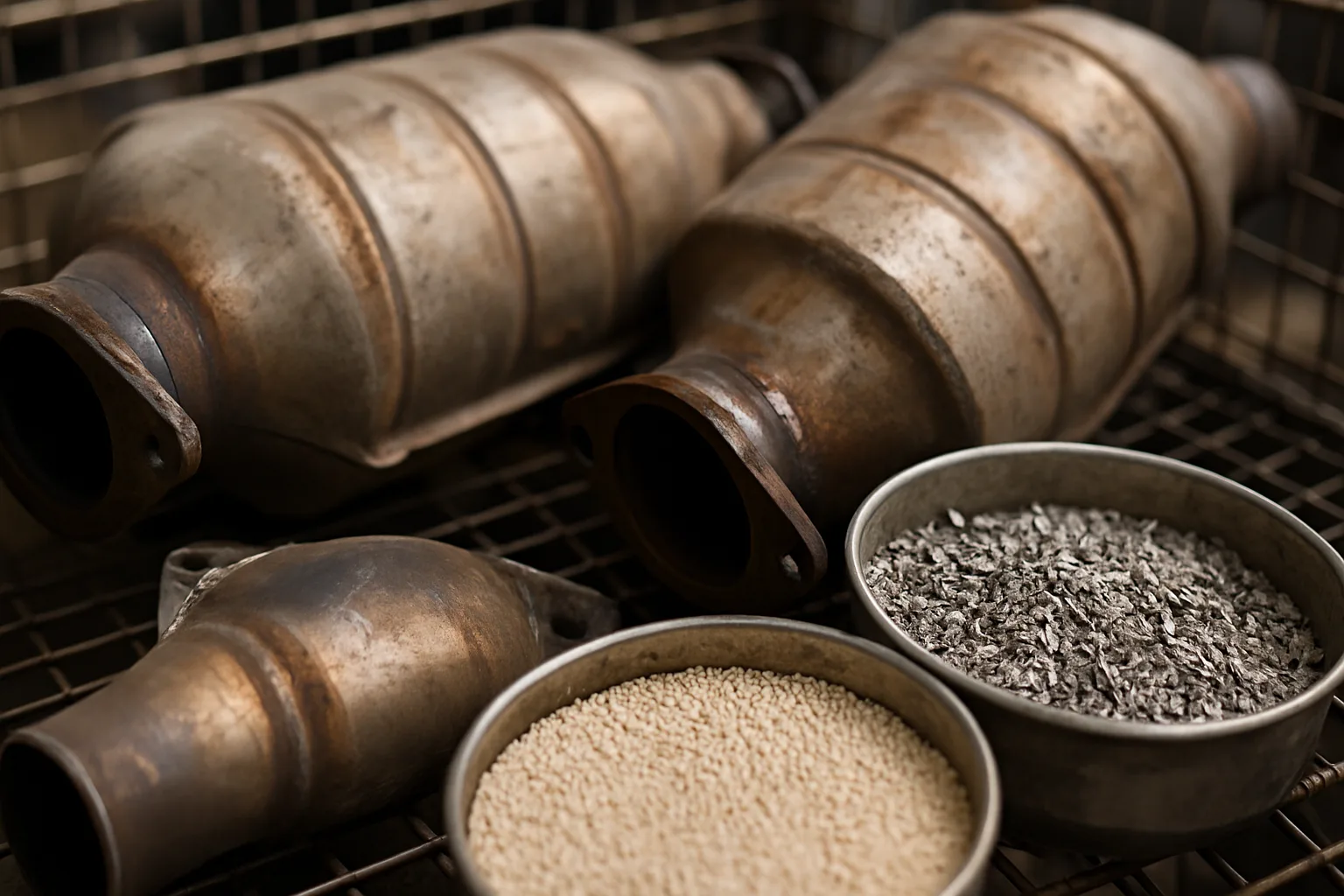
Catalytic converters carry value because of three metals locked inside the ceramic substrate: platinum, palladium, and rhodium. These aren't commodity metals with stable, predictable pricing. They trade on global markets, react to industrial demand, mining output, currency fluctuations, and macroeconomic signals — sometimes all in the same afternoon.
Here's what's pushing prices around right now:
- Rhodium volatility: Rhodium remains the most price-sensitive of the three PGMs (platinum group metals). Even small shifts in South African mining output — where most of the world's rhodium comes from — can move the needle meaningfully for recyclers.
- Palladium demand signals: Industrial and automotive demand for palladium continues to influence scrap values. When automakers signal production changes or hybrid/EV transitions, palladium pricing reacts.
- Platinum's role in the mix: Platinum tends to be more stable than its sister metals, but it's not immune. Fuel cell technology interest has kept platinum in focus throughout 2026.
- USD strength: PGMs trade in U.S. dollars globally. A stronger dollar can suppress metal prices; a weaker dollar can lift them. Watch the dollar index if you're timing a larger sale.
The bottom line: if you're sitting on a pile of cats and waiting for the "right time," you need real market data — not a number someone quoted you three weeks ago. To check current catalytic converter prices, you need a source that updates with the market, not one that's frozen in last month's reality.
What Drives the Spread Between Scrap Yards — and How to Close It
Two scrap yards in Rochester can quote you two meaningfully different prices for the same converter on the same day. That's not a glitch. That's how single-buyer pricing works. One yard has more of that unit in inventory. One yard has a better refinery relationship. One yard is trying to improve margins this week. None of those factors have anything to do with the actual catalytic converter scrap value of what you're holding.
This is the fundamental problem with the traditional scrap selling process: you call one buyer, you get one number, and you have no way to know if that number reflects the market or reflects that buyer's position. The old model puts all the information in the buyer's hands and almost none in yours.
Competitive bidding changes that dynamic. When multiple vetted buyers compete for your load, the price discovery process works the way it's supposed to. You see what the market will actually pay — not what one buyer decided to offer on a Tuesday morning. Platforms like SMASH let you get competitive bids for your scrap metal without cold-calling a list of yards and trying to compare apples to oranges.
For sellers in Rochester moving regular volume — whether you're an auto shop, a small collector, or a dismantler — the spread between the best and worst offer on a load of cats can be significant. Over a year, that spread compounds. Closing it is just math.
OEM vs. Aftermarket: Why the Converter Type Matters More Than You Think
Not all catalytic converters are created equal, and the price gap between types is real. Understanding what you have before you sell is one of the easiest ways to protect your catalytic converter scrap value.
OEM (Original Equipment Manufacturer) converters — the ones that came stock on the vehicle — typically carry higher PGM loadings than aftermarket replacements. An OEM converter off a larger-displacement engine from a domestic truck or SUV can hold significantly more platinum, palladium, and rhodium than a cheaply produced replacement unit. The price difference at the yard reflects that loading difference.
Aftermarket converters are designed to meet emissions standards at a lower cost. That means less precious metal per unit. Some are worth a fraction of their OEM equivalents. Selling a load that mixes OEM and aftermarket units without proper identification means you're likely averaging down — and the buyer benefits, not you.
A few practical steps before you sell:
- Photograph everything. Serial numbers, substrate condition, converter ends. Documentation gives buyers confidence and reduces disputes.
- Identify your units. A VIN lookup or serial number check can help confirm what vehicle the converter came from and whether it's OEM.
- Separate your grades. Don't mix high-value OEM units with low-grade aftermarket replacements in a single lot without disclosure. You'll get priced at the average — or the low end.
If you want to get the best catalytic converter price today, the documentation step is non-negotiable. Buyers pay more when they know exactly what they're bidding on.
Rochester Market Context: What Local Sellers Are Dealing With
Rochester, New York is a working industrial city with a real scrap economy. There's no shortage of auto shops, salvage operations, and collectors moving cats through the region. That also means there's competition for buyers' attention — and buyers know it.
Local yard pricing in the Rochester area follows the same fundamentals as anywhere in New York or across North America: it's driven by PGM spot prices, refinery relationships, and how much of any given unit a buyer already holds. What's different locally is logistics. If you're selling to a yard down the road, freight isn't a factor. But if competitive bidding opens up buyers outside your immediate area, you need to factor in whether the price premium covers the cost of shipping.
For smaller loads — a handful of cats from an auto shop cleanout — local yards often make sense. For larger loads, the math shifts. A meaningful price difference per unit, multiplied across a hundred converters, can more than cover freight costs and still leave more money in your pocket.
The key for Rochester-area sellers right now: don't default to the closest buyer out of habit. At least know what competitive pricing looks like before you commit. You can read catalytic converter pricing guides to get a clearer picture of how values are calculated and where you stand.
How SMASH Fits Into Your Scrap Converter Selling Process
SMASH is a scrap metal auction platform built for exactly this kind of sale. You document your load — photos, serial numbers, unit counts, grades — and vetted buyers compete for it. No subscription fees. No guessing. The auction format means price discovery happens in real time, based on actual buyer demand, not a single call to a single yard.
The platform handles inventory documentation, which matters for catalytic converter sales more than most scrap categories. Because converter value is tied to specific PGM content, buyers need confidence in what they're bidding. When your load is properly documented — with photos and serial tracking — buyers can bid aggressively. Ambiguity drives bids down. Clarity drives them up.
SMASH doesn't promise you'll get the highest possible price on every load. What it does is put actual market competition behind your sale, so the price you get reflects real buyer demand rather than one yard's margin target. For sellers moving cats in Rochester or anywhere across New York, that's a meaningful structural advantage.
No subscription fees means you're not paying to participate before you know if it works for you. The model is simple: SMASH wins when the seller wins.
Weekly Market Recap: What to Watch the Week of July 19, 2026
This week, keep an eye on the following factors that are likely to influence cat converter prices through the end of July:
- PGM spot prices: Check platinum, palladium, and rhodium daily if you're holding a significant load. Small moves in rhodium especially can shift your load's value noticeably.
- Automotive production signals: Any news from major automakers about production schedules, model changes, or EV transition timelines can move palladium in particular.
- USD index: A meaningful dollar move this week could affect how scrap buyers price their bids. PGMs priced in USD respond to currency strength.
- Refinery processing windows: Some buyers slow down or pause purchasing when their refinery partners are at capacity. If you're seeing slower responses from local yards, this may be why — and it's a good reason to reach out to buyers in other markets.
- Scrap metal recycling demand broadly: While the focus here is cats, general scrap market conditions affect buyer liquidity and how aggressively they're purchasing across all categories.
The market doesn't pause for weekends. If you're holding inventory and conditions shift, the cost of waiting isn't zero. Stay informed, document your loads, and put competition behind your sale.
If you're ready to stop guessing and start getting real market pricing for your cats, it's straightforward: get the best price for your catalytic converter — get a free quote at best-catalytic-converter-price.com. The market is moving right now. Make sure your price is moving with it.
Disclaimer: Catalytic converter scrap prices fluctuate daily based on PGM spot markets and buyer demand. All pricing references in this article are general in nature. Always check current rates before selling.
Frequently Asked Questions
Q: How often do cat converter prices in Rochester change?
Catalytic converter scrap value updates with the precious metals market — which means it can shift daily, sometimes intraday on volatile days. If you received a quote more than a few days ago, it's worth getting a fresh one before you sell, especially on larger loads.
Q: Why are two scrap yards in Rochester quoting me different prices for the same converter?
Different yards have different refinery relationships, different inventory levels, and different margin targets. A single quote reflects one buyer's position, not the market. Getting multiple bids — or using a competitive auction platform like SMASH — gives you a clearer picture of what your load is actually worth.
Q: Does the type of vehicle affect what I'll get for a scrap catalytic converter in New York?
Significantly, yes. OEM converters from larger-displacement domestic trucks, SUVs, and performance vehicles tend to carry higher PGM loadings and pay more per unit than aftermarket replacements. Knowing whether you have OEM or aftermarket units — and separating them when you sell — protects your catalytic converter scrap value.
Q: What documentation do I need to sell catalytic converters in New York State?
New York has scrap metal dealer regulations that include record-keeping requirements for catalytic converter purchases. Requirements can include seller ID, vehicle information, and serial numbers. Check current New York State and local Rochester regulations before selling, as compliance rules have continued to evolve in 2026.
Q: Is it worth shipping my cats out of Rochester to get a better price?
It depends on the volume and the price spread. For a small handful of units, local yard pricing usually makes logistics sense. For larger loads, a meaningful per-unit price advantage multiplied across the load can easily exceed freight costs. Running the numbers before you default to the closest yard is always worth the time.
Follow SMASH on LinkedIn for weekly scrap metal market insights and industry updates: linkedin.com/company/scrap-metal-auction-sales-hub