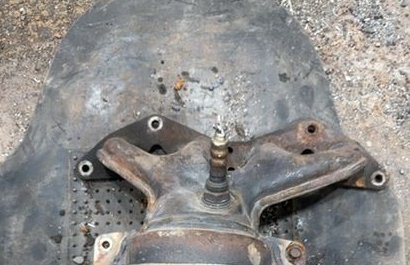
Most sellers leave money on the table — not because they have a bad converter, but because they don't know what's on it. That serial number stamped into your cat isn't decoration. It's the key to knowing your catalytic converter scrap value before anyone makes you an offer.
If you're in San Diego and trying to figure out what your cats are actually worth, start here. Understanding how to read a catalytic converter serial number changes the entire conversation with a buyer. You stop guessing. They stop lowballing.
This guide breaks down exactly how to find, read, and use serial numbers to get cat converter prices San Diego sellers actually deserve.
Why the Serial Number on Your Cat Converter Matters
Every OEM (original equipment manufacturer) catalytic converter carries a serial number or part number stamped directly into the body — usually on the heat shield, the shell, or an end cone. That number tells a buyer the exact make, model, and year the unit came from. More importantly, it reveals the precious metal loading inside: platinum, palladium, and rhodium.
Those three metals are what drive scrap catalytic converter value. Rhodium alone has traded at prices that make gold look modest. The concentration of PGMs (platinum group metals) inside a converter depends entirely on its origin — and the serial number is how you trace that origin. Without it, a buyer either guesses low or walks away. With it, you both know exactly what's on the table.
Buyers who use data to price cats — not gut feel — will pay more for a unit they can identify. That's just how the market works. Check current catalytic converter prices before you walk into any transaction, so you know the baseline.
Where to Find the Serial Number on a Catalytic Converter
Location varies by manufacturer, but here's where to look first:
- Stamped on the shell: Most common on domestic OEM units. Look along the top, bottom, or sides of the main body.
- On the end cone or inlet/outlet pipe: Especially common on Honda, Toyota, and other Asian-market vehicles.
- On a heat shield tab: Some Ford and GM converters stamp the number into the heat shield that wraps the body.
- Cast into the body: Certain OEM converters, especially older ones, have numbers that are raised or recessed into the metal itself — harder to read but always there.
- On a sticker or tag: Rare, and these usually don't survive long in scrap condition. Don't count on a sticker.
Before you try to read anything, clean the area. Dirt, grease, and rust will hide a number fast. A wire brush and a can of parts cleaner will do more for your payday than almost anything else you can do in five minutes. Good lighting matters too — a phone flashlight at an angle often reveals numbers that look completely blank in flat light.
If the number is truly gone — worn, ground off, or never stamped — you're working with an unidentified unit. These still have scrap value, but you'll get a generic price based on type and weight rather than confirmed PGM content. That gap in value can be significant.
How to Read and Decode What the Serial Number Tells You
There's no universal format. Each OEM uses their own numbering system, and aftermarket converters follow a completely different convention. Here's how to decode what you're looking at:
OEM Converters
If the number starts with a manufacturer-specific prefix — like 22300- for certain Hondas or 4F2Z- for Ford — you're looking at an OEM part number. These map directly to a specific vehicle application. Cross-reference that number with a reputable cat converter pricing database or read catalytic converter pricing guides to find the PGM loading data associated with that part.
Aftermarket Converters
Aftermarket cats often carry numbers from suppliers like Walker, MagnaFlow, or Eastern. These use their own numbering systems. Aftermarket units almost always carry significantly less PGM content than OEM — sometimes a fraction. Don't expect OEM pricing on an aftermarket unit, even if it looks identical on the outside.
Foreign (OEM from Non-North American Markets)
Converters from Japanese domestic market vehicles, European OEM, or other foreign-origin units can be harder to decode without a specialized database. These are often called "foreign direct fit" units in the recycling trade. Some carry very high PGM loadings — others don't. Identification matters here more than anywhere.
Bottom line: the serial number is the starting point, not the final answer. You need to match that number to a database that shows actual PGM content. That's where pricing becomes real and where North America's B2B scrap metal auction platform creates genuine competition among buyers who know exactly what they're bidding on.
Cat Converter Prices San Diego: What Identification Means for Your Bottom Line
San Diego has active scrap recycling and a strong automotive ecosystem — dealerships, independent shops, and salvage yards all generate catalytic converter volume regularly. That means local buyers exist, but it also means competition for those cats is real. Identified converters command better prices, full stop.
California emissions regulations historically drove higher PGM loadings in converters built for the California market. CARB-compliant cats — the ones fitted to California-spec vehicles — often carry more precious metal than federal-spec equivalents. If you're pulling converters off California-registered vehicles in San Diego, that context matters when you negotiate.
Knowing your serial number and the vehicle origin gives you leverage. A buyer offering a flat price per unit on a load of mixed cats is averaging — and averaging almost always benefits the buyer, not you. Segregate your inventory by identified type. Price it that way. You'll see the difference.
For anyone working volume — shops, recyclers, or collectors — San Diego scrap metal services tailored to the local market can help you move inventory with better price transparency than a phone call to a single buyer ever will.
Using Serial Numbers to Avoid Getting Burned on Scrap Value
The catalytic converter theft and resale market has sharpened buyer scrutiny significantly by 2026. Buyers want documentation. They want serial numbers that match vehicle records. They want photo evidence. This isn't just about pricing — it's about compliance.
If you're a legitimate seller — a shop, a yard, or a collector — this works in your favor. Documented inventory is worth more because it moves faster and clears compliance checks. Platforms built around transparency reward sellers who do the work upfront.
Here's what strong documentation looks like for a scrap catalytic converter:
- Clear photos of the serial number — multiple angles, cleaned surface, good lighting
- Vehicle of origin — year, make, model, and ideally the VIN
- Weight of the unit — both for pricing and shipping logistics
- Condition notes — intact honeycomb, cracked substrate, missing end pipes
- Quantity and type — if you're moving a load, sort by identified vs. unidentified
SMASH's platform supports this kind of documented inventory with photo documentation and serial tracking built into the listing process. When a buyer bids on your load, they're bidding on what they can actually see — not a verbal description over the phone. That transparency is what drives competitive bidding and better price discovery for sellers.
If you've never used a platform like SMASH, the difference between a single buyer phone call and a competitive auction format is stark. More buyers, more competition, better outcome — especially when your inventory is documented and identified.
How to Get the Best Catalytic Converter Scrap Price Near You
Knowing your serial number is step one. Getting paid what it's worth is step two — and that requires reaching the right buyers. A catalytic converter scrap price near you varies depending on which buyers you have access to and how much they're competing for your inventory.
Local scrap yards will give you a local price. That price reflects what they need to make their margin, not necessarily what the market will actually bear. Regional and national buyers who specialize in cats operate on tighter margins and higher volume — which often means better prices for sellers who reach them.
The practical path forward:
- Identify your converters using the serial number process above
- Document everything — photos, weights, vehicle origin
- Get the best catalytic converter price today by putting your inventory in front of multiple buyers, not just one
- Use a platform that creates real competition rather than a single take-it-or-leave-it offer
Precious metal prices move. Rhodium, palladium, and platinum all shift with global demand — mining output, auto manufacturing volume, and industrial use all play a role. What your cat is worth today may be different from what it was worth six months ago. That's why price transparency and up-to-date market access matter. Get the best catalytic converter price today by working with buyers who price to current market data, not last quarter's numbers.
Disclaimer: Catalytic converter prices fluctuate with precious metal markets. Always verify current rates before selling.
Frequently Asked Questions
Q: How do I find the serial number on my catalytic converter?
Look on the shell, end cones, or heat shield of the converter. Clean the surface with a wire brush and use angled lighting — a phone flashlight works well. Numbers are typically stamped, cast, or embossed directly into the metal. Stickers rarely survive in scrap condition.
Q: Does the serial number actually affect cat converter prices in San Diego?
Yes, significantly. An identified OEM converter with a confirmed part number maps to known PGM content — platinum, palladium, and rhodium levels that determine real value. Unidentified units get priced generically, which almost always means less money for the seller. In a competitive San Diego market, documentation gives you leverage.
Q: What's the difference between an OEM and aftermarket catalytic converter for scrap value?
OEM converters carry the original precious metal loading from the vehicle manufacturer — typically much higher than aftermarket units. Aftermarket cats use less PGM by design to keep production costs down. For scrap purposes, an OEM converter from the same vehicle will almost always be worth more than an aftermarket replacement.
Q: How much is my catalytic converter worth as scrap?
It depends on the unit's origin, the current prices of platinum, palladium, and rhodium, and the condition of the substrate. There's no single answer without identifying the converter. Use the serial number to look up the part, check current PGM market rates, and get quotes from multiple buyers — not just the closest yard. Prices fluctuate; always verify current rates before selling.
Q: Is catalytic converter theft documentation required when selling scrap in California?
California has some of the strictest regulations in the country around catalytic converter sales at scrap facilities. As of 2026, sellers are typically required to provide proof of ownership or vehicle documentation. Keeping records of vehicle origin and serial numbers isn't just smart for pricing — it's part of legal compliance in California. Check current state regulations or consult your local recycler for the latest requirements.
If you're ready to stop guessing what your cats are worth and start getting paid based on actual market data, the path is straightforward: identify your inventory, document it properly, and put it in front of buyers who compete for it. Platforms like SMASH make that process real — no subscription fees, no single-buyer guesswork, just competitive auctions with vetted buyers who know what they're bidding on. Get the best catalytic converter price today — get a free quote at best-catalytic-converter-price.com.
Follow SMASH on LinkedIn for scrap metal market updates, pricing insights, and industry news delivered straight to your feed.