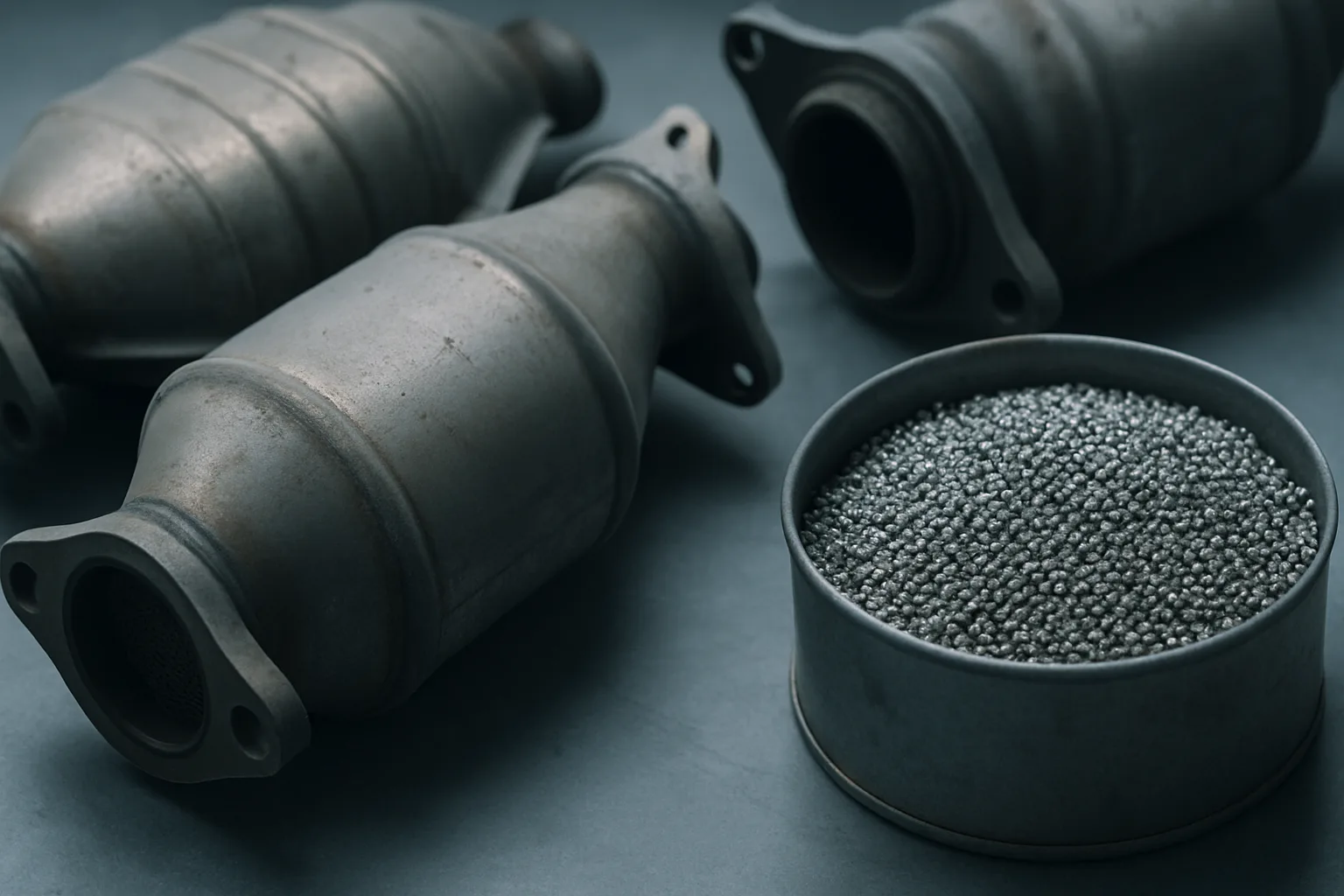
Most people selling a scrap catalytic converter have no idea what's actually driving the price — and that gap costs them money every single time.
The value of a catalytic converter isn't arbitrary. It's not what the buyer at the yard feels like paying that morning. It's tied directly to three precious metals — platinum, palladium, and rhodium — and their real-time spot prices on global commodity markets. Understanding how those metals work together is the difference between accepting a lowball offer and knowing exactly when to get the best catalytic converter price today.
Whether you're an auto shop in Grand Rapids sitting on a pile of used cats, a collector working a route across Michigan, or just someone who pulled a converter off a junked vehicle — this guide breaks down the actual science and economics behind what your converter is worth in 2026.
The Three Metals That Determine Scrap Catalytic Converter Price
Every catalytic converter contains a ceramic or metallic substrate coated with a wash of platinum group metals — commonly called PGMs. The three metals that matter most for scrap value are platinum (Pt), palladium (Pd), and rhodium (Rh). Each one plays a specific chemical role inside the converter, and each one trades independently on global commodity markets.
Here's the rough breakdown of what each metal does and why it has value:
- Platinum — Handles oxidation of hydrocarbons and carbon monoxide. Has historically been the most recognized of the three, though palladium surpassed it in price for several years before markets rebalanced.
- Palladium — Primarily found in gasoline-engine converters. More reactive at lower temperatures, making it critical for cold-start emissions control. Prices have been highly volatile over the past decade.
- Rhodium — The rarest of the three. Responsible for reducing nitrogen oxides (NOx). Small amounts go a long way, but when rhodium prices spike, they spike hard — it's the metal that can make or break the value of a high-grade OEM converter.
The mix of these three metals varies by vehicle make, model, year, and engine type. That's exactly why no two converters are worth exactly the same amount — and why a generic price quote without identifying the specific unit is almost always going to undervalue your load.
How Spot Prices for Platinum, Palladium, and Rhodium Drive Cat Converter Value
When processors buy scrap catalytic converters, they're ultimately recovering and reselling PGMs. The price they'll pay you today is based on the current platinum price today, palladium spot, and rhodium spot — minus their processing costs and margin. This is why cat converter values move constantly, even when nothing changes about the physical unit you're holding.
In mid-2026, PGM markets continue to be influenced by several macro factors:
- Global mining output from South Africa and Russia (the two dominant PGM-producing nations)
- EV adoption rates, which reduce demand for new converters but don't eliminate the need to recycle existing ones
- Industrial demand for platinum in fuel cell manufacturing
- Currency fluctuations, particularly the USD against the South African rand
- Refinery capacity and processing bottlenecks
This is why you can't rely on a static scrap catalytic converter price list — the numbers shift with the market. A converter worth one amount in January may carry a different value in July. If someone is quoting you a flat, non-market-based price without referencing current PGM spot rates, that's a red flag. To stay current, always check current catalytic converter prices before you commit to a sale.
OEM vs. Aftermarket: Why the Converter Type Changes Everything
Not all catalytic converters are created equal. One of the biggest mistakes sellers make — especially newer collectors in markets like Grand Rapids — is assuming every cat is worth roughly the same amount. The difference between an OEM (original equipment manufacturer) converter and a cheap aftermarket replacement can be dramatic.
OEM converters are built to meet strict emissions standards and typically contain significantly higher PGM loading than aftermarket units. A large-body OEM converter from a full-size truck or SUV can carry several times the PGM content of a small aftermarket unit from a commuter car.
Aftermarket converters — often installed as replacements after an OEM unit is stolen or fails — are specifically designed to be cost-effective. That means less precious metal. Some are worth only a fraction of their OEM counterparts. Knowing which type you have before you sell is critical.
How do you tell the difference? Key indicators include:
- Serial numbers and markings — OEM units typically have part numbers stamped or embossed directly on the shell. These can be cross-referenced against known databases.
- Weight and size — OEM converters are generally heavier for their size due to higher substrate density and PGM loading.
- Shape and construction — Aftermarket units often look more uniform and generic. OEM converters fit specific vehicle geometries.
- VIN lookup — Platforms built for this purpose, like SMASH Scrap — where verified buyers bid on your metal, offer tools that help identify and document converter types before a sale even happens.
Getting this identification right is the foundation of platinum group metals recycling done properly. It protects you from underselling and gives buyers the confidence to offer real market-based prices.
Why Selling Catalytic Converters Online Beats the Single-Buyer Model
Here's the old way: you call one buyer, they give you a number, you take it or leave it. You have no way of knowing if that number reflects today's platinum and palladium spot prices or last month's. You have no leverage. You have no competition working in your favor.
That model benefits the buyer. It was never designed to benefit you.
When you sell catalytic converters online through a competitive platform, the dynamic flips. Multiple vetted buyers see your inventory. They compete on price. The market — not one buyer's margin target — determines what you get paid. That's how price discovery is supposed to work, and it's how a transparent B2B scrap metal marketplace operates.
SMASH was built specifically for this. Yards and collectors list their inventory — with photo documentation, serial tracking, and proper identification — and vetted buyers bid. No subscription fees. No hidden charges. SMASH only wins when the seller wins. For anyone in Michigan serious about getting real market value for their cats, this is worth understanding. To read catalytic converter pricing guides that break down specific converter types and what drives their value, that's a good starting point before your first listing.
Competition can help reveal the market. More buyers means better price discovery. Documented inventory gives buyers more confidence — and confident buyers bid higher.
Regulations, Documentation, and Selling Cats Legally in Michigan
It would be incomplete to write about catalytic converter prices in 2026 without addressing the regulatory environment. Converter theft has driven significant legislative action across the United States, and Michigan is no exception.
As of 2026, sellers of catalytic converters in Michigan — and across most U.S. states — are subject to documentation requirements that vary by jurisdiction but generally include:
- Proof of ownership or vehicle title for the vehicle the converter was removed from
- Valid government-issued ID of the seller
- Recorded transaction details retained by the buyer (name, address, description, serial number where available)
- Restrictions on cash payments above certain thresholds, with many transactions now requiring traceable payment methods
These requirements aren't obstacles — they're protection. Documented converters with clear provenance are easier to sell, fetch better prices, and don't put buyers or sellers at legal risk. If you're running a shop in Grand Rapids and pulling cats from customer vehicles as part of standard repair work, maintaining clean records protects your business.
Working through a platform that supports serial tracking and photo documentation isn't just good practice — in this regulatory environment, it's increasingly necessary. Buyers in a legitimate B2B scrap metal marketplace expect it, and compliant sellers are simply more attractive to bid on.
Always consult current Michigan state law and local Grand Rapids ordinances for the most up-to-date requirements. Regulations can be updated, and this article does not constitute legal advice.
How to Get the Best Price for Your Scrap Catalytic Converters Right Now
If you're sitting on a load of cats — whether it's three units from a small shop or three hundred from a collection route — the approach you take to selling them matters as much as the converters themselves.
Here's what separates sellers who get good prices from sellers who get whatever the buyer decides to offer:
- Identify before you sell. Know whether you have OEM or aftermarket units. Pull serial numbers. Use a VIN lookup where possible. This information is the foundation of any credible offer.
- Document everything. Photos, weight, condition. Buyers bidding on documented inventory are more confident — and that confidence shows up in their offers.
- Check current PGM spot prices. Don't sell into a down market if you can hold. Don't wait forever if prices are strong. Understanding where platinum, palladium, and rhodium are trading gives you context for any offer you receive.
- Use a competitive platform. One buyer is not a market. SMASH connects sellers with multiple vetted buyers who bid against each other. That's how you find out what your inventory is actually worth.
- Get compliant paperwork in order. Especially in Michigan, clean documentation isn't optional anymore. It's expected.
The scrap catalytic converter market rewards sellers who do their homework. If you want to start doing that homework properly, the logical first step is to get the best catalytic converter price today — with real market context, not a guess.
Disclaimer: Catalytic converter prices fluctuate daily based on PGM spot prices and market conditions. Always verify current rates before selling.
Frequently Asked Questions
Q: How are catalytic converter scrap prices calculated?
Scrap catalytic converter prices are based on the current spot prices of platinum, palladium, and rhodium, combined with the estimated PGM content of your specific converter. Processors recover these metals through smelting and assay, then pay sellers a percentage of the recovered value minus processing costs. Converter type (OEM vs. aftermarket), condition, and accurate identification all affect the final number.
Q: Can I sell catalytic converters online in Grand Rapids, Michigan?
Yes. Sellers in Grand Rapids and across Michigan can list converters through online platforms that connect them with vetted buyers. Michigan has documentation requirements for converter sales, so make sure you have proof of ownership, valid ID, and serial numbers where available. Platforms like SMASH are designed to handle this documentation process as part of the listing workflow.
Q: What is the difference between an OEM and aftermarket catalytic converter for scrap value?
OEM converters are manufactured to meet original vehicle emissions specs and typically contain significantly more PGMs than aftermarket replacements. Aftermarket converters are designed to be cost-effective, which means lower precious metal loading and lower scrap value — sometimes dramatically lower. Identifying your converter type before you sell is one of the most important steps in getting a fair price.
Q: Why do catalytic converter prices change so frequently?
Because they're directly tied to platinum, palladium, and rhodium spot prices, which trade on global commodity markets and shift daily based on supply, demand, geopolitical factors, and currency movements. A converter you price on Monday may carry a different value by Friday. Checking current PGM rates before you commit to a sale is always worth the extra step.
Q: Is it legal to sell scrap catalytic converters in Michigan?
Yes, with proper documentation. Michigan regulations require sellers to provide proof of ownership, valid identification, and detailed transaction records. Many jurisdictions also restrict or prohibit cash payments for converter transactions above certain values. Working through a documented, compliant platform protects both seller and buyer and keeps the transaction legally clean. Always verify current state and local requirements before selling.
---If you're ready to stop guessing and start selling with real market data behind you, now is a good time to act. SMASH puts your converters in front of verified buyers who compete on price — no subscriptions, no games. And if you want to understand the market before you list, get the best catalytic converter price today and go in knowing what your metal is actually worth.
Stay sharp on scrap metal pricing and market trends — follow SMASH on LinkedIn for regular industry updates, PGM market insights, and practical advice for yards and collectors across North America.
```