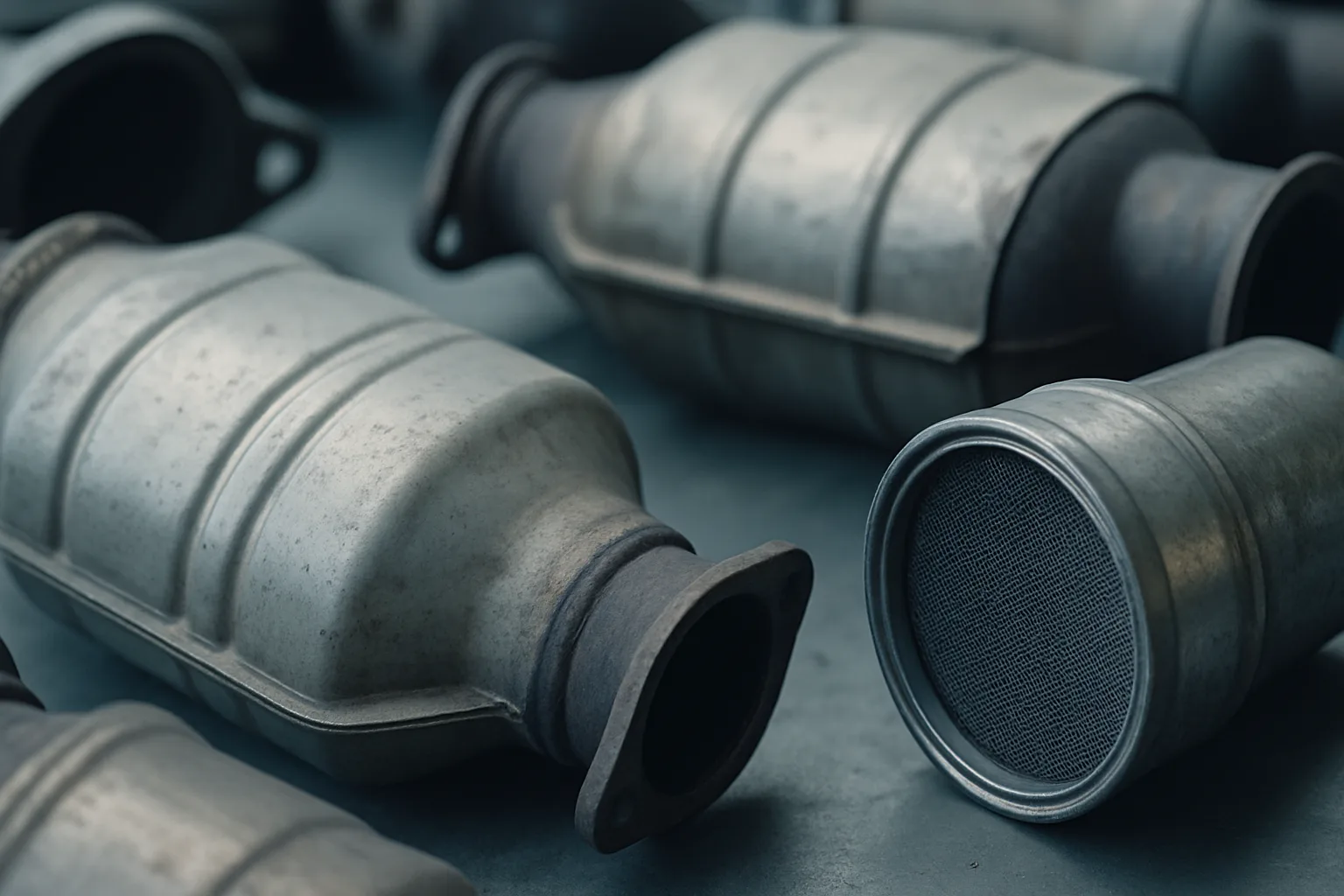
What Actually Happens to Your Catalytic Converter After You Sell It?
Most people who sell catalytic converters online have no idea what happens next. You hand over the cat, get a number, and that's it. But understanding the assaying and smelting process — the science behind how your converter's value gets determined — puts real money in your pocket. When you know what buyers are actually looking for, you stop guessing and start negotiating.
This isn't academic. The difference between a yard that quotes blind and a buyer who quotes based on real assay data can be hundreds of dollars per unit. In a market where platinum, palladium, and rhodium prices shift daily, that gap matters. Especially if you're moving volume.
The Three Precious Metals Inside Every Catalytic Converter
Before we get into assaying and smelting, you need to understand what buyers are actually chasing. Every catalytic converter contains a ceramic or metallic substrate coated with a combination of platinum (Pt), palladium (Pd), and rhodium (Rh) — the platinum group metals, or PGMs. These are what make your cat valuable. The steel shell is worth scrap weight. The PGMs are worth real money.
The exact loading varies by vehicle, manufacturer, and model year. An OEM converter from a late-model truck might carry significantly more PGM loading than an aftermarket unit from a decade ago. This is why a catalytic converter price list isn't a single number — it's a range that reflects specific units, specific loadings, and current spot prices for each of the three metals.
- Platinum: Used heavily in diesel converters. Pricing tracks industrial demand and mining supply from South Africa.
- Palladium: Dominant in gasoline engine converters. Prices have been volatile — supply constraints and EV transition uncertainty both play a role.
- Rhodium: The wildcard. Rhodium can command multiples of platinum's spot price and swings hard in either direction. A unit rich in rhodium is a unit worth fighting for.
The platinum price today is one input. But smart sellers know to look at all three metals — and understand that palladium and rhodium often tell a bigger story than platinum alone.
How Catalytic Converter Assaying Actually Works
Assaying is the process of measuring exactly how much of each PGM is present in a given sample. It sounds technical, but the concept is straightforward: you can't price what you haven't measured. Buyers who skip assay and quote from a lookup table are estimating. Buyers who assay are pricing the actual material.
Here's the real-world process, step by step:
- Decanning: The steel shell is cut open and the internal substrate (the honeycomb ceramic or metallic core) is removed. This is often called "decanning the cat." The substrate is the part that matters — the steel shell gets weighed separately at scrap rates.
- Crushing and sampling: The substrate gets crushed into a fine powder. This creates a homogeneous sample. You can't assay a chunk — you need a consistent blend of the full load.
- Sample splitting: A representative sample is split from the bulk crushed material. Proper sampling technique matters here. A bad split creates a bad assay — and a bad price.
- Chemical assay (fire assay or ICP): The sample gets analyzed. Fire assay (classical method) uses fusion and cupellation to isolate PGMs. Inductively Coupled Plasma (ICP) spectrometry is faster and increasingly common — it measures elemental concentrations with high precision.
- Return calculation: The assay result, combined with the total lot weight and current spot prices for platinum, palladium, and rhodium, produces a payable value. Most buyers pay a percentage of the gross metal value — the exact percentage depends on your contract and the buyer.
This is why documentation matters before you sell. If a buyer can't tell you how they assay or what percentage return they offer, that's a red flag. Transparency in the assay process is non-negotiable for serious cat converter buyers.
What Smelting Does — And Why It Completes the Picture
Assaying tells you what's in the material. Smelting is how you get it out. After assay and lot acceptance, the crushed substrate material goes through a smelting process to physically separate and recover the PGMs.
The most common industrial method is pyrometallurgical smelting — the crushed material gets combined with flux and a collector metal (often copper or iron-based), then melted at extremely high temperatures. PGMs are chalcophilic — they bond to the collector metal during smelting. The result is a PGM-rich alloy that can be further refined into pure metal streams.
After smelting, the alloy goes through hydrometallurgical refining — a chemical leaching process that separates platinum, palladium, and rhodium into individual pure metal products. These then enter the commodity markets. That rhodium that was part of your scrap cat last week? It might be a catalyst in a chemical plant or a component in a medical device next month.
The full process — from your scrap lot to refined metal — typically takes several weeks. This is why toll refining agreements have a settlement timeline built in. Anyone promising instant payment based on final refinery returns is either lying or losing money. Realistic settlement runs 30–60 days for toll refining arrangements.
How to Use This Knowledge When You Sell Catalytic Converters Online
Understanding assay and smelting isn't just interesting — it directly improves your negotiating position when you sell catalytic converters online. Here's how to apply it practically:
- Ask about assay method upfront. Is the buyer offering spot price based on a price list, or actual assay returns? These are very different conversations. Price list quotes are estimates. Assay-based returns track real metal content.
- Sort your cats before selling. High-grade OEM converters from domestic trucks and SUVs carry different loading than foreign or aftermarket units. Mixing your lot can drag your average down. Know what you have.
- Document everything. Photos, serial numbers, VIN lookups where applicable — all of this builds a stronger offer. Buyers confident in what they're buying bid more aggressively. Uncertainty gets priced in — against you.
- Get competing bids. A single buyer quoting blind isn't a market. A real market has multiple buyers who know what they're buying. That's where platforms like SMASH change the game.
- Watch all three metals. Don't just check the platinum price today. Palladium and rhodium move independently. A shift in rhodium spot can change the value of your lot significantly — without any change in platinum pricing.
If you're in Los Angeles moving volume, this matters even more. Southern California generates significant catalytic converter scrap — it's a competitive market. The yards that understand assay and bring documented inventory to buyers consistently outperform the ones calling one contact and taking whatever they're offered. To connect with local services, Los Angeles scrap metal services can help you get started with the right buyers in your area.
Why a B2B Scrap Metal Marketplace Changes the Pricing Equation
Here's the honest truth about the old way: one buyer, one quote, no competition. That buyer knows exactly what your cats are worth. You're guessing. That's not a market — that's a negotiation where one side holds all the information.
A B2B scrap metal marketplace like SMASH flips that dynamic. When you list your catalytic converter inventory with documented specs — grades, quantities, photos, serial tracking — vetted buyers compete for your material. Competition is what creates price discovery. Not hoping the person on the other end of the phone is feeling generous today.
For sellers in Los Angeles and across California, this is particularly relevant. The volume of scrap cats moving through Southern California is significant, and the buyer base is large. But without a structured auction process, most sellers never access the full depth of that demand. SMASH brings multiple buyers into a single transaction — which is exactly what assay-informed, documented lots deserve. You can get competitive bids for your scrap metal without the guesswork of a single-buyer quote.
No subscription fees. SMASH only wins when you win. That's the model. If you want to get the best catalytic converter price today, competition is how you get there — not loyalty to one buyer who's been keeping your price low for years.
The cat converter value in your lot is real. The question is whether you're capturing it or leaving it on the table. Documented inventory, assay transparency, and a competitive bidding process are the tools that close that gap. You can also read catalytic converter pricing guides to stay sharp on what's driving the market week to week.
If you're ready to stop guessing and start getting paid what your material is actually worth, check current catalytic converter prices and get a free quote at best-catalytic-converter-price.com. It's a straightforward first step toward selling smarter.
Disclaimer: Catalytic converter prices fluctuate daily based on platinum, palladium, and rhodium spot prices. Always verify current rates before finalizing any sale.
Frequently Asked Questions
Q: How long does catalytic converter assaying take before I get paid?
It depends on the arrangement. Spot price list quotes happen immediately but are estimates. True assay-based settlements — where your actual lot gets sampled, crushed, and analyzed — typically take several days for the assay result and 30–60 days for full toll refining settlement. Ask any buyer to explain their payment timeline before you commit.
Q: Can I sell catalytic converters online in Los Angeles without physically transporting them?
Many buyers offer logistics support, particularly for larger lots. When you list on a platform like SMASH, buyers who win the auction typically coordinate pickup or provide shipping instructions. For high-volume sellers in Los Angeles, this removes a significant barrier to reaching buyers outside your immediate area.
Q: What is the difference between an OEM converter price and an aftermarket converter price?
OEM (original equipment manufacturer) converters are built to factory specs and generally carry higher PGM loadings than aftermarket units. This directly affects scrap value. An aftermarket replacement cat might look identical on the outside but contain a fraction of the platinum, palladium, and rhodium of the OEM unit it replaced. Always sort and identify your inventory before pricing.
Q: Does the platinum price today directly set what I get paid for my scrap cat?
Platinum spot is one of three inputs — palladium and rhodium prices matter equally, sometimes more. Your payout reflects all three metals' spot prices at the time of settlement, multiplied by your lot's assay results, minus the buyer's processing and return percentage. Watching only platinum gives you an incomplete picture of your cat's value.
Q: Why does documented inventory get better bids when I sell catalytic converters online?
Buyers price uncertainty against you. When a lot has photos, serial numbers, accurate grades, and quantity documentation, buyers can assess risk accurately — and bid more aggressively. Undocumented mystery lots get discounted bids because the buyer is covering their downside. Clean documentation is free money for the seller.
Stay current on scrap metal markets and industry trends — follow SMASH on LinkedIn for regular updates on PGM pricing, market shifts, and scrap metal intelligence.