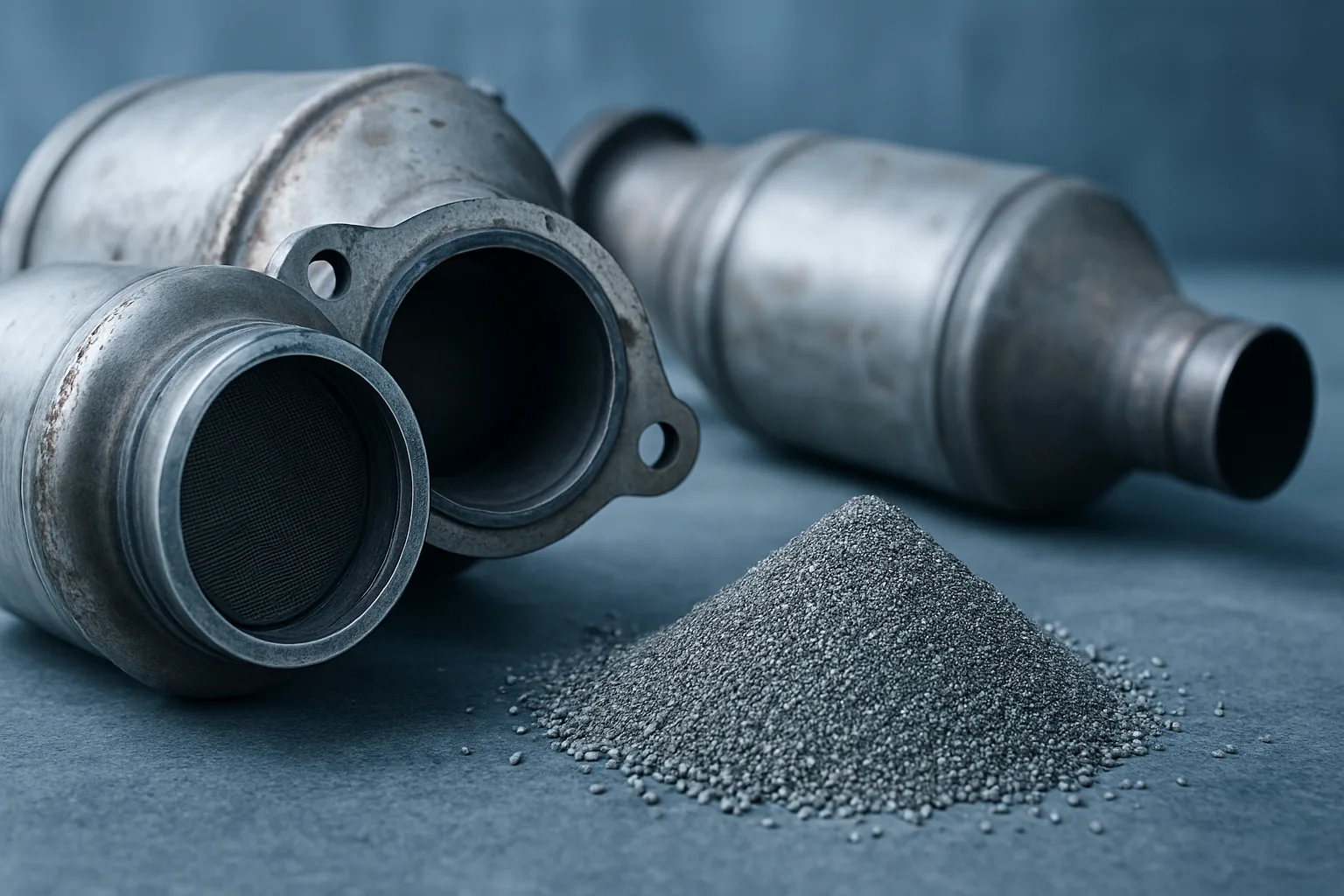
Catalytic Converter Theft Is Poisoning the Legitimate Scrap Market — Here's What Yards Need to Know in 2026
Catalytic converter theft is not a background problem anymore. It is a direct tax on every legitimate recycler, yard operator, and seller trying to get a fair palladium price today for honest inventory. When stolen converters flood the secondary market, they compress margins, invite regulatory crackdowns, and make buyers skeptical of every load — even the clean ones.
If you run a yard in Ohio, buy from auto shops, or collect cores for resale, this affects your bottom line. Understanding how theft distorts the market is the first step to protecting yourself from the blowback.
How Catalytic Converter Theft Distorts Platinum, Palladium, and Rhodium Pricing
Catalytic converters hold value because of three metals: platinum, palladium, and rhodium. These are platinum group metals (PGMs), and their market prices fluctuate based on global mining output, automotive manufacturing demand, and — increasingly — recycling supply. When theft spikes, it injects an irregular, untrackable supply of PGMs into the pipeline. That disrupts price discovery for everyone.
Here is what happens in practice. A stolen converter gets sold to an unscrupulous buyer who doesn't ask questions. It moves through the chain without documentation. When it reaches a processor or refiner, there is no VIN, no serial number, no photo record — just metal. That anonymized inventory muddies the data that legitimate buyers use to calculate what to pay for documented loads. The result? Buyers tighten their offers across the board, even for clean, verifiable inventory. Sellers who do everything right still get penalized.
- Palladium is used heavily in gasoline-engine converters — it is often the highest-value PGM in a standard cat.
- Platinum dominates diesel converters and DPFs (diesel particulate filters).
- Rhodium is rarer and more volatile in price — even small supply disruptions move the needle.
When stolen inventory distorts how much of these metals is actually in the recycling pipeline, it creates a pricing fog. Legitimate sellers checking the palladium price today are looking at a market that has been contaminated by theft-driven supply. That is a problem without an easy fix — but documentation and transparency are the best defense.
The Regulatory Response in 2026 — What Ohio Yards Are Facing
State and federal regulators did not ignore the theft surge. By 2026, a patchwork of state laws governs how recyclers and scrap yards can purchase catalytic converters. Ohio has implemented purchase record requirements that include seller ID, vehicle information, and in some cases photographic documentation of the converter and the vehicle it came from. These rules exist to create a paper trail that theft makes impossible.
For legitimate operators, compliance adds friction. You need systems in place to capture VINs, serial numbers, seller details, and photos at the point of purchase. Yards that were running on handshake deals and paper logs are now scrambling to catch up. And the cost of non-compliance is not just a fine — it is the risk of your entire purchase history being scrutinized if a stolen unit is later traced back to you.
Toledo yards and auto recyclers across Ohio are navigating this carefully. The good news is that proper scrap metal inventory management — the kind that creates a documented chain of custody from vehicle to sale — actually helps you in this environment. It proves your inventory is clean. That matters when you are trying to attract vetted buyers who pay fair market value.
Platforms like smashscrap.com are built around this kind of documentation-first approach. When every converter in a load has photo evidence, serial tracking, and a verifiable source, it does not just satisfy regulators — it gives buyers the confidence to bid competitively.
What Theft Does to Scrap Catalytic Converter Prices in Markets Like Toledo
Toledo sits in a dense industrial corridor with active scrap demand and a real base of auto recyclers, fleet operators, and independent collectors. That makes it a productive market — and also one that theft activity can destabilize quickly. When local law enforcement reports a spike in catalytic converter theft, the ripple effect on scrap catalytic converter prices in Toledo is real.
Buyers in the region start asking harder questions. Some temporarily reduce purchasing or require more documentation. Core dealers who relied on a fast, informal pipeline find themselves sitting on inventory longer. For sellers doing everything right, the delay costs money. PGM spot prices shift daily. A load that was worth one number on Monday may clear for less by Friday — especially if buyer confidence in regional supply has taken a hit.
This is exactly why working with a platform that connects you to multiple vetted buyers matters. One cautious buyer pulling back does not kill your deal when there are others ready to compete. More buyers means better price discovery — even in a market that theft has made nervous. You can get the best catalytic converter price today when your inventory is documented and your buyer pool is wide.
For Toledo-area sellers, the local regulatory environment and buyer behavior are additional reasons to invest in clean record-keeping and to use platforms that attract buyers who understand documented inventory. Check out Toledo scrap metal services to see how local sellers are navigating this market.
Inventory Documentation Is No Longer Optional — It Is Competitive Advantage
The theft crisis has had one unintended effect: it has made documentation a competitive differentiator. Yards that invested in proper scrap metal inventory management — VIN lookups, serial number tracking, photo documentation at intake, accurate packing lists — are now in a stronger position than those that did not. Buyers know clean inventory when they see it. And they are willing to pay for the certainty it provides.
Think about what a vetted buyer evaluates when they look at a load of cats. They want to know:
- Where did these converters come from?
- Can the source be verified?
- Are the serial numbers intact and traceable?
- Is there photo documentation that matches the listed inventory?
- Does the seller have a compliance history that holds up to scrutiny?
If you can answer yes to all five, you are not just a seller — you are a preferred seller. SMASH is built to help you present your inventory that way. The platform's tools for photo documentation, serial tracking, and verified listings are not just about compliance. They are about giving buyers enough information to bid with confidence. That competition is what drives your price up.
The days of "I've got a load of cats, what'll you give me?" are over. The market has matured — or been forced to mature by theft and regulation. Sellers who adapt will capture better value. Sellers who don't will find fewer buyers willing to take the risk.
How SMASH Helps Legitimate Sellers Compete in a Compromised Market
SMASH connects legitimate yards and collectors with a network of vetted buyers across North America. The auction format means your documented inventory is seen by multiple competing buyers — not just one contact from a rolodex. That structure is particularly valuable in a market where theft has made buyers cautious, because documented loads stand out immediately against unverified ones.
There are no subscription fees. SMASH only wins when you win. For sellers working to check current catalytic converter prices and maximize what they get for clean, compliant inventory, that alignment matters. You are not paying for access to a platform while wondering if it is actually working for you.
The reality of 2026 is that the legitimate recycling market is under pressure from two sides: theft activity from below and regulatory scrutiny from above. The sellers who survive that squeeze are the ones with clean records, transparent processes, and access to competitive buyer markets. If you are a yard operator or collector in Ohio trying to protect your margins and your reputation, those are the tools you need.
You can read catalytic converter pricing guides to stay current on how PGM markets move and what factors affect your converter values — because the palladium price today is just one input. How you document, list, and sell your inventory is the other half of the equation.
If you have clean inventory and you are tired of guessing what it is worth, do not wait for the market to clarify itself. Get it in front of buyers who can compete for it. Reach out to jeff@smashscrap.com to start selling, or visit smashscrap.com to learn more about how the platform works. And if you are ready to act now, get the best catalytic converter price today — your documented inventory deserves a real market.
Frequently Asked Questions
Q: How does catalytic converter theft affect the palladium price today?
Theft introduces untracked PGM supply into the recycling pipeline, which distorts the data buyers and processors use for pricing. It does not directly set the palladium spot price — that is driven by global mining and industrial demand — but it creates uncertainty in the secondary market that can make buyers more conservative with their offers on recycled material. Clean, documented inventory helps you avoid being caught in that pricing hesitation.
Q: Are scrap catalytic converter prices in Toledo affected by local theft rates?
Yes, indirectly. When theft activity spikes in a region, local buyers often respond by tightening purchasing requirements or reducing the number of loads they accept without heavy documentation. Toledo-area sellers with verified, compliant inventory are insulated from this because their loads can be distinguished from potentially stolen material. Working with platforms that connect you to multiple buyers — not just one local contact — also reduces your exposure to any single buyer pulling back.
Q: What documentation do I need to sell scrap catalytic converters legally in Ohio?
Ohio requires recyclers and scrap purchasers to collect seller identification, vehicle information (including VIN in many cases), and maintain purchase records. Specific requirements can vary by municipality, so it is worth confirming current local rules with your county or a compliance resource. At minimum, photo documentation of the converter and the source vehicle is strongly recommended — it protects you and makes your inventory more attractive to serious buyers.
Q: How do I find out what my catalytic converters are actually worth?
Start by identifying the make, model, and year of the vehicle the converter came from — OEM converters vary significantly in PGM content. Serial number lookups can help match a converter to its assay data. Platforms like SMASH connect you to vetted buyers who evaluate your documented inventory competitively, which is a more reliable way to find market value than calling a single buyer and accepting their number. Read catalytic converter pricing guides for more detail on how values are calculated.
Q: Does converter theft affect buyers differently than sellers?
Buyers face liability risk if stolen converters move through their operation — even unknowingly. That is why vetted buyers increasingly prefer documented loads with verifiable source information. For sellers, theft's biggest impact is the market-wide pricing caution it creates. Both sides benefit when inventory is clean and traceable, which is why platforms that prioritize documentation — like SMASH — tend to attract the buyers willing to pay competitive prices.
Follow SMASH on LinkedIn for industry updates, PGM market insights, and scrap metal pricing trends that affect your business.
Disclaimer: Catalytic converter scrap prices fluctuate based on PGM spot markets, converter type, and buyer demand. Always check current rates before selling. Information in this article reflects general market conditions as of August 2026 and is not a guarantee of specific pricing outcomes.