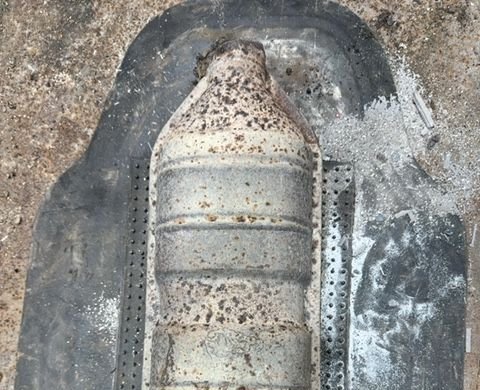
Most people selling scrap catalytic converters have no idea what happens after they hand them over. They get a number, take the check, and move on. But if you understood the assaying and smelting process behind that number — how refiners actually determine what your cats are worth — you'd never guess at pricing again. And if you're doing catalytic converter recycling in Tacoma, knowing this process is the difference between getting a fair price and leaving money on the table.
The precious metals inside a catalytic converter — platinum, palladium, and rhodium — don't reveal themselves easily. They're locked inside a ceramic or metallic substrate at concentrations measured in grams per unit. Extracting that value requires a precise, multi-step industrial process. Understanding it helps you ask better questions, evaluate buyer offers more critically, and ultimately get the best catalytic converter price today.
What's Actually Inside a Catalytic Converter
Before the assay process makes sense, you need to understand what refiners are looking for. The active material inside a cat is called the washcoat — a thin ceramic layer applied to the substrate that carries the platinum group metals (PGMs). These PGMs are platinum (Pt), palladium (Pd), and rhodium (Rh). Their concentrations vary significantly depending on the vehicle make, model, engine size, and whether the converter is OEM or aftermarket.
A standard domestic car converter might carry anywhere from 2 to 7 grams of combined PGMs. High-end or late-model foreign units can carry considerably more. Large diesel oxidation catalysts (DOCs) from heavy equipment or trucks have different PGM profiles entirely. This variation is exactly why assaying exists — there's no universal number. Every unit is different, and the only way to know for sure is to test it.
- Platinum: Used heavily in diesel converters. More stable, slightly lower value per gram than rhodium but consistently present.
- Palladium: Dominant in gasoline converters. Market prices have been volatile in recent years, making Pd-heavy loads especially sensitive to timing.
- Rhodium: The rarest of the three. Even tiny concentrations add significant value. Rhodium prices can swing dramatically on small supply changes.
Rhodium in particular can make or break a load's value. That's why OEM converter prices from major brands — Toyota, Honda, Ford — are tracked closely by serious buyers. The substrate type matters too: ceramic (cordierite) substrates are more common, while metallic foil substrates appear in performance applications and carry their own processing requirements.
The Assaying Process: From Raw Unit to PGM Data
Assaying is the scientific process of determining exactly how much of each PGM is in a given sample. In the catalytic converter recycling world, this typically means one of two approaches: lot sampling or full melt assay. Understanding the difference matters when you're deciding who to sell to and what guarantees you're getting on your price.
Lot sampling is the more common method for mid-size loads. The processor takes a representative sample from across your batch — usually after mechanical crushing and homogenization — then sends that sample to a certified lab for analysis. The lab uses techniques like X-ray fluorescence (XRF), fire assay, or inductively coupled plasma (ICP) spectrometry to identify PGM content. The result is a gram-per-unit figure for Pt, Pd, and Rh, which is then applied across the whole lot. This method introduces some statistical variance, which is why reputable processors disclose their sampling methodology.
Full melt assay (also called toll refining or smelting) is more thorough. Your entire load goes into the smelter. Nothing is estimated from a sample — everything is processed, and the recovered metals are weighed directly. You get paid on actual recovery, not a projection. This method costs more and takes longer, but for large loads or high-value units, the accuracy is worth it. Many serious recyclers in Washington who run consistent volume negotiate toll refining arrangements for exactly this reason.
How the Smelting Process Actually Works
Once assaying confirms what you're working with, smelting recovers the actual metals. The process starts mechanically: converters are decanned (the steel shell is removed), and the substrate is crushed and milled into a fine powder. This homogenization is critical — it ensures the sample or melt is representative of the entire batch. Inconsistent grinding leads to inaccurate assays.
The powdered substrate then enters a high-temperature smelting furnace, typically a plasma arc or electric arc furnace capable of reaching temperatures above 1,500°C. At these temperatures, the PGMs are captured into a collector metal — usually copper or iron — while the ceramic matrix forms a slag layer that floats to the top and is removed. The PGM-rich collector metal is then refined further using hydrometallurgical processes (acid leaching, solvent extraction, precipitation) to separate platinum, palladium, and rhodium into individual refined metals.
Each step introduces a small recovery loss. Reputable refiners publish their payable percentages — typically 97-99% for platinum and palladium, slightly lower for rhodium. When you check current catalytic converter prices, always factor in these payable rates. A buyer quoting spot price but paying only 85% payable is a different deal than one quoting slightly below spot at 98% payable.
How This Process Affects What You're Offered in Tacoma
Here's the practical part. The assay-to-payment chain has several steps, and every middleman in that chain takes a margin. The more intermediaries between your cats and the refiner, the more margin gets extracted before your check is written. A local scrap yard in Tacoma might buy from you, aggregate with other sellers, sell to a regional broker, who sells to a processor, who ships to a refiner. That's four cuts out of your PGM value before you see a dollar.
This is exactly why how you sell matters as much as what you're selling. Platforms that connect sellers directly to vetted buyers — buyers who are actually processors or downstream from processors — compress that chain. The SMASH scrap metal auction marketplace operates this way, bringing competition to the transaction so the market sets the price rather than a single buyer's margin target.
For Tacoma sellers moving any real volume of cats, the math on this is significant. Even a modest improvement in recovery percentage or buyer margin can represent hundreds or thousands of dollars on a single load. If you're pulling cats from a shop, doing insurance work, or running a recycling operation near the Port of Tacoma, you're leaving money on the table every time you call one buyer without shopping the load.
You can also explore Tacoma scrap metal services that connect local sellers with buyers who understand PGM-based pricing — not flat-rate guesswork.
Reading a Scrap Catalytic Converter Price List the Right Way
A scrap catalytic converter price list is only useful if you understand what it's actually measuring. Most published price lists quote by converter type — using identifiers like serial numbers, OEM codes, or physical descriptions. These are averages based on historical assay data. They're a starting point, not a guarantee.
Several factors can push a specific unit above or below the list price:
- Condition: Cracked, overheated, or contaminated substrates yield less. A melted-through converter has lost PGMs permanently.
- Age and mileage: High-mileage cats have partially consumed their washcoat. Newer OEM units typically return closer to theoretical PGM content.
- Market timing: Rhodium especially moves fast. A price list that's two weeks old may not reflect current spot values.
- Buyer type: A processor quoting off a price list is giving you a different number than a broker who's applying their own margin on top of a processor's list.
The best approach: use price lists as a benchmark, then use competition to find out what the market will actually pay. That's what SMASH is built for. Instead of one buyer telling you what your load is worth, multiple vetted buyers compete. That's how price discovery actually works — and it's why sellers who want to sell catalytic converters online should be looking for auction-format platforms rather than static quote tools.
Want to go deeper on how pricing is calculated? Read catalytic converter pricing guides that break down PGM spot prices, payable percentages, and what buyers are actually looking at when they quote your load.
Sell Catalytic Converters Online in Washington Without Guessing
The old method — calling your regular buyer, taking their number, done — works fine if you don't care what you're leaving behind. But in Washington, where environmental regulations on scrap processing are increasingly detailed and documentation requirements are real, the sellers who track their loads properly also tend to get better prices. Documented inventory, serial numbers, photo records — these aren't just compliance tools. They're value signals to serious buyers.
When you sell catalytic converters online through a platform that handles documentation and connects you to multiple buyers simultaneously, you're not just getting convenience. You're getting price transparency that the old single-buyer phone call never offered. That shift — from opaque to transparent, from one bid to many — is what moves the needle on your per-unit return.
If you're ready to find out what your cats are actually worth in today's market, the process is straightforward. Document your load. Know your unit types. Understand the basics of what's inside them. Then let competition do its job. For Tacoma sellers ready to move volume the smart way, that path starts at best-catalytic-converter-price.com — where you can get a free quote based on real market data, not one buyer's margin target.
Disclaimer: Catalytic converter prices fluctuate based on PGM spot market conditions. Always check current rates before selling. Information in this article reflects general industry practices as of September 2026.
Frequently Asked Questions
Q: How long does the assay process take for catalytic converters?
Lot sampling assays typically take 5–15 business days from when your material is received. Full melt (toll refining) assays can take 3–6 weeks depending on the refiner's schedule and load size. Some buyers in Tacoma offer faster turnaround for smaller lots using XRF screening, but XRF is a screening tool — not a settlement-grade assay.
Q: Does it matter if my catalytic converter substrate is cracked or damaged?
Yes, significantly. A cracked or physically damaged substrate may have lost washcoat material, which means lower PGM content than an intact unit. Overheated or melted converters are the most affected. Buyers and processors will discount damaged units, so handle and transport cats carefully to protect their value.
Q: Can I sell catalytic converters online in Washington without visiting a yard in person?
Yes. Platforms like SMASH allow Washington sellers to document their inventory with photos and serial/VIN data, then connect with vetted buyers remotely. Shipping or pickup logistics are handled as part of the transaction. This is increasingly common for shops and recyclers who want to sell catalytic converters online without being locked into a single local buyer's pricing.
Q: What's the difference between an OEM converter and an aftermarket unit for recycling purposes?
OEM (original equipment manufacturer) converters carry higher PGM loadings by design — they're built to meet emissions standards for specific vehicles and tend to hold value better at end of life. Aftermarket converters use lower PGM concentrations to keep manufacturing costs down, so they return less at assay. When you're quoting a load, separating OEM from aftermarket units almost always results in more accurate pricing.
Q: How do I know if a buyer in Tacoma is quoting me a fair catalytic converter price?
The clearest signal is whether they can explain their pricing. A legitimate buyer should be able to tell you what PGM spot prices they're referencing, what payable percentage they're applying, and what their assay method is. If a buyer just gives you a flat number with no explanation, that's not price discovery — that's their margin. Use competitive platforms or get multiple quotes before committing any load.
Stay current on scrap market trends and PGM price movements by following SMASH on LinkedIn — practical industry insights without the noise.
```