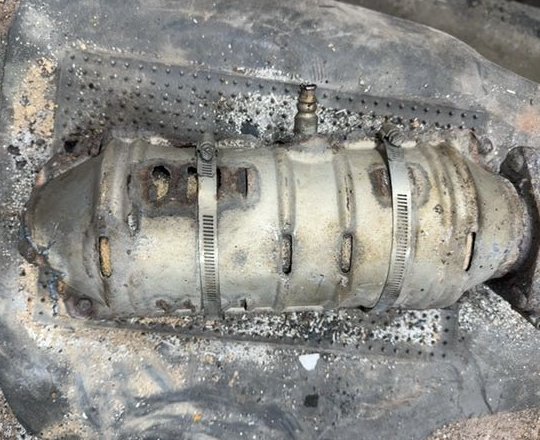
Which Catalytic Converters Are Worth the Most — And Why It Matters Before You Sell
Not all cats are created equal. If you've ever pulled a converter off a vehicle and wondered why one fetches three times the price of another, the answer comes down to three metals: platinum, palladium, and rhodium. Understanding which vehicles carry the most of these precious group metals (PGMs) is the difference between leaving money on the table and walking away with a fair market price. Whether you're an auto shop in Virginia Beach clearing out old stock, or a scrap collector building a load across Virginia, this guide breaks it down.
When you decide to sell catalytic converters online, knowing your inventory's value before you list it is non-negotiable. Guessing gets you low-balled. Data gets you paid.
What Actually Makes a Catalytic Converter Valuable?
The value of a scrap catalytic converter comes from its PGM loading — how much platinum, palladium, and rhodium is embedded in the ceramic or metalite substrate inside the shell. These metals do the chemical work of converting toxic exhaust gases into less harmful emissions. The more an engine needs that conversion capacity — because it runs hot, burns rich, or is tuned for performance — the more PGM loading the OEM typically specifies.
Three factors drive scrap cat value:
- PGM loading per unit — measured in grams. A high-load cat can carry 10–30+ grams of combined PGMs. A budget economy cat might carry 2–5 grams.
- Substrate type — ceramic honeycomb substrates are standard. Metalite (foil-based) substrates are common in European and performance vehicles and often carry higher PGM concentrations.
- OEM vs. aftermarket — OEM (original equipment manufacturer) converters are engineered to meet emissions standards over the full service life of the vehicle. Aftermarket replacements use less PGM loading to hit a lower price point. An OEM converter off a Lexus is worth significantly more than the aftermarket unit that replaced it.
This is why serial tracking and photo documentation matter so much before you sell. A recycler or buyer looking at your lot needs to verify whether they're bidding on an OEM unit or a cheap replacement. Platforms like SMASH help sellers document exactly what they have — photos, serial numbers, vehicle make and model — so buyers can bid with confidence and sellers get accurate price discovery.
The Most Valuable Catalytic Converters by Make and Model
Here's the practical breakdown. These are the vehicles consistently associated with high-value converters in the scrap and recycling market. Values shift with platinum price today, palladium, and rhodium spot rates, so treat this as a framework, not a fixed price list.
Luxury and Performance Vehicles
Ferrari, Lamborghini, and high-end Porsche models carry some of the most PGM-dense converters in the market. These engines run at extreme temperatures and require catalysts that can handle that heat load over a long service life. The substrate geometry is often more complex, and the PGM loading reflects that. Expect these to command premium prices when you sell catalytic converters online — provided you can document authenticity.
Bentley and Rolls-Royce converters are similarly high-value. Large displacement engines paired with strict OEM emissions compliance means these vehicles leave the factory with substantial PGM investment baked in.
SUVs and Trucks With Strong Scrap Cat Value
This is where volume players in Virginia Beach and across Virginia pay close attention. Full-size SUVs and trucks generate a lot of scrap inventory, and some of these units carry serious value:
- Ford F-250 / F-350 (6.2L and larger gas engines) — high PGM loading due to engine displacement and emissions requirements.
- RAM 1500 / 2500 (HEMI variants) — HEMI engines carry well-regarded converters in the scrap market.
- Chevrolet Silverado HD and GMC Sierra HD — larger gas engine variants have solid scrap cat value.
- Toyota Land Cruiser and Lexus LX series — Toyota/Lexus consistently over-engineers its emissions systems. These cats are dense and durable.
- Ford Explorer and Expedition (V8 and 3.5L EcoBoost) — common vehicles across Virginia with solid converter value, especially OEM units.
The key variable: always confirm OEM vs. aftermarket before pricing. A HEMI RAM with an OEM converter is a very different transaction than one that's been through two replacement cats.
Domestic Vehicles That Surprise Most Sellers
Honda Accord and Acura MDX/TL/RDX models are consistently cited by recyclers as carrying underappreciated PGM loading. Honda's emissions engineering tends to spec high, and these vehicles are everywhere — which means volume opportunity for collectors building a load.
Toyota Prius deserves its own mention. Hybrid vehicles run their combustion engines intermittently at lower temperatures, which means the catalyst needs to activate quickly from a cold state. Toyota compensates with higher PGM loading than a comparable non-hybrid engine would require. The Prius is one of the most-discussed converters in scrap metal inventory management conversations for exactly this reason. Read catalytic converter pricing guides to get deeper on hybrid vehicle values before you sell.
European Vehicles: High Value, High Verification Requirement
BMW 5 and 7 Series, Mercedes E-Class and S-Class, Audi A6 and A8 — all carry strong converter values, particularly on larger-displacement gas engines. European OEM standards have historically pushed manufacturers toward higher PGM specs.
The caveat here is verification. European vehicles are frequently serviced with aftermarket converters, especially older units. A BMW 750i with an OEM converter is a premium unit. The same shell with an aftermarket replacement is a fraction of that value. Document everything. Photo the substrate. Note the serial. This is exactly the workflow that platforms built for serious scrap inventory management are designed to support.
How Platinum, Palladium, and Rhodium Prices Affect What You Receive
You can't talk about cat converter value without talking about spot prices. The PGM market is volatile. Rhodium in particular has seen dramatic swings over the past decade — from historically low pricing to record highs and back down. Palladium has followed a similar pattern, driven largely by automotive demand and supply constraints from major mining regions.
What this means practically: a converter that paid well in one quarter may pay differently the next, purely based on market movement — not because the converter changed. Checking the platinum price today before you finalize a sale isn't optional; it's how you avoid accepting a price that was fair six months ago but undersells your load today.
This is why competitive auction formats outperform single-buyer phone calls. When multiple vetted buyers bid on your documented inventory, the price reflects the actual market — not one buyer's margin target. To check current catalytic converter prices and understand what your load is worth before you list, start with current spot data and work backward from there.
Sellers in Virginia Beach sometimes ask whether regional market conditions affect pricing. The honest answer: PGM pricing is global and tied to commodity spot rates. What regional factors affect is logistics cost and buyer pool. Selling through a platform that connects you to vetted buyers across North America eliminates the local market ceiling that comes with calling one nearby recycler.
How to Sell Catalytic Converters Online Without Getting Burned
The scrap cat market has a theft problem, and that has pushed responsible buyers to require better documentation. If you want to sell catalytic converters online at serious prices, you need to come prepared. Here's the practical checklist:
- Photograph every unit — shell condition, serial number visible, substrate visible where possible.
- Record make, model, year, and VIN where available. VIN lookup confirms OEM fitment and supports pricing.
- Separate OEM from aftermarket — mixed lots price to the lowest common denominator.
- Know your substrate type — ceramic vs. metalite affects assay yields and buyer interest.
- Track inventory systematically — if you're moving volume, a proper scrap metal inventory management workflow means you're not losing units or selling blind.
SMASH is built around this workflow. The platform's inventory tool supports photo documentation, serial tracking, and buyer verification — so when your lot goes to auction, buyers are bidding on real, documented information. No guessing, no low-ball offers based on uncertainty. North America's B2B scrap metal auction platform exists precisely for this kind of transparent, competitive transaction.
For shops and collectors across Virginia — from Virginia Beach yards clearing end-of-life vehicle inventory to inland collectors aggregating loads — the advantage of auction-format selling is clear. Competition reveals the market. One buyer with a phone doesn't.
Getting the Best Price: Final Considerations Before You List
Timing, documentation, and buyer access are the three levers you control. PGM spot prices are the variable you don't control — but you can time your listing to avoid selling into a dip when you don't have to.
Build your load with make and model data attached to every unit. Separate high-value OEM cats from lower-value aftermarket replacements. List through a platform that puts your documented inventory in front of multiple vetted buyers simultaneously. That's the process that produces real price discovery instead of a single take-it-or-leave-it number from a buyer who knows you have no alternative.
Whether you're selling a single high-value Prius cat or a full pallet of mixed domestic and import units, the approach is the same: document it, list it competitively, and let the market tell you what it's worth. To get the best catalytic converter price today, start with the data — then let buyers compete for your inventory.
Disclaimer: Catalytic converter scrap prices fluctuate daily based on platinum, palladium, and rhodium spot rates. The information in this article reflects general market dynamics as of September 2026. Always check current rates before finalizing any sale.
Frequently Asked Questions
Q: Which catalytic converter is worth the most money as scrap?
High-end luxury and performance vehicles — Ferrari, Lamborghini, Bentley, and large-displacement BMW and Mercedes models — typically carry the highest PGM loading and command the highest scrap prices. Among more common vehicles, Toyota Prius, Honda Accord, and full-size domestic trucks with OEM converters are consistently strong performers. Always verify OEM vs. aftermarket before pricing any unit.
Q: How do I sell catalytic converters online safely?
Document every unit with photos, serial numbers, and vehicle make/model before listing. Use a platform that verifies buyers and supports competitive bidding rather than accepting a single-buyer offer. Platforms like SMASH provide inventory tools and vetted buyer networks designed specifically for this kind of B2B transaction.
Q: How do platinum, palladium, and rhodium prices affect my converter's value?
Directly and significantly. Converter scrap value is calculated from the PGM content of the substrate — the more rhodium or palladium in a given unit, the more its value moves with those spot prices. Checking the platinum price today (and palladium and rhodium) before you sell is essential to knowing whether the market is moving in your favor.
Q: Does it matter if my catalytic converter is OEM or aftermarket?
Yes — substantially. OEM converters are engineered to carry full PGM loading for the life of the vehicle. Aftermarket replacements use lower PGM concentrations to reduce manufacturing cost. A genuine OEM converter from a Lexus or Honda can be worth several times more than the aftermarket replacement that looks identical on the outside. Always separate and document both types before selling.
Q: Where can sellers in Virginia Beach get accurate catalytic converter prices?
Start with current PGM spot rates and cross-reference with platforms that provide real market pricing based on documented unit data. Virginia Beach sellers have the same access to national buyer networks as any other market — using a competitive auction platform rather than calling a single local buyer is how you avoid regional pricing caps. Get a quote at best-catalytic-converter-price.com to see what your inventory is actually worth today.
Ready to stop guessing and start getting paid what your converters are actually worth? Head to best-catalytic-converter-price.com for a free quote — bring your make, model, and documentation, and let the market work for you.
For ongoing scrap metal market insights and industry updates, follow SMASH on LinkedIn — useful intel whether you're moving one load or building a recurring operation.