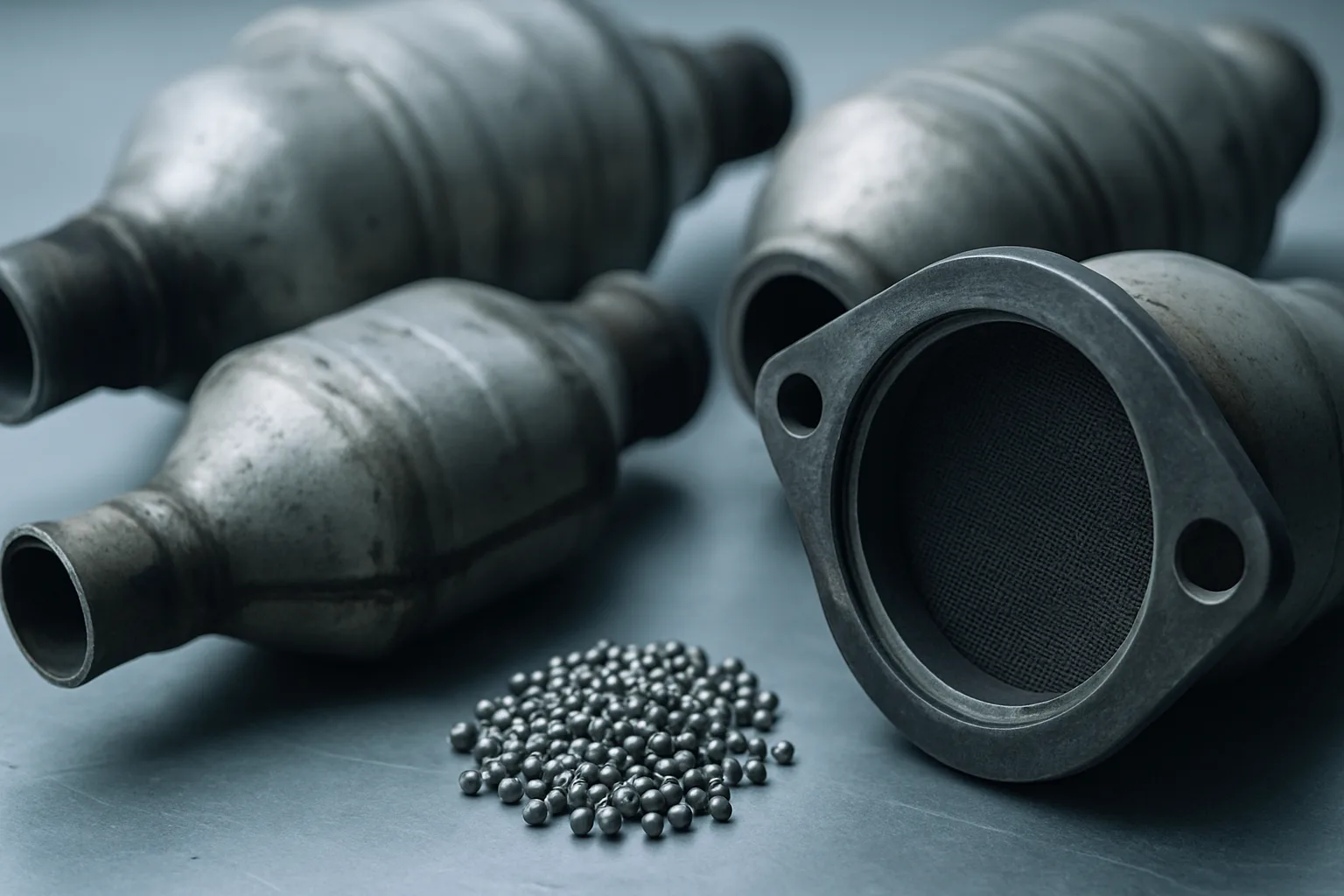
One bad buyer can cost you hundreds of dollars on a single load of cats. In a market driven by volatile platinum, palladium, and rhodium prices, that gap between what you're offered and what your converters are actually worth can be significant — and some buyers count on you never finding out.
If you're trying to get the best cat converter prices in Akron or anywhere across Ohio, understanding the scams in this market isn't optional. It's the difference between a fair deal and getting quietly taken advantage of. This guide breaks down the most common tricks, the red flags to watch for, and how platforms like the SMASH scrap metal auction marketplace are changing the game for sellers who are tired of guessing.
Why the Catalytic Converter Buying Market Attracts Bad Actors
Catalytic converters are small, heavy, and loaded with platinum group metals — platinum, palladium, and rhodium — that most sellers can't easily identify or price on their own. That information gap is the foundation most scams are built on. A buyer who knows what's inside a converter and knows you don't is in a powerful position.
The market also moves fast. PGM spot prices shift daily. Assay results vary by vehicle make, model, year, and whether the unit is OEM or aftermarket. Most individual sellers — and even some shops — don't have access to real-time data or independent assay results. They're forced to trust whoever is standing in front of them with a checkbook.
This dynamic creates fertile ground for deception. It's not limited to back-alley buyers either. Some well-established-looking operations run the same plays, just with better signage.
The Most Common Scams in the Cat Converter Buying Market
Knowing the playbook protects you. Here are the scams that cost sellers the most money — and how each one works.
The Low-Ball Flat Rate Offer
A buyer offers you a flat dollar amount per unit, regardless of make, model, or PGM content. This sounds simple and convenient. That's the point. A high-grade OEM converter from a luxury SUV can be worth dramatically more than a low-grade aftermarket unit — grouping them together at one flat rate almost always benefits the buyer, not you. Your catalytic converter scrap value depends heavily on what's inside each unit. Accepting a blanket price means you're subsidizing the buyer's margin on your best pieces.
The Bait-and-Switch After Assay
A buyer quotes you a price before assay, you ship your load, and then the offer drops significantly once they claim the "assay came back low." Without independent verification or a clear pre-shipment agreement, you're stuck negotiating against a number you can't verify. Reputable buyers provide assay documentation. If a buyer won't commit to a process with documented results, that's a problem before you ship a single converter.
Fake or Manipulated Grading Systems
Some buyers use proprietary grading systems that sound official but serve only one purpose: categorizing your converters into tiers that pay you less. They'll tell you a unit is "mid-grade" when the PGM content says otherwise. Without access to independent databases or a competitive quoting process, you have no way to challenge the grade assigned to your load.
Weight Manipulation
This one is straightforward and surprisingly common. Scales that read light, units weighed with excess moisture or debris included, or loads measured before inspection — all of these shave money off your payout without you realizing it. If you're selling by weight rather than by unit, always weigh on a certified scale before you hand anything over. Document it.
The "Damaged" or "Aftermarket" Misclassification
A buyer classifies OEM converters as aftermarket — or claims units are damaged beyond a threshold that reduces value — to justify a lower payout. OEM converters carry higher PGM loads than most aftermarket replacements. Misclassifying even a handful of units per load adds up fast. If you're selling in Akron or anywhere in Ohio, this is especially relevant for shops sitting on older domestic truck and SUV converters, which often carry strong OEM values.
Red Flags to Watch for Before You Sell
You don't need to become a PGM analyst to protect yourself. You need to recognize the warning signs early enough to walk away.
- No written quote or pricing sheet. Verbal offers are worthless. Get everything documented before you hand over inventory.
- Pressure to decide immediately. "This price is only good today" is a sales tactic designed to prevent you from getting competitive quotes.
- No assay process or documentation offered. Legitimate buyers can explain how they price, test, and report results.
- Cash-only, no paperwork. Beyond the scam risk, this creates compliance exposure for your business.
- No verifiable business address or track record. A buyer with no history and no fixed location is a risk, not a convenience.
- Offers that seem high upfront. Some scams work by overpromising, then finding "problems" with the load after you've committed.
If you're already using Akron scrap metal services through a verified platform, many of these risks are already mitigated. Vetted buyer networks exist specifically to remove bad actors from the equation.
How Competition and Transparency Protect Sellers
The single best protection against scams in the catalytic converter market is competition. When one buyer sets the price and you have no alternatives, you're at their mercy. When multiple vetted buyers compete for your load, the market sets the price — and it's much harder to lowball a seller who can click to accept a higher offer from the next bidder.
This is exactly the problem that platforms like SMASH are built to solve. Instead of calling one buyer and hoping for a fair number, sellers list inventory, document their units with photos and serial tracking, and let competition do the work. More buyers bidding means better price discovery. It doesn't guarantee a specific outcome, but it removes the information asymmetry that scammers depend on.
Documentation also matters more than most sellers realize. A converter with a clear photo, serial number, and vehicle data attached is easier for buyers to price accurately — and harder to misclassify after the fact. Check current catalytic converter prices and document your inventory before you approach any buyer. That preparation is its own protection.
What Sellers in Akron Should Know About the Local Market
Akron's industrial and automotive history means there's no shortage of catalytic converter inventory moving through the region. Auto shops, salvage operations, and independent collectors are all active in this market. That volume attracts both legitimate buyers and opportunists.
Ohio has seen increased scrutiny around scrap metal transactions in recent years, with documentation requirements designed to combat theft-driven selling. For legitimate sellers, this is actually good news — it creates a paper trail that protects you as much as it does the buyer. Keep your BOLs, your VIN records where applicable, and your photo documentation in order.
If you're working through a platform that handles auto-invoicing and documentation automatically, you're already ahead of most sellers in the market. That infrastructure matters when a transaction is later questioned or when you need to demonstrate fair-market pricing to a business partner or accountant.
For anyone looking to sell catalytic converter near me for cash in the Akron area, the safest approach is to avoid purely cash-based, no-paperwork buyers — even when the cash offer looks attractive. The short-term convenience often costs more than you gain.
How to Get a Fair Price Without Getting Burned
Here's a practical process that protects you from the most common scams and positions you for the best possible payout on your catalytic converters.
- Identify what you have. Use VIN lookups and serial tracking to classify your units before you approach any buyer. Know your OEM units from your aftermarket units.
- Document everything. Photos, weights, serial numbers, and vehicle data. This protects you at every stage of the transaction.
- Get multiple quotes. Never accept the first offer. The spread between a low-ball offer and a competitive market price can be substantial on a meaningful load of cats.
- Use a verified platform. Platforms that vet buyers remove the worst actors before they can make you an offer. That vetting isn't just convenient — it's financial protection.
- Insist on written agreements. Pricing, assay terms, and payout timelines should all be in writing before your load ships or changes hands.
- Understand assay rights. Know whether you have the right to independent assay verification before finalizing a transaction.
The platinum palladium rhodium content in your converters is real value. Don't give it away to a buyer who's counting on you to skip step one. Read catalytic converter pricing guides to sharpen your understanding of how PGMs affect converter value before your next sale.
When you're ready to list your inventory with buyers who compete for your load — not just make you a take-it-or-leave-it offer — get the best catalytic converter price today through a transparent, auction-based process that works in your favor.
Disclaimer: Catalytic converter prices fluctuate based on daily PGM spot prices and converter grade. Always verify current market rates before selling.
Frequently Asked Questions
Q: How do I know if a catalytic converter buyer in Akron is legitimate?
Look for a verifiable business address, written pricing terms, and a clear assay process. Legitimate buyers in Ohio document transactions and can explain how they grade and price converters. If a buyer pressures you to decide immediately or only deals in cash with no paperwork, treat that as a red flag.
Q: Why do cat converter prices vary so much between buyers in Akron?
Catalytic converter scrap value is tied to the platinum, palladium, and rhodium content inside each unit, which varies by vehicle make, model, year, and whether the converter is OEM or aftermarket. Buyers who offer flat rates often underpay on high-value units. Getting multiple quotes reveals the true market range for your specific inventory.
Q: What documentation should I have when selling catalytic converters?
At minimum, have photos of each unit, weight records from a certified scale, serial numbers where visible, and vehicle data if applicable. In Ohio, scrap metal transaction documentation requirements exist to protect both buyers and sellers. Platforms that handle auto-invoicing make this process significantly easier.
Q: Is it worth using an online platform to sell cats instead of a local buyer in Akron?
For most sellers with meaningful volume, yes. Online auction platforms allow multiple vetted buyers to compete for your load, which creates better price discovery than a single local offer. The documentation tools these platforms provide also protect you from misclassification and post-shipment lowballing.
Q: How often do catalytic converter prices change?
PGM spot prices — platinum, palladium, and rhodium — move daily based on global commodity markets. Your converter's value moves with them. Always check current rates before agreeing to a price, and be cautious of any buyer who quotes you a price that doesn't reference current spot levels.
Ready to stop guessing and start selling on your terms? Get the best price for your catalytic converter — get a free quote at best-catalytic-converter-price.com.
Stay current on scrap metal market moves and PGM price trends — follow SMASH on LinkedIn for industry updates that actually matter to sellers.
```