Rhodium, Palladium, and Platinum: Why Your Catalytic Converter Is Worth More Than You Think
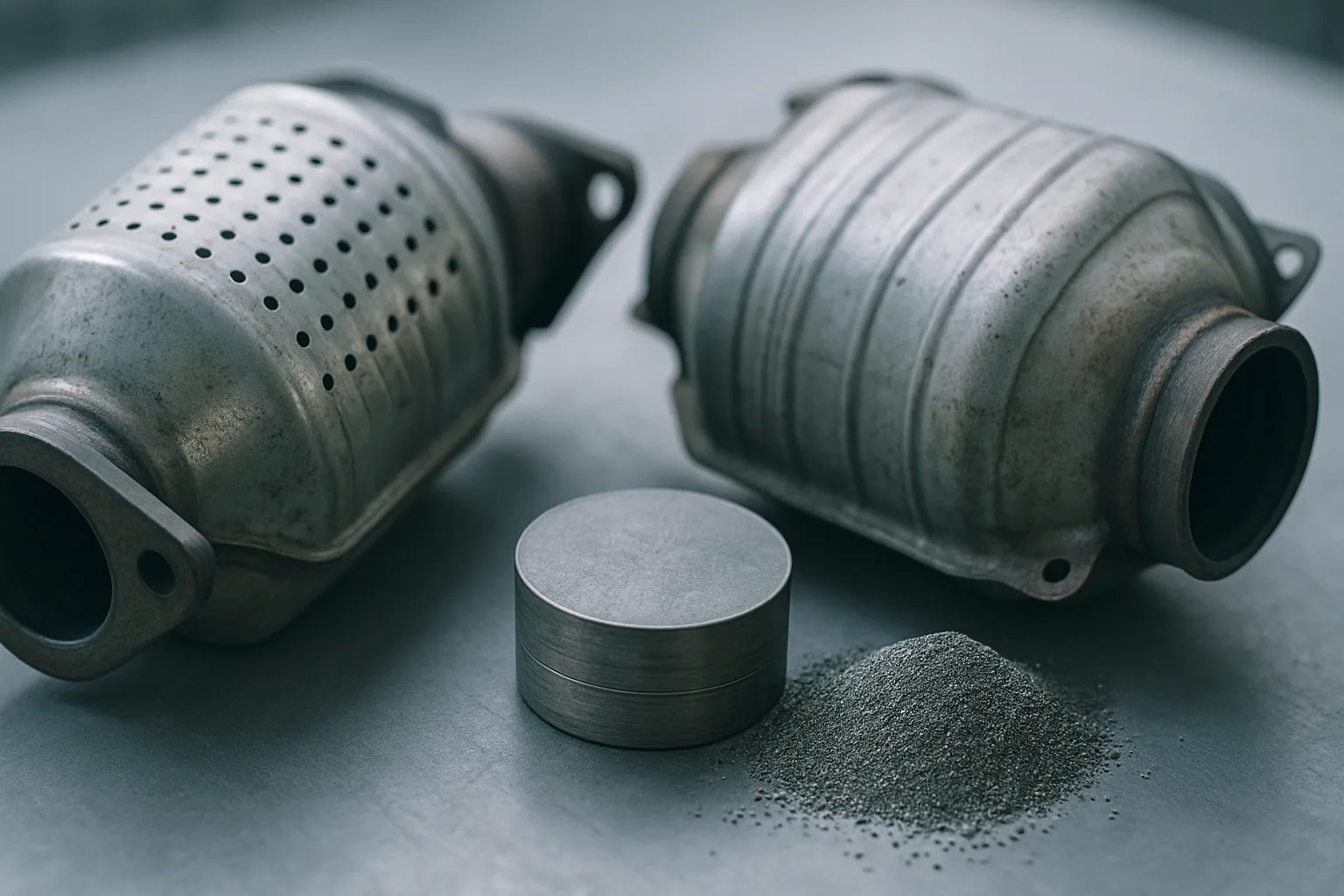
Most people toss a dead catalytic converter in the corner of the yard and forget about it. That's a mistake. Inside that ceramic honeycomb sits a cocktail of platinum group metals — platinum, palladium, and rhodium — and one of those three is consistently the most expensive metal on the planet. Understanding catalytic converter scrap value starts with understanding why rhodium commands the prices it does, and what that means for the load sitting in your shop right now.
If you're in Allentown or anywhere across Pennsylvania, auto shops and scrap collectors are sitting on serious value. The problem isn't the metal — it's not knowing how to price it or where to sell it competitively. Let's fix that.
What Makes Rhodium the Most Valuable Metal in a Catalytic Converter
Rhodium is a platinum group metal (PGM), and it's exceptionally rare. Global annual production sits in the range of a few hundred thousand troy ounces — tiny compared to gold or silver. That scarcity alone drives prices up. But the real driver is industrial demand with almost no substitutes.
Catalytic converters use rhodium specifically to reduce nitrogen oxide (NOx) emissions. Regulatory pressure on vehicle emissions hasn't let up — if anything, federal and state standards tightened heading into 2026. Automakers need rhodium. There's no practical workaround. That combination — finite supply, inelastic demand — is what makes rhodium pricing so volatile and, when the market is right, so lucrative for sellers.
- Rhodium: The rarest of the three PGMs in a cat. Even a small loading can represent significant value.
- Palladium: Used to oxidize hydrocarbons and carbon monoxide, primarily in gasoline-engine converters. The palladium price today matters enormously when valuing a load.
- Platinum: More common in diesel converters. Still valuable, though typically trading below rhodium and sometimes below palladium depending on market conditions.
All three metals move independently. A converter's actual value on any given day is a function of the current spot price for each PGM multiplied by the loading — how many grams of each metal the substrate contains. That loading varies dramatically by make, model, year, and whether the unit is OEM or aftermarket.
Why Catalytic Converter Scrap Value Varies So Much Between Units
Not all cats are created equal. An OEM converter from a late-model Toyota Prius contains significantly different PGM loadings than an aftermarket unit bolted on a 2009 Silverado. This is the single most misunderstood part of the market — and the reason so many sellers leave money on the table.
Here's what actually drives the spread in catalytic converter scrap value:
- OEM vs. Aftermarket: OEM converters carry the manufacturer's original substrate. They tend to have higher and more consistent PGM loadings. Aftermarket units are cheaper to produce and use less precious metal — often dramatically less.
- Vehicle type and engine: Larger engines and performance vehicles often run higher-loaded cats. Diesel units lean on platinum. Gasoline units lean on palladium and rhodium.
- Converter age and condition: A converter that's been running hot for 200,000 miles has experienced some PGM loss through volatilization and physical degradation. A cleaner, lower-mileage cat holds more value.
- Serial number and VIN data: This is where data separates professional sellers from guessers. VIN lookup and serial number tracking let you identify the exact converter and reference its known PGM profile. Platforms like SMASH use this kind of inventory documentation to help buyers bid with confidence — which directly affects what you get paid.
If you're in Allentown and you're pricing cats by eyeballing them, you're guessing. And guessing usually means underselling.
How to Determine What Your Catalytic Converter Is Actually Worth
There's no single static number. The cat converter value you read about online is a snapshot, not a guarantee. But there's a repeatable process for getting close to real market value before you sell.
Start with identification. Pull the serial number off the converter — it's stamped on the body of the unit. Cross-reference it against a reputable database or use a VIN lookup tool if you have the vehicle information. This tells you the converter type, the expected PGM profile, and the processing grade. That's your baseline.
Then check current PGM spot prices. Rhodium, palladium, and platinum all trade on the open market. The numbers shift daily, sometimes dramatically. A converter worth a certain amount on Monday can be worth noticeably more or less by Friday. If you want to check current catalytic converter prices before you sell, use a resource that pulls live data — not a static price list that was last updated six months ago.
From there, factor in the refiner's or buyer's processing spread. Even when you know the PGM content, buyers don't pay 100% of spot. They build in their margin for processing, assay, and risk. The question is how much margin. That's where competition changes everything — more buyers bidding on your load compresses that spread in your favor. That's the core logic behind auction-based selling.
Want to go deeper on pricing methodology? Read catalytic converter pricing guides that break down the math by converter type and current market conditions.
Sell Catalytic Converters Online: Why the Platform You Choose Matters
The old way to sell cats: call your one buyer, take their number, ship the load. No competition. No visibility. No idea if you left $200 or $2,000 on the table.
The better way is to put your inventory in front of multiple vetted buyers simultaneously and let them compete. That's the core mechanic of SMASH — a scrap metal auction platform built for exactly this. When buyers know they're competing, they sharpen their bids. You get price discovery instead of price guessing.
For anyone looking to sell catalytic converters online, the documentation side of the process matters as much as the auction itself. Photo documentation, serial number tracking, and accurate inventory descriptions aren't just paperwork — they're the difference between a buyer bidding confidently and a buyer discounting your load for unknown risk. SMASH's inventory tools handle that systematically. Better documentation, more buyer confidence, better bids. The logic is straightforward.
If you're running a volume operation — an auto dismantler, a recycling yard, or a shop in Allentown clearing out a season's worth of pulled cats — the ability to get competitive bids for your scrap metal through a structured auction format is a fundamentally different outcome than a single phone call to a single buyer.
No subscription fees. SMASH only wins when you win. That alignment matters.
What Pennsylvania Sellers Need to Know Before They List
If you're selling cats in Pennsylvania, a few practical points apply directly to your situation.
Pennsylvania has documentation requirements for catalytic converter transactions — state-level regulations around record-keeping and seller identification have tightened as cat theft enforcement increased across the Northeast. Make sure your inventory is documented: serial numbers, sources, and condition. This isn't just good practice for compliance — it's also what serious buyers need to bid accurately. Documented inventory is more valuable inventory.
For Allentown-area sellers specifically, proximity to major mid-Atlantic processing hubs gives you logistical options. You're not stuck shipping across the country. That can reduce your freight cost and improve net returns. Factor that into your total when you compare bids — a slightly lower gross bid from a closer processor can net better than a higher bid from one that charges more to ship.
Also worth noting: the sell catalytic converters Pennsylvania market is active. Auto dismantlers, independent shops, and recycling operations across the Lehigh Valley generate meaningful volume. If you're selling one-off units, individual value matters. If you're moving volume, consistency of documentation and buyer relationships becomes the competitive advantage.
Ready to stop guessing and start getting market-based prices? Get the best catalytic converter price today by understanding what your inventory is actually worth before you sell.
The Bottom Line on Rhodium and Catalytic Converter Pricing in 2026
Rhodium is valuable because it's irreplaceable in emissions control, rare in the ground, and in continuous demand from automakers worldwide. Palladium and platinum round out the PGM picture but move on their own supply-demand logic. The palladium price today can shift your converter value meaningfully in either direction — which is why selling on a fixed-price, single-buyer basis is a structural disadvantage.
The yards and shops that get the best returns on catalytic converter scrap aren't necessarily the ones with the most volume. They're the ones who document properly, price based on live data, and sell into competitive markets. That's a process, and it's repeatable.
Whether you're clearing one unit from a customer's trade-in or moving a pallet of mixed cats from a dismantler operation, the fundamentals are the same. Know what you have. Price it against current markets. Sell it where buyers compete. If you're ready to put that into practice, get a free quote at best-catalytic-converter-price.com — it's a straightforward starting point for understanding what your converters are worth right now, in today's market.
Disclaimer: Catalytic converter scrap prices fluctuate daily based on live PGM spot prices. Always verify current rates before selling. No price mentioned in this article should be treated as a current or guaranteed offer.
Frequently Asked Questions
Q: Why is rhodium more expensive than gold?
Rhodium is produced in far smaller quantities than gold and has highly concentrated industrial demand — primarily for catalytic converters. Unlike gold, there are no practical substitutes for rhodium in NOx reduction chemistry. That combination of scarcity and inelastic demand pushes its price above gold in most market conditions.
Q: How much is my catalytic converter worth?
It depends on the make, model, year, and condition of the vehicle it came from, plus the current spot prices for rhodium, palladium, and platinum. OEM converters from larger or hybrid vehicles tend to carry the highest value. Use a serial number lookup and current PGM pricing to get a real estimate — don't rely on outdated price lists.
Q: Where can I sell catalytic converters in Allentown, Pennsylvania?
Local scrap yards are one option, but they typically represent a single buyer and a single price. Online auction platforms like SMASH let you put your inventory in front of multiple vetted buyers, which creates competition and better price discovery. Documentation and serial number tracking improve your bids regardless of where you sell.
Q: Does the palladium price today affect what I get for my catalytic converter?
Yes, directly. Palladium is one of the three primary PGMs in catalytic converters, and it prices independently of rhodium and platinum. If palladium spot rises, gasoline-engine converter values typically follow. Check live PGM prices before you negotiate or accept any offer on your load.
Q: Are aftermarket catalytic converters worth less at scrap?
Generally, yes. Aftermarket converters use lower PGM loadings to reduce manufacturing cost, which translates to lower scrap value compared to OEM units of the same physical size. Always identify the unit by serial number before assuming value based on appearance alone.
---Follow SMASH on LinkedIn for industry updates, PGM market insights, and scrap metal pricing trends across North America.