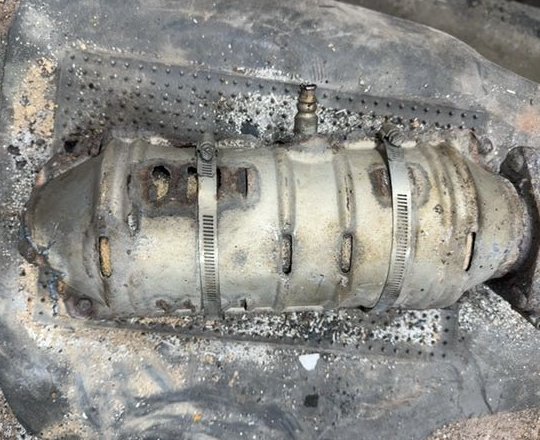
Why Auto Shops Leave Money on the Table When Selling Scrap Cats in Bulk
Most auto shops treat scrap catalytic converters like an afterthought — they pile up in a corner, get sold to whoever shows up with a van, and the transaction ends with a handshake and a gut feeling. If you're running a shop in Mesa, or anywhere else in Arizona, that approach is costing you real money. Bulk cat selling is a skill, and shops that treat it like one consistently walk away with better returns.
This guide is written specifically for shop owners and service managers who accumulate cats regularly and want to stop guessing their way through the sale. We'll cover how to document your inventory, what drives cat converter value, how to time your sales, and why platforms like SMASH are changing how serious sellers operate.
Understanding What Drives the Best Catalytic Converter Price in Mesa
A cat converter isn't priced like sheet metal. It's priced based on the platinum group metals (PGMs) locked inside — specifically platinum, palladium, and rhodium. Rhodium in particular has historically been the most volatile of the three, swinging dramatically based on automotive production trends and industrial demand. Tracking rhodium price today before you sell a large lot isn't optional — it's basic due diligence.
The spread between a well-documented bulk lot sold competitively and the same lot sold to a single local buyer with no documentation can be significant. That gap exists because buyers price in their uncertainty. If they don't know the exact part numbers, the substrate condition, or the OEM versus aftermarket breakdown, they'll low-ball to protect themselves. Your job as a seller is to remove that uncertainty — and charge accordingly.
Key factors that directly affect the price you'll be offered:
- PGM content — OEM converters from domestic trucks and SUVs typically carry higher loadings than cheap aftermarket replacements
- Substrate condition — cracked, flooded, or rattled-out substrates yield less at the assay
- Part identification — serial numbers, OEM stamps, and VINs dramatically increase buyer confidence
- Lot size and consistency — a clean, documented bulk lot commands better pricing than a mixed bag of unknowns
- Market timing — PGM prices move daily; selling into a rising rhodium or palladium market matters
If you want to get the best catalytic converter price today, start by knowing exactly what you have before you talk to a single buyer.
How to Build a Bulk Inventory System That Gets You Better Offers
Documentation is the single highest-leverage thing a shop can do to improve what they're paid for bulk cats. When a buyer reviews a well-organized lot — with photos, serial numbers, OEM source data, and substrate condition notes — they can bid with confidence. That confidence translates directly into higher offers. Guesswork gets discounted. Documentation gets rewarded.
Here's a practical process any shop can implement without expensive software:
- Tag every converter when it comes off the vehicle. Write the VIN or RO number directly on the cat with a paint marker. This links each unit back to the vehicle it came from — useful for OEM identification and for legal compliance.
- Photograph each unit front and back. Capture the serial number, any OEM stamps, and the condition of the end pipes. Good photos cut down buyer questions and demonstrate you're a serious seller.
- Separate OEM from aftermarket immediately. Aftermarket cats (think MagnaFlow, Walker, or similar) typically carry lower PGM loadings and price lower. Mixing them in with OEM units muddies your lot value.
- Note substrate condition. Is it intact, cracked, or rattled out? Buyers ask. Having the answer ready signals professionalism and eliminates room for lowball adjustments.
- Track by vehicle type. Diesel cats, pre-cat units, and large-truck converters each have distinct value profiles. Knowing what you have lets you sort accordingly and potentially sell high-value units separately.
Platforms like SMASH support photo documentation, VIN lookup, and serial tracking — features built specifically to help sellers present inventory clearly to a pool of vetted buyers. That's not an accident. It's how the platform creates real price competition on documented lots.
Timing Your Bulk Sales Around the Catalytic Converter Market
Selling fifty cats when rhodium is depressed is a different outcome than selling the same fifty cats three weeks later when the market has recovered. Shops that accumulate inventory for two to four weeks — rather than selling every single unit the moment it comes off a car — give themselves room to time their sales. That doesn't mean holding forever. It means being intentional.
A few practical timing guidelines for shop owners in Mesa and across Arizona:
- Check PGM spot prices weekly at minimum. Rhodium, palladium, and platinum move independently. A drop in one doesn't mean the others followed.
- Don't let inventory sit for months. Cats don't gain value in storage, and the carrying cost (space, compliance risk, security) adds up.
- Watch automotive production news. Catalytic converter prices are downstream of auto manufacturing demand — when plants slow down or ramp up, PGM demand shifts accordingly.
- Sell in lots, not individually. One buyer bidding on three cats has less incentive to compete than multiple buyers bidding on thirty-five cats with documented provenance.
For shops that want to check current catalytic converter prices before committing to a sale, having a reliable benchmark source is non-negotiable. Buying blind is for buyers. Sellers should always know the market before they engage one.
Why Bulk Sellers in Mesa Are Moving Away from Single-Buyer Deals
The traditional model — one buyer, one phone call, one offer — still dominates in many markets. In Mesa's auto shop corridor, it's still common for recyclers to pull up, offer a flat rate per unit, and leave with a truckload before the shop owner has had a chance to compare anything. That model works well for the buyer. It works less well for you.
Competitive bidding changes the dynamic entirely. When multiple vetted buyers are looking at the same documented lot at the same time, they have to compete on price rather than capitalize on information asymmetry. The shop that used to accept whatever the van driver offered now has actual market data in front of them.
SMASH — the scrap metal auction platform — applies exactly this model to bulk cat lots. Sellers list their inventory with documentation, vetted buyers bid competitively, and the seller sees real price discovery rather than a single buyer's best guess at what they can pay and still make margin. No subscription fees. The platform only wins when the seller wins. For shops looking to sell your scrap metal on the SMASH marketplace, the process is direct and transparent.
If you've been selling to a single local buyer by default, that's not loyalty — that's leaving money uncontested on the table. Shops in Arizona running twenty-plus cats a month have enough volume to justify a better process. The only question is whether you set it up.
Compliance, Documentation, and Legal Requirements for Cat Sellers in Arizona
Arizona has specific requirements around the sale of catalytic converters, and shops operating in Mesa need to be current on them. State law requires sellers to provide proof of ownership or lawful possession of each converter — vehicle records, repair orders, or business documentation typically satisfy this requirement. Selling without proper documentation isn't just a legal exposure; it also makes you a less attractive seller to serious, vetted buyers who are doing their own due diligence.
Beyond state compliance, good documentation protects you in disputes and creates a paper trail that supports your pricing position. Buyers who know you have your records in order are more likely to bid aggressively because they're not pricing in legal risk on their end. For shops that want to read catalytic converter pricing guides that cover compliance topics alongside pricing strategy, staying educated on both sides of the transaction is time well spent.
Practical compliance checklist for Mesa auto shops selling cats:
- Retain repair orders linking each converter to the vehicle it was removed from
- Record the seller's (your business) information on all sale documentation
- Know your buyer — deal with licensed recyclers and vetted purchasing operations, not anonymous cash buyers
- Stay current on Arizona state legislation, which has continued to evolve in response to converter theft trends through 2025 and into 2026
- Keep copies of all transaction records for a minimum of two years
Note: This article does not constitute legal advice. Consult with a qualified attorney or your local regulatory authority for current compliance requirements in Arizona.
Frequently Asked Questions
Q: How do I get the best catalytic converter price in Mesa for a bulk lot?
Document your inventory thoroughly — photos, serial numbers, OEM versus aftermarket separation, and substrate condition notes. Then sell into a competitive bidding environment rather than accepting the first single-buyer offer. Platforms like SMASH connect documented bulk lots with vetted buyers who compete on price, which is how you get actual market value instead of one buyer's floor.
Q: Does rhodium price today affect what I'll be paid for my scrap cats?
Yes, directly. Rhodium is one of the three primary PGMs recovered from catalytic converters, and it has historically been the most price-volatile of the group. Buyers adjust their offers based on current spot prices for platinum, palladium, and rhodium. Checking PGM spot prices before you sell — especially before moving a large lot — is standard practice for any serious seller.
Q: How many cats should an auto shop accumulate before selling in bulk?
There's no universal answer, but most experienced sellers suggest accumulating at least fifteen to thirty units before going to market. This gives you enough volume to attract serious buyers and creates genuine competition in an auction setting. Selling one or two units at a time rarely justifies the documentation effort or the buyer's attention for premium pricing.
Q: Are there catalytic converter buyers near me open now in Mesa, Arizona?
Local buyers exist throughout the Mesa metro area, but proximity doesn't guarantee the best price. A buyer who's physically nearby may offer less than a vetted buyer operating in a competitive auction environment. Use local buyers as a benchmark, not a default — and verify that any buyer you work with operates with full compliance documentation requirements.
Q: What's the difference between an OEM converter and an aftermarket converter when it comes to scrap value?
OEM (original equipment manufacturer) converters are factory-installed units and typically carry higher PGM loadings — more platinum, palladium, and rhodium per unit than aftermarket replacements. Aftermarket converters are built to meet emissions standards at lower cost, which means less precious metal content and lower scrap value at assay. Separating your OEM and aftermarket units before selling is one of the fastest ways to protect the value of your premium inventory.
If your shop is accumulating cats and settling for whatever the first buyer offers, you're not running a recycling strategy — you're running a convenience service for buyers. Take thirty minutes to document your next lot properly, check where rhodium and palladium are trading, and put that inventory in front of more than one buyer. The difference in what you walk away with can be meaningful, especially at volume. When you're ready to move your next bulk lot, get the best price for your catalytic converter — get a free quote at best-catalytic-converter-price.com and see what competitive pricing actually looks like for your inventory.
Disclaimer: Catalytic converter prices fluctuate daily based on PGM spot markets. All pricing decisions should be made using current market data. Check current rates before committing to any sale.
Stay ahead of PGM market moves and scrap metal pricing trends — follow SMASH on LinkedIn for regular industry updates and insights that help sellers make smarter decisions.