Your Phone Is Leaving Money on the Table — Here's How to Fix That
With the platinum price today moving constantly and rhodium values swinging hard depending on industrial demand, a blurry photo of your cat converter isn't just inconvenient — it's costing you real money. Buyers can't quote what they can't identify. And when they're unsure, they quote low to protect themselves.
If you're sitting on a pile of cats in San Francisco or anywhere across California, the difference between a sharp, complete photo set and a muddy snapshot can be the difference between a fair market offer and a floor price. This guide walks you through exactly how to photograph your catalytic converter so buyers have everything they need to quote you at the top of their range.
Why Photo Quality Directly Affects Your Catalytic Converter Price
Here's the reality: scrap catalytic converter buyers price based on what's inside the shell — the platinum, palladium, and rhodium loaded into the ceramic or metallic substrate. They can't cut your cat open over the internet. What they can do is read the substrate density, shell shape, OEM markings, and pipe configuration from a solid photo.
A buyer looking at a clear, well-lit set of images can often identify the exact unit, cross-reference it against assay data, and give you a strong offer in minutes. Hand them a dark, angled, thumb-in-the-frame shot? They're guessing. And buyers who guess, guess low. That's not a knock on them — it's just how risk pricing works.
Platforms like compare scrap metal bids from verified buyers rely on accurate documentation to drive real competition between buyers. Better photos mean more confident buyers. More confident buyers bid higher. The math isn't complicated.
The 5 Shots Every Catalytic Converter Photo Set Needs
You don't need a professional camera. Your phone works fine. What you need is a consistent, complete photo set that gives buyers the information they're looking for. Here's the five-shot formula that gets results:
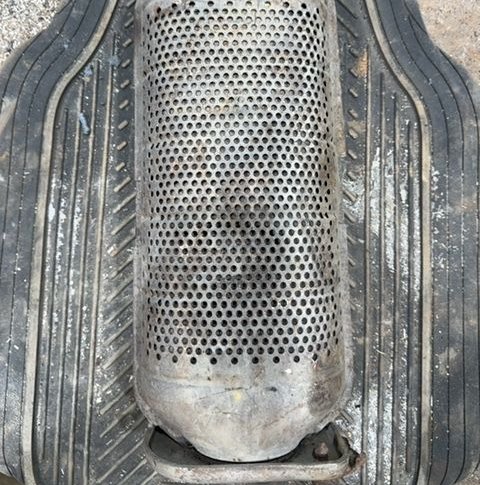
- The flat front shot. Lay the cat on a flat, clean surface — concrete, a workbench, a piece of cardboard. Shoot straight down from directly above. No angle. Fill the frame with the unit. This gives buyers the overall shell shape and helps them start narrowing down the make and model.
- The OEM stamp or serial number close-up. Every OEM converter has a stamped code somewhere on the shell — usually on the end cap, the pipe connection, or the face. Find it. Shoot it close enough that the numbers are readable without zooming in. This is the single most important shot for accurate identification. If a buyer can read your OEM code, they can pull exact assay data.
- Both pipe ends, face-on. Shoot each inlet and outlet pipe opening straight on. Buyers use the pipe diameter and honeycomb substrate pattern to confirm substrate type and density. These two shots often confirm what the OEM stamp suggests.
- The bottom or underside view. Flip the unit and shoot the opposite face from your flat front shot. Some cats have additional markings here. It also confirms the shell isn't cracked, crushed, or melted — damage that reduces the recoverable PGM content.
- A size reference shot. Place a standard item next to the unit — a tape measure, a dollar bill, a common wrench. This helps buyers gauge actual size, which matters more than you might think. Aftermarket units can look identical to OEM units in photos but are dramatically smaller internally.
Five shots. Clean surface. Good light. That's the baseline. If you want to go further — and for high-value units, you should — add a weight shot with the unit on a scale. The cat converter value calculation always factors in substrate weight, and giving buyers that number upfront saves everyone a step.
Lighting, Background, and Common Mistakes to Avoid
Bad lighting is the number one photo problem buyers see. Shadows hide markings. Flash creates glare that washes out stamps. Both cost you money. Here's what actually works:
- Natural light is your best friend. Take photos outside on an overcast day, or near a large open door or window. Even, diffused light shows surface detail without harsh shadows or reflections.
- If you're shooting indoors, use two light sources — one on each side of the unit — to eliminate shadows. Two shop lights or even two phone flashlights propped up work fine.
- Avoid busy backgrounds. A cluttered yard floor makes it hard for buyers to focus on the unit. A piece of plywood, a clean concrete patch, or even a flattened cardboard box gives you a neutral backdrop fast.
- Don't shoot through glass or plastic bags. It sounds obvious, but buyers regularly get photos of cats still in garbage bags. Shoot the bare unit.
- Wipe off heavy grease or mud before shooting. You don't need to detail it. But if there's two inches of caked grime covering the OEM stamp, a quick wipe with a rag before you shoot will get you a better quote.
For shops in San Francisco dealing with high volumes of mixed converter loads — OEM, aftermarket, DPF — building a simple photo station takes about twenty minutes and pays for itself on the first load. A sheet of plywood, two clamp lights, and a fixed camera height. Consistency speeds up your quoting process across the board.
How SMASH Uses Your Photos to Drive Competitive Bidding
When you submit your converter inventory through SMASH, the photos you upload go directly to vetted buyers who are actively looking to purchase. This isn't a single buyer making you an offer behind closed doors. It's a structured auction format where multiple qualified buyers review the same documentation and compete on price.
That competition is where strong photo documentation pays off. A buyer who can clearly identify an OEM converter with a readable serial number and clean substrate images doesn't need to pad their margin for uncertainty. They can price tight because they know what they're getting. That tightened margin goes to you, not them.
SMASH also supports serial tracking and photo documentation at the inventory level — which matters for California yards operating under strict documentation requirements. Your photo set isn't just a quoting tool. It's part of your paper trail. In a state where catalytic converter theft enforcement has tightened significantly by 2026, documented inventory protects you as a seller too.
If you haven't already, get the best catalytic converter price today by starting with a complete, documented photo submission. Clean images move faster and close higher — that's true whether you're selling one converter or a truckload.
Reading the Market: Why Platinum Price Today Changes Your Urgency
The platinum price today — alongside palladium and rhodium — determines what your converter is actually worth at the substrate level. These aren't stable numbers. Platinum, palladium, and rhodium trade on commodity markets that respond to automotive production rates, emissions regulation changes, and industrial demand from sectors outside of automotive entirely.
In late 2026, the PGM market has shown meaningful volatility tied to shifts in EV adoption rates and tightening emissions standards in Asia and Europe, which are driving sustained demand for three-way catalytic systems in internal combustion vehicles. That's a longer conversation — but the short version is this: when PGM prices move up, your converter is worth more. When they drop, the window narrows.
This is why submitting clean, complete photos matters right now, not eventually. Pricing windows are real. A load sitting in your yard waiting on better photos is a load that might miss a market peak. Read catalytic converter pricing guides to understand how PGM movements connect to the offers you're seeing on specific converter types.
Buyers in San Francisco and across California are actively purchasing. The market is open. Your photos are the only thing standing between your inventory and a competitive offer.
Submitting Your Photos and Getting a Quote That Reflects the Real Market
Once your photo set is ready, submission is straightforward. Upload your images along with any available identifying information — OEM codes, vehicle make and model if you know it, weight if you've got a scale. The more complete your submission, the faster and stronger your offers will come back.
For California sellers — particularly shops and yards in the San Francisco Bay Area handling regular converter volume — building a consistent documentation workflow is worth the upfront time. Consistent photos mean faster turnaround, fewer back-and-forth clarifications with buyers, and cleaner records for compliance purposes.
Use a scrap metal auction platform like SMASH that puts your documented inventory in front of multiple buyers at once. One submission, multiple offers, real competition. That's how you stop leaving money on the table and start pricing to the actual market.
Ready to stop guessing what your cats are worth? Check current catalytic converter prices and submit your photo documentation today. Getting a quote that reflects real market value starts with giving buyers the information they need to bid confidently.
Disclaimer: Catalytic converter prices fluctuate with PGM commodity markets. Always verify current rates before selling. The figures and market conditions described reflect general 2026 market context and are subject to change.
Frequently Asked Questions
Q: How does the platinum price today affect what I get paid for my catalytic converter?
Platinum is one of three primary platinum group metals (PGMs) recovered from catalytic converters, alongside palladium and rhodium. When platinum prices rise on commodity markets, the recoverable value of your converter's substrate increases, and competitive buyers will reflect that in their offers. Submitting clean photos and getting multiple bids through an auction platform is the best way to ensure you're capturing current market pricing rather than a buyer's worst-case margin.
Q: What's the most important photo to include when selling a scrap catalytic converter?
The OEM serial number or stamp is the single most valuable piece of information you can provide. A readable OEM code allows buyers to cross-reference exact assay data for that unit, which leads to more accurate and often higher offers. If the stamp is dirty or hard to read, wipe it down before shooting and get as close as your phone's camera will focus.
Q: Are there catalytic converter buyers in San Francisco that accept photo submissions online?
Yes — and online photo submission is increasingly the preferred method for serious buyers across California. Platforms like SMASH connect sellers in San Francisco and across the state with vetted buyers who review documentation remotely and compete on price. You don't need to drive your load somewhere to get a competitive quote.
Q: Does it matter if my converter is aftermarket versus OEM when I submit photos?
It matters significantly. OEM converters typically carry higher PGM loading than aftermarket units, which means higher scrap value. Buyers need to distinguish between the two from your photos — the shell size, pipe diameter, and any visible markings all help. Being upfront about what you have and photographing the identifying details clearly will get you the most accurate quote.
Q: How many converters should I photograph at once when submitting a batch?
Photograph each unit individually. Group shots make it nearly impossible for buyers to identify individual converters, read serial numbers, or assess substrate condition. Yes, it takes more time upfront — but buyers can quote individual units accurately, and competitive pricing on identified units almost always outperforms a bulk estimate on an unidentified pile.
---Stay ahead of the scrap metal market — follow SMASH on LinkedIn for catalytic converter market updates, PGM pricing insights, and news from the scrap recycling industry across North America.