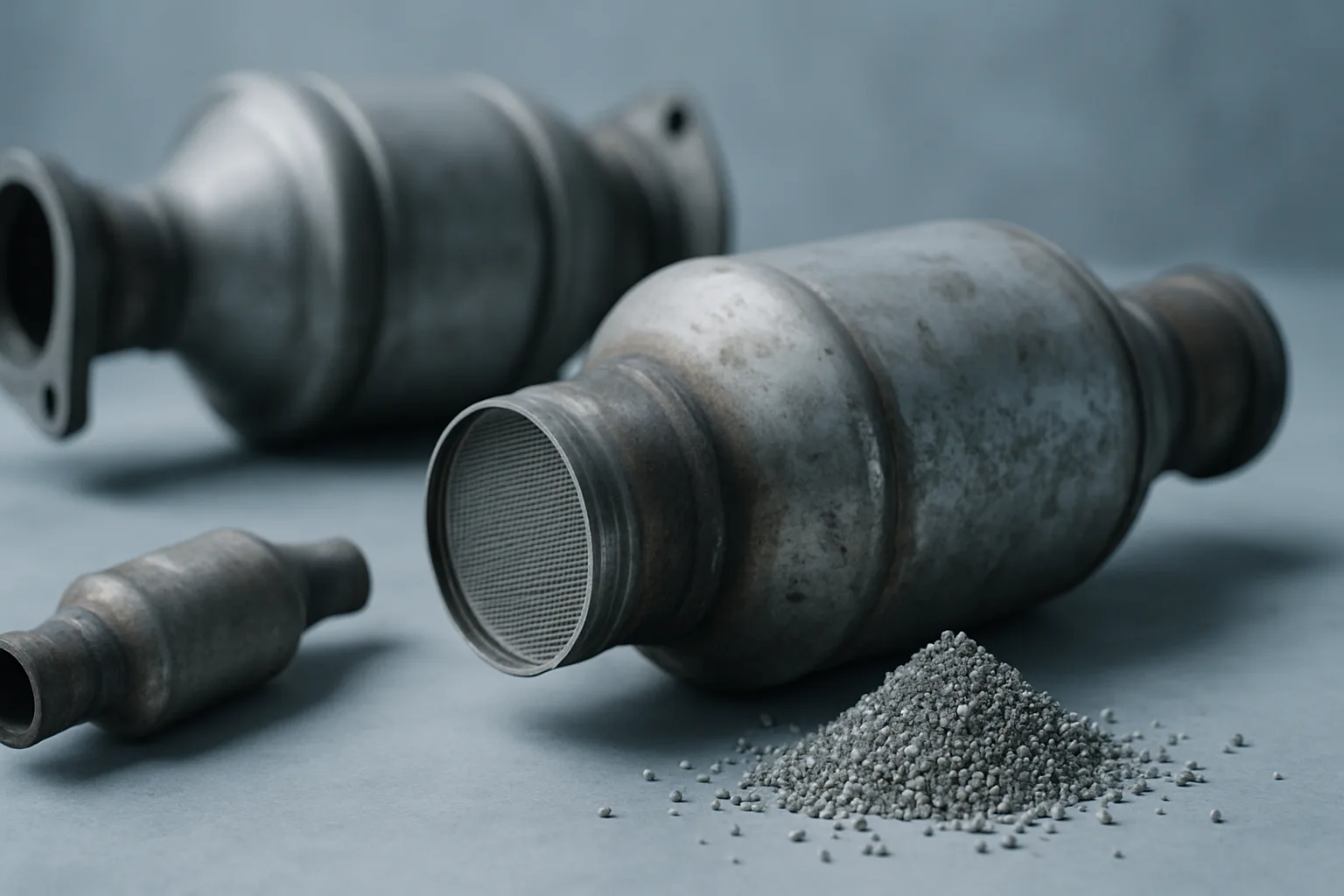
A blurry photo of your catalytic converter can cost you real money. Buyers who can't read the serial number, see the substrate condition, or identify the manufacturer have no choice but to quote low — or walk away entirely. In a market where catalytic converter scrap value swings hard based on platinum, palladium, and rhodium content, a few bad shots can mean the difference between a fair price and getting shortchanged.
This isn't about being a photographer. It's about giving buyers enough information to compete for your load. More information equals more confidence. More confidence equals better bids. That's the whole game.
Whether you're an auto shop sitting on a pallet of used cats, a scrapper working Tampa-area junkyards, or an individual with one converter off a trade-in, the same rules apply. Take the right photos, and you'll get the best catalytic converter price today.
Why Photos Determine Your Catalytic Converter Scrap Value
Online quoting runs on data. A buyer sitting in Chicago or Dallas evaluating your cats can't touch them, shake them, or hold them up to the light. They're working entirely from what you send. If your photos are dark, angled wrong, or missing key details, that buyer has to assume the worst — and price accordingly.
The precious metals inside a catalytic converter — platinum, palladium, and rhodium — vary significantly by make, model, year, and whether the unit is OEM or aftermarket. A clean, readable serial number lets a buyer cross-reference their database and price accurately. A photo where the serial is half-obscured by grease? That's a guess. Buyers don't pay top dollar for guesses.
When you sell catalytic converters online, you're essentially writing a listing. Treat it like one. The goal is to remove every reason a buyer might hesitate or discount.
The Five Shots You Need Before You Quote
You don't need a camera crew. A modern smartphone handles this fine. What matters is knowing which five angles give buyers everything they need to price confidently.
- The serial number or part number — close and in focus. This is the most critical shot. Get within 6–8 inches. Make sure the number is fully in frame with no blur. If there's grease over it, wipe it with a rag first. No buyer can identify a cat from a smeared label.
- The manufacturer stamp or OEM markings. Flip the converter if you need to. Look for raised casting marks, stamped codes, or foil labels on the canister body. OEM converters from Honda, Toyota, and GM carry different precious metal loads than aftermarket units — and buyers price that difference.
- The full converter body — both ends visible. Step back and shoot the whole unit. Buyers want to see inlet and outlet pipe condition, overall size, and whether the body is crushed, cut, or intact. Crushed substrates affect yield.
- The substrate face — if accessible. If your converter is already off the vehicle and you can see into the ends, shoot the honeycomb face. Cracked, missing, or rattling substrate is a value killer. Show what's there honestly.
- A group shot if you're selling multiple units. Lay all converters flat in good light and shoot the whole pallet or pile. This helps buyers understand quantity and variety before they dig into individual units.
These five shots take about ten minutes. They can increase the accuracy of your quote significantly — and accuracy almost always trends toward a better number when your load is legitimate.
Lighting and Staging: The Details That Actually Matter
Bad lighting kills more quotes than bad converters. A converter photographed in a dark corner of a shop bay, backlit by fluorescent overhead light, or shot in direct noon sun with harsh shadows — none of those work. Here's what does.
Shoot outside in open shade. Overcast days are ideal. Bright but diffused light shows detail without washing out stamped numbers or creating shadows that hide text. If you're in Tampa where the afternoon sun is intense, shoot in the morning or find a shaded wall to stand near.
Lay converters on a clean, neutral surface — concrete, cardboard, or a wooden pallet. Avoid gravel or grass where the unit can shift or get visually cluttered. If you're processing volume, a designated photo area in your yard keeps this consistent and fast.
Hold the camera parallel to the serial number — not at an angle. Shooting at an angle distorts the characters and makes reading harder. If the converter is round, prop it so the label faces up and shoot straight down. Use your phone's grid feature to keep the frame level.
Don't use zoom. Move physically closer instead. Digital zoom degrades quality. For serial number shots, get close enough that the number fills most of the frame.
How to Sell Catalytic Converters Online Using Platform Tools
Once your photos are done, the platform you use matters just as much as the photos themselves. Not all online quoting tools are built the same.
Platforms like find the best price for your scrap on SMASH are designed specifically for this process. SMASH gives sellers access to vetted buyers who compete for your load — not a single buyer making a take-it-or-leave-it offer. When multiple buyers see your well-documented photos and compete, price discovery happens. That's how you find actual market value, not just whatever one local yard feels like paying today.
SMASH also supports photo documentation and serial tracking as part of the inventory submission process. That means your photos don't just help you get quoted — they create a documented record of what you sold, to whom, and for what price. For shops and recyclers in Florida processing volume, that documentation matters for compliance and recordkeeping.
For sellers in Tampa and across Florida, using a platform with structured documentation is increasingly important. Regulatory pressure on catalytic converter sales has tightened across many states in recent years, and proper records — including photos tied to serial numbers — help sellers demonstrate they're operating above board. Tampa scrap metal services that use documented platforms are better positioned as compliance expectations evolve.
If you're still calling one buyer and taking their first number, you're leaving the market to someone else. Competition is what reveals true catalytic converter scrap value. Photos are what make that competition possible.
Common Photo Mistakes That Hurt Your Quote
Most sellers make the same handful of mistakes. Avoiding these is as important as knowing what to shoot.
- Blurry serial numbers. Tap the screen on your phone to force focus on the text. Take three shots and keep the sharpest one.
- Shooting through plastic bags or wrapping. Remove packaging before you photograph. Foil and plastic reflect light and obscure markings.
- Only sending one photo. One photo never tells the full story. Send at least three per unit — serial, body, and manufacturer mark.
- Not cleaning the unit first. A quick wipe with a shop rag takes 30 seconds. Grease-caked converters make serial numbers unreadable and signal poor handling to buyers.
- Mixed loads with no organization. If you're quoting a pallet with 20 cats, label them. Lay them in rows, number them if needed, and match photos to units. Buyers quoting blind on a chaotic pile quote conservatively.
- Shooting aftermarket converters without noting it. Aftermarket cats carry different PGM loads than OEM units. If you know a unit is aftermarket, say so. Buyers who find out mid-transaction lose trust — and that affects future deals.
The palladium price today — and the rhodium and platinum markets alongside it — sets the ceiling on what buyers can offer. But your documentation quality determines how close to that ceiling your actual quote lands. Don't let a bad photo be the reason you settle for less.
Turning Good Photos Into the Best Offer for Your Catalytic Converter
Documentation is only half the equation. The other half is making sure the right buyers see it. A well-photographed converter submitted to a single local yard gets you one number. The same converter submitted through a competitive platform gets you the market.
For anyone selling in Florida — from Tampa auto dismantlers to independent collectors running rural routes — the difference between one buyer and a vetted pool of competing buyers is measurable. You don't need a subscription. You don't need to be a large-volume seller. You need good photos and access to a platform that works in your favor.
Before you call a catalytic converter scrap yard near me and accept the first number you hear, take ten minutes. Clean the converters. Shoot the five angles. Submit through a platform where buyers compete. Then check current catalytic converter prices to benchmark what you're being offered against current market conditions.
The market is paying for platinum, palladium, and rhodium — not for the effort it takes to quote your load. Make it easy for buyers, and they'll make it worth your while. If you want a deeper look at how converter values are calculated, read catalytic converter pricing guides that break down the variables driving today's OEM converter prices.
When you're ready to move your cats, get a free quote at best-catalytic-converter-price.com — and find out what your load is actually worth in today's market.
Frequently Asked Questions
Q: How many photos do I need to get an accurate catalytic converter scrap value quote?
At minimum, send three photos per converter: the serial number close-up, the full body, and any manufacturer stamps. Five photos is ideal — add a substrate face shot and a group shot if you're submitting multiple units. More detail means buyers can price accurately instead of quoting defensively.
Q: What if the serial number on my catalytic converter is worn off or unreadable?
Photograph whatever markings remain — casting codes, foil labels, pipe diameter markings. Also photograph the vehicle it came from (year, make, model) or provide that information in your submission. Experienced buyers can often identify converters by physical characteristics even without a clean serial, though pricing accuracy may be lower. Being upfront about missing markings builds trust and gets you a more realistic quote.
Q: How much is my catalytic converter worth — and does the palladium price affect it?
Yes, directly. Palladium is one of the three precious metals (alongside platinum and rhodium) that determines catalytic converter scrap value. Prices fluctuate daily based on commodity markets. OEM converters from certain Toyota, Honda, and GM models carry higher PGM loads and command stronger prices. Disclaimer: Prices fluctuate constantly — always check current rates before selling.
Q: Can I sell catalytic converters online if I'm in Tampa, Florida?
Absolutely. Sellers in Tampa and across Florida regularly use online platforms to submit photos, get competitive quotes, and arrange pickup or drop-off. Florida has specific recordkeeping requirements for catalytic converter sales, so using a platform with built-in photo documentation and serial tracking helps you stay compliant. SMASH is one platform built for exactly this kind of transaction.
Q: Does the condition of the catalytic converter affect the quote?
Yes. Crushed bodies, cracked or missing substrate, and cut pipes all reduce the recovered precious metal yield — and buyers price that in. A converter in intact condition with a readable serial will consistently quote higher than a damaged unit. Honest photos of the actual condition protect you too: it eliminates disputes when the load arrives at the buyer's facility.
Stay current on scrap metal markets and catalytic converter pricing trends — follow SMASH on LinkedIn at linkedin.com/company/scrap-metal-auction-sales-hub for industry updates and market insights.
```