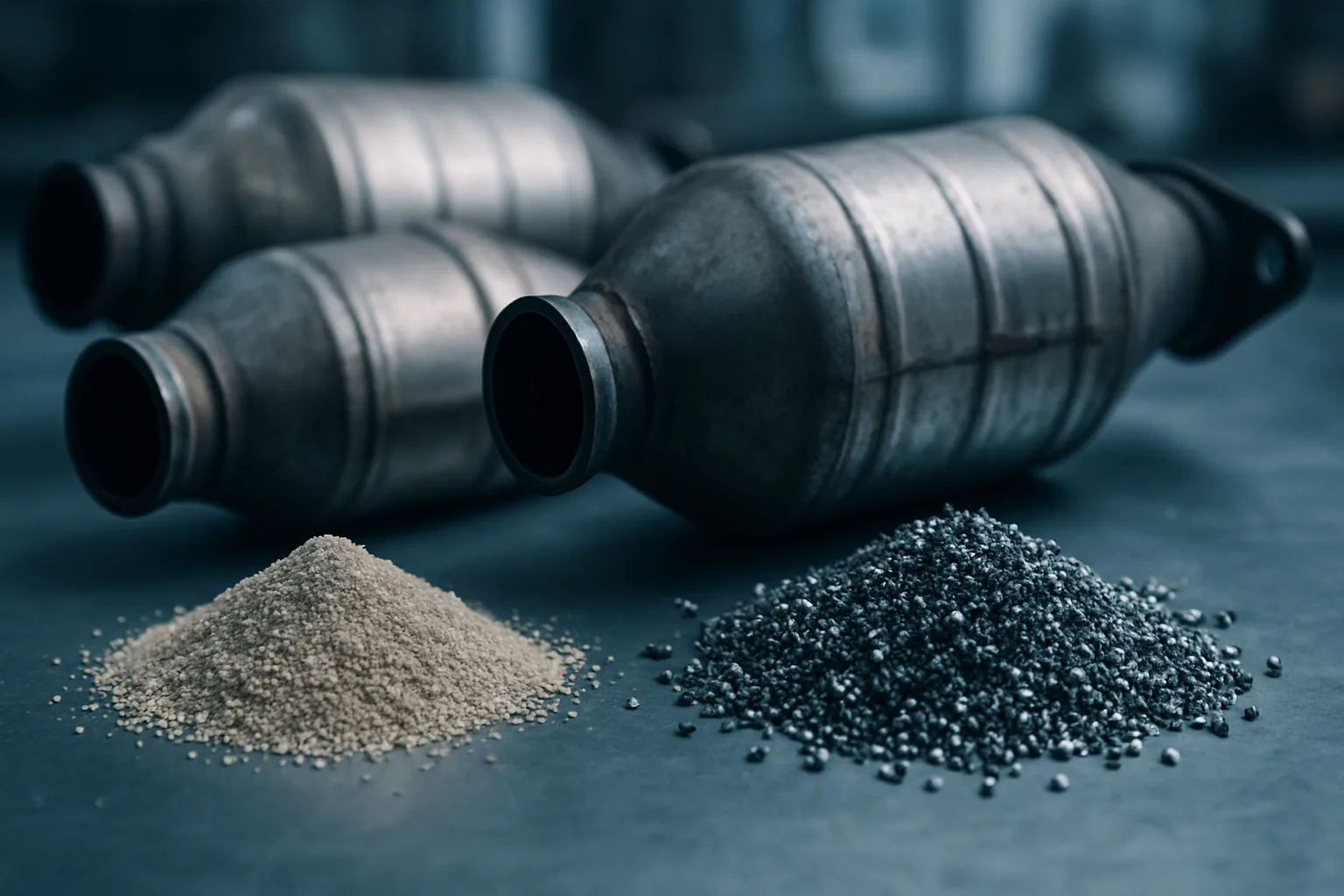
Most auto shops leave serious money on the table when selling scrap catalytic converters. Not because they don't have volume — they do. It's because they're still calling one buyer, taking the first number offered, and moving on. That's not a strategy. That's a habit. And habits cost money when platinum, palladium, and rhodium prices are this volatile.
If your shop accumulates even a modest stack of cats each month, the difference between selling smart and selling fast can add up fast. This guide breaks down exactly how auto shops — from independent garages to multi-bay operations in San Francisco and across California — can get more from every load they move.
Understand What Drives Catalytic Converter Scrap Value Before You Sell
The single biggest mistake shops make is treating all cats as equal. They're not. Catalytic converter scrap value swings dramatically based on make, model, year, and the specific precious metal content locked inside — platinum, palladium, and rhodium. A Honda Accord cat and a Ford F-250 diesel cat are not even in the same conversation pricewise.
Palladium price today directly influences what buyers will pay for gas-engine cats, since gasoline converters lean heavy on palladium. Diesel converters typically run higher platinum ratios. Rhodium, when prices are elevated, can push certain OEM converter prices into triple-digit territory per unit — or well beyond for rare applications. Knowing which metals dominate your inventory helps you time sales better and negotiate harder.
- OEM converters (original equipment, still in the original housing) command higher prices than aftermarket or "biscuit" units.
- Large foreign cats — common on European makes — often carry high palladium and rhodium loads.
- Small foreign cats — common on compact Hondas and Toyotas — move in volume but lower per-unit value.
- Domestic converters from American trucks and SUVs vary widely; some are excellent earners.
- Aftermarket / direct-fit replacements typically pay far less than OEM units of the same vehicle.
If you're not sorting your inventory by type before you sell, you're likely blending high-value units into average-priced batches and losing money on every transaction. Sort first. Sell informed.
Build a Documentation System That Protects You and Increases Buyer Confidence
Buyers pay more when they trust what they're buying. That trust comes from documentation. In California especially, anti-theft regulations have tightened significantly around catalytic converter transactions, requiring sellers to maintain records of the vehicles converters came from. Smart shops turned compliance into a competitive advantage — because documented inventory moves faster and often fetches better offers.
Here's the minimum documentation system every shop should run:
- Record the vehicle VIN for every converter removed during service — platforms like SMASH make it easy to get competitive bids for your scrap metal when your inventory is properly documented with serial and VIN data.
- Photograph each unit before it goes into the pile. Top, bottom, and the serial or part number stamp. This takes 30 seconds and eliminates disputes later.
- Tag or bin converters by type — large foreign, small foreign, domestic — as they come off the vehicle. Don't let a mixed pile sit for a month and then try to sort it cold.
- Track your running inventory with a simple spreadsheet or a dedicated scrap inventory tool. Know what you have before a buyer calls, not after.
- Keep repair orders on file as proof of legitimate acquisition. This protects you legally and simplifies any compliance audit.
Shops in San Francisco dealing with California's strict catalytic converter transaction laws already know this isn't optional — it's the cost of doing business. But documentation also gives you leverage. When you walk into a sale knowing exactly what you have and where it came from, you negotiate from strength, not guesswork.
Stop Selling to One Buyer — Create Competition for Your Loads
Here's the uncomfortable truth: if you only ever call one buyer, you have no idea what your cats are actually worth. You're getting that buyer's number, not the market's number. And there's a significant difference.
Competition is the most reliable mechanism for better catalytic converter scrap value. When multiple vetted buyers bid on the same load, the price has to move to where the market actually is. One buyer has no incentive to offer more. Ten buyers competing for your load have every incentive.
This is exactly why platforms like SMASH exist. Instead of taking the first call you get from a local yard, you submit your documented inventory — photos, VINs, serial numbers, unit types — and let vetted buyers compete. More buyers means better price discovery. You stop guessing and start selling with actual market data backing you up.
For auto shops that want to get the best catalytic converter price today, moving away from single-buyer relationships is the highest-leverage change you can make. It costs nothing to get a second opinion. It potentially earns a lot.
Timing Your Bulk Sales Around Precious Metal Markets
Auto shops accumulate cats continuously. The question is when to move them. Sitting on inventory has risk — prices can fall. But selling every week in dribs and drabs means you're never moving enough volume to negotiate seriously.
Most shops find a monthly or bi-monthly cadence works well for bulk sales. You build up enough units to make the sale meaningful, and you give yourself time to watch the palladium price today and broader platinum-group-metal (PGM) trends before committing. You're not trying to time the market perfectly — that's a fool's errand. But selling into obvious dips when you don't have to is just leaving money behind.
A few practical timing signals to watch:
- Rhodium spikes — Rhodium is the most volatile of the three PGMs. When it runs up hard, high-rhodium-content cats become disproportionately valuable.
- Palladium trends — Palladium demand is closely tied to gasoline vehicle production. Watch automotive production data and EV adoption curves as leading indicators.
- Platinum — Platinum has historically trailed the other two but plays an important role in diesel converters. Industrial demand also affects platinum pricing independently of automotive cycles.
You don't need to become a commodities trader. You need to know enough to avoid the worst timing mistakes and to read catalytic converter pricing guides that contextualize current market conditions before your next bulk sale.
How to Sell Catalytic Converters Online and What to Look for in a Platform
The ability to sell catalytic converters online has changed the game for shops outside major metro centers — and even for shops in busy markets like San Francisco who want access to buyers beyond their usual local contacts. Online sales remove geography as a constraint and put your inventory in front of buyers who specialize in exactly what you have.
Not all online platforms are the same. Here's what to evaluate before committing:
- Buyer vetting — Are the buyers on the platform legitimate, verified recyclers? Unvetted platforms attract low-ball flippers, not serious buyers.
- Auction vs. fixed price — Auction formats create competition. Fixed price formats favor the platform or the buyer. Know which you're using.
- Inventory documentation tools — Does the platform make it easy to upload photos, VINs, and serial numbers? If not, you can't present your inventory professionally.
- Fee structure — Subscription fees eat into margins before you've sold a single unit. Look for platforms that only take a cut when you actually close a deal. SMASH charges no subscription fees — they only win when you do.
- Auto-invoicing and record keeping — In California, documentation of transactions isn't optional. A platform that auto-generates invoices and keeps transaction records saves you compliance headaches.
For California shops specifically, the combination of strong regulations and a high-volume automotive service market makes online selling particularly attractive. You can reach buyers in other states or regions when local competition is thin — and you have documentation built in to satisfy state requirements. If you're ready to check current catalytic converter prices and see what your inventory could realistically earn, start with platforms built for serious scrap sellers.
Practical Bulk Selling Tips for High-Volume Shops
If your shop moves 20, 50, or 100-plus cats per month, you're operating at a scale where small improvements in process pay big dividends. Here's what separates shops that consistently extract strong catalytic converter scrap value from those that consistently underperform:
Separate before you store. Never let a mixed pile sit. Tag each unit by type as it comes off the vehicle. High-value OEM cats should never be lumped in with aftermarket replacements at settlement time.
Get multiple quotes on every batch. Even if you have a standing relationship with a local buyer, get a competing number before you accept. One phone call to a second buyer or one submission to an online auction platform takes minutes and can reveal whether you're getting a fair price.
Know your floor. Use published pricing data and PGM spot prices to calculate a rough minimum value for each category of converter you stock. If a buyer comes in under your floor, walk away. Price data exists — use it.
Volume is leverage, but only if you use it. Buyers want large, clean, documented loads. That's negotiating power. Use it explicitly: "I have 60 units, fully documented, here's what I need." That's a different conversation than "what will you give me for this pile?"
Build relationships with serious buyers, not just convenient ones. The buyer who answers first isn't always the buyer who pays best. Invest time in finding buyers who specialize in cats and who have the infrastructure to assay properly — those buyers can pay more because they know exactly what they're getting.
Running a high-volume cat program the right way takes setup time upfront. But once the documentation system is built and the right buyer relationships are in place, it runs efficiently and profitably. If you've been doing this the old way — one call, one price, move on — consider what a different approach might look like. Platforms like SMASH are built for exactly this kind of seller.
If your shop is ready to stop guessing and start selling with real market competition behind every load, it starts with submitting your inventory the right way. Get the best price for your catalytic converter — get a free quote at best-catalytic-converter-price.com and see what your next bulk sale could actually earn.
Disclaimer: Catalytic converter prices fluctuate based on PGM spot prices, converter type, and market conditions. Always verify current rates before finalizing any sale.
Frequently Asked Questions
Q: How much is a scrap catalytic converter worth in bulk?
Bulk catalytic converter scrap value varies significantly by unit type, precious metal content, and current PGM spot prices. OEM converters from certain European or domestic trucks can be worth considerably more per unit than small aftermarket units. Sorting your inventory by type and getting competitive bids — rather than accepting a single offer — is the most reliable way to understand what your specific load is actually worth in today's market.
Q: Do auto shops in California need special paperwork to sell catalytic converters?
Yes. California has strict regulations requiring sellers to document the source of every catalytic converter transaction. This typically means keeping vehicle repair orders, VIN records, and seller identification on file. San Francisco shops operating under California law should maintain complete records for every unit removed during service. Beyond compliance, this documentation also improves your negotiating position with buyers who pay more for clean, verifiable inventory.
Q: What's the best way to sell catalytic converters online as an auto shop?
The best approach is to use a platform with vetted buyers, auction-format pricing, and built-in documentation tools. Selling online through a competitive auction exposes your load to multiple serious buyers simultaneously, which creates real price discovery rather than a single-buyer take-it-or-leave-it offer. Make sure the platform you use has no subscription fees — you should only pay when you actually close a sale.
Q: How does palladium price affect what I get for scrap cats?
Palladium is the dominant precious metal in most gasoline-engine catalytic converters, so palladium price movements directly impact what buyers will offer for those units. When palladium prices rise, buyers can pay more and still profit on assay. When prices fall, offers follow. Tracking palladium trends before your next bulk sale helps you avoid selling into obvious dips when holding for a few weeks might make financial sense.
Q: Can a small auto shop benefit from selling cats on an auction platform, or is it only for large operations?
Any shop with consistent converter volume can benefit — even if that's 15-20 units per month. The documentation habits and buyer relationships you build at smaller volumes pay off as your operation grows. Auction platforms don't require a minimum lot size to get started, and even smaller loads presented with proper documentation often attract serious offers that beat what a single local buyer would provide.
Follow SMASH on LinkedIn for scrap metal market updates, PGM pricing insights, and industry news that keeps your operation informed and competitive.
```