Not All Catalytic Converters Are Worth the Same — Here's Why That Matters
Most people selling a scrap catalytic converter assume the price is the price. Hand it over, get a check, done. But that assumption costs sellers real money every single time. The difference between a Grade A converter and a low-grade unit can be hundreds of dollars — on the same vehicle make, sometimes the same model year. If you want to sell catalytic converters online and actually get what they're worth, you need to understand how grading works.
This isn't complicated chemistry. It's a straightforward system once you know the logic behind it. Graders look at three things: which precious metals are inside, how much of each, and the physical condition of the unit. That combination determines the tier — and the tier determines your payout. Let's break it down clearly.
What's Actually Inside a Catalytic Converter That Gives It Value
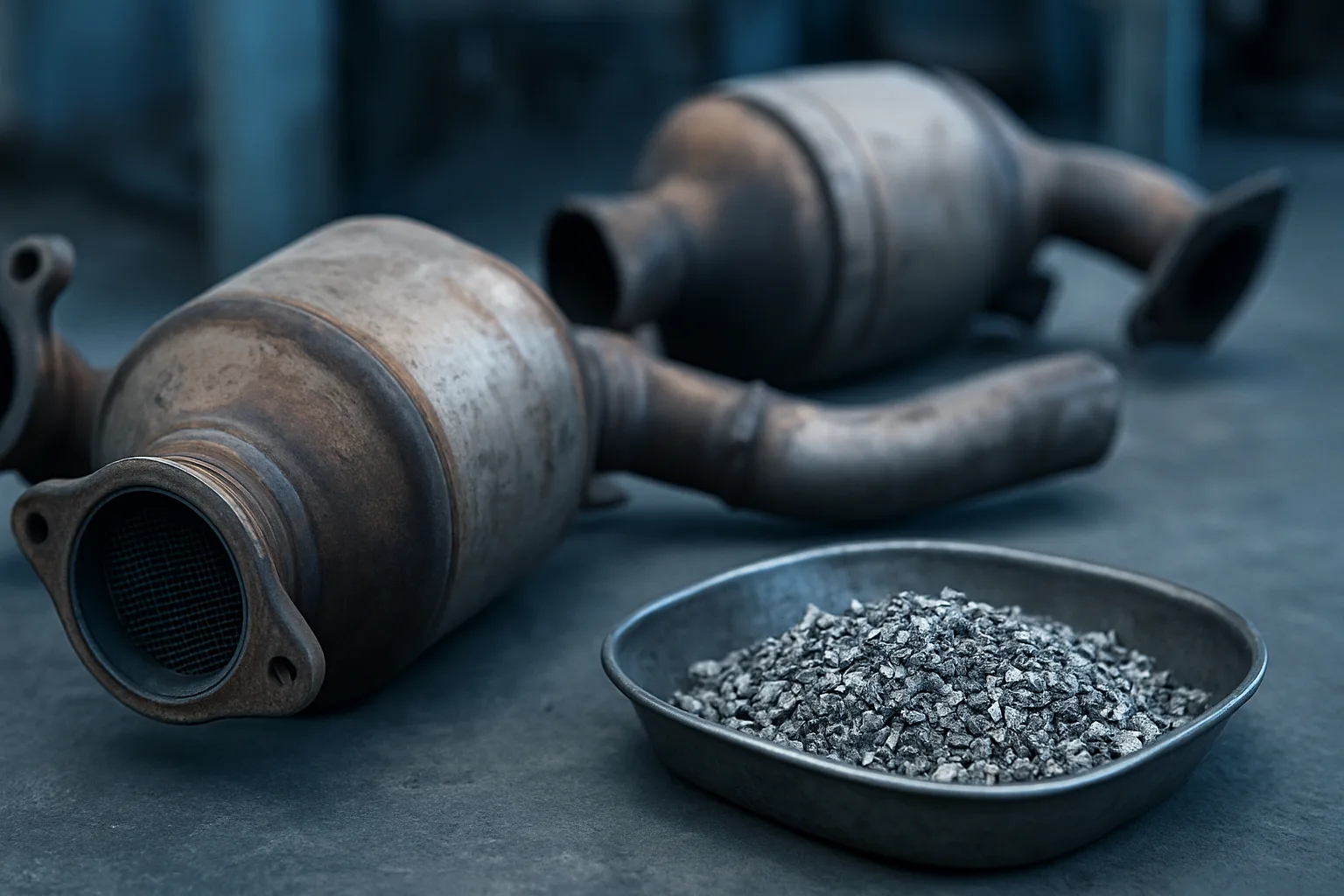
The value of any catalytic converter comes down to its platinum group metals (PGMs): platinum, palladium, and rhodium. These metals are embedded in the ceramic or metallic substrate inside the canister. When the converter is recycled, the substrate gets crushed, sampled, and assayed to determine exact PGM content. That assay drives the payout.
Each of these metals trades on the commodities market daily. Platinum price today, rhodium price today, palladium price today — all of it moves. Rhodium in particular has historically shown extreme price swings, which is why two identical-looking cats can be worth very different amounts depending on when you sell. The key point: your converter's grade reflects its PGM loading, and that loading is the foundation of every pricing conversation.
- Platinum (Pt): Common in diesel converters. More stable pricing but still market-sensitive.
- Palladium (Pd): Dominant in gasoline converters. High demand from automakers globally.
- Rhodium (Rh): Found in smaller amounts but often the most valuable by weight. Extremely volatile price.
Understanding which metals your converter contains — and in what proportion — tells you a lot about what tier it should land in. Buyers who assay properly know this breakdown cold. Sellers who walk in blind are guessing.
The Grading Tiers Explained: From Premium to Low-Grade
The industry doesn't use one single universal grading system — different buyers and processors have their own terminology. But the underlying logic is consistent. Here's how the tiers generally break down:
Premium / High-Grade Converters
These are OEM converters from higher-end vehicles — think trucks, SUVs, and performance models with larger engines that require more aggressive emissions control. OEM converter price for premium units reflects high PGM loading. A Ford F-250 with a diesel engine, a Toyota Tundra, certain Honda models — these vehicles are well known in the recycling industry for producing high-yield converters. If you're in the Bay Area and pulling parts from fleet vehicles or commercial trucks, you may be sitting on premium units without knowing it.
Standard / Mid-Grade Converters
The largest category by volume. Standard passenger cars — sedans, smaller SUVs, compact trucks — typically produce mid-grade converters with moderate PGM content. These are the everyday cats that recyclers handle in large quantities. Payout per unit is lower than premium, but they move fast and process efficiently. Consistent volume in mid-grade is often where auto shops and collectors in California build reliable revenue streams.
Low-Grade / Economy Converters
Smaller displacement engines, economy vehicles, older model years, and certain import makes tend to produce low-grade units. Lower PGM content means lower payout. Some of these units are still worth processing — just don't expect the same return as a premium diesel cat. The mistake sellers make here is assuming all converters from the same vehicle type are low-grade. Year, generation, and region of sale all affect this.
Aftermarket / Universal Converters
This is the bottom tier. Aftermarket converters are replacements — they're designed to meet emissions standards, not to maximize PGM loading. They contain significantly less platinum, palladium, and rhodium than OEM units. Some buyers won't touch them at all. Others buy them in bulk at a steep discount. If you've been sold an aftermarket cat as a high-value unit, you've been misled. Always check whether the converter is OEM or aftermarket before accepting any quote.
Exotic / High-Value Units
On the opposite end of the spectrum, certain specialized converters — particularly from luxury European vehicles, heavy equipment, or industrial machinery — can carry significantly higher PGM content than standard OEM units. These are relatively rare but worth knowing about. If you handle specialty vehicles or equipment in San Francisco or elsewhere in California, these units deserve individual attention rather than bulk pricing.
Why Physical Condition Affects Your Catalytic Converter Worth at Scrap Yard
Grade isn't only about chemistry. Physical condition matters too — and it directly affects your catalytic converter worth at scrap yard or with any online buyer. A cracked, rattling, or damaged converter has a compromised substrate. Broken substrate means PGM loss — the precious metal literally falls out. Buyers price that risk into their offer.
Here's what graders look at beyond the part number:
- Substrate integrity: Is the honeycomb inside intact or collapsed? Rattling when shaken is a red flag.
- End caps: Have they been cut, torched, or tampered with? Modified units raise questions about theft or substrate damage.
- Overheating damage: Extreme heat can destroy PGM content. Burned or discolored units often grade lower.
- Moisture and oxidation: Long-term exposure degrades substrate quality and affects recovery yields.
- Full unit vs. defanned: Some buyers price differently depending on whether the outer shell is intact.
Document your units with clear photos before you ship or quote anything. Photo documentation protects you from disputes and gives buyers the confidence to price fairly. Platforms like smashscrap.com make this process structured — photos, serial tracking, and grading documentation all in one place, so nothing gets lost in translation.
How to Use a B2B Scrap Metal Marketplace to Get Accurate Grading and Better Prices
Here's the core problem with selling locally through one buyer: you have no idea if the grade they assign is accurate, and no leverage to push back. A single buyer controls the grading conversation. You can accept it or walk. Most sellers accept it because they don't have a reference point.
A B2B scrap metal marketplace changes that dynamic. When multiple vetted buyers see your documented inventory and bid competitively, grading disputes resolve themselves. If one buyer low-balls a premium unit as mid-grade and another correctly identifies it and bids accordingly, you see the difference instantly. Competition can help reveal the market. More buyers means better price discovery. That's not a guarantee of higher prices — it's a structural advantage that single-buyer transactions can't offer.
SMASH operates exactly this way. You list your cats with documentation — photos, serial numbers, part identification — and vetted buyers submit competitive bids. No subscription fees. SMASH only wins when you do. For shops and collectors in San Francisco looking to get the best catalytic converter price today, this approach removes the guesswork from grading disputes entirely.
If you're wondering where to find catalytic converter recycling near me in the Bay Area, the honest answer is that local options vary wildly in how they grade and price. An online auction approach gives you access to buyers who specialize in cats, know the PGM market, and have an incentive to price your units accurately to win the bid.
Practical Tips for Sellers: Grade Your Cats Before You Quote Them
You don't need to be a metallurgist to do basic pre-sale grading. Here's a practical checklist before you check current catalytic converter prices or request any quote:
- Identify the part number. Most converters have a stamped or welded serial number on the body. This is the fastest way to categorize the unit. Buyers use large reference databases tied to these numbers.
- Confirm OEM vs. aftermarket. Aftermarket converters often have visible branding or non-OEM part numbers. Know what you have before pricing conversations start.
- Shake the unit gently. Loose or rattling material inside indicates substrate damage. Note it and disclose it upfront — hiding damage creates disputes.
- Photograph all sides. End caps, body, serial number, any visible damage. Good photos reduce back-and-forth and speed up quote turnaround.
- Check current PGM market prices. You don't need exact data — just a general read on whether platinum, palladium, and rhodium are trending up or down. Timing matters.
- Separate your units by apparent grade. Don't mix a premium diesel cat with a pile of economy aftermarket units. Buyers price mixed lots conservatively.
Taking these steps before you approach any buyer — local or online — puts you in a stronger position. You're not guessing. You have documentation, basic identification, and a read on current market conditions. That's what separates informed sellers from sellers who take whatever they're offered.
For deeper guidance on valuation, read catalytic converter pricing guides that break down pricing by make, model, and PGM trends across different market conditions.
The Bottom Line on Grading and What It Means for Your Sale
Catalytic converter grading isn't arbitrary. It's a data-driven process tied to real metal markets — platinum price today, palladium demand, rhodium volatility. The grade your unit receives determines your payout, and getting that grade right requires documentation, identification, and access to competitive buyers who have an incentive to price accurately.
Whether you're running an auto shop in San Francisco, collecting cats across California, or managing a recycling operation that handles volume, the approach is the same: know what you have, document it properly, and sell through a process that creates competition rather than accepting a single take-it-or-leave-it number.
SMASH gives sellers across North America that competitive structure. No cold calls, no guessing, no single-buyer leverage. If you're ready to move your inventory at prices that reflect actual market conditions, get the best price for your catalytic converter — get a free quote at best-catalytic-converter-price.com.
Disclaimer: Catalytic converter prices fluctuate based on daily PGM market movements. Always check current rates before finalizing any sale. Prices referenced in general terms reflect market-based dynamics and are not guaranteed offers.
Frequently Asked Questions
Q: How do I know what grade my catalytic converter is before I sell it online?
Start with the serial or part number stamped on the converter body. Most online buyers and platforms use reference databases tied to these numbers to assign grades. You can also confirm whether your unit is OEM or aftermarket — OEM units almost always grade higher. Document the physical condition with photos before requesting any quote.
Q: Does platinum price today affect what I'll get paid for my catalytic converter?
Yes, directly. Payout calculations are tied to live PGM spot prices — platinum, palladium, and rhodium. When platinum price today is higher, premium and mid-grade converters pay more. Timing your sale during favorable market conditions can meaningfully affect your return, especially on high-yield units.
Q: Is it better to sell catalytic converters online or take them to a local scrap yard in San Francisco?
Local scrap yards in San Francisco offer convenience, but typically a single take-it-or-leave-it price. Selling online through a platform like SMASH puts your inventory in front of multiple vetted buyers who compete for it. More competition means better price discovery. For high-grade or large-volume lots, online selling almost always outperforms a single local quote.
Q: What makes an aftermarket catalytic converter worth less at the scrap yard?
Aftermarket converters are built to meet emissions compliance — not to maximize precious metal content. They contain significantly less platinum, palladium, and rhodium than OEM units. At scrap, the PGM content drives the payout. Less PGMs means a lower grade and a lower price. Always know whether you have OEM or aftermarket units before accepting any offer.
Q: How many catalytic converters do I need to sell online to make it worth it?
Even a single high-grade converter can justify the process — especially if it's a premium OEM unit from a large-engine vehicle. For smaller or mid-grade units, batching inventory together typically improves your leverage and makes shipping logistics more efficient. Platforms like SMASH handle individual units and volume lots, so there's no minimum required to get started.
Stay current on scrap metal market trends and catalytic converter pricing — follow SMASH on LinkedIn for industry updates and market insights.