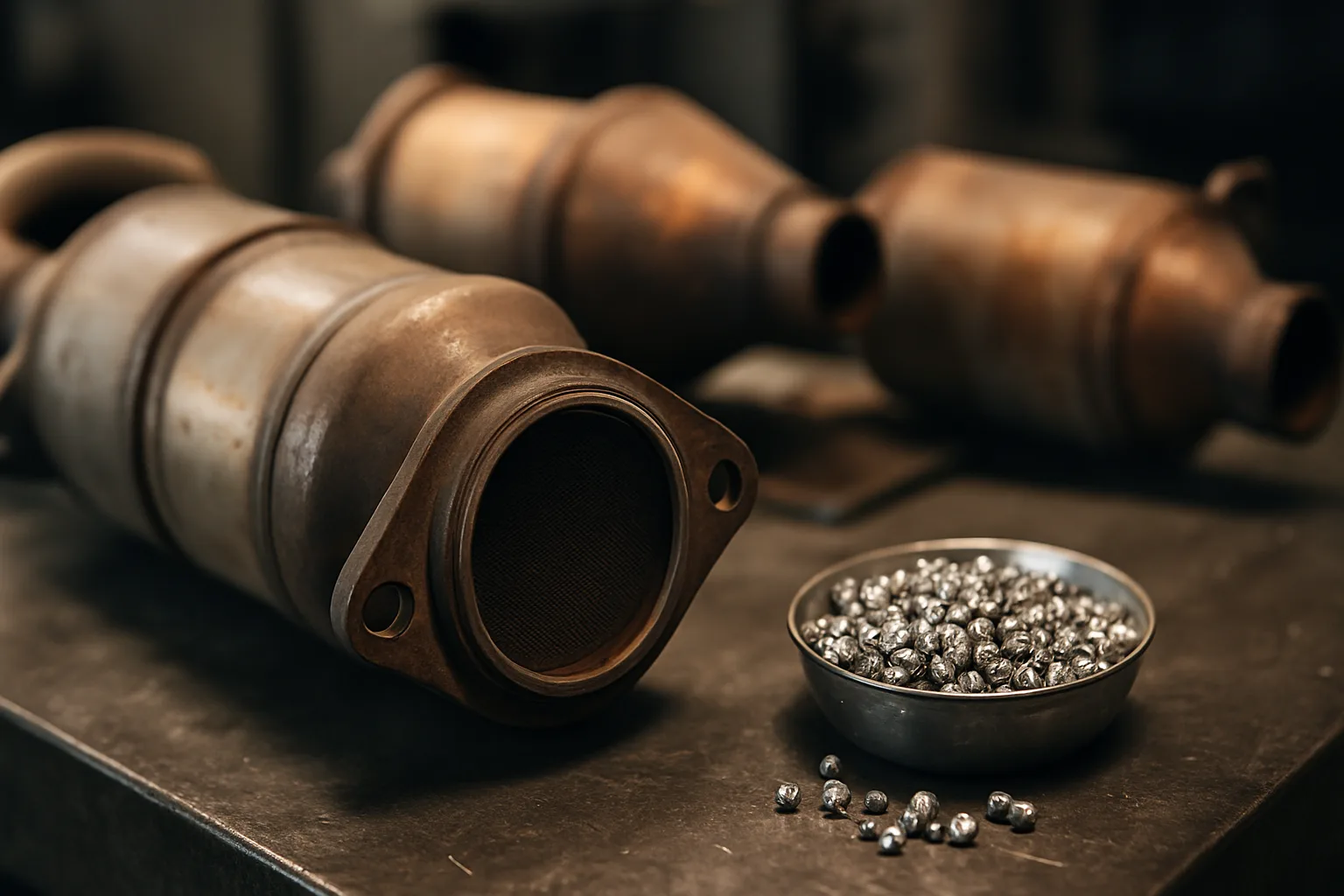
Most people selling scrap catalytic converters know the big names — the big GM cats, the foreign five-speeds, the DPFs. But foil and bead style converters? They're the ones that confuse sellers, get undervalued at the counter, and leave real money behind. If you're a catalytic converter buyer in Raleigh or a seller trying to understand what you've got, this breakdown will help you make smarter decisions.
Not all catalytic converters are built the same way. The internal structure — specifically how the precious metal catalyst is held — determines a lot about how it's processed and what it's worth. Foil and bead styles are two less-discussed converter types that show up regularly in scrap yards, auto shop bins, and recycling collections across North Carolina. Knowing the difference matters when you're trying to get the best catalytic converter price today.
What Are Foil Style Catalytic Converters?
Foil style converters use a metallic substrate — thin corrugated foil layers, typically made from a high-temperature stainless steel alloy — instead of the ceramic honeycomb you see in most OEM converters. This foil is rolled or layered into a tight structure, then coated with a washcoat that holds the precious metals: platinum, palladium, and sometimes rhodium.
These converters are most commonly found on motorcycles, small engines, European performance vehicles, and certain aftermarket applications. Because the substrate is metallic rather than ceramic, the processing method is different. You can't just crush and bag a foil cat the same way you handle a standard ceramic unit. The foil structure requires specific smelting and recovery processes, which affects where you can sell them and what buyers will pay.
Key traits of foil style converters:
- Metallic substrate (stainless foil layers, not ceramic)
- Lighter weight than ceramic OEM units
- Common on motorcycles, ATVs, European imports, and small-displacement engines
- Precious metal loading varies significantly by manufacturer and application
- Require specialized processing — not all buyers handle them
The precious metal content in foil converters can be competitive with ceramic units, but the recovery process is more involved. A buyer who doesn't process foil in-house will typically lowball you or pass entirely. That's why finding the right catalytic converter buyer in Raleigh — one who actually knows what they're looking at — makes a direct impact on what you walk away with.
What Are Bead Style Catalytic Converters?
Bead style converters are a different animal entirely. Instead of a honeycomb or foil substrate, they use small ceramic or alumina beads coated with platinum group metals (PGMs). The beads pack loosely inside the converter shell, creating a high-surface-area environment for exhaust gases to pass through and react with the catalyst.
You'll find bead style converters most often on older domestic vehicles — GM, Ford, and Chrysler models from the late 1970s through the mid-1980s. Some industrial applications still use bead-style catalyst beds today. If you've ever opened a scrap converter and heard rattling, that's usually beads. They tend to settle, break apart over time, and shift inside the canister.
What makes bead converters tricky:
- Beads can fall out if the converter is damaged or cut improperly
- Precious metal distribution is different than in honeycomb units — you can't visually assess loading the same way
- Older units may have degraded catalyst activity, but the PGM loading was often substantial in early designs
- Buyers unfamiliar with bead cats sometimes apply ceramic pricing, which may not reflect actual value
- Assay-based pricing (sending to a refiner and getting paid on actual PGM recovery) can be more accurate than flat rates
The bottom line: bead style converters deserve a closer look before you sell. Don't let a buyer wave them off as low-grade without getting a second opinion. Platforms that connect you with multiple vetted buyers — like SMASH — give you a better shot at price discovery rather than accepting the first number thrown at you. Get competitive bids for your scrap metal instead of settling for one offer.
Foil vs. Bead vs. Ceramic: How Scrap Value Compares
Here's where sellers get confused. They assume all catalytic converters price the same way — that there's one flat market and every unit gets the same treatment. That's not how it works. The substrate type, precious metal loading, vehicle application, and condition all factor into scrap catalytic converter value.
Generally speaking, the pricing hierarchy looks like this:
- High-grade OEM ceramic converters — typically the highest PGM loading, well-documented, easiest to price using serial numbers and VIN-based databases
- Foil style converters — value depends heavily on application and manufacturer; some command strong prices, others are modest; processed differently than ceramic
- Bead style converters — pricing is older and assay-dependent; some units carry significant PGM value, especially early domestic designs
- Aftermarket and generic units — typically low PGM loading by design; worth less than OEM equivalents
The real risk for sellers is treating every non-ceramic unit as scrap-of-last-resort. If you're in Raleigh and selling through a buyer who doesn't specialize in converter recycling, you may get a generic low-ball offer on a foil or bead unit that's actually worth real money. That's exactly the gap that catalytic converter recycling in Raleigh specialists and competitive platforms are built to close.
Disclaimer: Catalytic converter prices fluctuate based on platinum, palladium, and rhodium spot prices, which change daily. Always check current catalytic converter prices before selling.
Why Proper Identification Matters for Scrap Metal Prices Today
If you walk into a scrap yard in North Carolina with a mixed load of cats — some ceramic, some foil, one or two bead units — and the buyer doesn't separate them properly, you're likely leaving money on the table. The processing path for foil and bead is different from ceramic, and buyers who lump everything together are pricing to their risk, not to the actual value of your material.
Proper identification starts with documentation. For ceramic OEM converters, serial numbers and VIN lookups can connect a unit to known PGM loading data. For foil and bead units, identification requires knowing the vehicle make, model, year, and sometimes original equipment manufacturer — because foil substrate suppliers like Emitec (now part of EMICAT) and others produced units with varying precious metal specifications.
What good documentation does for you when you sell:
- Removes guesswork — buyers price with more confidence when they can verify the unit
- Supports competitive bidding — multiple buyers can evaluate the same documented lot
- Protects against undervaluation — you have a record of what you submitted
- Creates accountability on both sides — no disputes about what was in the load
SMASH builds documentation into the process — photo records, serial tracking, and load details that give buyers enough information to bid accurately. That's how scrap metal prices today actually get reflected in what sellers receive, rather than getting averaged down by uncertainty.
How to Sell Foil and Bead Catalytic Converters for Maximum Value
Selling specialty converter types takes a bit more work than dropping a standard ceramic cat at the counter, but the payoff is worth it. Here's a practical approach for sellers in Raleigh and across North Carolina:
- Identify what you have before you sell. Don't mix foil and bead units in with standard ceramic loads without flagging them. Keep them separate and note the vehicle source if you have it.
- Photograph every unit. Good photos — both ends, the exterior shell, any visible markings or heat shields — give remote buyers the information they need to price accurately when you sell catalytic converter online.
- Get multiple bids. One buyer with one number is never the market. Especially with foil and bead units, which fewer buyers handle confidently, competition reveals real value.
- Ask about processing method. Does the buyer process foil in-house or broker it out? That affects what they can actually pay. A buyer who sends foil to a third-party refiner at a discount will pass that haircut to you.
- Consider assay pricing for bead lots. If you have a meaningful quantity of bead converters, asking for assay-based pricing — where you get paid on actual PGM recovery — can outperform flat-rate offers, especially on older domestic units with unknown loading.
Platforms like SMASH connect sellers with vetted buyers who understand specialty converter types. Instead of cold-calling yards and hoping someone knows what a foil substrate is, you post your load with documentation and let qualified buyers compete. That's how used catalytic converter scrap value actually gets realized, not just quoted and discounted. You can also read catalytic converter pricing guides to sharpen your knowledge before you sell.
For sellers working with Raleigh scrap metal services, understanding these converter types puts you in a stronger negotiating position from the first conversation.
The Market Reality for Platinum, Palladium, and Rhodium in 2026
The value of every catalytic converter — foil, bead, or ceramic — is anchored to the spot prices of platinum group metals. Platinum, palladium, and rhodium move independently and can shift substantially over short periods. Rhodium, in particular, has a history of dramatic price swings that directly impact the value of high-loaded OEM converters.
In 2026, the PGM market continues to reflect pressure from multiple directions: automotive industry transitions, mining supply constraints in South Africa and Zimbabwe, and evolving industrial demand from hydrogen fuel cell development. None of that means prices are predictable — it means they're always moving, and selling on a strong day versus a weak one can make a real difference on a large lot.
This is why timing, competition, and documentation all work together. You can't control the market, but you can control whether you're selling to one buyer with no pressure or to multiple vetted buyers who are actively competing for your material. For anyone looking to maximize their cat converter value in North Carolina, the structure of the sale matters as much as the structure of the converter.
When you're ready to move your cats — whether you've got foil units off motorcycles, bead converters from older domestic vehicles, or a mixed load of OEM ceramics — the smartest move is to work with buyers who actually process these materials and know what they're worth. Get the best catalytic converter price today by putting your load in front of real competition, not just the first number you hear.
Frequently Asked Questions
Q: How do I know if my catalytic converter is foil, bead, or ceramic style?
The easiest method is to shake the converter gently — if you hear rattling, it's likely a bead style unit. Foil and ceramic units are typically silent. A cross-section or end-view of the substrate will show the metallic foil layers versus ceramic honeycomb. If you're unsure, a knowledgeable catalytic converter buyer in Raleigh can help identify the unit before you commit to a price.
Q: Are foil catalytic converters worth less than ceramic ones?
Not necessarily. Some foil units carry significant PGM loading and command strong prices when processed by the right buyer. The issue is that fewer buyers handle foil substrates in-house, which can result in lower offers from general scrap yards. Getting multiple bids — especially from specialized buyers — helps ensure you're not undervaluing foil material.
Q: Can I sell catalytic converters online from Raleigh, North Carolina?
Yes. Platforms like SMASH allow sellers across North Carolina to document and list their converters for competitive bidding from vetted buyers. You handle documentation and shipping logistics, and buyers compete on price rather than you accepting a single counter offer. It's one of the most practical ways to sell catalytic converter online and actually reach the market.
Q: What precious metals are in foil and bead style converters?
Both types use platinum group metals — primarily platinum and palladium, with some rhodium depending on the manufacturer and application. The specific loading (how much PGM per unit) varies widely by vehicle make, model year, and original equipment specifications. That's why blanket flat-rate pricing on specialty converters often underrepresents actual value.
Q: How do scrap metal prices today affect what I get for a catalytic converter?
Directly. Every catalytic converter price is tied to live platinum, palladium, and rhodium spot prices. When PGM prices rise, converter values go up — and vice versa. Always check current PGM spot prices before selling a significant lot, and work with buyers who price transparently against current market data rather than internal flat rates that may lag the real market.
Ready to find out what your foil or bead converters are actually worth? Get the best price for your catalytic converter by requesting a free quote at best-catalytic-converter-price.com — and put your material in front of buyers who know the difference.
Stay current on PGM markets, scrap metal pricing trends, and catalytic converter industry news by following SMASH on LinkedIn — practical insights for recyclers, auto shops, and collectors who want to sell smarter.
```