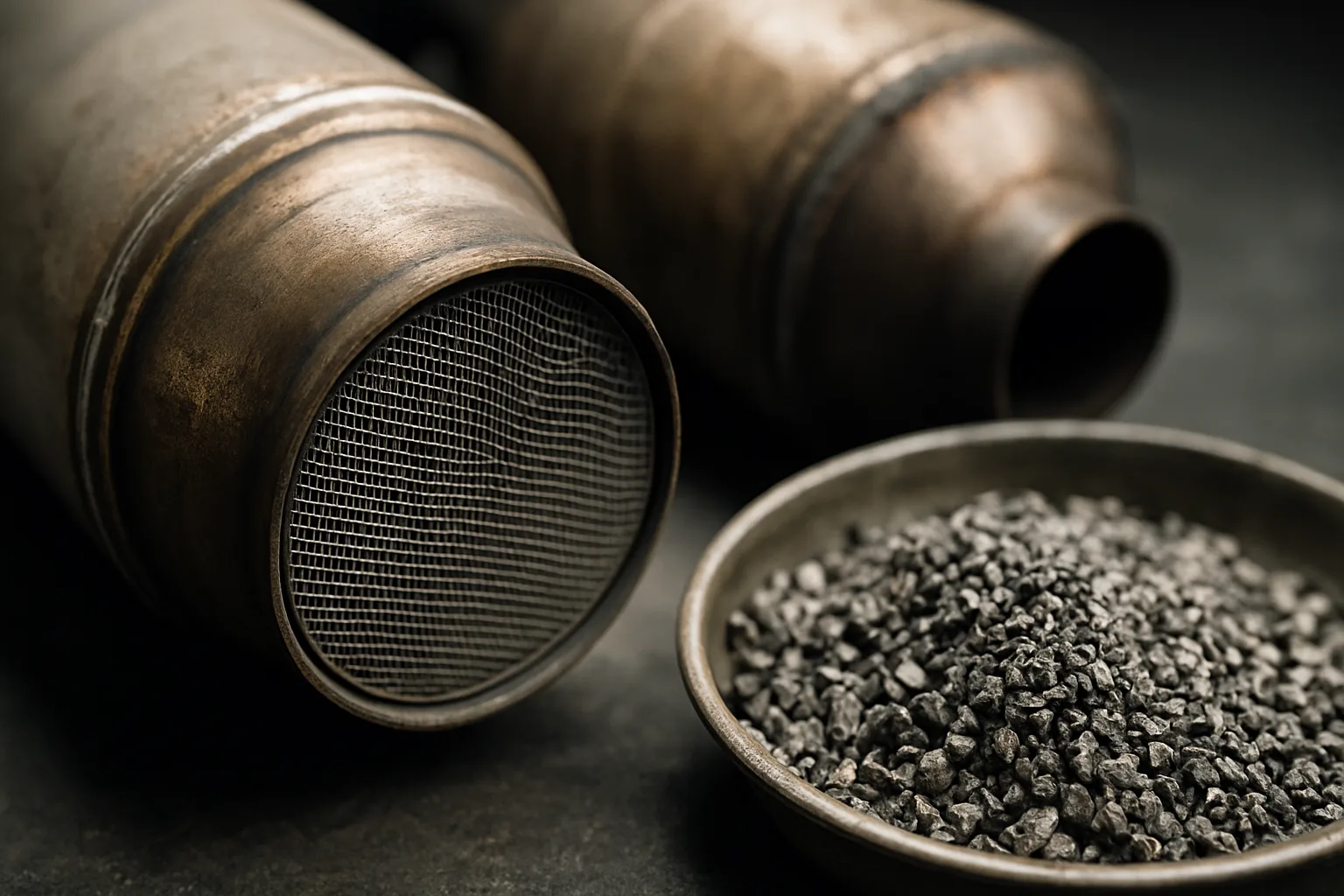
Most people selling scrap cats are leaving money on the table — not because they got a bad deal, but because they didn't know what they were actually selling. Diesel converters and gasoline converters look similar from the outside. Inside, they're completely different machines with different metals, different values, and different buyers. If you're sitting on a pile of diesel units from a fleet job in El Paso or pulling DOCs off a construction site in Texas, knowing the difference before you sell matters more than you think — especially when the platinum price today is moving.
What's Actually Inside a Diesel Converter vs. a Gasoline Converter
Gasoline catalytic converters run on a three-way catalyst. They use a combination of platinum, palladium, and rhodium to handle three emissions — hydrocarbons, carbon monoxide, and nitrogen oxides — at the same time. The substrate is typically a ceramic honeycomb coated with a washcoat loaded with those precious metals. Rhodium is the expensive one in these units. It's rare, it's reactive, and it's why some gasoline cats fetch strong prices even from compact cars.
Diesel converters don't work the same way. A diesel exhaust system typically uses two main components:
- DOC (Diesel Oxidation Catalyst): Handles hydrocarbons and carbon monoxide. Uses platinum and palladium, but no rhodium. The platinum loading is often higher than in gasoline units.
- DPF (Diesel Particulate Filter): Captures soot particles from the exhaust. Uses platinum, sometimes palladium, but in lower concentrations. The substrate is a wall-flow ceramic — much denser than a standard cat.
The absence of rhodium in diesel units is the critical difference when it comes to scrap value. Rhodium has historically been the highest-priced of the three platinum group metals (PGMs). Diesel DOCs can carry a meaningful platinum load, but they don't carry the same rhodium punch that makes some gasoline cats so valuable. That said, large diesel DOCs from heavy equipment — think Class 8 trucks, mining machines, or agricultural equipment — can still be serious earners because of sheer platinum volume.
How the Platinum Price Today Affects Diesel vs. Gasoline Cat Values Differently
The platinum price today directly affects DOC values more than DPF values. A DOC substrate is actively loaded with platinum to catalyze oxidation reactions. When platinum is trading strong, DOC values climb accordingly. DPFs, on the other hand, use platinum more sparingly — they're filtering physical particles, not running chemical reactions at the same intensity — so their value per unit tends to run lower than a comparable DOC.
Palladium also plays into diesel pricing. Palladium has seen significant volatility over the past several years, and DOCs that carry a palladium component in the washcoat will reflect those swings. Here's the core takeaway for anyone selling diesel units:
- Gasoline converter value = heavily influenced by rhodium and palladium
- Diesel DOC value = driven primarily by platinum, secondarily by palladium
- Diesel DPF value = driven by platinum, but typically lower loading per unit
This is why a buyer quoting you a price on a "catalytic converter" without distinguishing between diesel and gasoline units is giving you a bad number. The metals aren't the same. The refining process isn't the same. The value isn't the same. Before you accept any number, make sure your buyer is separating these out — or you're leaving real money behind.
Prices fluctuate daily based on PGM spot markets. Always check current catalytic converter prices before selling.
DPF vs. DOC: Which Is Worth More at the Scrapyard?
For most scrap collectors and shops in El Paso, DOCs are generally the higher-value diesel unit to focus on. They carry more platinum per unit and go through a more straightforward smelting and assay process at refiners. A DOC from a heavy-duty pickup or a commercial truck can return a meaningful price — but that number is only accurate if the buyer is testing it properly, not guessing by make and model alone.
DPFs are trickier. The wall-flow substrate traps not just soot but also oil ash and other contaminants over time. A clogged, oil-soaked DPF has lower recoverable metal content than a clean one. Some refiners discount heavily for contaminated DPFs, and some scrapyards don't distinguish at all — they'll give you a flat low number and move on. That's where a scrap metal auction platform like SMASH changes the equation. Instead of one buyer setting a number without full disclosure, competitive bidding lets the market find a real price based on what's actually in the unit.
Here's what affects DPF and DOC values at the point of sale:
- Unit size (light-duty pickup vs. Class 8 truck — weight and substrate volume matter)
- OEM manufacturer (some OEMs run higher PGM loadings than others)
- Condition (soot loading, oil contamination, physical damage to the substrate)
- Volume — selling 50 units moves differently than selling 5
- Current platinum and palladium spot prices
Selling Diesel Cats in El Paso and Texas: What the Local Market Looks Like
El Paso sits at a unique intersection for scrap catalytic converters. The city's proximity to major freight corridors, cross-border trucking, and a strong construction and agriculture sector in West Texas means diesel exhaust components flow through here regularly. Fleet operators, diesel repair shops, and equipment yards all generate DOCs and DPFs. The question is whether sellers are getting a fair shake.
The traditional path — call your regular buyer, accept whatever they offer — doesn't account for market conditions on any given day. A catalytic converter buyer El Paso who operates on a flat price sheet isn't adjusting for the platinum price today. They're adjusting for their margin. That's a different number entirely. For anyone moving volume, whether it's a shop cleaning out a year's worth of diesel repairs or a fleet maintenance yard in Texas processing vehicle end-of-life units, that gap between "what the buyer offers" and "what the market would pay" compounds fast.
If you're in El Paso or anywhere across Texas selling diesel units, connecting with a platform that puts your inventory in front of multiple catalytic converter buyers Texas is the move. You can also explore El Paso scrap metal services to get a local quote backed by real market pricing.
Platforms like SMASH are built for exactly this scenario. List your diesel cats with proper documentation — photos, unit identification, condition notes — and let competitive bidding surface the real market price. No subscription fees. No guessing. To get the best catalytic converter price today, the process starts with making sure multiple buyers see what you have.
How to Document and Sell Diesel Catalytic Converters the Right Way
Documentation separates a fast, fair sale from a prolonged negotiation or a bad number accepted out of frustration. Diesel units are harder to identify by visual inspection than gasoline cats. A DOC and a DPF can look almost identical from the outside. Buyers making serious offers need to know what they're bidding on.
Here's how to prep diesel cats for sale:
- Photograph every unit clearly. Both ends of the substrate, the body, and any visible markings or stamps. Substrate condition matters — cracked, melted, or oil-soaked units will be valued differently.
- Identify DOC vs. DPF. If you're pulling these from vehicles you serviced, note which is which. If you're buying in bulk, ask the seller. This single step affects valuation significantly.
- Note the vehicle source if possible. Heavy-duty diesel (Class 7-8 trucks, equipment) vs. light-duty diesel (pickup trucks, passenger vehicles) matters for substrate size and PGM loading estimates.
- Weigh your units. Buyers working with you remotely or through a platform like SMASH need weights to estimate value accurately. Don't skip this.
- Don't break open substrates. Damaged substrates lose material. Sell them intact.
When you have your inventory documented and ready, find the best price for your scrap on SMASH and let qualified buyers compete for it. That competitive pressure is what turns a flat number into a real market price. You can also read catalytic converter pricing guides to understand what drives value before your next sale.
The Bottom Line on Diesel vs. Gasoline Converter Value
Diesel DOCs and DPFs aren't the same as gasoline cats. They use different metals, in different concentrations, for different chemical purposes. Their value moves differently when the platinum price today shifts versus when rhodium spikes. Treating them as interchangeable at the point of sale is how sellers get underpaid.
Know what you have. Document it properly. Sell through a process that puts your inventory in front of multiple buyers — not just the one on speed dial who's been giving you the same flat number for three years. Whether you're a diesel shop in El Paso running through units every week or a collector in Texas who picked up a load of fleet vehicles, the difference between one buyer and competitive bidding is real money.
If you're ready to see what your diesel cats are actually worth, get a free quote at best-catalytic-converter-price.com. No pressure. No subscription. Just a real number based on what's in the market right now.
Frequently Asked Questions
Q: Are diesel catalytic converters worth less than gasoline converters?
Not always — but they're different. Diesel DOCs can carry strong platinum loads and return solid prices, especially from heavy-duty applications. However, since diesel units don't contain rhodium (one of the highest-value PGMs found in gasoline cats), their value profile is different. The platinum price today is the key variable for diesel unit pricing.
Q: What's the difference between a DPF and a DOC for scrap value?
A DOC (Diesel Oxidation Catalyst) is generally higher-value because it carries more active platinum and palladium in the washcoat. A DPF (Diesel Particulate Filter) uses platinum more sparingly and can be discounted further if the substrate is contaminated with oil or heavy soot loading. When selling, separate these two and get individual quotes where possible.
Q: Where can I sell diesel catalytic converters in El Paso?
You have local scrapyard options in El Paso, but local buyers often price off flat rate sheets that don't reflect daily PGM movements. A better approach is using a platform like SMASH that puts your inventory in front of multiple vetted buyers across the U.S., including catalytic converter buyers Texas and beyond, and lets the market set the price through competitive bidding.
Q: How does the platinum price today affect what I get for a diesel cat?
Platinum is the primary PGM in diesel DOCs. When platinum spot prices rise, the theoretical value of a DOC substrate rises with it. However, what a buyer actually pays depends on their refining yields, processing costs, and margin expectations. Selling competitively — through an auction format rather than a single buyer — is the most reliable way to capture more of that market value.
Q: Do I need to separate DOCs and DPFs before selling a large batch?
Yes, if you want accurate pricing. Mixing DOCs and DPFs in a single lot means buyers either have to guess the composition or apply a conservative blanket number that doesn't favor the seller. Sorting by type, and noting condition and approximate vehicle source for each group, gives buyers the confidence to bid higher. Documented inventory consistently supports better price discovery.
Follow SMASH on LinkedIn for scrap metal market updates, PGM pricing insights, and industry news across North America.