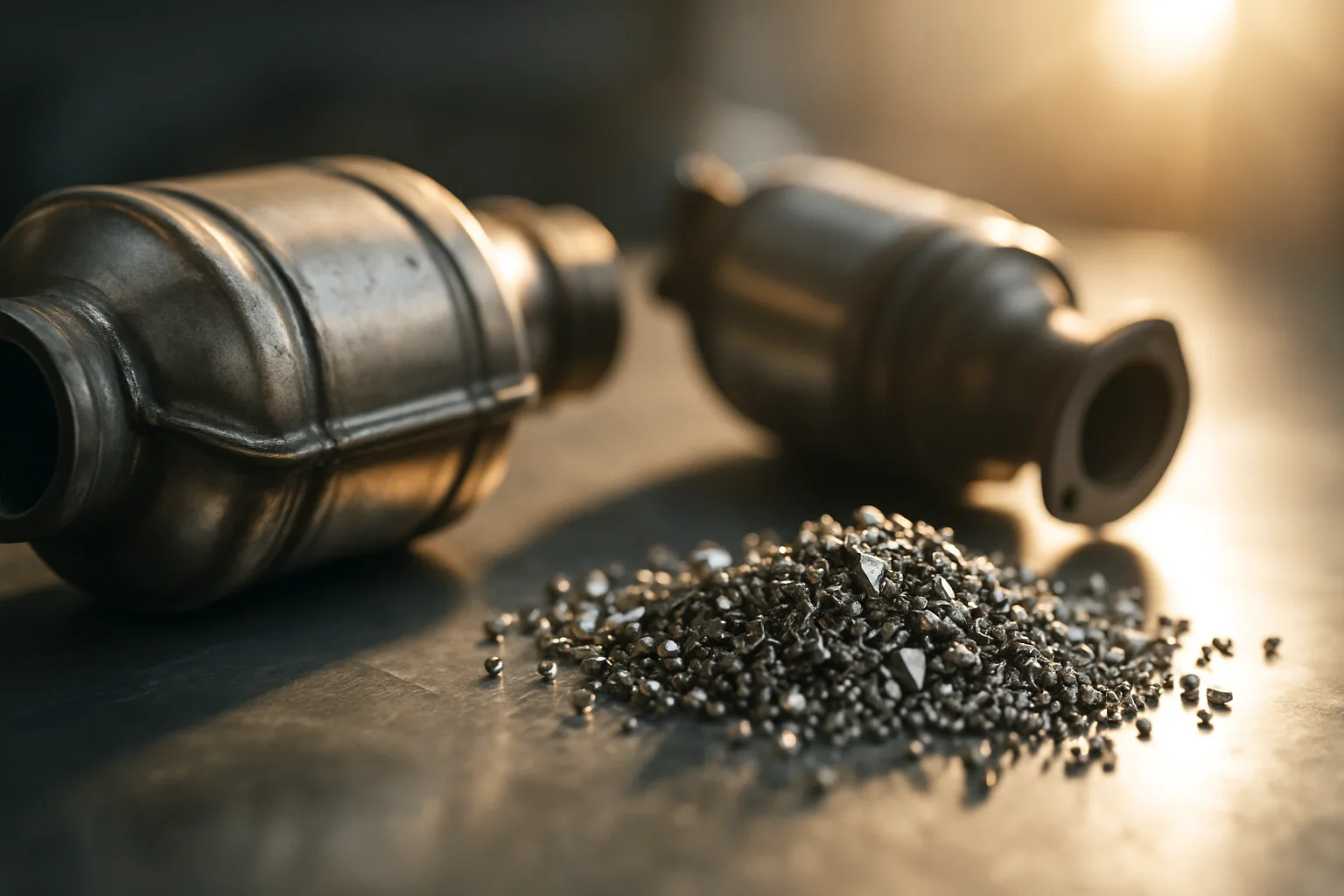
Most people selling a scrap catalytic converter are thinking about one thing: catalytic converter scrap value. That's fair. But there's a bigger story behind every cat you pull off a vehicle — one that affects air quality, precious metal supply chains, and what your converter is actually worth in the first place.
Proper recycling isn't just good for the planet. It's the reason palladium, platinum, and rhodium can be recovered and reused — keeping demand for newly mined metals in check and keeping prices tied to real market conditions. If you're in El Paso or anywhere across Texas, understanding this connection can help you make smarter decisions when you sell.
Why Catalytic Converters Matter Beyond Your Exhaust Pipe
A catalytic converter does one job: it converts harmful exhaust gases — carbon monoxide, nitrogen oxides, hydrocarbons — into less harmful emissions before they hit the atmosphere. It does this using a ceramic or metallic substrate coated with platinum, palladium, and rhodium. These are among the rarest metals on Earth, and they work because of chemistry, not combustion.
When a converter reaches end-of-life, those metals don't disappear. They're still in there, embedded in the substrate. The question is whether they get properly extracted — or whether the converter ends up in a landfill, crushed beyond use, or processed irresponsibly by a buyer who doesn't have the equipment to recover the metals correctly.
Responsible recycling means:
- Precious metals get recovered and re-enter the supply chain
- Less pressure on mining operations to extract new platinum group metals (PGMs)
- Fewer toxic materials entering soil and groundwater
- A traceable, documented chain of custody for regulated materials
That last point matters more than most sellers realize. Regulatory scrutiny around catalytic converter sales has increased significantly across the U.S. in recent years, and Texas has its own documentation requirements for sellers. Proper recycling isn't just environmentally responsible — it keeps you legally protected.
The Connection Between Recycling and Catalytic Converter Scrap Value
Here's something most casual sellers don't connect: the palladium price today — and by extension, your converter's value — is directly influenced by how efficiently the recycling industry recovers PGMs from scrap. When recovery rates are high, secondary supply helps balance primary mining output. When recovery is poor or supply chains are disrupted, prices swing harder.
Palladium and rhodium prices have seen significant volatility over the past several years. Rhodium in particular hit historic highs before correcting sharply. That volatility didn't happen in a vacuum — it reflected tightening supply from primary mines in South Africa and Russia combined with rising demand from vehicle manufacturers who couldn't source enough metal through secondary (recycled) channels.
The cleaner and more efficient the recycling process, the more stable the secondary supply. And a stable secondary supply means your converter gets priced based on actual metal content — not panic buying or artificial scarcity. That's a better market for everyone, including you as a seller.
Platforms that help you get the best catalytic converter price today aren't just matching you with buyers — they're connecting you to a chain of custody that runs from your yard all the way to a processor who can properly assay and recover the metals inside your converter.
What Happens to a Catalytic Converter During Proper Recycling
Most sellers hand off a converter and never think about what happens next. Here's the actual process when recycling is done right:
- De-canning: The metal shell is cut open and the ceramic or metallic substrate (called the "cat") is removed. The steel shell has its own scrap value — typically lower than the substrate itself.
- Assaying: The substrate is sampled and analyzed for PGM content. This is where your price gets determined. A credible processor assays by weight and metal concentration, not by eyeballing the converter type.
- Smelting and refining: The substrate is smelted at high temperatures. PGMs are separated from base metals and refined to commodity-grade purity.
- Re-entry into the supply chain: Recovered platinum, palladium, and rhodium are sold back to manufacturers — including automakers and electronics producers — reducing the need for newly mined metal.
When this process is shortcut — by processors who skip proper assaying, underreport metal content, or sell converters overseas without documentation — you lose money and the environmental benefit disappears. You want your converter going to a buyer who's connected to a legitimate refinery, not a middleman who profits from the gap between what they pay you and what they recover.
If you're looking to check current catalytic converter prices before you sell, knowing what goes into proper recycling helps you ask the right questions and identify buyers who actually pay fair market value.
Selling Scrap Catalytic Converters in Texas — Local Context
Texas generates a significant volume of scrap catalytic converters. Between the commercial trucking industry, oil field vehicles, a dense network of auto recyclers, and a large population of aging vehicles, the state feeds a consistent stream of cores into the secondary PGM market. El Paso specifically sits at a crossroads — geographically and commercially — that makes it an active market for scrap metal of all kinds.
If you're looking to sell catalytic converters in Texas, you're operating in a state with specific documentation rules around converter sales. Texas law requires sellers to provide identification and documentation for catalytic converter transactions — a direct response to the theft wave that affected the state heavily through the early 2020s. This isn't a barrier — it's actually a filter that pushed irresponsible buyers out of the market.
For sellers in El Paso, El Paso scrap metal services that operate within proper legal and environmental frameworks are your best option. You're not just protecting yourself legally — you're ensuring your converter goes to a processor who can actually recover its full value.
The competitive buying landscape in Texas means that if you're only calling one buyer, you're leaving money on the table. That's where North America's B2B scrap metal auction platform changes the equation — by bringing multiple vetted buyers into competition over your material, rather than letting a single buyer set the price unchallenged.
How SMASH Supports Responsible Scrap Converter Recycling
SMASH isn't just about getting you a better number. The platform is built around documentation, transparency, and vetted buyer networks — all of which directly support responsible recycling outcomes.
When you list converters through SMASH, you're working with a system that requires photo documentation, proper identification of converter types, and accurate weight and condition data. That level of detail doesn't just help buyers bid with confidence — it creates a paper trail that supports legitimate recycling and protects sellers under Texas documentation requirements.
Here's what that looks like in practice:
- Photo documentation: Buyers see exactly what they're bidding on. No surprises, no disputes, no pressure to accept a lowball offer based on a vague description.
- Vetted buyers: You're not selling to an unknown middleman. SMASH connects sellers with buyers who are accountable within the platform.
- Auction format: Competition reveals the market. One phone call to one buyer gives you one price. Multiple buyers competing gives you market price discovery.
- No subscription fees: SMASH only wins when you do. There's no monthly cost to access the platform.
Responsible recycling and fair pricing aren't competing interests — they reinforce each other. A transparent, documented sale is the foundation of both. If you want to read catalytic converter pricing guides that help you understand what your material is worth before you list it, that knowledge makes you a sharper seller.
How to Maximize Your Catalytic Converter Scrap Value While Recycling Responsibly
These two goals — getting the best price and recycling properly — point in the same direction. Here's how to pursue both at once:
- Identify your converter type before selling. OEM converters, aftermarket converters, and diesel particulate filters all carry different PGM loads. Knowing what you have prevents you from accepting a generic price for a high-value unit.
- Document everything. Photos, VIN (where applicable), vehicle make and model, and weight. This protects you legally and gives buyers the data they need to bid accurately.
- Don't sell to the first buyer who calls. Single-buyer pricing is almost always below market. Competition is how you find out what your material is actually worth.
- Choose buyers connected to legitimate processors. Ask where your converters are going. A credible buyer can tell you.
- Check current market conditions. Palladium, platinum, and rhodium prices move. Selling when the market is strong — and knowing when that is — requires staying informed.
If you're handling volume — multiple loads, regular pickups, or a growing inventory of cores — the difference between a single-buyer relationship and a competitive auction format compounds fast. Sellers across Texas who have moved to a platform-based approach consistently report that transparency and competition change the conversation with buyers entirely.
Doing this right doesn't require a chemistry degree. It requires choosing the right platform and the right buyers. When you're ready, get the best catalytic converter price today by connecting with a system built for sellers who want fair value and a clean transaction.
Disclaimer: Catalytic converter prices fluctuate based on platinum, palladium, and rhodium spot prices, converter type, and market conditions. Always check current rates before selling.
Frequently Asked Questions
Q: Does recycling a catalytic converter properly really affect its scrap value?
Yes — indirectly but meaningfully. When recycling is done properly, more PGMs re-enter the secondary supply chain. That secondary supply helps stabilize prices for platinum, palladium, and rhodium, which means your converter's value is priced against real market conditions rather than distorted supply dynamics. Proper recycling supports the market structure that determines your payout.
Q: What documentation do I need to sell a catalytic converter in Texas?
Texas law requires sellers to provide valid identification and, in many cases, documentation tying the converter to a vehicle — such as a title or bill of sale. Requirements can vary by buyer and jurisdiction, so confirm with your buyer before completing a transaction. Selling through a platform with built-in documentation tools helps you stay compliant from the start.
Q: How do I know if a catalytic converter buyer in El Paso is legitimate?
A legitimate buyer will ask for documentation, be able to tell you how they process converters, and won't offer a vague or suspiciously low price without examining your material. In El Paso, working with buyers connected to vetted platforms — rather than anonymous cash buyers — gives you accountability and recourse if something goes wrong.
Q: What metals are inside a scrap catalytic converter and why do they matter?
Most catalytic converters contain platinum, palladium, and rhodium — known collectively as platinum group metals (PGMs). These metals drive your converter's scrap value. The exact concentration varies by vehicle make, model, year, and whether the converter is OEM or aftermarket. An accurate assay from a credible processor is the only way to know exactly what you're working with.
Q: Can I sell catalytic converters online from Texas?
Yes. Platforms designed to help you sell scrap metal online — including catalytic converters — allow you to reach multiple vetted buyers without being limited to local buyers. SMASH connects sellers across North America, including Texas, with competitive buyers through an auction format that supports price discovery and proper documentation.
The right sale isn't just about the number — it's about knowing your material ends up where it should, processed correctly, by a buyer who paid you what it's actually worth. If you're in El Paso or anywhere across Texas, that starts with connecting to the right platform. Get the best price for your catalytic converter and get a free quote at best-catalytic-converter-price.com.
Follow SMASH on LinkedIn for industry updates, scrap metal market insights, and platform news.