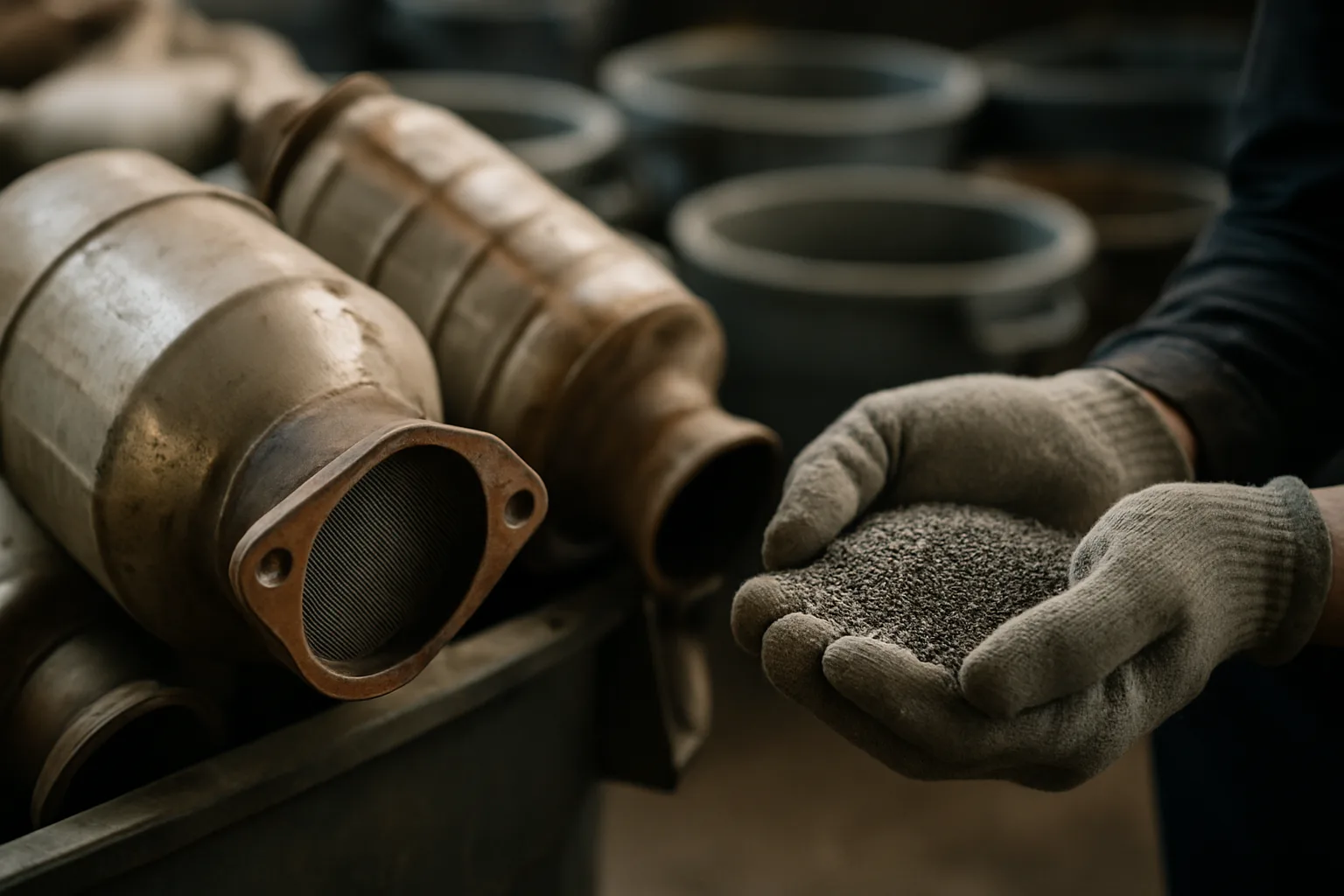
The Catalytic Converter Buying Market Has a Scam Problem — Here's What You Need to Know
If you've ever tried to sell a scrap catalytic converter and walked away feeling like you left money on the table, you're not alone. The cat converter market is one of the most opaque corners of the scrap metal industry — and that opacity creates the perfect conditions for buyers who are more interested in your ignorance than the platinum price today. Knowing how the scams work is the first step to making sure they don't work on you.
This isn't a scare piece. It's a practical guide for individuals, auto shops, and scrap collectors — especially those operating in and around Milwaukee and greater Wisconsin — who want to sell catalytic converters at a fair, market-based price. Let's break down the most common plays dishonest buyers use, and how you can protect yourself.
Why Catalytic Converters Are a Target for Buyer Fraud
Cats are worth real money. The precious metals inside — platinum, palladium, and rhodium — fluctuate daily based on global commodities markets. On any given day, a single high-grade OEM converter from a late-model truck or SUV could carry significant value. The problem is that most sellers don't know exactly what they have, and some buyers exploit that gap aggressively.
The value of your scrap catalytic converter isn't printed on the outside. It depends on the make, model, year, substrate condition, and the current platinum price today — along with palladium and rhodium spot prices. Buyers who don't explain how they're valuing your cat are either guessing or hiding something. Neither is acceptable when you're leaving real dollars on the table.
- Platinum, palladium, and rhodium prices shift daily — sometimes sharply
- OEM converters typically carry more value than aftermarket units
- Internal substrate condition matters — cracked or hollowed cats pay less
- Serial numbers and VINs help verify authenticity and match to assay data
The Most Common Scams Targeting Catalytic Converter Sellers
These aren't hypothetical. These are plays that show up repeatedly in yards and parking lots across Wisconsin, and they cost sellers real money. Learn to recognize them before you're in the middle of a transaction.
1. The Low-Ball "Cash Now" Offer
A buyer — sometimes a roaming buyer, sometimes a scrap yard — offers you a flat cash price on the spot. They make it sound urgent. "I can only do this today." That pressure is intentional. They're betting you won't check the platinum price today, look up your cat's serial number, or get a second opinion. The offer is almost always well below actual market value. If you're in Milwaukee or surrounding areas, this tactic shows up at shops and auctions alike.
2. Bait-and-Switch Grading
You bring in a high-grade cat. The buyer examines it, initially agrees it looks good, then comes back with a lower number — citing supposed internal damage, aftermarket concerns, or "updated" spot prices. In reality, nothing changed. They're hoping you've already committed mentally and won't walk away. Walk away. Always.
3. Fake or Manipulated Assay Results
Some converters are purchased based on assay — a process where the cat is smelted and tested for actual precious metal content. Legitimate assays are verifiable. The scam version involves buyers showing you "results" from an in-house process you can't verify, then pricing your cat below what the assay actually showed. Without third-party verification, you have no way to confirm you're seeing real numbers.
4. Swapping Your Cat Before Assay
This one's serious. You drop off a load of cats for assay processing. Somewhere between drop-off and results, higher-grade units get swapped out and replaced with lower-value ones. When results come back, your payout reflects the substituted cats — not the ones you actually brought in. Photo documentation and serial tracking aren't just nice to have. They're your protection against this kind of fraud.
5. Unlicensed or Unvetted "Buyers"
Fly-by-night buyers — sometimes operating out of unmarked vehicles or pop-up locations — offer quick cash for cats with no paperwork, no documentation, and no accountability. Some of these operations are tied to theft networks. Beyond the legal risk of unknowingly dealing in stolen converters, you have zero recourse if something goes wrong. In Wisconsin, regulations around catalytic converter transactions have tightened in recent years — dealing with unlicensed buyers puts you at legal risk, not just financial risk.
How to Protect Yourself: What Legitimate Transactions Look Like
The best defense against scams is knowing what a clean, transparent transaction looks like — and refusing to accept anything less. Here's the standard you should hold every buyer to before you hand over a single cat.
- Get everything in writing. Price, grade, quantity, date. No verbal-only deals.
- Document your load before drop-off. Photos of every converter, serial numbers recorded, VINs matched where applicable. This protects you in assay situations.
- Ask how they're pricing your cats. Any legitimate buyer can tell you which market reference they're using — platinum price today, palladium spot, rhodium rate — and how they arrived at your number.
- Get multiple offers. Competition is the single most effective fraud deterrent. A buyer who knows you're comparing prices has no room to low-ball you.
- Use vetted buyers only. Work with licensed scrap yards, established processors, or platforms that verify the buyers in their network.
- Verify assay processes. If you're selling on assay, ask for third-party documentation and understand the settlement timeline before you agree to anything.
If a buyer resists any of these requests, that resistance tells you something. A Milwaukee scrap metal services provider worth working with will welcome documentation and transparency — not push back on it.
Why a Scrap Metal Auction Platform Changes the Math Entirely
The core problem with most catalytic converter transactions is that they're one-on-one. One seller, one buyer, one price. That structure almost always advantages the buyer. When you don't know what your cat is worth and you only have one number in front of you, the default is to accept it — even when it's low.
A scrap metal auction platform flips that dynamic. Instead of approaching a single buyer and hoping they're honest, you're presenting your load to multiple vetted buyers who compete against each other. That competition is what drives prices toward actual market value. It also creates a paper trail — bids, buyer identities, documented inventory — that protects you if anything goes wrong.
Platforms like SMASH are built specifically for this. You document your inventory with photos, serial tracking, and descriptions. Vetted buyers review the load and bid competitively. You see every offer. No single buyer controls your price, and no one benefits from keeping you in the dark. You can compare scrap metal bids from verified buyers without cold-calling yards or hoping you landed on an honest one.
For sellers in Milwaukee and across Wisconsin, this kind of structured, competitive process is a direct answer to the scam tactics outlined above. Transparency doesn't just feel better — it pays better. Get the best catalytic converter price today by making sure more than one buyer is looking at your load.
Red Flags to Watch for When Selling Catalytic Converters in Milwaukee
Milwaukee has an active scrap market, which means both legitimate buyers and opportunistic ones. If you're selling locally — whether through a yard, a broker, or a direct buyer — these are the warning signs to take seriously.
- No business address or license information. Any legitimate buyer can provide this.
- Cash-only, no paperwork. In Wisconsin, scrap metal transactions have documentation requirements. A buyer avoiding paper is avoiding accountability.
- Pressure to decide immediately. Legitimate buyers don't need your answer in five minutes.
- Prices that don't reference spot metals. If a buyer can't tell you how platinum, palladium, and rhodium prices factor into your offer, their pricing methodology is a black box.
- Lowball offers with vague explanations. "These are running low right now" is not a pricing methodology.
- Refusing to let you photograph your load. This is a serious red flag, especially for assay-based sales.
To read catalytic converter pricing guides that help you understand how your converter's value is calculated, bookmark resources that explain grading, spot prices, and how serial lookups work. Knowledge is your best protection.
Use SMASH to Keep the Process Honest
You shouldn't have to be an expert in precious metals markets just to get a fair price on your scrap cats. But you do need a process that puts verified buyers in competition with each other — and gives you documentation at every step. That's exactly what SMASH is built to deliver.
No subscription fees. No single buyer controlling your outcome. Just a structured auction format with vetted buyers, photo documentation, serial tracking, and auto-invoicing that protects both sides of the transaction. If you're selling catalytic converters — whether it's one cat from an auto shop or a pallet of cores from a recycling yard — you deserve to know your load is being evaluated honestly and priced competitively.
Don't let a scam or a lazy single-buyer offer cost you real money. Check current catalytic converter prices and get a free quote at best-catalytic-converter-price.com. The process is straightforward, and you'll know exactly what your cats are worth before you commit to anything.
Disclaimer: Catalytic converter prices fluctuate daily based on platinum, palladium, and rhodium spot prices. Always verify current market rates before selling. Prices referenced in this article are general and not guaranteed.
Frequently Asked Questions
Q: How do I know if the platinum price today is reflected in my catalytic converter offer?
Ask the buyer directly which spot price reference they're using and how they calculated your offer from it. A legitimate buyer will walk you through the math — platinum, palladium, and rhodium spot prices, grading, and recovery estimates. If they can't explain it clearly, their number isn't tied to market reality.
Q: Where can I find legitimate catalytic converter buyers in Milwaukee?
Look for licensed scrap yards with verifiable business addresses, established recycling processors, or auction platforms like SMASH that vet buyers before giving them access. Avoid cash-only, no-paperwork buyers operating without a fixed location — especially in Wisconsin where documentation requirements exist for scrap metal transactions.
Q: What should I do if I think I was scammed by a catalytic converter buyer?
Document everything you have — photos, any written agreements, buyer contact information — and report the incident to your local law enforcement and the Wisconsin Department of Agriculture, Trade and Consumer Protection. If converters were purchased under false pretenses or without proper documentation, that's a matter for regulators and potentially law enforcement.
Q: Is assay-based pricing safe for selling catalytic converters?
Assay-based pricing can actually be one of the most accurate ways to get paid — but only when the assay process is transparent and third-party verifiable. Always photograph and document your load before drop-off, record serial numbers, and confirm the assay facility and methodology before agreeing to terms. Unverified in-house assays are a known fraud vector.
Q: Does it matter if my catalytic converter is OEM or aftermarket when selling in Wisconsin?
Yes — significantly. OEM converters generally carry more platinum, palladium, and rhodium than aftermarket units, which means higher scrap value. Aftermarket cats vary widely in precious metal content. When you get the best catalytic converter price today, make sure the buyer distinguishes between OEM and aftermarket units clearly in their offer — and can explain the difference in their valuation.
Follow SMASH on LinkedIn for ongoing scrap metal market updates, pricing insights, and industry news that keeps you ahead of the market.