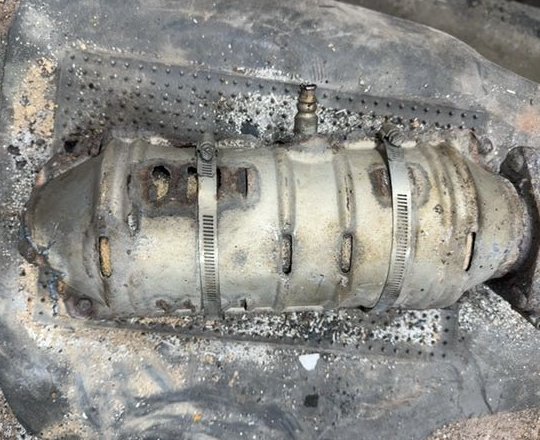
Foil vs. Bead: The Two Converter Types That Confuse Even Experienced Scrappers
Most people selling scrap catalytic converters think a cat is a cat. Drop it in a pile, get a quote, move on. But that assumption leaves money on the table — sometimes a lot of it. Catalytic converter prices today vary significantly based on converter type, and the foil vs. bead distinction is one of the most misunderstood splits in the industry.
If you're sitting on a pile of cats in Mesa or running a shop anywhere in Arizona, understanding what you have before you sell matters. Let's break it down in plain language.
What Are Foil Style Catalytic Converters?
Foil style converters — sometimes called metallic substrate converters — use a thin, corrugated metal foil wound into a honeycomb structure inside the converter housing. That foil is typically made from a high-grade stainless steel alloy. The precious metals (platinum, palladium, and rhodium) are coated onto the surface of that foil.
Because foil converters have an extremely high surface area relative to their size, they can achieve high catalytic efficiency in a compact package. Automakers and manufacturers who needed lightweight, performance-oriented solutions leaned on foil construction heavily. You'll find foil-style converters in a range of applications:
- High-performance and sports vehicles
- Motorcycles and small-displacement engines
- Some European OEM applications
- Certain aftermarket and high-flow performance cats
- Heavy equipment and specialty industrial units
From a scrap standpoint, foil converters are processed differently than their ceramic counterparts. The foil substrate requires different shredding and separation techniques during refining. That affects how processors bid on them — and it affects catalytic converter prices today in ways that casual sellers often don't anticipate.
The precious metal loading on foil converters can vary widely. Some foil units carry a relatively light PGM (platinum group metals) load. Others — particularly OEM units from European manufacturers — carry significant value. Don't assume a foil converter is low-value just because it looks different from what you're used to seeing.
What Are Bead Style Catalytic Converters?
Bead style converters use small, spherical ceramic or alumina beads packed inside the converter canister. The precious metals are impregnated into or coated onto those beads. When exhaust gases pass through, they contact the bead surface, and the catalytic reaction happens. It's an older design approach — you'll mostly encounter bead converters on vehicles and equipment manufactured before the mid-1990s, though some specialty applications still use them.
Bead converters are physically distinctive. Shake one — if you hear the rattle of loose material inside, you're likely holding a bead unit. That rattle is the beads shifting around. Some yards and collectors in Mesa know to listen for it before sorting their pile.
From a processing standpoint, bead converters are generally easier to open and process. The beads pour out, they're relatively straightforward to sample and assay, and refiners have well-established processes for handling them. However, bead units tend to carry lower PGM concentrations than many ceramic honeycomb or foil units. They're still worth selling — but set your price expectations accordingly.
One important note: bead converters are increasingly rare in active vehicle populations. Most cars on Arizona roads today are 2000s-era and newer, meaning the volume of bead cats coming through scrap streams is lower than it was a decade ago. If you have them, they're still worth processing — just don't expect them to top your price list.
How Much Are Foil and Bead Catalytic Converters Worth? What Drives the Price?
Here's where it gets real. Catalytic converter prices today are driven by three precious metals: platinum, palladium, and rhodium. All three float on commodities markets and change daily. The value of any individual converter flows directly from how much of each metal it contains and what those metals are trading for on any given day.
Foil converters generally fall into a few pricing tiers based on their PGM loading and origin:
- High-grade foil units — typically European OEM or performance applications — can carry meaningful PGM value and should be quoted individually or as a premium grade lot
- Mid-grade foil units — standard foil cats from mixed applications — are usually priced as a category by experienced buyers who know the average yield
- Low-grade or degraded foil units — damaged, burned, or aftermarket units with minimal PGM loading — carry the least value and should be identified and separated before you sell
Bead converters typically land in a lower price bracket than comparable ceramic honeycomb units, but exceptions exist. Some older OEM bead converters from specific vehicle lines carry surprisingly strong PGM loads. Proper identification matters here. If you're asking yourself how do I find out how much my catalytic converter is worth, the honest answer is: you need a buyer or platform that does real identification, not just a flat per-unit guess.
Platforms like SMASH connect scrap sellers with vetted buyers who know the difference between a foil unit and a bead unit — and price accordingly. That kind of competitive, informed bidding is exactly what get the best catalytic converter price today is built around. Guessing or defaulting to one flat rate across your whole pile is the old way. It costs you money.
Disclaimer: Catalytic converter prices fluctuate daily based on PGM commodity markets. Always check current catalytic converter prices before committing to a sale. The figures and tiers referenced here are general guides, not guaranteed quotes.
Sorting Your Converters Before You Sell — A Practical Guide for Mesa Yards and Collectors
Whether you're running a recycling yard in Mesa, an auto shop clearing out a bin of old cats, or an independent collector working Arizona scrap runs, sorting before you sell is one of the highest-ROI things you can do. Dumping everything into one mixed lot and accepting a blended price is convenient — but it almost always means your high-grade units subsidize pricing on your low-grade ones.
Here's a practical sorting approach:
- Identify foil vs. bead vs. ceramic honeycomb — these are three distinct categories and experienced buyers price them differently
- Photograph serial numbers and markings — most OEM converters have stamped or printed serial numbers that allow for accurate identification against known price databases
- Separate damaged or gutted units — burned, rattling (in honeycomb units), or clearly empty converters should be flagged separately, not mixed into a grade lot
- Group by application type where you can — high-performance, European, domestic, diesel, and small-engine cats often have different yield profiles
- Document your lot with photos before shipping — any serious buyer should expect and welcome this documentation
Good documentation doesn't just protect you from disputes. It gives buyers confidence, and confident buyers bid more aggressively. That's basic market logic, and it applies directly to the catalytic converter auction format that competitive platforms use. When buyers can see exactly what they're bidding on, they're more willing to go to their true number.
For more guidance on identifying and pricing your converters, read catalytic converter pricing guides that break down specific grades and market dynamics in plain language.
Why Competitive Bidding Beats a Single-Buyer Quote for Foil and Bead Cats
The traditional scrap model goes like this: one buyer, one call, one offer, take it or leave it. For commodity scrap like steel or aluminum, that might be fine. For PGM-bearing material like catalytic converters — where individual unit values can range from a few dollars to several hundred — that model costs sellers real money.
The problem is worse with specialty grades like foil and bead converters. If your buyer doesn't have a strong market for foil units specifically, they'll low-ball you to protect their margin. They're not cheating you — they're managing their own risk. But that risk gets priced into your offer whether you know it or not.
SMASH, operating as North America's B2B scrap metal auction platform, routes catalytic converter lots through a vetted buyer network where multiple buyers compete for your material. That competition does something a single-buyer quote never can: it reveals what the market actually thinks your cats are worth. More buyers, better price discovery. It's straightforward math.
For yards and collectors in Mesa and across Arizona, that access to a broader buyer pool matters — especially when you're moving specialty grades that not every local buyer handles well. The catalytic converter buyers Arizona market has depth, but you have to connect to it. A platform built for competitive bidding makes that connection systematic, not a matter of who you happen to know.
There are no subscription fees with SMASH. The model only works when you win on price. If the auction doesn't beat your current buyer, you're not locked into anything. That's the kind of transparency the scrap industry has needed for a long time.
If you're ready to stop guessing and start selling with real market competition behind you, get the best catalytic converter price today by submitting your lot for a quote. Photograph your units, document your grades, and let buyers compete.
Frequently Asked Questions
Q: What is the difference between a foil and bead catalytic converter?
Foil converters use a corrugated metallic substrate wound into a honeycomb structure, while bead converters use small spherical ceramic or alumina beads packed inside the canister. Both carry platinum group metals (PGMs), but their construction, processing requirements, and typical scrap values differ. Bead converters are more common in older vehicles; foil converters appear across a range of applications including performance and European OEM vehicles.
Q: Are foil catalytic converters worth more than bead converters?
Not always — it depends on the specific unit and its PGM loading. Some high-grade foil converters from European OEM applications carry strong precious metal value. Bead converters generally run lower in value on average, but older OEM bead units can surprise you. Proper identification before selling is the only way to know what you actually have.
Q: How do I find out how much my catalytic converter is worth?
Start by identifying the type (foil, bead, or ceramic honeycomb) and photographing any serial numbers or markings. Then use a pricing platform or service that matches your specific unit to known yield data rather than giving you a flat per-unit average. Platforms like SMASH connect you with vetted buyers who price based on what your material actually contains, not a blended guess.
Q: Can I sell foil and bead catalytic converters in Mesa, Arizona?
Yes. Sellers in Mesa and across Arizona can sell scrap catalytic converters through local buyers or through competitive online platforms that reach a national buyer network. Online platforms often provide better price discovery, especially for specialty grades like foil and bead units that not every local buyer handles efficiently.
Q: Do catalytic converter prices today change frequently?
Yes — catalytic converter prices move with platinum, palladium, and rhodium commodity markets, which fluctuate daily. A converter worth one amount this week may be worth more or less next week based on PGM spot prices. Always check current pricing before committing to a sale, and consider using a competitive auction format to capture the market's current best offer rather than a single static quote.
Ready to find out what your foil or bead cats are actually worth? Get the best price for your catalytic converter — get a free quote at best-catalytic-converter-price.com.
Follow SMASH on LinkedIn for ongoing scrap metal market updates, PGM price movement insights, and industry news that helps you sell smarter.