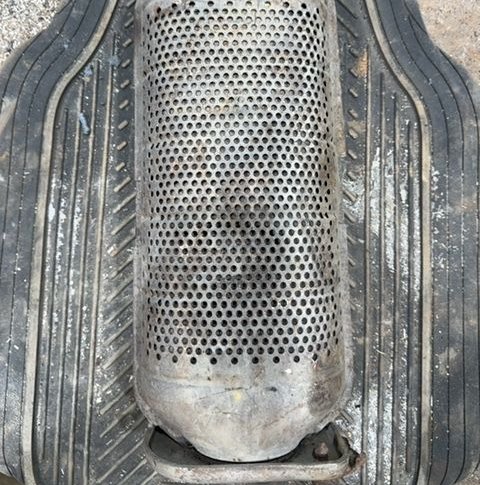
Most people selling a scrap catalytic converter think platinum is the big prize inside. They're wrong. Rhodium — a metal most people have never heard of — is what actually drives the value of your cat. Understanding that one fact can change how you approach selling, what questions you ask, and how much money you walk away with. If you're watching the palladium price today to time your sale, that's smart. But ignoring rhodium is leaving real money on the table.
This breakdown covers how the three key platinum group metals (PGMs) work inside a catalytic converter, why rhodium commands such extreme prices, and how sellers — from individual collectors to high-volume yards in Jacksonville, Florida — can use that knowledge to get stronger offers.
---What's Actually Inside a Catalytic Converter
A catalytic converter isn't one thing — it's a ceramic or metallic substrate coated with a precise blend of platinum group metals. Those metals are the only reason a scrap cat has any value at all. Strip away the steel shell and the honeycomb substrate, and what you're really selling is a few grams of platinum, palladium, and rhodium.
Each metal plays a specific chemical role in the emissions reduction process:
- Platinum — oxidizes carbon monoxide and unburned hydrocarbons
- Palladium — handles oxidation in gasoline engines, particularly effective at lower temperatures
- Rhodium — the only metal that efficiently reduces nitrogen oxides (NOx) into harmless nitrogen and oxygen
Rhodium's job — NOx reduction — is irreplaceable. No cost-effective substitute has been found despite decades of research. That scarcity of function, combined with extreme scarcity of supply, is what makes rhodium the most valuable precious metal in any catalytic converter. Automakers can't simply swap it out, which means demand doesn't soften even when prices spike.
The Rhodium Premium: Why This Metal Trades at Extreme Prices
Rhodium is one of the rarest elements on Earth. Global annual mine supply is measured in tens of tonnes — a fraction of what gold or silver produces. The overwhelming majority of that supply comes from South African platinum group metal mining operations, making the market highly sensitive to geopolitical and operational disruptions on that continent.
The price history of rhodium tells a story unlike any other commodity. It has spiked to levels that dwarf platinum and palladium on multiple occasions. Even during periods of market softening, rhodium trades at a significant premium. That premium flows directly into your scrap cat value — whether you realize it or not.
Here's the practical reality for sellers:
- A converter from a high-emission vehicle (large trucks, older SUVs, performance vehicles) often contains a higher rhodium loading than a compact car converter
- OEM converters from major brands tend to have higher PGM concentrations than aftermarket replacements
- Two converters that look nearly identical externally can have very different rhodium content — and therefore very different scrap values
This is why guessing your price based on the shell or assuming all cats are worth the same is one of the most expensive mistakes a seller can make. Get the best catalytic converter price today by working with buyers who actually assay PGM content rather than offering flat rates on appearance alone.
Palladium Price Today — And Why It's Only Part of the Picture
Checking the palladium price today is a reasonable starting point for understanding your cat's value. Palladium is heavily used in gasoline-engine converters and trades actively on commodity markets, making it easy to track. But sellers who only watch palladium are getting an incomplete read on the market.
The true value of a scrap catalytic converter is a function of all three PGMs combined — platinum, palladium, and rhodium — weighted by the specific loading in that converter. Rhodium's price, even in softer market conditions, can contribute a disproportionately large share of the total metal value. In some high-rhodium converter types, it can represent more than half the total PGM value despite being present in the smallest quantity by weight.
What does that mean for you? It means:
- Tracking only palladium gives you a distorted picture of your converter's worth
- Buyers who quote flat rates without referencing all three metals may be pocketing the rhodium margin
- Getting multiple offers — through a competitive process rather than a single-buyer negotiation — is the only way to know you're seeing real market value
Platforms like SMASH operate on exactly this principle. Rather than locking you into a one-buyer conversation where you have no leverage, SMASH connects sellers with vetted buyers who compete. Competition reveals what the market actually thinks your load is worth. Find the best price for your scrap on SMASH and see what real buyer competition looks like.
Jacksonville Sellers: Why Local Market Access Matters
Jacksonville, Florida is one of the largest cities in the continental United States by land area — and a significant hub for auto dismantling, salvage yards, and scrap metal activity. That means there's meaningful volume moving through the local market. But volume doesn't automatically mean great prices. In fact, high-volume markets can sometimes produce complacency — buyers know the next load is coming regardless, so there's less urgency to sharpen their offers.
If you're selling scrap catalytic converters out of Jacksonville, the biggest lever you have isn't which local buyer you call first. It's whether you're getting competing offers at all. A single-buyer process in Jacksonville gives you exactly one data point on what your converters are worth. That's not price discovery — that's price acceptance.
The better move is connecting with Jacksonville scrap metal services that give you access to a broader buyer pool, including regional and national buyers who may value your specific converter types more aggressively than a local-only offer. Florida's dense automotive market means converter variety is high — from high-mileage fleet vehicles to performance cars — and different buyers specialize in different types.
Documentation matters here too. Converters with clear serial tracking, photo documentation, and accurate identification consistently attract stronger bids. Buyers paying for rhodium content want to know what they're buying before they commit to a number. If you show up with a clean, documented load, you look like a professional — and professionals get better prices. Read catalytic converter pricing guides to understand how proper documentation changes your negotiating position.
How SMASH Helps Sellers Get PGM-Informed Prices
The old way of selling cats is a phone call to one buyer, a flat offer with no explanation, and a take-it-or-leave-it dynamic. That process has nothing to do with what platinum, palladium, or rhodium are actually trading for. It has everything to do with the buyer's margin targets and your lack of alternatives.
SMASH breaks that dynamic. As a B2B scrap metal marketplace, SMASH connects sellers — yards, auto shops, collectors, fleet operators — with a vetted pool of buyers who bid competitively on loads. The auction format means the market sets the price, not one buyer's internal spreadsheet. You see actual competition, not a number handed to you with no context.
For catalytic converter sellers specifically, this matters because rhodium, palladium, and platinum values shift. The palladium price today is not the palladium price from three months ago. Buyers in a competitive format have an incentive to reflect current PGM markets in their bids — because if they don't, another buyer will. That's how you get prices that actually track what the metals are worth right now.
SMASH also supports proper inventory documentation — photo uploads, serial tracking, and accurate descriptions — which gives buyers the confidence to bid stronger. An undocumented load introduces uncertainty. Uncertainty becomes a discount on your offer. Eliminate the uncertainty, and you eliminate that discount. No subscription fees. SMASH only wins when you win.
What to Do Before You Sell Your Scrap Catalytic Converters
Whether you're moving one converter or a full pallet, a few steps before you sell will directly affect the price you get:
- Identify what you have. OEM converters from major manufacturers carry different PGM loadings than aftermarket units. Knowing the difference matters. Serial numbers and VIN lookup tools can help match a converter to its vehicle origin and PGM profile.
- Document thoroughly. Photos of the converter, serial numbers, condition notes — all of this supports better bids. Buyers paying for rhodium content want clarity, not guesswork.
- Don't anchor on one buyer's number. If you've only heard from one buyer, you don't know your price. You know one offer. Get competing bids.
- Watch all three PGM markets. Track platinum, palladium, and rhodium — not just one. A shift in any of them affects your converter's total value.
- Time your sale thoughtfully. Rhodium in particular is volatile. If you have flexibility on timing, understanding the current market direction is worth a few minutes of research.
If you're ready to stop guessing and start getting market-based offers, check current catalytic converter prices and connect with buyers who compete for your load.
Disclaimer: Catalytic converter scrap prices fluctuate daily based on platinum, palladium, and rhodium spot markets. Always verify current rates before selling.
---Frequently Asked Questions
Q: Why is rhodium more valuable than palladium or platinum in a catalytic converter?
Rhodium is the only metal that effectively reduces nitrogen oxides (NOx) in exhaust gases, and there's no practical substitute. Global mine supply is extremely limited — far smaller than platinum or palladium — which keeps prices elevated even when other PGMs soften. That combination of functional necessity and supply scarcity is what drives rhodium's premium.
Q: How does the palladium price today affect what I get for my scrap catalytic converter?
Palladium is one of three PGMs that determine a converter's scrap value, alongside platinum and rhodium. When palladium prices rise, converters from gasoline-engine vehicles typically increase in value. However, if you're only tracking palladium, you may be missing significant value shifts driven by rhodium — which can represent a substantial share of total PGM value in some converter types.
Q: Where can I sell scrap catalytic converters in Jacksonville, Florida?
Jacksonville has an active scrap and salvage market, but local buyers aren't your only option. Platforms like SMASH connect Jacksonville sellers with a wider network of vetted buyers who bid competitively, which can produce better price discovery than a single local offer. For local options paired with broader market access, check out Jacksonville scrap metal services.
Q: Do OEM catalytic converters have more rhodium than aftermarket converters?
Generally, yes. OEM converters are engineered to meet specific emissions standards for a particular vehicle and typically contain higher and more precise PGM loadings — including rhodium — than aftermarket replacements, which are often built to lower cost tolerances. This is one reason OEM converters consistently command higher scrap prices than aftermarket units of the same size.
Q: Is a B2B scrap metal marketplace worth using for catalytic converter sales?
For yards and collectors moving regular volume, yes. A B2B scrap metal marketplace like SMASH creates a competitive bidding environment rather than a take-it-or-leave-it single-buyer dynamic. More buyers competing for your load means better price discovery — especially important for high-value, PGM-heavy inventory like catalytic converters where even small per-unit price differences add up fast.
---If you're sitting on scrap catalytic converters and still waiting for a single buyer to give you a number, you're already behind. The metals inside those cats — platinum, palladium, and especially rhodium — trade on a global market every day. Your price should reflect that market, not one buyer's margin. Get the best price for your catalytic converter by putting your load in front of competing buyers — get a free quote at best-catalytic-converter-price.com and see what your converters are actually worth.
Stay current on scrap metal market trends and PGM pricing movements — follow SMASH on LinkedIn for industry updates and insights that help you sell smarter.